
#TalkThree 15: Some “Principles” for Knowledge Curation
Using “Principles” to build a Knowledge Container

On May 19, 2022, I edited a possible book titled Knowledge Discovery: Developing Tacit Knowlege with Thematic Space Canvas. The book introduces the following canvas for knowledge engagement.
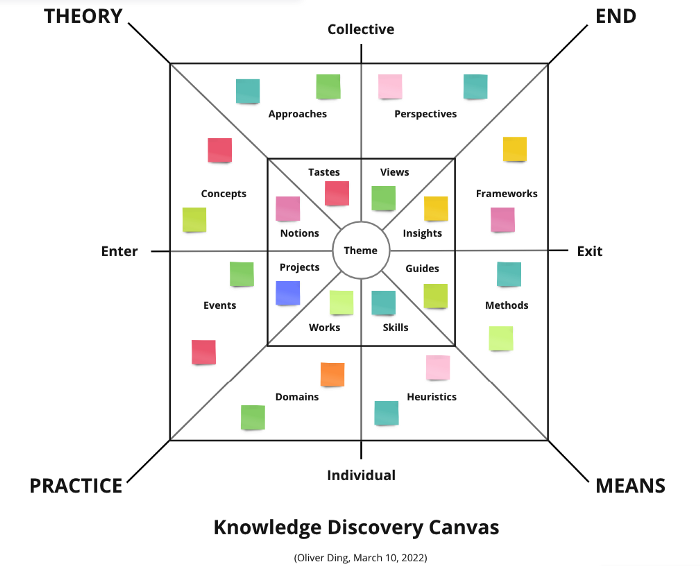
The above canvas considers the following 8 pairs of concepts.
- Approaches — Tastes
- Concepts — Notions
- Events — Projects
- Domains — Works
- Perspectives — Views
- Frameworks — Insights
- Methods — Guides
- Heuristics — Skills
These terms are meta-terms for discussing knowledge development. We can also find more knowledge-related meta-terms. For example, Principles, Questions, Standards, Schemas, etc.
Today I’d like to share three examples of Principles.
Principles for Systems Change
The Art of Systems Change: Eight guiding principles for a green and fair future is curated by The Fuller Systems Transformation Collaborative in 2019. The book was written by 15 authors from different backgrounds. The book is a great example of Applied Knowledge Curation.
Each knowledge curation project requires a new “knowledge container”. This green book about system thinking takes the “Principles” approach.
According to the authors of the book, “Part 2 introduces a set of principles for working to achieve long-lasting solutions to tackle our most pressing challenges. Built on the collective wisdom of influential system thinkers and the co-authors of this book, the eight mutually reinforcing principles synthesize key concepts and capacities that change-makers across sectors can develop to tangibly integrate systems thinking into practice. In each chapter, we introduce a principle, why it’s important, how to work with it, and provide simple ‘daily practice’ prompts that can help you cultivate both your individual and institutional capacity for changing.”
Here are the 8 principles:
- See ourselves in the system: We are part of the complex adaptive systems we try to change. There are feedbacks and forces generated by our actions — and those of others — acting on us that we are not normally of.
- Identify our frames: Systems cross multiple scales, while our individual and institutional frames are often more limited; how we frame our problems determines the solutions we seek.
- Co-create with intention: Any one person’s knowledge of a system is incomplete; co-creation helps create a more complete understanding of the relationships and structure of a system to tackle systemic problems.
- Explore time and scale: There are intrinsic time delays between action and response, which impact the results we see and when we see them. Systems cross multiple scales, and complex systems are nested within each other at different scales.
- Find simplicity in complexity: While complex, systems can be understood by distilling patterns, trends, or principles that reflect underlying structures and behaviors, and leverage points can be focused on to create longer-term change.
- Experiment iteratively: We usually have to act with an incomplete understanding of complex systems and their dynamics; iterative experimentation allows us to adapt our programs as we act and learn.
- Align structure with change: The structures of formal organizations and institutions can either foster or inhibit working with the dynamics and trajectories of complex systems.
- Act based on evidence: Working with complex systems requires us to be more intentional in what we are measuring and why, and how information is used by people and organizations at different scales.
The book is designed to be a practice guide for social change-makers around the world. It aims to connect the THEORY knowledge of System thinking approaches with the PRACTICE of the art of systems change.
Now we can compare this book with Mike Jackson’s Systems Thinking: Creative Holism for Managers (2003). I have written a review about it one month ago.
Principles for Life-centred Design
Several months ago, I read a paper titled From human-centred to life-centred design: Considering environmental and ethical concerns in the design of interactive products which was written by Madeleine Borthwicka, Martin Tomitscha, and Melinda Gaughwin.
According to the authors, “In the past few years, the interaction design community has begun to question this explicit prioritisation of people and their needs and desires due to the damage wreaked upon the global systems essential to human well-being. Scholars argue that it is necessary to shift to a new design paradigm for creating interactive products by augmenting the focus that human-centred design places on the user or consumer with explicit consideration of global well-being within the design process (Nardi, 2019). This shift is urgently needed as global well-being is intrinsically linked to the health of global systems, and technology use has caused environmental impacts on those systems (Praskievicz, 2021).”
There are several new approaches that aim to offer new solutions for dealing with the “design/product — environment/society” relationship. Though scholars and thinkers use different terms to name their knowledge creations, their activities can be seen as a large collaborative project of making a new paradigm of design.
- Post-anthropocentric Design
- Value-sensitive Design
- Sustainable Business Design
- Life-centred Design
- etc
The term “Life-centred design” was used as an umbrella term by some interaction design researchers, “Life-centred design, as a framework, is able to encompass and operate alongside other emerging terms while being distinguished by its objective to augment human-centredness in design rather than replacing it. In the context of this article we consider life-centred design as being complementary but different from “more-than-human” centred design, which has its foun- dation in ecological philosophy (Abram, 1996). In the interaction design literature, examples of more-than-human centred design refer to designing experiences for non-human species in cities (Clarke et al., 2019), the home (Robinson and Torjussen, 2020) or the zoo (French et al., 2020) and designing with and for artificial intelligence and automated agents (Nicenboim et al., 2020). In other words, more-than-human designs consider non-human stakeholders as the primary user or subject in a design process.”
In order to support Life-centred interaction design practice, the authors adopt environmental policy researcher Robert B. Gibson’s principles (2001) to develop a knowledge framework.
- Integrity: recognizes the interdependencies between human systems and ecological systems and maintains the integrity of these irreplaceable biophysical systems.
- Sufficiency and Opportunity: ensures a decent quality of life for all people, with opportunities to seek improvements to this quality of life but without compromising future generations.
- Equity: reduces dangerous social gaps insufficiency and opportunity in aspects of health, security, social recognition, and political influence between rich and poor.
- Efficiency: reduces demand for energy, materials, and other stressors of socio-ecological systems.
- Democracy and civility: increase the capacity for authoritative, market, customary and individual entities to be better informed when applying sustainability principles in decision making.
- Precaution: acknowledges uncertainty by managing for adaptation, and by avoiding poorly understood risks that could potentially cause irreversible damage to complex and poorly-understood systems.
- Immediate and long-term integration: acknowledges “interdependencies through the application of multiple sustainable principles at once, to identify and seek areas of potential mutual benefit.
Moreover, the authors use a schema called “P/F/M” to develop the framework:
- P: Principles
- F: Frameworks
- M: Methods
The outcome is visualized in the following diagram:
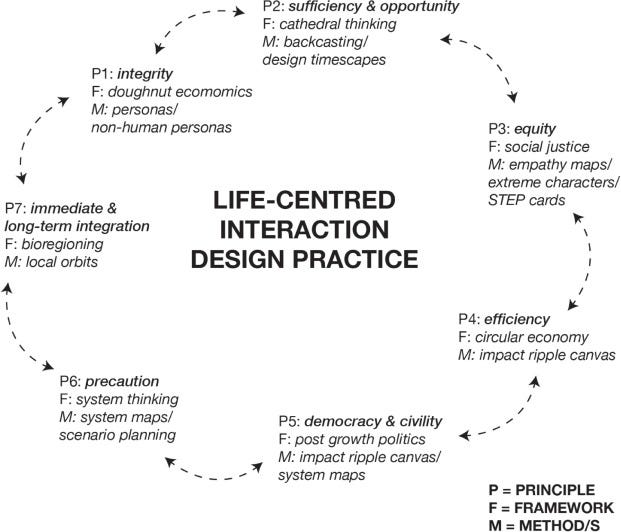
You can find more details about frameworks and methods in their original paper.
Principles for The Life-as-Project Approach
In Feb 2022, I worked on the Life Discovery Project and developed a new approach called Life-as-Project.
The diagram below is an early model of the Life-as-Project approach.
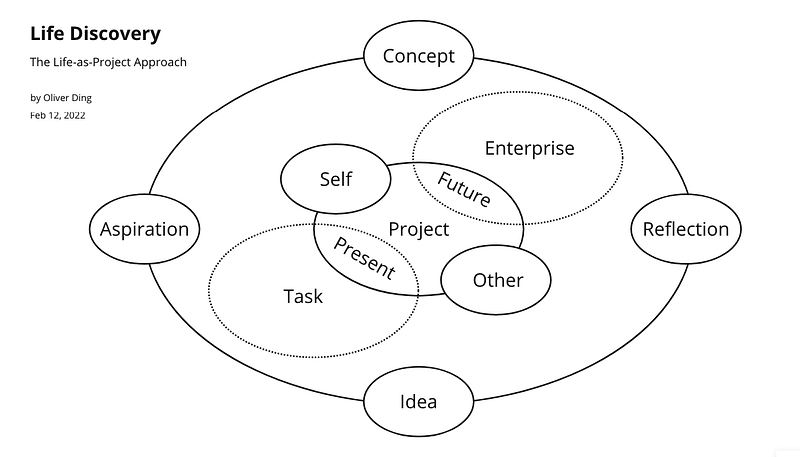
Later, I expanded it to the Project-centered approach which considers “Project” as a multiple dimension concept.
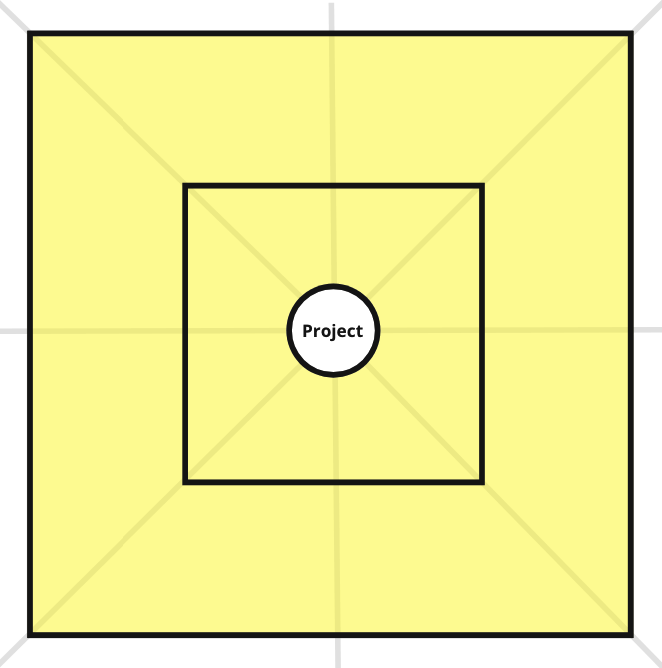
It led to the Life Discovery Canvas which considers 8 pairs of concepts for Life Discovery Activity.
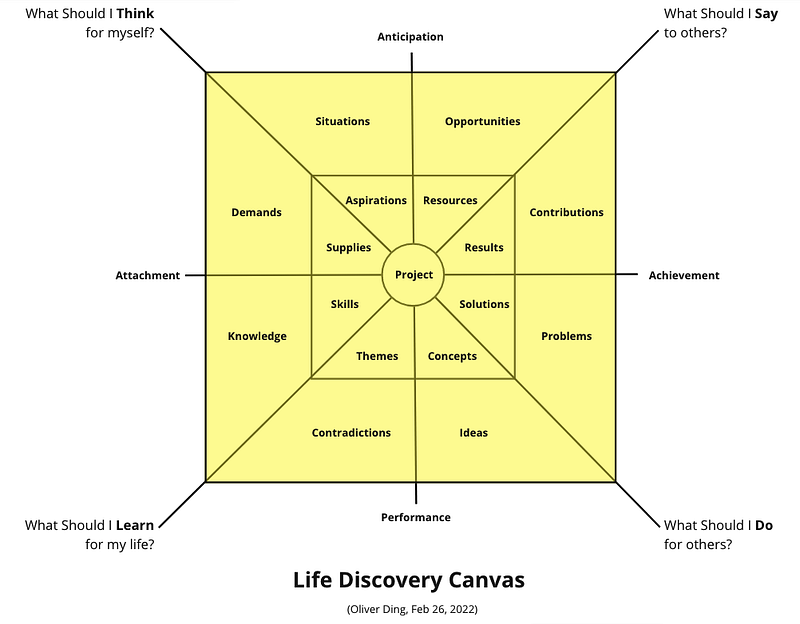
In The Life Discovery Canvas (v1.0) — Part 1: Theoretical Background, I highlighted six basic principles of the Life-as-Project approach:
- Being by Doing
- Engagement as Method
- End as Means
- Discovery as Development
- Performance as Experiment
- Curativity as Creativity
In July, I developed the 7th basic principle of the Life-as-Project approach:
- Project as Thematic Space
The philosophical roots of the Project-centered approach are Activity Theory and Ecological Psychology. At the general philosophical level, both ecological psychology and activity theory share the same view of the inseparability of human beings and the world.
While Activity Theorist emphasizes the mind and self are developed within Activity, Ecological Psychologists focus on the mutual relationship between organism and environment. I personally use the metaphor “Container” to describe both activities and environments.
The Project-centered approach is also inspired by other theoretical resources such as Anticipatory Systems Theory and Curativity Theory. Since I focus on creative workers, I also adopted Howard E. Gruber’s evolving systems approach to the study of creative work (1974,1989) for the approach.
The Life-as-Project Approach can be understood as an Applied Knowledge Curation project. The schema behind the project is A[M(T/P/H)]:
- A: Activity
- M: Mediating Instruments
- T: Theoretical Approaches
- P: Basic Principles
- H: Operational Heuristics
First, I consider Life Discovery as a specific Activity from the theoretical perspective of Activity Theory. According to Activity Theory, we should pay attention to Mediating Instruments of an activity. Thus, I started by making Life Discovery Toolkit (v1.0), then designed the Life Discovery Canvas (v1.0).
Second, I also considered the Life-as-Project approach as a Mediating Instrument too. It is a knowledge framework for developing Operational Heuristics such as Toolkit and Canvas. I also used it to guide the design of a Life Discovery 1:1 coaching program.
The above principles are developed by connecting THEORY and PRACTICE. See the diagram below.
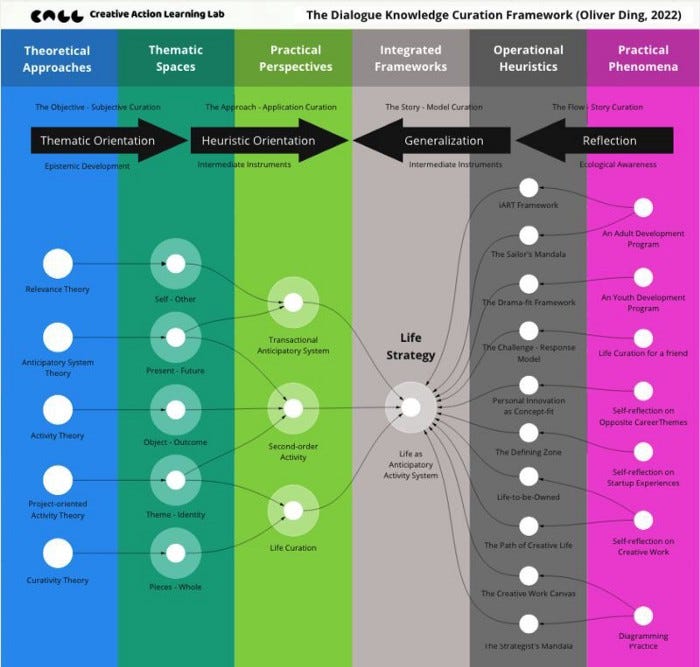
The above diagram is for developing the Life Strategy framework with the “Dialogue Knowledge Curation” method. I applied the same method to develop the Life-as-Project approach.
While I was working on developing Instruments for Life Discovery Activity and designing the Life Discovery Coaching program, I also worked on developing the Life-as-Project knowledge framework.
The Final Word
Though I don’t consider “Principles” as a meta-term for the Knowledge Discovery Canvas, it is a useful meta-term for knowledge development, especially Applied Knowledge Curation.
The above “Life Strategy” diagram shows the “Dialogue Knowledge Curation” method which is a useful way for the Applied Knowledge Curation activity.
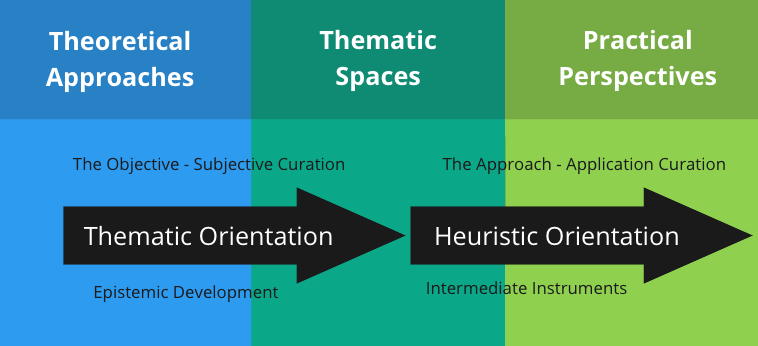
The Dialogue Knowledge Curation method considers two directions of knowledge curation. The Left-to-Right direction refers to the transformation from THEORY to PRACTICE. There are two phases:
- Thematic Orientation: The Objective — Subjective Curation
- Heuristic Orientation: The Approach — Application Curation
The Right-to-Left direction refers to the transformation from PRACTICE to THEORY. There are two phases too:
- Reflection: The Flow — Story Curation
- Generalization: The Story — Model Curation
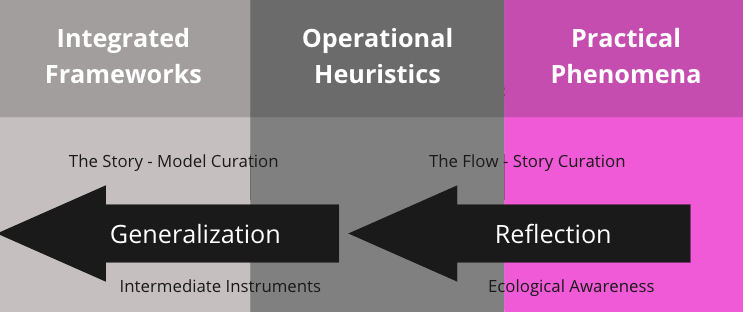
These two approaches meet in the middle where we pay attention to the creation of Intermediate Instruments.
What are Intermediate Instruments?
Actually, Principles is a specific type of Intermediate Instrument.
In April 2021, I wrote a book titled The ECHO Way: Echozone and Boundary Knowledge Work to reflect on connecting Theory and Practice via the HERO U framework. In the book, I wrote a chapter called Intermediate Construction and discussed several cases I made during the process of writing the following three books:
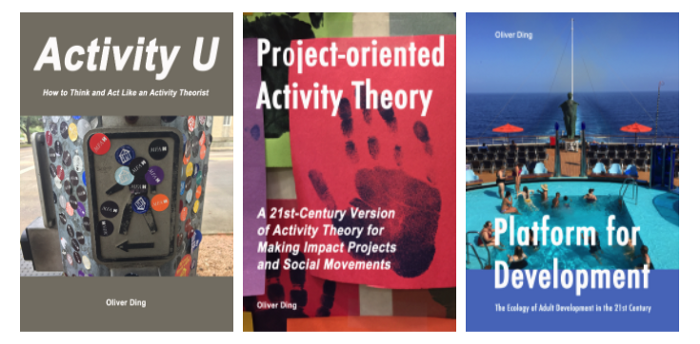
I used the following types of Intermediate Constructions for my work:
- Intermediate Concepts
- Intermediate Frameworks
- Intermediate Diagrams
Why didn’t I make Principles as Intermediate Constructions for these books? Because they are one-theory creations, not multiple-theory curation.
As mentioned above, I made some Principles for the Life-as-Project approach. I thought it was wonderful to use Principles to curate ideas from multiple theoretical resources.
You can find more thinking tools in my book Knowledge Discovery (draft).
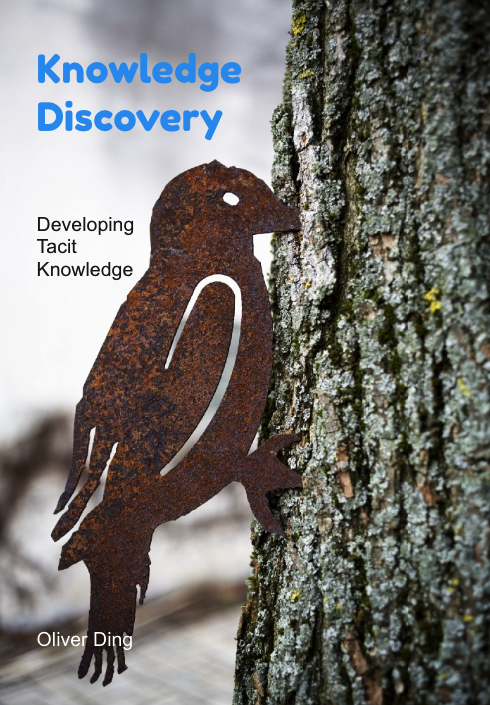
Knowledge Discovery: Developing Tacit Knowlege with Thematic Space Canvas
Related Articles
- Meet with Oliver Ding: 1 Mission, 4 Theories, and 12 Possible Books
- The Knowledge Curation Project
- How to Grow A Knowledge Enterprise
- Platform Genidentity: The Movements of Unfolding Uniqueness
- The Slow Cognition Project (Phase II): Activity Analysis for Creative Work Study
- CALL: The Launch Day of Curativity Center
- TalkThree: A Tiny Idea for Knowledge Engagement (June 2, 2022)
- #TalkThree 01: How to Read a Handbook? (June 2, 2022)
- #TalkThree 02: How to Name “X Innovation”? (June 3, 2022)
- #TalkThree 03: How to Use an Abstract Model? (June 6, 2022)
- #TalkThree 04: How Does Collective Learning Work? (June 7, 2022)
- #TalkThree 05: How to Connect X and Y? (June 8, 2022)
- #TalkThree 06: How to Approach Radical Innovation? (June 12, 2022)
- #TalkThree 07: How to Understand “X as Y” (June 14, 2022)
- #TalkThree 08: How to Expand a Framework with Friends (June 15, 2022)
- #TalkThree 09: The Art of Intelligence or Mind (June 16, 2022)
- #TalkThree 10: How to use a Hierarchy? (June 21, 2022)
- #TalkThree 11: How to find a SIG (Special Interest Group)? (June 26, 2022)
- #TalkThree 12: Re-learning Activity Theory (June 27, 2022)
- #TalkThree 13: How to Use the concept of “Self-reference”? (July 3, 2022)
- #TalkThree 14: What’s “Thematic Space”? (July 6, 2022)
I am also working on building a new website for the Platform Ecology project. You can save the following links:
- PlatformEcology.org
- Twitter: @PlatformEcology
- Linkedin: @PlatformEcology
You are most welcome to connect via the following social platforms:
Linkedin: https://www.linkedin.com/in/oliverding Twitter: https://twitter.com/oliverding Polywork: https://www.polywork.com/oliverding Boardle: https://www.boardle.io/users/oliver-ding


