
#TalkThree 11: How to find a SIG (Special Interest Group)?
Join a Special Interest Group for Diving With a Special Theme
This morning I find a little book titled Designer’s Existential Crises in 2022 on Twitter. See this tweet:
The little book is an outcome of the collective efforts of the Design Research Society (DRS) Special Interest Groups (SIGs) in Global Health, Pluriversal Design SIG, Sustainability SIG, SIGWELL, and Education.
Inspired by the little book, this article aims to share some ideas about SIG (Special Interest Group) and your journey of Knowledge Discovery. I will share three examples of SIG and connect them with Themes of Practice in the last section.
According to Wikipedia, “A special interest group (SIG) is a community within a larger organization with a shared interest in advancing a specific area of knowledge, learning or technology where members cooperate to affect or to produce solutions within their particular field and may communicate, meet, and organize conferences. The term was used in 1961 by the Association for Computing Machinery (ACM), an academic and professional computer society. SIG was later popularized on CompuServe, an early online service provider, where SIGs were a section of the service devoted to particular interests.”
You can find SIGs from an established academic and professional society and select one SIG for your journey of Knowledge Discovery.
Example 1: Academy of Management (AOM)
Founded in 1936, the Academy of Management (AOM) is a large professional association for management and organization scholars. Their members are professors and Ph.D. students in business schools at universities, academics in related social science and other fields, and practitioners who value knowledge creation and application from over 120 countries.
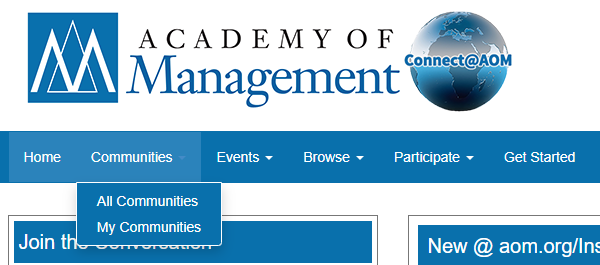
Academy of Management uses Divisions and Interest Groups (DIGs) to design its network. What’s the difference between Divisions and Interest Groups?
- Divisions focus on established bodies of scholarship and have a unique intellectual contribution to the field.
- Divisions are comprised of members who regularly make scholarly contributions applicable to the management field through firmly rooted research recorded in scholarly books and journals.
- Interest Groups focus on emerging trends within distinct bodies of scholarship.
- Interest Groups are organized around trends not represented within the Divisions and represent an area to which AOM members are beginning or likely to make scholarly contributions.
You can explore all DIGs of AOM from the following link:
AOM also classifies all DIGs into three clusters:
- Micro cluster: Micro DIGs focus on individual people, typically drawing on the discipline of psychology.
- Macro cluster: Macro DIGs focus on industries, markets, professions, or other large social units, typically drawing on economics and sociology.
- Meso cluster: Meso DIGs focus on intermediary social structures and processes that form connections between the micro and macro domains, drawing on diverse social science disciplines.
Let’s have look at three DIGs:
- STR (Strategic Management): 5795 members, Division
The Strategic Management Division encourages and supports the development and dissemination of knowledge relevant to general managers and those who study, shape, or influence the strategy of organizations, as well as effective teaching of these issues. Division scholars aim to understand and predict when and why some firms perform better than others.
STR covers several topics associated with strategic decision-making processes, their antecedents/context, and their consequences, such as: behavioral strategy; boundaries of the firm; corporate governance; corporate strategy; economics of strategy; non-market strategies; innovation and strategic renewal; strategic formulation, implementation and planning; and strategic processes.
- SAP (Strategizing Activities and Practices): 742 members, Interest Group
The Strategizing Activities and Practices Interest Group aims to create a developmental community for academics and practitioners who wish to advance knowledge and understanding of strategy as something people do rather than something organizations have. We aim to offer opportunities for lively and stimulating engagement to scholars sharing this interest.
- MOC (Managerial and Organizational Cognition): 1350 members, Division
The Managerial and Organizational Cognition division focuses on the study of how organization members model reality and how such models interact with behaviors. Major topics include: attention, attribution, decision making, ideology, information processing, learning, memory, mental representations and images, perceptual and interpretive processes, social construction, and symbols.
Each DIG has its own website, you can find more details from its website and social media accounts.
Example 2: Design Research Society (DRS)
Founded in 1966, the Design Research Society (DRS) is the longest established, multi-disciplinary worldwide society for the design research community.
According to the DRS, its purpose and the first statement of rules were to promote “the study of and research into the process of designing in all its many fields”.
DRS uses Special Interest Groups (SIGs) to design its network.
The purpose of DRS Special Interest Groups (SIGs) is to build global communities within and across the domains of design research. SIGs engage with their communities through a broad range of activities, including building platforms of engagement, organising events and creating publications.
SIGs are led by a convening group and manage their own membership. The DRS encourages SIGs to collaborate together in recognition that contemporary design research blends disciplines and perspectives.
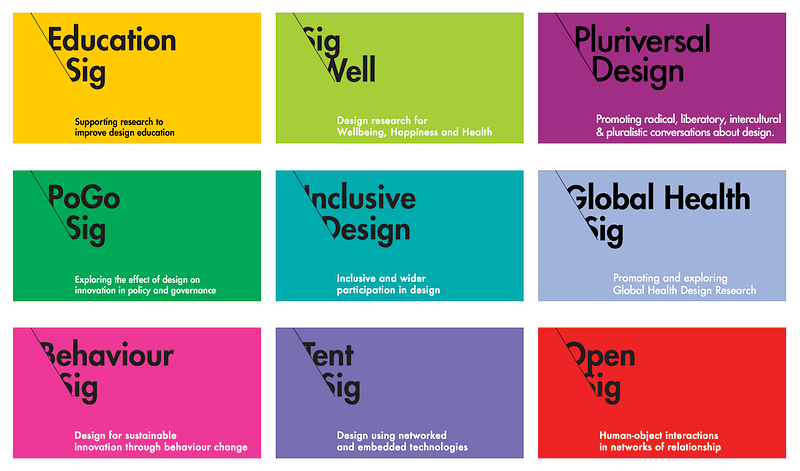
You can find all SIGs of DRS in the following link:
Let’s have look at three DIGs:
- OPENSig: Objects, Practices, Experiences, and Networks
The Objects, Practices, Experiences, and Networks Special Interest Group (OPENSig) was launched in 2007 and has run several symposia and conference strands since then, most recently at the Design Museum in London in June 2019 to launch Tricky Design: The Ethics of Things. This book, which invites design research and practice to engage with the ethics of both process and purpose, grew out of a series of events sponsored by the SIG.
These include a special strand at the DRS conference 2008 and two successful workshops at Sheffield Hallam University (2007) and Nottingham Trent University (2010), which served to define the group’s interest in broad questions about human-object interactions — focusing on Objects and engaging with social Practices, which involve Experiences with/ of objects in Networks of relationship. Comprising artists and designers and social scientists, the intention of OPENSig is to facilitate engagement with recent work that has emerged in non-design disciplines over recent years, which is relevant to design and in which the term ‘design’ is used. To achieve this, the group’s activities draw together work in design practice, HCI, science and technology studies, art practice, work on material culture in geography, archaeology, anthropology, sociology, art history, design history and the philosophy of technology.
- SusSIG: Sustainability
The DRS Sustainability SIG aims to nurture design research debates and outcomes that are more holistic in their approach to ecological and social care. In the context of the current global pandemic where the challenges to lifestyle and working norms are evident. SusSIG enables a timely reflection on the theory and practices that can signpost different ways ahead.
The Design Research Society’s Sustainability Special Interest Group (SusSIG) aims to connect design researchers from across the world to debate, exchange and co-create adaptable and more resilient design responses to contemporary threats such as the destruction of ecological systems and the inequitable distribution of global resources.
The language and activities of Design for Sustainability are not new, although the focus has often been oriented to industrial knowledge and practice and shaped by an economic growth paradigm. The result is that environmental crises grow and social inequalities deepen.
A step change in thinking and action is required. This change must incorporate a deeper understanding of, and empathy to, ecological complexity and its intersection with social problems. Design, as part of the ‘modern project’, is part of the intersecting social systems and structures that have created the current scale of ecosystem and social insecurities. If it is to have a vital role in creating other solutions, design thinking must consider ecological and social complexity
- EKSIG: Experiential Knowledge
The Special Interest Group on Experiential Knowledge (EKSIG) is concerned with the understanding and role of knowledge in research and professional practice in design.
This clarify fundamental principles and practices of using design practice within research, both with regard to research regulations and requirements, and to research methodology.
EKSIG was the first Special Interest Group of the DRS.
Example 3: Activity Analysis Network (AAN)
In Dec 2020, I reviewed the Activity U project (phase I) and used LIGs (Learning Interest Groups) to design its phase II.
Activity Theory has inspired many empirical studies in various domains. While phase I of the project focused on theoretical reflection, the main purpose of phase II of the project aims to develop the Theory — Practice dialogue by promoting Activity Theory in various domains and developing Activity Theory with practice-based reflection.
Phase II is about domain special empirical research and education. I selected several domains for the task.
There are two types of practice domains: horizontal domains and vertical domains.
- Horizontal domains refer to general functions in society such as “organization, strategy, and innovation”.
- Vertical domains refer to specific industries, for example, farm (agriculture), bus (transportation), and movies (entertainment).
I choose horizontal domains for the Activity U project (phase II) because I want to service boundary innovators and knowledge workers.
Inspired by the naming approach of Academy of Management’s Divisions and Interest Groups (DIGs), I set six Learning Interest Groups (LIGs) to represent horizontal domains about knowledge works.
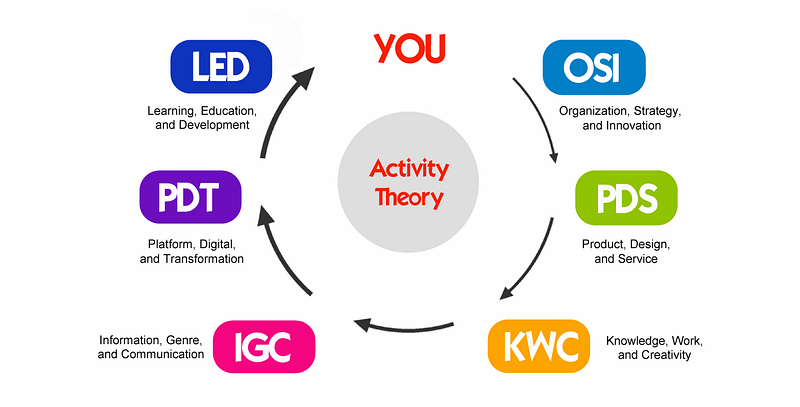
- Organization, Strategy, and Innovation (OSI)
- Product, Design, and Service (PDS)
- Knowledge, Work, and Creativity (KWC)
- Information, Genre, and Communication (IGC)
- Platform, Digital, and Transformation (PDT)
- Learning, Education, and Development (LED)
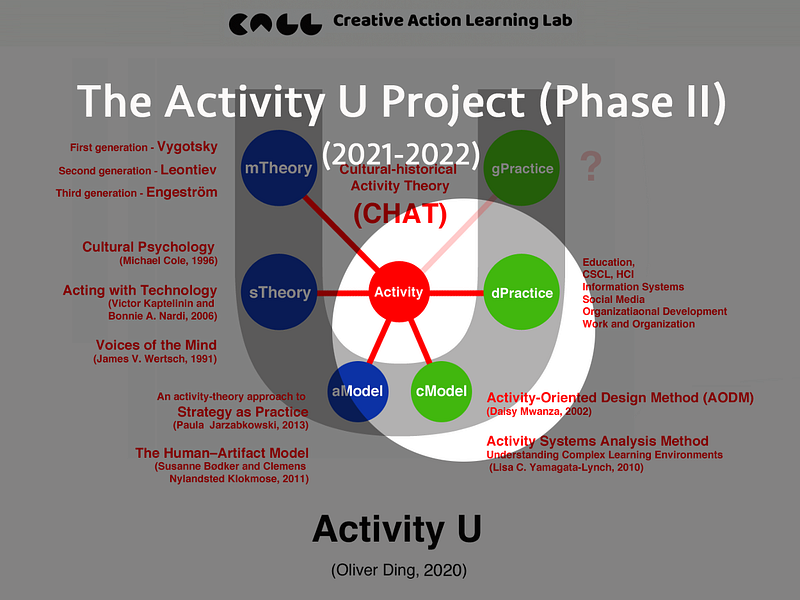
The Activity U project (phase II) was renamed Activity Analysis Network in April 2022. You can visit its website here: ActivityAnalysis.net
More Examples
- ASIS&T: https://www.asist.org/sig/
- ASA: 53 Sections
- APS: Research Topics
- APA: All Psychology Topics
The Final Words
What do you think after reading the above three examples?
I learned a new idea from writing the first example about ACM. See the following two SIGs.
- STR (Strategic Management): 5795 members, Division
- SAP (Strategizing Activities and Practices): 742 members, Interest Group
According to AOM, while Divisions focus on established bodies of scholarship Interest Groups focus on emerging trends. Almost half of AOM’s members join more than two DIGs. There are nearly 30,000 connections within AOM’s DIGs.
How many people are members of both STR and SAP? Why do some people only join SRT?
It’s clear that many people don’t like SAP which represents an emerging trend: the Practice Turn to Strategy Study.
Since 2001, a group of philosophers, sociologists, and scientists have rediscovered the practice perspective and used it as a lens to explore and examine the role of practices in human activity. Researchers called it The Practice Turn in Contemporary Theory. As Schatzki pointed out, “there is no unified practice approach”(2001, p.2). Davide Nicolini adopted a way of toolkit to introduce the following six different ways of theorizing practice in his 2012 book Practice Theory, Work, & Organization.
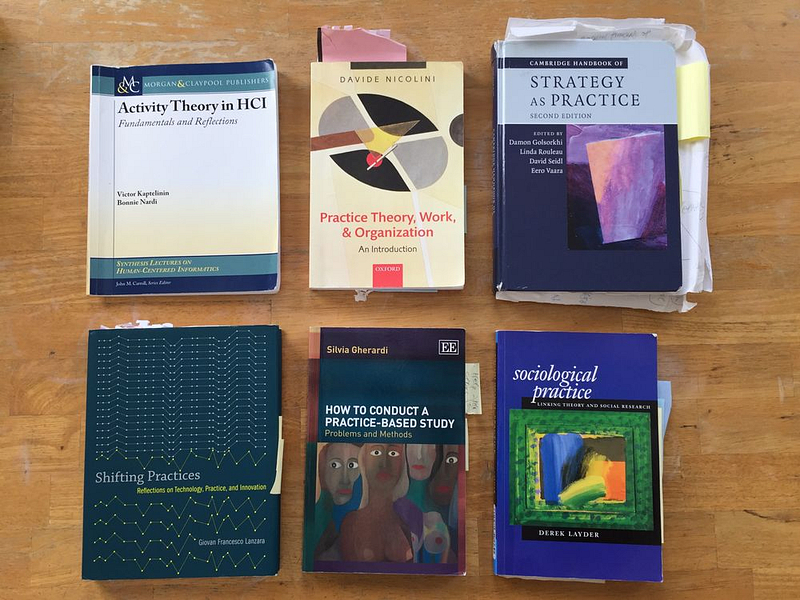
The “Strategy as Practice” approach is a new approach to Strategy Research. In 2018, I learned the approach by reading The Cambridge Handbook of Strategy as Practice (Second Edition, 2015). See the above picture.
“Strategy as Practice” can be understood as a Theme of Practice.
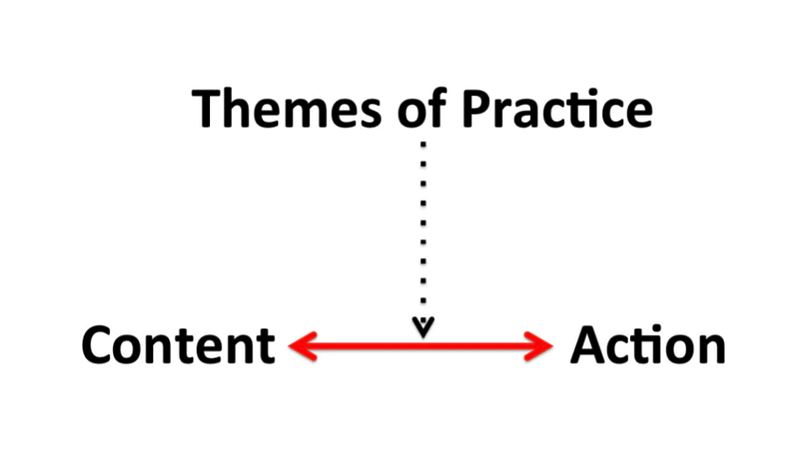
I started developing the concept of Themes of Practice in 2019 for Curativity Theory. I have mentioned the concept in my previous articles many times. The purpose of the concept is to connect the “life theme” and “culture theme”.
If you join the SAP Interest Group, then “Strategy as Practice” is a Theme of Practice for you.
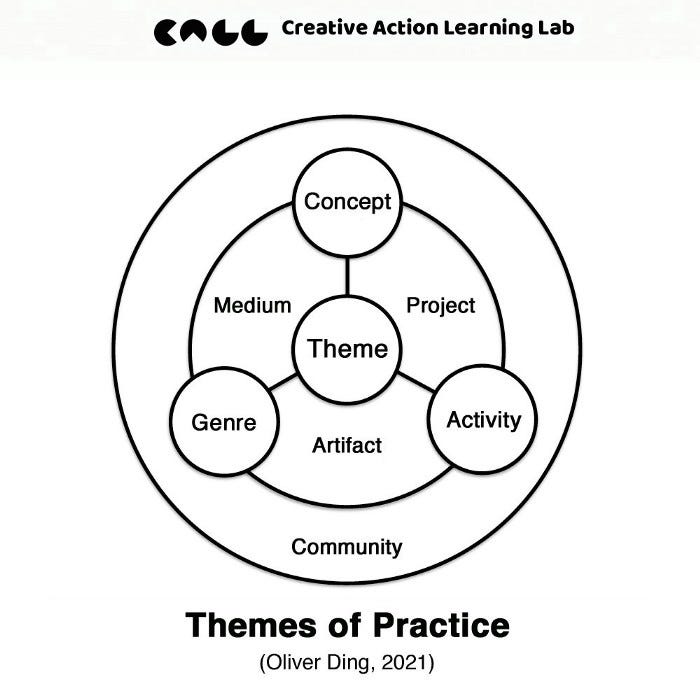
According to the above diagram which represents the Themes of Practice framework, the SAP Interest Group is a Community while “Strategy as Practice” is the primary theme.
You can apply the same idea to your journey of knowledge engagement. What’s your primary theme? What’s your Special Interest Group? What’s your’s community about the theme?
You can find more thinking tools in my book Knowledge Discovery (draft).
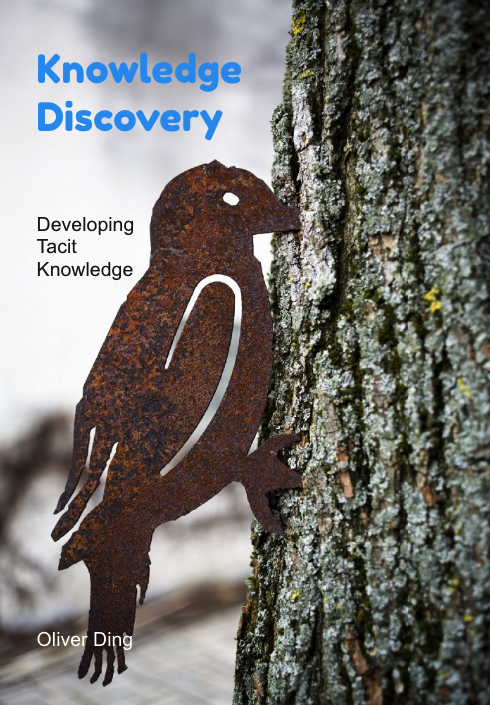
Knowledge Discovery: Developing Tacit Knowlege with Thematic Space Canvas
Related Articles
- Meet with Oliver Ding: 1 Mission, 4 Theories, and 12 Possible Books
- The Knowledge Curation Project
- How to Grow A Knowledge Enterprise
- Platform Genidentity: The Movements of Unfolding Uniqueness
- The Slow Cognition Project (Phase II): Activity Analysis for Creative Work Study
- CALL: The Launch Day of Curativity Center
- TalkThree: A Tiny Idea for Knowledge Engagement (June 2, 2022)
- #TalkThree 01: How to Read a Handbook? (June 2, 2022)
- #TalkThree 02: How to Name “X Innovation”? (June 3, 2022)
- #TalkThree 03: How to Use an Abstract Model? (June 6, 2022)
- #TalkThree 04: How Does Collective Learning Work? (June 7, 2022)
- #TalkThree 05: How to Connect X and Y? (June 8, 2022)
- #TalkThree 06: How to Approach Radical Innovation? (June 12, 2022)
- #TalkThree 07: How to Understand “X as Y” (June 14, 2022)
- #TalkThree 08: How to Expand a Framework with Friends (June 15, 2022)
- #TalkThree 09: The Art of Intelligence or Mind (June 16, 2022)
- #TalkThree 10: How to use a Hierarchy? (June 21, 2022)
I am also working on building a new website for the Platform Ecology project. You can save the following links:
- PlatformEcology.org
- Twitter: @PlatformEcology
- Linkedin: @PlatformEcology
You are most welcome to connect via the following social platforms:
Linkedin: https://www.linkedin.com/in/oliverding Twitter: https://twitter.com/oliverding Polywork: https://www.polywork.com/oliverding Boardle: https://www.boardle.io/users/oliver-ding


