The Perils of Punishment Story Series
Because I like alliteration… and science. I really like science.

I have compiled my series of stories related to the problems with using punishment to change behaviour.
Note: When I use the term punishment, I mean anything that the recipient perceives to be unpleasant, it is not just physical punishment.
The Thesis: Punishment Does Not Work
Our modern conceptualization of punishment, which we now call “consequences” because we think that sounds nicer, is ineffective.
If you dole out punishment, the behaviour doesn’t change and repeats itself, then you punish the child yet again… then what are they learning? Not what you want them to, that’s for sure.
Compliant Children Are Not Learning
I’ve said it before, and I’ll say it many times again
medium.com
…but for some reason, we’re obsessed with it.
Concerning Behaviour is STRESS Behaviour
When children lack skills for a particular situation, this causes them stress. Because they are lacking skills, they are unable to behave as the adults expect and want them to, which causes them more stress.
When children have additional stressors in their lives — disabilities, learning challenges, neurocognitive differences, poverty, illness, abuse, bullying, violence, hunger, fatigue, to name but a small few — these stresses manifest in their behaviour.
Children do not yet have the developmental ability to recognize, identify, and communicate that these stressors are negatively impacting them. When those stressors come out in behaviours that we don’t like, we punish them, causing further stress.
Punishment only addresses surface behaviours
Punishment does nothing to dig down to the underlying reasons for concerning behaviours.
And often our expectations are not developmentally appropriate
Punishment is mostly about the adults getting their way
Get Curious, Not Furious
Behaviour happens for a reason. Punishing it ignores the reason.
medium.com
Further Evidence: Punishments don’t teach skills.
Punishments don’t teach skills. If a child has been punished for a particular action, then repeats that behaviour again, they are not doing it to be obstinate or “defiant”, they’re doing it because they haven’t been taught anything different.
Children should not only be allowed have minds of their own, independent and critical thinking should be encouraged, not just tolerated.
I have found that adults generally label children as stubborn, willful, or defiant when the adult lacks the skills to support the child. Meanwhile, we’re punishing them for the fact that we, both the adult and child, are lacking skills, and we haven’t taught the child what to do instead.
Micromanaging children also does not teach skills
Is it about teaching and guiding, or about wielding your power and authority?
Is it about teaching and guiding, or winning the argument?
The Result: Punishment Causes Even More Stress
As I mentioned, when stressors come out in children’s behaviours that we (adults) don’t like, we punish the children, causing further stress.
Stress impairs the brain’s ability to learn, regulate emotions, and to make pro-social decisions.
Chronic stress causes these challenges to worsen and become ingrained, causing the child to be in a constant state of fear or anxiety, and puts them into fight/flight/freeze mode.
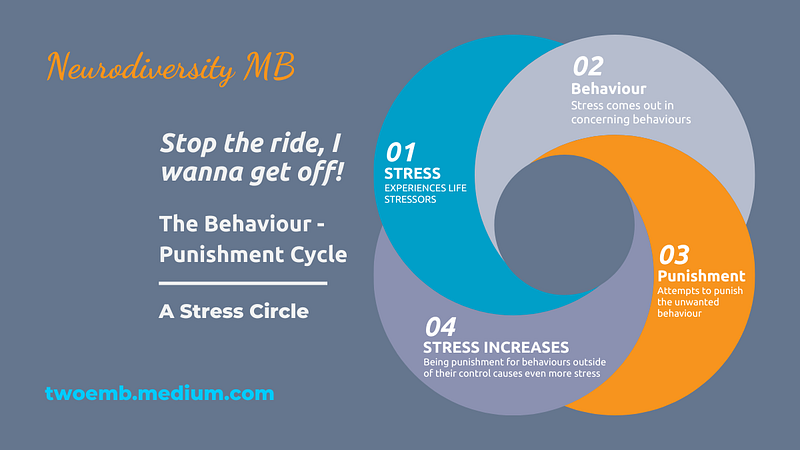
It’s a vicious cycle: stress, behaviour, punishment, more stress, rinse, repeat.
Lucky vs. Unlucky Behaviours
Why some children receive support while others just get punished.
Even more worrisome potential fallouts of punishment
There IS a better way!
We can guide children and set appropriate boundaries without threats or punishment.
In fact, children will learn much better when we role-model kindness, understanding, and problem-solving rather than retribution and punishment.
When you join medium, as a member you’ll have access to unlimited reads for only $5 per month. If you use my referral link, I’ll earn a small commission, and you’ll earn my undying gratitude.
Read More
I have created a table of contents for all (well, most) of my stories if you are interested in reading and learning more.
About the Author
Follow Me