
Parenting
Why I’m Okay With My Son Calling Me Out
No, he does not get into trouble for calling me on my hypocrisy

We’re all hypocrites
We’re all hypocrites. Especially parents. Oh man, are we ever hypocrites!
We don’t intend to be, but we’re human and it happens. A lot.
My son is twice exceptional (gifted with ADHD and anxiety). He is incredibly sharp and observant, so he notices every single time I slip up. Every. Single. Time. Which is a lot. I make a lot of mistakes.
I admit I sometimes get annoyed with my child, 29 years my junior, calling me to task. None of us enjoy having our mistakes pointed out, but that’s really not our children’s problem, is it? When adults rebuke children for this, it’s really more of an issue with the adult’s pride.
Allowing respectful debate helps children develop important life skills, so I will explain why I try to be humble and to remain open to hearing my son’s observations.
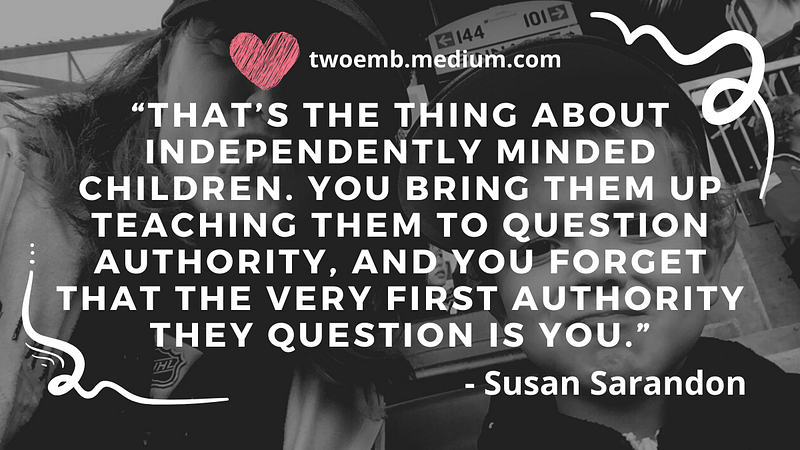
Self-Advocacy Skills
I want my son to be able to speak up when he feels something isn’t right. Since he’s only 8 years old, he hasn’t quite developed tact, nor the skill of picking his battles. That will come (sooner than later, I hope).
As a neurodivergent child, he’s going to need to be able to advocate for himself at school, with peers, leaders, coaches, and someday in the workplace. It’s important for him to practice those skills in a safe environment now so that he has those skills at the ready when he needs them.
Unfortunately, children with ADHD are at higher risk for a number of issues, including bullying and abuse. I want my son to be able to identify when he is in an unsafe situation and feel he can speak up and get adult support for himself or someone else when it’s needed.
Critical Thinking Skills
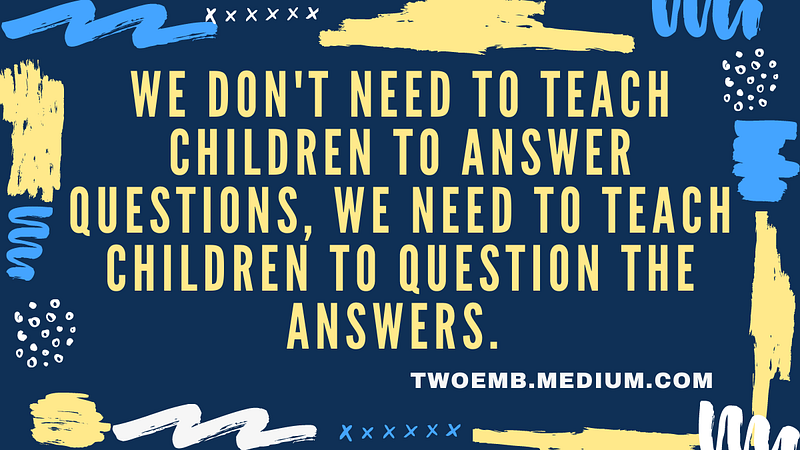
Inquiry-based learning has been shown to help children develop critical-thinking skills. In other words, asking questions and then questioning the answers.
In an age where anyone and his cousin can share their opinions online, misinformation and conspiracy theories abound, I want my son to have a really good bullshit detector.
We’re in luck because, according to doctors Hallowell and Ratey, “People with attention issues tend to have acute bullshit detectors. We hate hypocrisy and can spot it a mile away.”
Excellent.
Interpersonal Skills
We all benefit from learning the art of agreeing to disagree, but even more than that, the ability to accept and utilize criticism constructively.
As I mentioned earlier, when adults reproach children simply for pointing out when they made a mistake, that says more about the adult’s need to be right than anything else.
Yes, I want my son to learn to pick his spots. We don’t actually need to point out every single mistake we notice, that would be an endless and exhausting endeavour.
That said, if we expect our children to hear us when we give them feedback, shouldn’t we be able to role-model what that looks like? How can we expect children and students to be respectful of differing points of view, and willing to admit when they’re wrong, if adults are unwilling or unable to demonstrate this for them?
“…if we want children to be able to resist peer pressure and grow into principled and brave adults, we have to actively welcome their questioning and being assertive with us. We have to move beyond our need to win arguments and impose our will.” — Alfie Kohn
It’s hard sometimes, but we can’t actually be hypocritical about being hypocrites, that just makes me dizzy.
These skills will also be very important to our children’s future. The ability to challenge the beliefs and opinions of others and of ourselves and a willingness to receive and apply constructive feedback will serve students well throughout their school careers and in the workplace.
Among the top qualities employers are looking for today are:
- Adaptability and resilience — The ability to bounce back from mistakes.
- Collaboration and teamwork.
- Emotional intelligence and interpersonal skills.
- Continuous learning — A desire to learn and improve.
- Critical thinking.
- Curiosity and creativity.
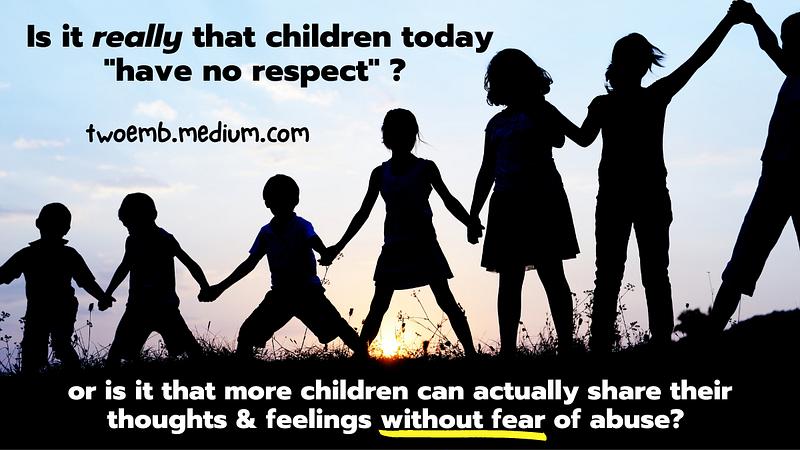
Authenticity
My son is a lot like me. As a child I was told I had a “big mouth” and was “argumentative”. Okay, true — and still true — but I really would have benefited from someone teaching me how to pick my battles, rather than just telling me to stop being such a know it all.
It also turns out I was born with both a gifted mind and a mouth with essentially no filter. I may have come across as precocious and impolite at times, but I was genuinely interested in gaining a deeper understanding of the things I was questioning.
My son is naturally curious and, from a very early age, has never been afraid to question those who believed themselves to be in a position of authority. I think of this as a positive trait that will serve him very well, provided he continues to refine the skills of tact and choosing his battles wisely.
I don’t want him to be made to feel that this is a character flaw and I never want him to feel bad for wanting to know why.
© Jillian Enright, Neurodiversity MB
Related Stories
When you join medium, as a member you’ll have access to unlimited reads for only $5 per month. If you use my referral link, I’ll earn a very small commission.
References
Duran, M., & Dökme, İ. (2016). The Effect Of The Inquiry-Based Learning Approach On Student’s Critical Thinking Skills. Eurasia Journal of Mathematics, Science and Technology Education, 12(12), 2887–2908. https://doi.org/10.12973/eurasia.2016.02311a
Hallowell, E. & Ratey, J. (2021). ADHD 2.0. Ballantine Books.
Kohn, A. (2016). The Myth of the Spoiled Child: Coddled kids, helicopter parents, and other phony crises. Beacon Press.
Reinhardt, M. C. & Reinhardt, C. (2013). Jornal de Pediatria, 89(2), 124–130. https://doi.org/10.1016/j.jped.2013.03.015