
Children Are Entitled To Autonomy
I choose joyful chaos over despondent deference
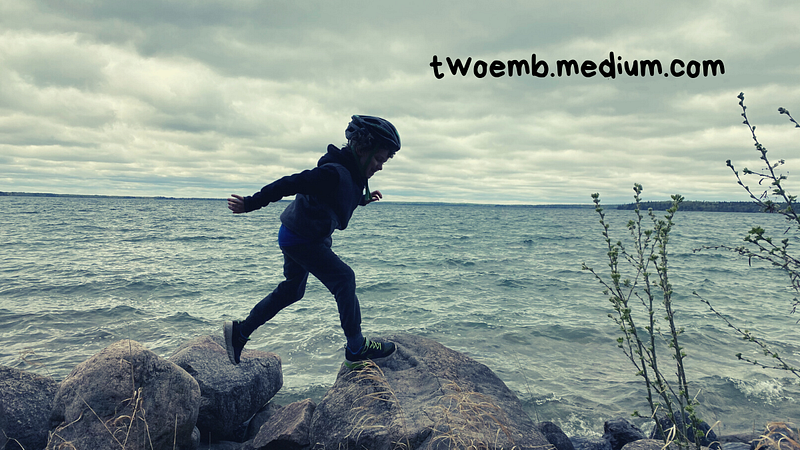
I’ve heard this said about my son on more than one occasion, “he seems to think he can do what he wants, and doesn’t have to do something if he doesn’t want to.”
Um, well, yes.
He’s a human being after all, with free will and autonomy.
Certainly all of our actions have consequences, and I mean naturally-occurring consequences, not adult-imposed punishments.
Of course I want my son to learn responsibility and to be kind and respectful to others.
So how do I teach that, if I don’t force him to do things he doesn’t want to do?
That’s exactly how. By treating him with the same respect and kindness I want him to learn and show others. By taking responsibility for my own actions and role-modelling the behaviours I want to see from him.
Children learn from our examples.
What do children learn from mandatory compliance?
That their feelings and experiences don’t matter, they have to hush-up and fall in line.
Children learn they don’t have control over their bodies and their lives, adults can tell them what to do, and they are compelled to listen or face punishment.
That’s a little scary to me — a lot scary, actually.
Children usually aren’t following directions for good reason — we may not think they’re good reasons, but they’re good enough for the child.
Sometimes we don’t even seek out a reason, we automatically push back without looking deeper.
I get it. A teacher, parent, or adult responsible for a group of children needs them to cooperate, otherwise there would be chaos, right?
Well, there would be joyful chaos.
“Children must be taught to think not what to think.” — Margaret Mead
Of course there are limits
To be clear, I am advocating for autonomy and independence at a developmentally appropriate level. Parents and caregivers are responsible for ensuring children’s safety and setting healthy boundaries.
The trouble is, we often use this as an excuse to micro-manage and over-control children, thus depriving them of rich opportunities to make their own mistakes and learn by doing.
We create a lot of “behaviour problems” by micro-managing children’s behaviour, and waste time and energy trying to get kids to comply with things that don’t really matter.
When we trust children, within developmentally-appropriate boundaries, they learn how to trust themselves and improve their ability to self-monitor.
When we show children we genuinely care about them and respect them as human beings, they are much more likely to cooperate. When we build positive relationships and have fun with them, kids are much more likely to want to cooperate.
There may still be chaos. but there would be joy. There would be fun.
Aren’t fun and joy the essence of childhood?
© Jillian Enright, Neurodiversity MB
Related Articles
Ways to support my work
You can leave a “tip” on Ko-Fi at https://Ko-Fi.com/NeurodiversityMB
Become a paid subscriber to my Substack publication
Check out my online store at https://NeurodiversityMB.ca/shop
Read and share my articles from twoemb.medium.com


