Punishing Kids Is Hypocritical & Counterproductive
Reductio ad absurdum: Respectful parenting is not permissive parenting

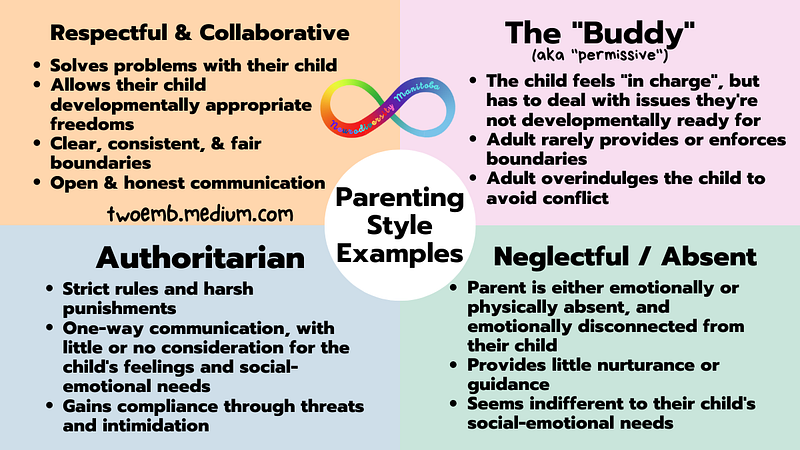
Allowing our children choices is neither reckless nor permissive.
Ensuring our children have autonomy within developmentally-appropriate bounds is an important way for them to hone their decision-making skills. Hovering over them, micro-managing, and controlling their every move robs kids of important learning opportunities.
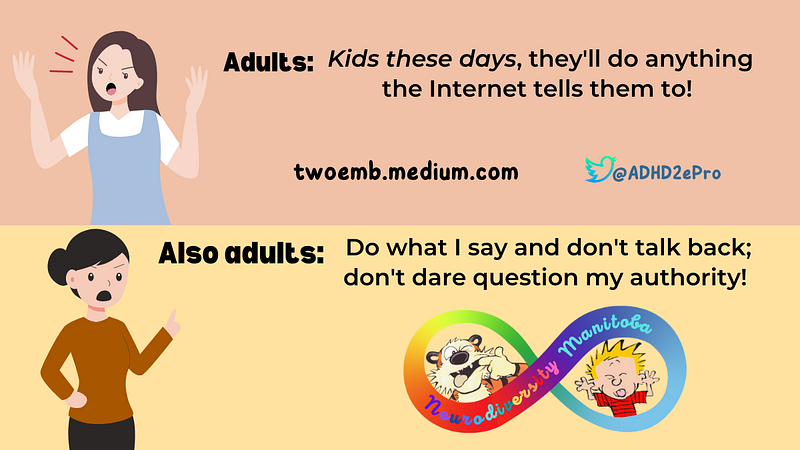
Expecting kids to do everything we say whenever we say it, simply because we’re the parents and they’re children, is reckless. This sets kids up for being very easily influenced by peers, and worse, puts children in danger of being manipulated by other adults in their lives.
Reductio ad absurdum
“We can’t cater to their every whim and let kids do whatever they want!”
This is a form of argument called reductio ad absurdum, wherein someone takes a concept to its extremes in an attempt to refute or disprove it.
I promise you, I don’t allow my 9 year old to drive my car, even though he’d like to. I don’t let him play video games and eat junk food all day, despite the fact that he’d probably really enjoy that.
I do, however, respect he is his own person and is allowed to make choices I may not like or agree with, as long as they are not harmful to himself or others.

Our conversation at dessert last night provides a fairly innocuous example.
My son asked me to get him a bowl of ice cream after dinner, but my hands were full with something else, so I suggested he scoop his own. He told me he wouldn’t be able to resist the temptation of giving himself an enormous amount of ice cream, so I had better do it for him.
That’s pretty cool self-awareness for a 9 year old, and I like that he cares enough to recognize and express this.
I could have taken over at that point, and scooped out what I deemed to be a reasonable amount. If he were 5 years old I may have done so, but he’s not, so I didn’t. He’s 9 1/2 and soon enough (or too soon!) he’ll be riding his bike to the store with his friends, buying his own junk food, and making plenty of important decisions without me looking over his shoulder.
I reminded him of the time he did serve himself a very large amount and couldn’t finish it all, resulting in the rest of the ice cream going to waste. I suggested he scoop an amount that he could enjoy comfortably, without feeling unwell afterward, and without any going to waste.
The rest I left up to him.
He served himself what was probably the exact same amount I would have, had I been in control, without me micro-managing him.
“Sometimes we need to make decisions to keep our kids safe.”
Yes, we absolutely do.
“No, you cannot ride your bike on the highway with no helmet, while allowing your friend to ride on the handlebars, while simultaneously texting and eating ice cream.”

Silly, yes, but I certainly do agree there is a need for healthy boundaries.
The question we all have to ask ourselves when setting limits is, are we doing this for our child’s sake, or for our own? And answer ourselves honestly.
I fully admit to sometimes making decisions based on my own anxiety, saying no because I’m simply too tired to monitor risky play, or for reasons other than this is what is best for my child.
We’re human, it happens. The important thing is to acknowledge the difference, so we don’t conflate the two, and ensure we intentionally create opportunities for our children to make decisions for themselves.
Punishing kids is hypocritical
I’m not just talking about aggressive, authoritarian, or abusive parenting practices either. I’m talking about basic, every day ways in which we exert power and control over our children.
“Rewards and punishments flourish in asymmetrical relationships, where one person has most of the power.” — Alfie Kohn
Threatening punishment or loss of privileges, taking advantage of the fact that we have control over just about everything our children need and want in their lives, is a form of manipulation.
Children have so many things happen to them, without their input, rarely having any say over things that happen in their own lives. It’s important we give them opportunities for choice whenever we can.
© Jillian Enright, Neurodiversity MB
Related Articles
When you join medium, as a member you’ll have access to unlimited reads for only $5 per month. If you use my referral link, I’ll earn a small commission, and you’ll earn my undying gratitude.