
Compliance Makes Us Vulnerable
Neurodivergent people are often expected to show unquestioning obedience

Like many of us, as a kid I was expected to be quiet and do what I was told. I’ve never been very good at that, mind you, but the message was made abundantly clear: You are a good person if you put your head down, work hard, and don’t make trouble.
Pfft.
As I said, obedience was never my strong suit, and that has certainly not changed in adulthood.
Regardless, it was expected and demanded. I was taught that “good” kids do what they’re told and are shown kindness. “Bad” kids who don’t listen are punished and shown cruelty.
Compliance became a survival skill, which caused me significant difficulty in adolescence and early adulthood.
“Fake it ’til ya make it”
…but what happens if you never make it?
The need to be good, to be liked, to gain the approval of others led me into unhealthy relationships. I became a chameleon, trying to turn myself into whatever I thought other people wanted from me. Friendships were based on lies, false personas, and trying too hard.
Romantic relationships were worse. I was a pathological people-pleaser, trying desperately to be everything to everyone, simply so I could prove my worth as a person.
I accepted horrible treatment. In part, because I thought it was what I deserved, but also because it was ingrained in me from very early on that I should go along to get along and not cause problems.
The need for constant external validation
Early adulthood was not better. My first job out of College was in residential care, supporting adolescents living in group homes. In hindsight, I now recognize the youth were treated terribly. They had no autonomy and staff controlled almost every aspect of their lives.
Staff were poorly trained, not at all trauma-informed, and not at all supported by management. As new youth workers, we were treated horribly. The supervisors and managers bullied us, constantly criticizing us while not providing the support and resources we needed to do our jobs well.
But I had to be a hard worker, please the bosses, make them like me. I desperately needed their approval.
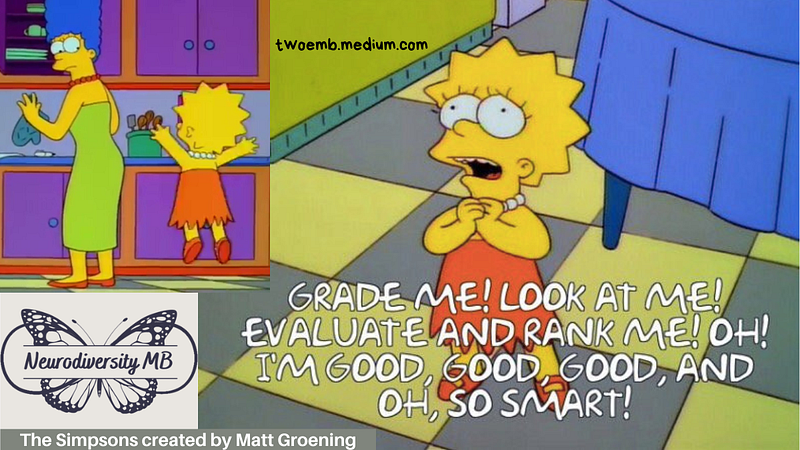
I had no idea I could stand up for myself, my co-workers, or for the youth living in these dismal conditions. My entire life it was drilled into me that I must respect and obey authority; I must do what I’m told and produce exceptional work in order to prove my worth.
I very quickly worked myself into burnout, all because I needed my superiors to think highly of me, to tell me I was good.
Breaking the cycle
My son is a mini-me. He’s head-strong, spirited, and has a very strong sense of right and wrong. He’s not afraid to speak “truth to power” and stand up for what he believes in. Sometimes he finds himself in trouble because he calls out people in positions of authority.
I’m so proud.
It can be difficult raising a strong-willed kid, and even more difficult to encourage and foster that independent-minded attitude because it backfires. A lot.
Guess which person in a position of “authority” he most often calls out?
Yeah, that’d be me.
With maturity and experience, he’ll develop tact and the ability to more carefully pick his battles — maybe. (I’m still working on that myself).
I am confident he will not be silent in the face of injustice and will speak up for those who are being mistreated. He will likely encounter a lot of difficulty due to his penchant for speaking his mind, but to me, that’s a lot safer than blind obedience.
“Coercive therapies will… teach us that to be okay we need to do anything and everything we’re told. That is a profoundly dangerous message.” — Kassiane Asasumasu
Noncompliance is a life skill and an important self-advocacy skill.
I want to teach my son to think for himself, evaluate critically, and have the skills to refuse to comply when being asked to do something unsafe or unreasonable.
Skills learned and needed for survival should be independence and self-determination, not conformity.
© Jillian Enright, Neurodiversity MB
Related Articles
When you join medium, as a member you’ll have access to unlimited reads for only $5 per month. If you use my referral link, I’ll earn a small commission, and you’ll earn my undying gratitude.
If you’d prefer give a one-time tip, you can support my writing on Ko-Fi — also, it’s free to follow me on Facebook!
References
Asasumasu, Kassiane. (2021). What your daughter deserves: Love, safety, and the truth. In E. P. Ballou, S. daVanport, & M. G. Onaiwu (Eds.). Sincerely, Your Autistic Child: What people on the autism spectrum wish their parents knew about growing up, acceptance, and identity. Beacon Press.