
Psychology & Mental Health
Neurodivergents: Justice Warriors
Something you may not know about autism & ADHD
Why are Neurodivergents more sensitive?
There are a number of possible reasons for neurodivergent people experiencing emotions more intensely than others. Neurodivergent people often experience emotional lability, emotional impulsivity, and negative intent attribution.
We’re kind of an intense bunch sometimes.
But that’s okay, our intensity can be a positive thing too: Neurodivergents can be more creative and more passionate. That creativity and passion can drive us to take action where others may not, and our cognitive rigidity can give us a strong sense of morals. These features combined make us more susceptible to a variety of sensitivities, including justice sensitivity.
For example, in 2015, researchers found that participants with ADHD reported significantly higher justice sensitivity and greater perceptions of injustice than those without ADHD.
That same year, Schäfer & Kraneburg did an interesting study in search of a deeper understanding of why neurodivergents are prone to Justice Sensitivity, which is what I will discuss here.
What is Justice Sensitivity?
According to Baumert & Schmitt, “justice-sensitive people’s information processing should be guided in a way that raises their probability of experiencing injustice compared with less justice-sensitive people,” and their “emotional reactions to injustice should be stronger the more justice is endorsed as a fundamental value.”
In other words, people who experience high justice sensitivity have a stronger tendency to notice and identify wrongdoing and have more intense cognitive, emotional, and behavioural reactions to perceived injustice.
Additionally, “justice-sensitive people should ruminate longer and more intensively about experienced injustice than less justice-sensitive people” and should have an “inclination to restore justice and undo injustice”.
Those of us with justice sensitivity have a harder time letting these things go and have a strong desire to make right that which we feel is unfair or morally wrong.
Justice sensitivity has been categorized into four perspectives: victim, perpetrator. beneficiary, and observer. I’m going to focus on the last two and how they relate to ADHD and autism.
The beneficiary is someone who passively benefits from an act of injustice but does not personally commit the wrongdoing, and the observer is someone who witnesses an injustice as a bystander.
What does that have to do with neurodivergence?
As if we don’t have enough to deal with already, right? Well, putting a name on something we already experience isn’t necessarily a bad thing. It can help us understand ourselves (or others in our lives) better, and to me, that is always a good thing.
Neurodivergents are more likely to experience justice sensitivity, in particular children, but adults as well.
“Kids with ADHD tend to have a strong sense of justice, sensitivity, and of course, energy. When they feel wronged, disempowered, or unheard, they can become quite mad.” — Dr. Sharon Saline
An interesting study by Schäfer & Kraneburg demonstrated this through an online game that doled out raffle tickets to participants. The participants were told their tickets would be entered into a draw for a voucher that would allow them to purchase items in an electronic market.
The participants were led to believe that each of the players was another random participant; in reality they were computer players the researchers had set to make certain decisions in the game.
In each round, the allocators were to hand out 100 tickets to themselves and three other participants.
Round One
In the profiteer condition, the allocators were predetermined by the researchers to give themselves 60, the participant 40, and the other computer player none. The participant could choose to keep the 40 tickets or refuse them and risk a reallocation that would give themselves fewer tickets the next time around.
Round Two
In the next round, the observer condition, the participant was a referee and was not given any further tickets. The allocators gave themselves 50 tickets, another computer player 45, and a third computer player only 2. The participant could allow this or could choose to take 10 tickets from players one and two and give them to the third player. The participants were told the latter option came with a risk of losing 10% of their own tickets they had retained from the first round.
The Results
In both of the above conditions, people with ADHD were more likely to refuse the unfair allocation and to redistribute the tickets in more even amounts, despite the risk of losing some of their own.
This, combined with extensive research on social cognition and the social challenges faced by people with ADHD, led the authors to conclude that people with ADHD were more sensitive to social justice.
Why does being neurodivergent increase Justice Sensitivity?
There are a number of theories about this. In the above study, the authors hypothesize that Autistics and people with ADHD have difficulties recognizing social norms and our pronounced justice sensitivity is a coping strategy used to infer “desirable” social behaviour.
My own interpretation of this is that, due to repeated negative social experiences, we over-correct and overcompensate by taking these perceived social rules to their extremes.
I would also suspect that, due to cognitive rigidity, we may have difficulty being flexible once we have internalized these social rules.
Social Cognition
Social cognition refers to “a complex set of mental abilities underlying social stimulus perception, processing, interpretation, and response. Together, these abilities support the development of adequate social competence and adaptation”.
Essentially, social cognition is how we observe, process, and remember social information, and then use that information to direct our future social interactions in a prosocial manner.
Uekermann, et al. (2010) concluded that ADHD is associated with social cognition impairments involving emotional face and prosody perception, whereas Dr. Russell Barkley (2015) explains these difficulties in terms of a deficit in working memory (I elaborated on the second point in another article).
Let’s Get Real
So it’s nice to know the research that helps to explain the reasons behind our experiences, but what does this look and feel like in real life?
I’ll share a few examples from my own history.
When I was about 9 years old I was in Girl Guides. I remember one particular evening when the leaders asked everyone to sit in a circle. I was being silly and loud, but heading over to do what I was asked, albeit in a circuitous way.
I think I was skipping and talking loudly, but I had no idea I was being disruptive until the leader snapped at me to sit down! Until she yelled, I’d had no concept that my behaviour was unexpected or inappropriate.
Around the same time, I was rambunctiously and gregariously chatting away with the others in the Girl Guides group when my friend quietly leaned over and whispered to me, “you sometimes talk to much… that’s why people sometimes don’t like you…” I was completely unaware of how others were perceiving me, or how my behaviour might be impacting others.
A few years later, I was in grade 9, so I was about 13 years old. I played on my high school soccer team, which was coached by a grade 12 senior. I spotted him in the hallway talking to some of his friends. I had a question about that day’s practice, so I marched right up to him and called his name repeatedly until he stopped speaking with his friends and paid attention to me.
I asked my question and walked away, completely oblivious, until my friend quietly told me that I had interrupted their conversation without even saying “excuse me”! To this day, I have no recollection as to the coach’s emotional response — for example, whether he appeared annoyed at my intrusion — nor the responses of his friends.
Theory of Mind
Neurotypical and typically-developing children as young as 3 and 4 years old are already beginning to develop a Theory of Mind (ToM).
ToM is defined by the American Psychiatric Association as “the understanding that others have intentions, desires, beliefs, perceptions, and emotions different from one’s own and that such intentions, desires, and so forth affect people’s actions and behaviours”.
ToM is essentially when we start to recognize and consider that other people also have their own independent thoughts and feelings, and that theirs may be different from ours.
By about age 8–10, a neurotypical child can recognize a social “faux pas”, like those I described above in my own middle childhood and early adolescence. At least 3 years older, and I still didn’t possess the self-awareness or social cognition skills to consider the perspective of others before acting in what is considered by others a rude or immature manner.
Autistic ToM
This false claim that Autistics do not possess theory of mind has been extremely harmful to the autistic community.
“Because a lack of theory of mind is believed to impair autistic people’s understanding of their selves, in addition to their understanding of others, the claim disputes autistic people’s autonomy, devalues their self- determination, and discredits their credibility.” — R. M. Yergeau
In other words, since we can’t possibly understand the minds of others, or even our own minds, our experiences and perceptions cannot possibly be valid. Our feelings, opinions, and thoughts can all be discredited simply by saying we lack ToM.
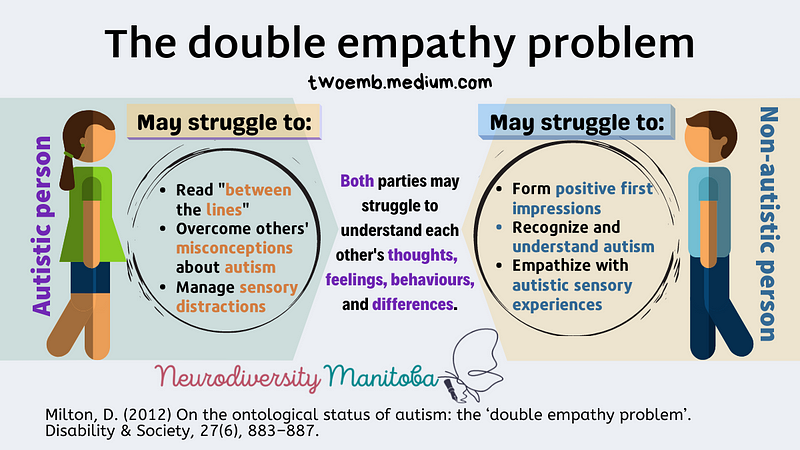
Further research has demonstrated that allistics (non-Autistics) are just as poor at understanding Autistic ToM as Autistics are at theorizing about allistic minds. The problem is mutual.
ADHD and ToM
My ADHD may have prevented me from focusing on, noticing, or paying attention to the social cues of those around me. Perhaps due to hyperactivity my body just needed to move more than my brain cared about what anyone thought of me.
A lot of neurodivergents have less concern with social norms than neurotypicals. This doesn’t mean we lack ToM; perhaps it means we value different things, or our social “norms” are different from the majority.
Have you ever been doing something that looked strange to others, but it needed to be done — or it was just really fun — so you shrugged your shoulders and carried on, not caring what others thought of you?
Does that mean you lacked ToM and couldn’t possibly comprehend what might have been going through the minds of others? Or perhaps you simply had no shits left to give that day. Some of us just have fewer shits than others to begin with.
Learning the Hard Way
Many neurodivergents struggle with social skills and I was no exception. Dr. Barkley (2015) states that “children with ADHD are likely to miss important social information and may persist in their use of negative or inappropriate behaviours” and that “failure to read emotions in others may directly impair the ability of children with ADHD to monitor peer feedback.”
Yep. That about sums up my childhood and early adolescence.
What the 2015 Schäfer & Kraneburg study mentioned above surmises is that because people with ADHD struggle with recognizing social norms, they develop a pronounced justice sensitivity as an overcompensation for their social difficulties.
So after a great many repeated experiences like the ones I described above, I slowly developed an aversion to injustice, to the violation of what I perceived to be the social rules, and a very strong and black-and-white sense of right versus wrong.
It is likely that this trial by error led me to develop justice sensitivity as a way of attempting to avoid continued negative feedback and criticism from my peers.
Pronounced justice sensitivity is a coping strategy people with ADHD use to infer the right social behaviour.
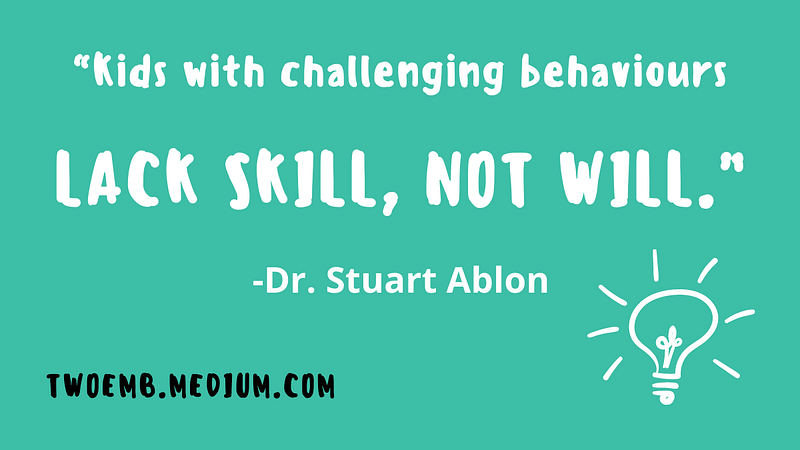
Lack of Skill, not Will
As Schäfer & Kraneburg conclude, “the motivation to follow social norms but the experience of not being able to do so many be the foundation of higher justice sensitivity. Repeated confrontations with the social environment might serve to sharpen the perceptive of justice and injustice”.
Confrontations with the social environment is a painfully accurate description of much of my life and explains both my justice sensitivity and social anxiety.
With so many painful experiences of peer rejection in the lives of people with ADHD (eg. Hoza, 2007; Grygiel et al., 2018), it’s no wonder we develop coping mechanisms.
Well, at least Schäfer & Kraneburg noted that justice sensitivity has some positive traits, such as altruism and generosity.
In fact, I’ve decided to change the name.
We’re not “sensitive”, we’re Justice Warriors. Maybe we should get capes.
(I’m definitely getting a cape. Sound the trumpets).
© Jillian Enright, Neurodiversity MB

When you join medium, as a member you’ll have access to unlimited reads for only $5 per month. If you use my referral link, I’ll earn a small commission.
If you’d prefer give a one-time tip, you can support my writing on Ko-Fi — also, it’s free to follow me on Facebook and LinkedIn!
Related Articles
References
Andrade, B. F., Waschbusch, D. A., Doucet, A., King, S., MacKinnon, M., McGrath, P. J., Stewart, S. H., & Corkum, P. (2012). Social Information Processing of Positive and Negative Hypothetical Events in Children With ADHD and Conduct Problems and Controls. Journal of Attention Disorders, 16(6), 491–504. https://doi.org/10.1177/1087054711401346.
Barkley, Russell A. (2015). Attention-Deficit Hyperactivity Disorder: A Handbook for Diagnosis & Treatment. The Guilford Press.
Baumert A., Schmitt M. (2016). Justice Sensitivity. In: Sabbagh C., Schmitt M. (eds). Handbook of Social Justice Theory and Research. Springer. https://doi.org/10.1007/978-1-4939-3216-0_9
Beaudoin, Cindy & Beauchamp, Miriam, H. (2020). Handbook of Clinical Neurology, Volume 173, Pages 255–264.
Bondü, Rebecca & Esser, Günter. (2015). Justice and rejection sensitivity in children and adolescents with ADHD symptoms. European Child & Adolescent Psychiatry, 24, 185–198.
Carpenter Rich, E., Loo, S. K., Yang, M., Dang, J., & Smalley, S. L. (2009). Social Functioning Difficulties in ADHD: Association with PDD Risk. Clinical Child Psychology and Psychiatry, 14(3), 329–344. https://doi.org/10.1177/1359104508100890
Damian, E.M. (2012). On the ontological status of autism: the ‘double empathy problem’. Disability & Society, 27(6), 883–887. https://doi.org/10.1080/09687599.2012.710008
Fletcher-Watson, S., & Bird, G. (2020). Autism and empathy: What are the real links? Autism, 24(1), 3–6. https://doi.org/10.1177/1362361319883506
Gernsbacher, M. A., & Yergeau, M. (2019). Empirical Failures of the Claim That Autistic People Lack a Theory of Mind. Archives of scientific psychology, 7(1), 102–118. https://doi.org/10.1037/arc0000067
Grygiel, P., Humenny, G., Rębisz, S., Bajcar, E., & Świtaj, P. (2018). Peer Rejection and Perceived Quality of Relations With Schoolmates Among Children With ADHD. Journal of Attention Disorders, 22(8), 738–751. https://doi.org/10.1177/1087054714563791
Hoza, Betsy. (2007). Peer Functioning in Children With ADHD, Journal of Pediatric Psychology, 32(6), 655–663. https://doi.org/10.1093/jpepsy/jsm024
Jellinek, M. (2010). Don’t Let ADHD Crush Children’s Self-Esteem. Clinical Psychiatry News. https://mdedge.com/psychiatry/article/23971/pediatrics/dont-let-adhd-crush-childrens-self-esteem.
Kofler, M. J., Rapport, M. D., Bolden, J., Sarver, D. E., Raiker, J. S., & Alderson, R. M. (2011). Working memory deficits and social problems in children with ADHD. Journal of abnormal child psychology, 39(6), 805–817. https://doi.org/10.1007/s10802-011-9492-8
Milton, D. (2012). On the ontological status of autism: the ‘double empathy problem’. Disability & Society, 27(6), 883–887. https://doi.org/10.1080/09687599.2012.710008
Saline, S. (2018). What your ADHD child wishes you knew: Working together to empower kids for success in school and life. TarcherPerigee.
Schäfer, T., & Kraneburg, T. (2015). The Kind Nature Behind the Unsocial Semblance: ADHD and Justice Sensitivity — A Pilot Study. Journal of Attention Disorders, 19(8), 715–727. https://doi.org/10.1177/1087054712466914
Schmitt, M. & Mohiyeddini, C. (1996). Sensitivity to befallen injustice and reactions to a real life disadvantage. Social Justice Research, 9, 223–238.
Sobanski, E., Banaschewski, T., Asherson, P., Buitelaar, J., Chen, W., Franke, B…. Faraone, S.V. (2010). Emotional lability in children and adolescents with attention deficit/hyperactivity disorder (ADHD): clinical correlates and familial prevalence. Journal of Child Psychology and Psychiatry, 51: 915–923. https://doi.org/10.1111/j.1469-7610.2010.02217
Späth, E.M.A., Jongsma, K.R. (2020). Autism, autonomy, and authenticity. Medicine, Health Care and Philosophy 23, 73–80. https://doi.org/10.1007/s11019-019-09909-3
Uekermann, J., Kraemer, M., Abdel-Hamid, M., Schimmelmann, B. G., Hebebrand, J., Daum, I., Wiltfang, J., & Kis, B. (2010). Social cognition in attention-deficit hyperactivity disorder (ADHD). Neuroscience and biobehavioral reviews, 34(5), 734–743. https://doi.org/10.1016/j.neubiorev.2009.10.009
Westby, C. & Robinson, L. (2014). A developmental perspective for promoting theory of mind. Topics in Language Disorders, 34(4), 362–383.
Yergeau, M. (2018). Authoring autism: On rhetoric and neurological queerness. Duke University Press.


