
Punishing Unwanted Behaviour Just Makes it Worse
Based on neuroscience
Doubling down on a previous story, Punishment Does Not Work, I am taking this concept a step further by explaining how punishment actually makes things worse in a lot of cases.
Firstly, let me explain what I mean by punishment.
The scientific definition of punishment is a consequence that follows a behaviour that decreases (or attempts to decrease) the likelihood of that behaviour occurring in the future.
So when I refer to punishment, I don’t mean only physical punishment, I am referring to anything that a child may experience as unpleasant. This can mean time-out, yelling, removal of privileges, grounding, suspension from school, and spanking.
This is not a new concept
The concept of avoiding the use of aversives is not a liberal snowflake, new-age form of permissive parenting. The idea that punishment may do more harm than good has been around for at least 77 years.
As early as 1944, a psychologist named Dr. William Kaye Estes wrote in favour of positive reinforcement over punishment. Dr. Estes concluded there was no evidence to indicate that punishment exerts a direct weakening effect upon a behaviour comparable to the strengthening produced by a reward.
B.F. Skinner himself, the scientist whose work many clinicians with a behaviourist philosophy use to defend their practices, actually warned about the fallout of using punishment.
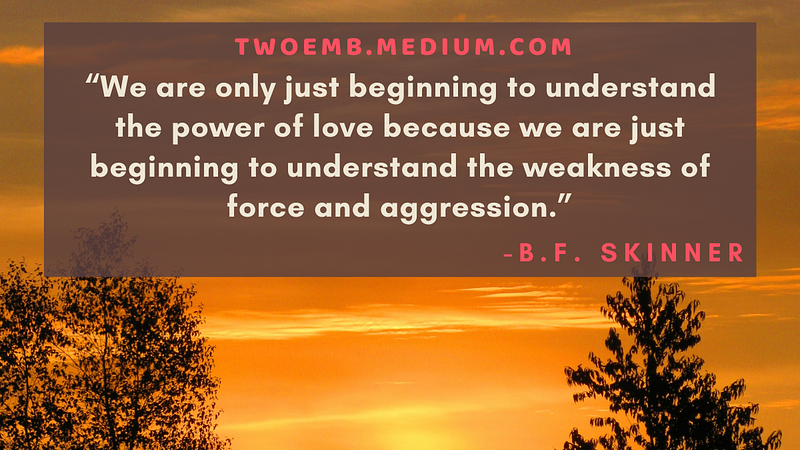
In his 1953 textbook, Science and Human Behavior, B.F. Skinner explained that while punishment may seem to stop undesirable behaviour, the behaviour often returns once the punishment ends if a child has not been taught more adaptive ways to behave.
Worse, punishment creates fear, guilt, and shame, which result in less learning overall.
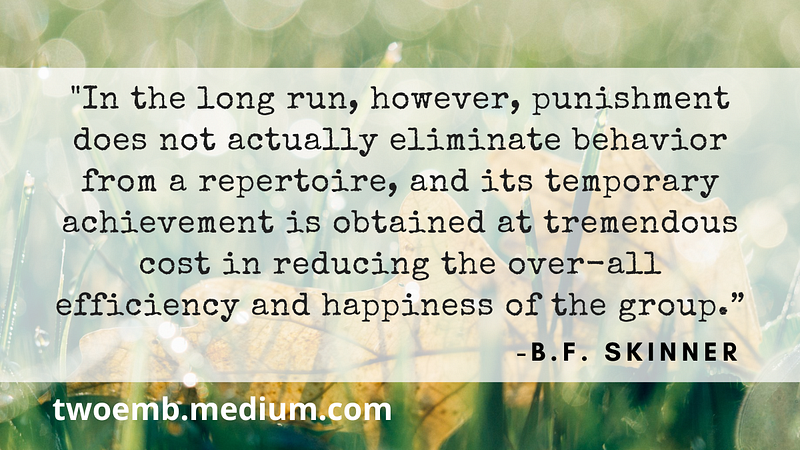
In his experiments involving rats, Skinner came to realize that punishment does not result in learning. In fact, punishment doesn’t even stop undesired behaviour, it only temporarily suppresses that behaviour. Not only that, it often causes new, sometimes worse behaviours to emerge as the child seeks to escape what scares or hurts them.
Not much later, Dr. Russell Church wrote about the problem of inconsistent results when using punishment.
In his 1984 book, “Coercion and its Fallout”, Dr. Murray Sidman explained that punishment eventually proves counterproductive. Dr. Ignatius Toner agreed, concluding his 1986 research paper with the following statement:
“While punishment may be of limited value in consistently influencing rule-related behavior, non-punitive techniques have been found to have greater impact on children who have begun to master their native language.” — Dr. Ignatius Toner
Essentially, if a child is old enough to reason with, then you needn’t use punishment because you can use logic to teach and guide them. If they’re too young to understand your reasoning, then they’re also too young to learn from any sort of punishment.
Either way, punishment is ineffective.
Nearly a decade later, Dr. Sidman reiterated his point, concluding that coercion produces side effects that may be even less desirable than the original problem behaviour.
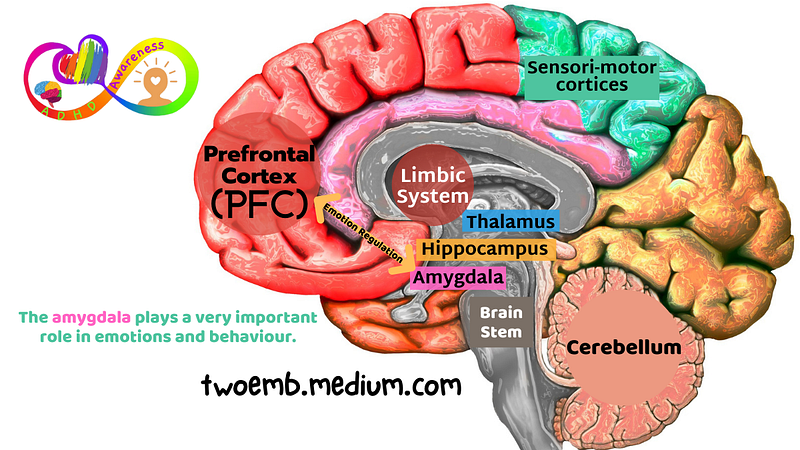
Our PFC & Amygdala are not always friends
A significant finding about the neurobiology of ADHD is that the Prefrontal Cortex (PFC) matures more slowly in people with ADHD than in those without.
People with ADHD also have abnormalities in the connections between their amygdala and Prefrontal Cortex.
Essentially, our amygdala is the fear centre of our brain, it is responsible for processing unpleasant emotions and then sending signals to the PFC.
The PFC is the command centre of our brain, it is supposed to take in the information, then help us make a rational and calculated decision about what to do next.
Supposed to.
The PFC is the part of our brain that slows us down when we’re about to react impulsively. Its job is to inhibit our response to give us time to consider our options before acting.
When we experience stress, our PFC and amygdala are fighting to see who’s boss. While the PFC is telling the amygdala “hang on man, let’s think about this”, the amygdala claps back “stand down, man! No time for complex decision-making, it’s go time!” (The amygdala is a bit of a drama queen sometimes).
Not only do people with ADHD have abnormalities in the connections between their amygdala and their PFC, we also have problems in both of those regions of our brains, which is part of the reason for our impulsive behaviour.
Punishment Increases Stress
Neurodiverse children generally experience increased life stressors in comparison to their neurotypical peers. A vicious cycle can develop wherein increased stress exacerbates one’s ADHD symptoms, and those worsened ADHD symptoms in turn increase life stressors.
We now know that people with ADHD already have communication problems between their PFC and amygdala, and the amygdala responds to stress by telling the PFC to stand down and let instincts take over, which in turn makes us behave more impulsively.
Now consider that when we punish children for behaviour that we don’t like, we cause children stress.
“The kids who are most often described as being manipulative are those least capable of doing it well.”
— Dr. Ross Greene
Blaming, shaming, or otherwise punishing a child for stress behaviours can make things worse. The punishment becomes a stressor in its own right.
This is especially true if the punishment is inconsistent, unpredictable, or a consequence for something over which the child has little or no control.
And what happens when our brains are under stress?
That’s right. Emotions and instincts take over, rational thought and careful consideration go offline, and people revert to fight-or-flight mode.
This is an evolutionary necessity: if a pack of wolves is surrounding us, ready to pounce, and we stand there weighing out every option before we act, we’re dinner. Our brains need to engage our survival instincts for the very reason they’re called survival instincts.
The subconscious perception of safety and threat underlies stress behaviours, which are adaptive and emerge fro the instinctive drive toward self-protection.
When our children feel threatened, they are no longer neurologically capable of accessing their intellect and logic, and neither are adults.
“Traditional discipline can inadvertently escalate negative behaviours because survival brains cannot process rewards, consequences, or reason.”
— Dr. Lori Desautels
We are all biologically programmed to shift from the forebrain (PFC and complex reasoning) to our hindbrain (emotions and survival instincts) when we perceive danger.
The part of the brain that serves intentional behaviour is precisely the part that shuts down when we become too stressed. The overactive amygdala sends messages to the PFC telling it to decrease its functioning because something scary is happening; you don’t want reason getting in the way of survival.
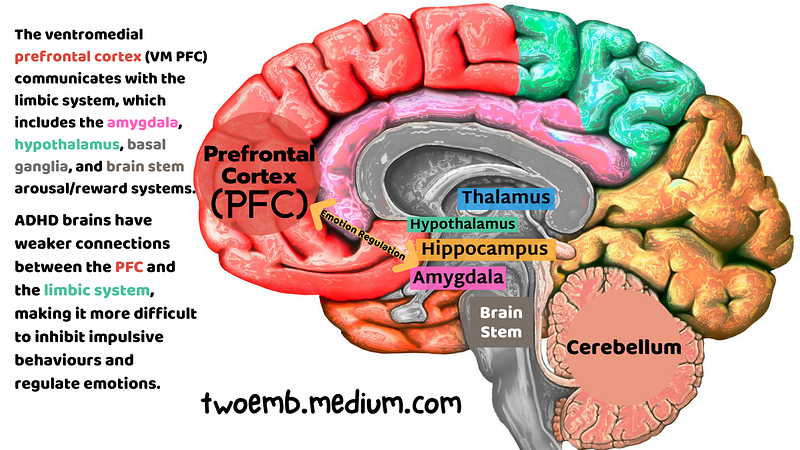
Unfortunately, frequent or long-term stress and repeated activation of the amygdala cause the amygdala to become increasingly sensitive. In cases of severe prolonged stress, the amygdala can then remain hypersensitive, and the brain tells the PFC to remain less involved. This can lead to emotional volatility, hypervigilence, and increased impulsive behaviour as a response to protracted stress.
When the stress response is activated too frequently, or if the stressor is too intense, the body can lose the ability to shut down the stress response and it remains activated, even in safe environments.
End the Cycle
The more we punish children, the more stressed they become. The more stressed they become, the less they are able to regulate their emotions and control their impulses.
The less they regulate and inhibit, the more they get in trouble. The more they get in trouble, the more they get punished. The more are punished, the more stress they experience, and the cycle continues.
“Pain is often misunderstood and seen as intentional disrespect, indifference, or deviant behaviour.”
— Dr. Lori Desautels
When we punish children we are not teaching them any new skills, we are not giving them a sense of autonomy or control over their own behaviour and their own lives, and we are potentially causing them to resent their punisher — or worse, making them feel afraid of the punisher, which is usually an adult with whom they are supposed to feel safe.
The good news is that it does not have to continue this way
There are a number of important ways that we can guide our children and enforce appropriate boundaries in a loving way without the use of punishment.
I want to be clear that we all do things that make our children, or children in our care, uncomfortable — even unintentionally. We may hurt their feelings, raise our voice in frustration, or threaten consequences in anger. None of us is perfect, and we will all mess up.
When we do, we can role-model what taking responsibility and making amends look like. We acknowledge our error and its effect on others, we apologize, and we tell our child what we plan to do in order to avoid making the same mistake in the future.
“It is powerful when we can model an observation of our own mistake and then model how we take responsibility for it.”
—Linda K. Murphy
In the mean time, we can learn and grow as parents or caregivers, and as people in general. This starts with filling our toolbox with new and better ways to deal with challenging behaviour, and arming ourselves with knowledge — knowledge about child development, healthy relationships, and about the individual children in our lives.
I have a follow-up story to this one: kinder, more effective alternatives to punishment:
Collaborative & Proactive
Another great place to start is Dr. Ross Greene’s Collaborative & Proactive Solutions method. My website has a summary of this method, as well as links to the Lives in the Balance website, which offers extensive resources for both families and professionals.
In essence, the CPS method explains that kids do the best they can with the skills they have at that time. When we encounter difficulties, it’s up to the adults to identify and teach those skills which our children are lacking.
The most important priority is to strengthen the adult-child relationship first and foremost. When our children feel loved and cared for in a secure, unconditional way, it is much easier for them to learn and grow in a healthy direction.
When we deal with our own issues separately from the adult-child relationship, and focus on developing healthy and secure relationships with our children, the rest comes more readily — certainly not easy by any stretch, but easier than before. Like any skill, it gets easier with practice.
You got this.
© Jillian Enright, Neurodiversity MB
When you join medium, as a member you’ll have access to unlimited reads for only $5 per month. If you use my referral link, I’ll earn a small commission, and you’ll earn my undying gratitude.
Further Resources
I have an extensive booklist with recommended books (and a few podcasts) about child development, behaviour, parenting, neurodiversity, ADHD, and education. This list is updated frequently with new recommendations as I discover them.
I also have a number of related stories here on Medium with further advice about managing challenging behaviours, parenting, education, neurodiversity, ADHD, and much more. Here are just a few that are specifically related to this article:
Kinder, More Effective Alternatives to Punishment
Punishments Don’t Teach Skills
Misbehaviour is Stress Behaviour
Help with Challenging Behaviour
Validation: A Powerful Way To Strengthen The Parent-Child Relationship
Power Trips Lead to Power Struggles

References
Arnsten A. F. (2009). The Emerging Neurobiology of Attention Deficit Hyperactivity Disorder: The Key Role of the Prefrontal Association Cortex. The Journal of Pediatrics, 154(5), I–S43. https://doi.org/10.1016/j.jpeds.2009.01.018
Burke, H. N. (2018). The deepest well: Healing the long-term effects of childhood adversity. First Mariner Books.
Church, R. M. (1963). The varied effects of punishment on behavior. Psychological Review, 70(5), 369–402. [https://doi.org/10.1037/h0046499].
Curatolo, P., D’Agati, E. & Moavero, R. (2010). The neurobiological basis of ADHD. Italian Journal of Pediatrics, 36, 79. [https://doi.org/10.1186/1824-7288-36-79].
Delahooke, M. (2019). Beyond Behaviors: using brain science and compassion to understand and solve children’s behavioral challenges. PESI Publishing.
Desautels, L. (2020). Connections Over Compliance: Rewiring our perceptions of discipline. Wyatt-MacKenzie Publishing.
Estes, W. K. (1944). An experimental study of punishment. Psychological Monographs, 57(3), i–40. [https://doi.org/10.1037/h0093550].
Faraone, S., Asherson, P., Banaschewski, T. et al. (2015). Attention-deficit/hyperactivity disorder. Nature Reviews Disease Primers 1, 15020. [https://doi.org/10.1038/nrdp.2015.20].
Godoy, L.D., Rossignoli, M.T., Delfino-Pereira, P., Garcia-Cairasco, N., de Lima Umeoka, E.H. (2018). A Comprehensive Overview on Stress Neurobiology: Basic Concepts and Clinical Implications. Frontiers in Behavioral Neuroscience, 12:127. https://10.3389/fnbeh.2018.00127
Greene, Ross, W. (2021). Lost & Found: Unlocking collaboration and compassion to help our most vulnerable, misunderstood students, and all the rest. (2nd ed.). Jossey-Bass.
Harris, N. B. (2019). The Deepest Well: Healing the long-term effects of childhood adversity. First Mariner Books.
Hartman, C. A., Rommelse, N., van der Klugt, C. L., Wanders, R., & Timmerman, M. E. (2019). Stress Exposure and the Course of ADHD from Childhood to Young Adulthood: Comorbid Severe Emotion Dysregulation or Mood and Anxiety Problems. Journal of clinical medicine, 8(11), 1824. https://doi.org/10.3390/jcm8111824
Holth, P. (2005). Two definitions of punishment. The Behavior Analyst Today, 6(1), 43–47. https://doi.org/10.1037/h0100049
Toner, I. J. (1986). Punitive and non-punitive discipline and subsequent rule-following in young children. Child Youth Care Forum 15, 27–37 https://doi.org/10.1007/BF01118991
Murphy, L. K. (2020). Declarative Language Handbook: Using a thoughtful language style to help kids with social learning challenges feel competent, connected, and understood.
Qiu, Mg., Ye, Z., Li, Qy. et al. (2011). Changes of Brain Structure and Function in ADHD Children. Brain Topography, 24, 243–252. [https://doi.org/10.1007/s10548-010-0168-4].
Shanker, S., & Barker, T. (2017). Self-Reg: How to help your child [and you] break the stress cycle and successfully engage with life. Penguin Random House LLC. https://www.goodreads.com/book/show/27774752-self-reg
Sidman, Murray. (1984). Coercion and Its Fallout. Authors Cooperative.
Sidman, M. (1993). Reflections on Behavior Analysis and Coercion. Behaviour and Social Issues, 3, 75–85. https://doi.org/10.5210/bsi.v3i1.199
Skinner, B. F. (2002). Beyond freedom and dignity. Hackett Publishing.
Skinner, B. F. (1953). Science and human behavior. Macmillan.
Skinner, B. F. (1948). Walden Two. Macmillan.
Wei, J., Zhong, P., Qin, L., Tan, T., and Yan, Z. (2017). Chemicogenetic restoration of the prefrontal cortex to amygdala pathway ameliorates stress-induced deficits. Cerebral Cortex 28, 1980–1990. https://doi.org/10.1093/cercor/bhx104


