
The Behaviour Iceberg Explained
What it means when we reference a behaviour iceberg

According to Google trends, the ADHD iceberg is one of the most frequently searched ADHD-related terms.
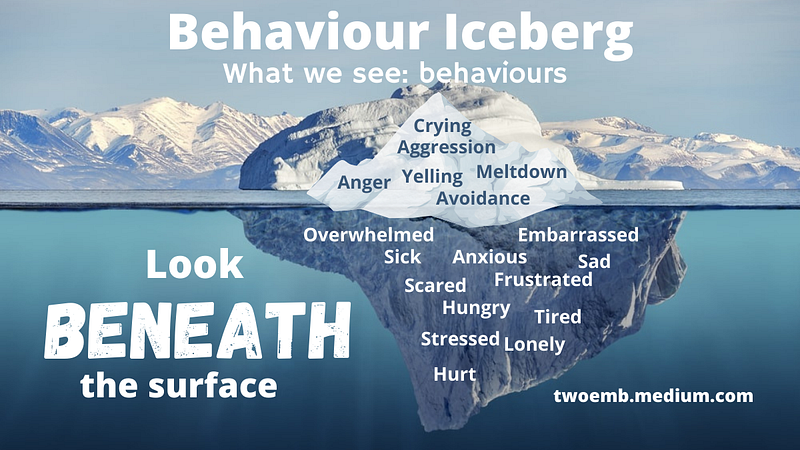
I’m sure most people have seen some variation of the image below floating around online.
It’s a pretty good visual to help us understand that the externalized behaviour we see is only a very small piece of the puzzle. Why is it so important to understand this, and why is it such a popular conceptualization?
Human beings, especially neurodivergent people and those who have experienced trauma, are highly complex.
When we have spent our lives having to mask, camouflage, or hide true parts of ourselves as a matter of self-protection, then what you see on the outside may not even match what we’re feeling on the inside.
We are very quick to assume a person’s intent based on the behaviour we observe: A child not following directions is being disobedient or defiant, a child crying and yelling is throwing a “tantrum”, a child responding with anger is being aggressive.
Yet this is rarely the case. A child not following directions may have auditory processing disorder, anxiety, or simply may not fully understand what’s being asked of them.
Anxiety doesn’t always look like someone quietly biting their nails in the corner.
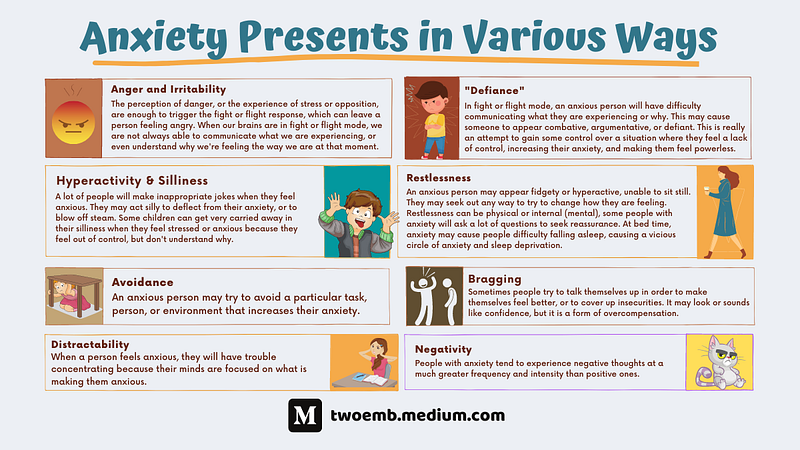
A child crying and yelling may be in fight-or-flight mode, having a meltdown, or panicking. They may be feeling afraid, or have a history of trauma that we don’t know about.
They may simply be tired, hungry, overwhelmed, or any number of underlying factors that we haven’t looked for (yet). A lot of neurodivergent people struggle with interoception — being aware of our physical senses in our bodies, including fatigue, hunger, thirst, even needing to go to the bathroom.
A child may be hungry and not even realize that this is the reason they are feeling irritable. This is common for many children, not just neurodivergent children, as they are only beginning to learn and develop this self-awareness.
“…behaviour we see on the outside is reflective of their brains working differently, not willful acts of defiance.” — Dr. Jody Carrington
Many of us know these things intellectually, but when it comes down to supporting children, or dealing with behaviour, we often revert back to old habits. We need to constantly remind ourselves to dig deeper, which is why I write these articles — to share information with fellow professionals and parents, but also as a reminder to myself to keep bringing it back to what I know.
Children experience all the same emotions and feelings that adults do, but they have less mature brain development, and haven’t had the life experience and opportunities to learn what we have.
It’s our job, as adults, to support children through co-regulation, teaching them how to manage these experiences in healthy ways.
“Co-regulating means supporting children as they regain emotional composure, as well as teaching them skills that will help them stay balanced and regulated more easily in the future.” — Siegel & Bryson
It’s our responsibility to be positive role-models, to guide children, and give them safe places to experience and express their emotions — because if they’re not with us, them with whom?
© Jillian Enright, Neurodiversity MB
A list of related stories
When you join medium, as a member you’ll have access to unlimited reads for only $5 per month. If you use my referral link, I’ll earn a small commission.

References
Carrington, J. (2020). Kids These Days: A game plan for (re) connecting with those we teach, lead, and love. IMPress Books.
Siegel, D. J., & Payne Bryson, T. (2019). The Yes Brain: How to cultivate courage, curiosity, and resilience in your child. Bantam.


