avatarJillian Enright

Free AI web copilot to create summaries, insights and extended knowledge, download it at here

5601

Abstract

ming-corners-15c7520f6c32">sensory area</a> <b>in their classroom</b> with sensory items and fidget toys?</li><li>Do they offer various seating options, such as wobble chairs, wobble cushions, or standing desks? Do they allow students to <a href="https://readmedium.com/practical-tips-for-creating-inclusive-classrooms-2bd9ea05e498">choose</a> which of these they are comfortable using?</li><li>What <a href="https://readmedium.com/interoception-and-emotion-regulation-fd6d5b877f2c">social and emotional</a> supports do they offer?</li><li>If a private or independent school, do they follow the provincial curriculum?</li></ul><h2 id="c52e">Questions about their teachers and staff</h2><ul><li>What training and education do the teachers and staff have to successfully support students and to help the students thrive, in particular neurodivergent or disabled students?</li><li>What is their priority when scheduling and registering for professional development training and workshops?</li><li>How do they support their staff to increase their knowledge and skill set?</li><li>How do they support their staff’s mental health, improve the school climate, and prevent burnout?</li><li>What are the school’s philosophy and values, and how do they actively embody those values on a practical level, in their day-to-day activities and learning?</li><li>What is the student-to-teacher ratio? How many students will be in your child’s class? Does their teacher have an EA support person in their classroom?</li></ul><h2 id="5890">IEPs, SSPs, AEPs, etc.</h2><ul><li>How do they support students with IEPs/SSPs (<a href="https://readmedium.com/is-your-childs-iep-unintentionally-useless-38ee6e10da0e">Individual Education Plans</a> and Student-Specific Plans)?</li><li>How do they ensure they are following those plans and providing appropriate <a href="https://readmedium.com/accommodations-are-not-privileges-a02c74b3d79a">accommodations</a> for students who need them?</li><li>How many consultations do they engage in with their clinicians? How do they ensure they are following and implementing recommendations from those clinicians?</li><li>Is the school willing and able to facilitate subject acceleration for students who are excelling in particular subject areas? How do they do this in an <i>inclusive</i> way?</li></ul><p id="d552">For more information about developing practical and effective IEPs, read <a href="https://readmedium.com/education-planning-for-neurodiverse-students-5d434321f6f3">Effective Education Planning</a>:</p><div id="6284" class="link-block"> <a href="https://readmedium.com/education-planning-for-neurodiverse-students-5d434321f6f3"> <div> <div> <h2>Effective Education Planning</h2> <div><h3>Our neurodiversity expert shares must-haves for creating effective Individual Education Plans (IEPs) for students</h3></div> <div><p>medium.com</p></div> </div> <div> <div style="background-image: url(https://miro.readmedium.com/v2/resize:fit:320/1*8nD3cVGx22JI1jhf8V2H2w.jpeg)"></div> </div> </div> </a> </div><h2 id="a012">In the meantime</h2><p id="3029">Firstly, if your child is suffering in their current school, please don’t be afraid to pull them out until you feel they can keep your child safe (emotionally and psychologically, as well as physically) and meet their needs. Your child’s emotional and psychological health are more important than their academic performance.</p><p id="2854">You can inform the school that you require your child’s work be sent home until such time as you can meet with the principal and guidance counsellor — or whoever is most relevant to the situation — and until you feel confident it is safe for them to return.</p><p id="b099" type="7">Your child’s emotional and psychological health are more important than their academic performance.</p><p id="dd9a">This will send a strong message, and if they don’t take it seriously, loop in the school division’s superintendent. For more specific steps to follow when advocating for your child, read <a href="https://readmedium.com/how-do-i-advocate-for-my-child-f1d084bd68b1">Be Your Child’s Best Advocate</a>:</p><div id="97de" class="link-block"> <a href="https://readmedium.com/how-do-i-advocate-for-my-child-f1d084bd68b1"> <div> <div> <h2>Be Your Child’s Best Advocate</h2> <div><h3>Advice from a Professional Advocate for Supporting and Effectively Advocating for Your Child at School.</h3></div> <div><p>medium.com</p></div> </div> <div> <div style="background-image: url(https://miro.readmedium.com/v2/resize:fit:320/1*Ce82RfZv8tU-Q9jquCIPXA.jpeg)"></div> </div> </div> </a> </div><p id="b5cf">While you’re making arrangements, only provide developmentally-appropriate and helpful information to your child.</p><p id="6eeb">For example, do not directly discuss your specific conversations and frustrations with your child. Let them know you are advocating for them and you are working with their school to help make things better, but don’t add to their list of things to worry about.</p><p id="fa7e">Protect the relationship between your child and their school if at all possible, especially if there’s a possibility they may stay there, even if just until the end of the current school year.</p><figure id="3d7e"><img src="https://cdn-images-1

Options

.readmedium.com/v2/resize:fit:800/1*bHPL46668h-2PIZoMXmrpA.png"><figcaption>Photo by author</figcaption></figure><h2 id="ce06">If you decide to make the switch</h2><p id="7615">Do your best to establish a relationship with the school ahead of time, and to help your child do the same. It’s ideal to go in for a tour, meet the teacher (or RT or GC), the principal, and see the classroom if possible.</p><p id="d331">If this is not possible due to Covid, ask about a virtual tour, or explore photos of the school on their website to help your child develop some familiarity.</p><p id="a2dd">Ensure your child knows the basic day-to-day information. We can get caught up in the complexities of their needs and planning that we may overlook these details. It will help quell some anxiety if your child knows where to go for lunch, where their locker is, where the bathrooms are, and so on.</p><p id="0f37">If your child knows other students in the class (and they’re young enough to still do this), consider setting up some play dates ahead of time to help them re-establish their friendship.</p><p id="4e46">If not, consider reaching out to local parents to see if other students from your child’s class are interested in getting together outside of school. Most communities or schools have an online group where parents can connect.</p><p id="73ce">Research has shown that the <a href="https://doi.org/10.1177/2396941516684834">quality of friendships</a> is a significant factor in how well a child adjusts and enjoys school.</p><h2 id="81de">Don’t wait and see</h2><p id="6b5d">Try to establish communication between the former and new school. In many provinces, this happens automatically, where the new school requests the student file.</p><p id="a401">However, the student file is often a very bare-bones snapshot of your child’s academic and behaviour needs. Even worse, it may be a litany of suspensions and behaviour reports outlining all the “<i>problems</i>” your child had at the previous school and none of the positives.</p><p id="4a16">It’s more helpful if your child has an updated <a href="https://readmedium.com/education-planning-for-neurodiverse-students-5d434321f6f3">IEP</a>, or more extensive information can be provided to the new school.</p><p id="07cc">Be as upfront and honest as possible, while providing a balanced perspective on your child. Be straightforward and specific about their struggles, but also communicate what an awesome person your child is, and give them some starting points for establishing a relationship.</p><p id="e622">Schools frequently try to take a “wait and see” approach. They throw the child into the classroom environment with little to no supports in place, little to no advanced education and training for the teacher and staff, and then deal with problems as they come up.</p><p id="c66c">This is reactive, not proactive, and is a detriment to everyone involved, especially the child.</p><p id="3137">If they wait until an incident occurs, then the child already begins to develop a reputation with staff and students. Worse, they begin — or continue — to internalize the message that they’re a “bad kid”.</p><p id="e181">It’s harmful and unfair to the child if extensive assessments and background information has been provided, and the adults have access to information that will help them best support the student, to take a “wait and see” approach.</p><p id="1b87">Research has also shown that transitioning a student into an <a href="https://doi.org/10.1177/2396941516684834">ill-prepared environment</a> is predictive of poor adjustment and negative experiences.</p><figure id="6a94"><img src="https://cdn-images-1.readmedium.com/v2/resize:fit:800/1*b34Mv0seBNGYiz20vp9OtQ.png"><figcaption>Photo by author — (quote by Mata Angelou)</figcaption></figure><p id="8cd6">Whatever next steps you choose, let your child know that you are on their side, and will do whatever is needed to support and advocate for them.</p><p id="924b">Try your best to maintain a positive working relationship with their school, but always prioritize your child’s emotional well-being first and foremost.</p><p id="e367">Good luck!</p><p id="dd72">© Jillian Enright, Neurodiversity MB</p><h1 id="5365">Further Reading</h1><div id="c77c" class="link-block"> <a href="https://readmedium.com/back-to-school-series-f63fa6df1e04"> <div> <div> <h2>Education and School Series</h2> <div><h3>Stories to help make the school year as smooth as possible</h3></div> <div><p>medium.com</p></div> </div> <div> <div style="background-image: url(https://miro.readmedium.com/v2/resize:fit:320/1*UR6j_cj_TGJEDpWN3DI0Hw.jpeg)"></div> </div> </div> </a> </div><h2 id="ea31">References</h2><p id="cae8">Makin, C., Hill, V., & Pellicano, E. (2017). The primary-to-secondary school transition for children on the autism spectrum: A multi-informant mixed-methods study. <i>Autism & Developmental Language Impairments.</i> <a href="https://doi.org/10.1177/2396941516684834">https://doi.org/10.1177/2396941516684834</a></p><p id="d090"><b><i>Subscribe to <a href="https://insightsfromeducate.substack.com/welcome">Insights from Educate </a>for a biweekly dose of professional learning and inspiration from authentic voices in education.</i></b></p><figure id="3dfb"><img src="https://cdn-images-1.readmedium.com/v2/resize:fit:800/1*75X_AixoZXocR_3Irk_vEw.png"><figcaption></figcaption></figure></article></body>

Questions To Ask Prospective Schools

Considering moving your child to a new school?

Photo by Mwesigwa Joel on Unsplash

Take your time

If your child is unhappy at their current school, if you feel you have tried everything to work with that school to help them meet your child’s needs, or if you feel there is little chance of improvement, it may be time to consider a switch.

If your child is extremely unhappy for any reason, your instincts may be to get them out right away, and I fully understand that. Moving schools is a huge change, so it’s important to really investigate your options thoroughly before making the transition.

The last thing you want is to go through the significant stressors of switching schools, only to have the same problems occur in the new environment. Ask other families who have attended the schools you are considering about their experiences, especially families whose children are neurodivergent or disabled.

Call the schools and ask a few preliminary questions to rule out the ones you know for sure won’t be a good fit. For example, my son is twice-exceptional (gifted with ADHD). When his former school was failing to meet his needs, I began calling around to see what programming was available nearby.

One principal I spoke with told me:

“ We don’t have gifted education in Manitoba because all kids are gifted.”

Um, no.

That was a big red flag for me, so I was able to cross them off the list without wasting any more of my time. That very disappointing and frustrating conversation also prompted this article:

Once you’ve narrowed your search down to a couple of schools you feel would be the best fit, arrange a meeting with the principal, and hopefully their resource teacher as well if your child has an Individual Education Plan (IEP).

I have listed some suggested questions to ask below. I don’t recommend asking every single one of them, but write down the 5–10 most important to you that are most relevant to your child’s situation.

I highly recommend writing them down because it’s very easy to get railroaded during these conversations, or to feel rushed or nervous, and then forget what you wanted to ask.

Some questions to ask if you are exploring school options for your child:

  • What is their inclusion policy, and what does inclusion look like in practice?
  • How do their educators and staff strive to make meaningful connections with students?
  • How do the adults build rapport and develop relationships with students?
  • Do they prioritize mental and emotional health and cultivating a sense of belonging, or do they prioritize obedience and academics?
  • What discipline methods do they use? Do they focus on restorative justice and making amends, or on punishment and retribution?
  • How do they approach disruptive or unsafe behaviour?
  • What is their seclusion policy? How do they handle aggressive or unsafe behaviours?
  • How do they prevent and address bullying?
  • What do they offer for when kids need to move their bodies in a big way?
  • How much physical education, physical activity, and outdoor playtime do the students get? Do the teachers offer movement breaks for the younger classes?
  • What choices do they offer children who need sensory breaks? Do they have a sensory area in their classroom with sensory items and fidget toys?
  • Do they offer various seating options, such as wobble chairs, wobble cushions, or standing desks? Do they allow students to choose which of these they are comfortable using?
  • What social and emotional supports do they offer?
  • If a private or independent school, do they follow the provincial curriculum?

Questions about their teachers and staff

  • What training and education do the teachers and staff have to successfully support students and to help the students thrive, in particular neurodivergent or disabled students?
  • What is their priority when scheduling and registering for professional development training and workshops?
  • How do they support their staff to increase their knowledge and skill set?
  • How do they support their staff’s mental health, improve the school climate, and prevent burnout?
  • What are the school’s philosophy and values, and how do they actively embody those values on a practical level, in their day-to-day activities and learning?
  • What is the student-to-teacher ratio? How many students will be in your child’s class? Does their teacher have an EA support person in their classroom?

IEPs, SSPs, AEPs, etc.

  • How do they support students with IEPs/SSPs (Individual Education Plans and Student-Specific Plans)?
  • How do they ensure they are following those plans and providing appropriate accommodations for students who need them?
  • How many consultations do they engage in with their clinicians? How do they ensure they are following and implementing recommendations from those clinicians?
  • Is the school willing and able to facilitate subject acceleration for students who are excelling in particular subject areas? How do they do this in an inclusive way?

For more information about developing practical and effective IEPs, read Effective Education Planning:

In the meantime

Firstly, if your child is suffering in their current school, please don’t be afraid to pull them out until you feel they can keep your child safe (emotionally and psychologically, as well as physically) and meet their needs. Your child’s emotional and psychological health are more important than their academic performance.

You can inform the school that you require your child’s work be sent home until such time as you can meet with the principal and guidance counsellor — or whoever is most relevant to the situation — and until you feel confident it is safe for them to return.

Your child’s emotional and psychological health are more important than their academic performance.

This will send a strong message, and if they don’t take it seriously, loop in the school division’s superintendent. For more specific steps to follow when advocating for your child, read Be Your Child’s Best Advocate:

While you’re making arrangements, only provide developmentally-appropriate and helpful information to your child.

For example, do not directly discuss your specific conversations and frustrations with your child. Let them know you are advocating for them and you are working with their school to help make things better, but don’t add to their list of things to worry about.

Protect the relationship between your child and their school if at all possible, especially if there’s a possibility they may stay there, even if just until the end of the current school year.

Photo by author

If you decide to make the switch

Do your best to establish a relationship with the school ahead of time, and to help your child do the same. It’s ideal to go in for a tour, meet the teacher (or RT or GC), the principal, and see the classroom if possible.

If this is not possible due to Covid, ask about a virtual tour, or explore photos of the school on their website to help your child develop some familiarity.

Ensure your child knows the basic day-to-day information. We can get caught up in the complexities of their needs and planning that we may overlook these details. It will help quell some anxiety if your child knows where to go for lunch, where their locker is, where the bathrooms are, and so on.

If your child knows other students in the class (and they’re young enough to still do this), consider setting up some play dates ahead of time to help them re-establish their friendship.

If not, consider reaching out to local parents to see if other students from your child’s class are interested in getting together outside of school. Most communities or schools have an online group where parents can connect.

Research has shown that the quality of friendships is a significant factor in how well a child adjusts and enjoys school.

Don’t wait and see

Try to establish communication between the former and new school. In many provinces, this happens automatically, where the new school requests the student file.

However, the student file is often a very bare-bones snapshot of your child’s academic and behaviour needs. Even worse, it may be a litany of suspensions and behaviour reports outlining all the “problems” your child had at the previous school and none of the positives.

It’s more helpful if your child has an updated IEP, or more extensive information can be provided to the new school.

Be as upfront and honest as possible, while providing a balanced perspective on your child. Be straightforward and specific about their struggles, but also communicate what an awesome person your child is, and give them some starting points for establishing a relationship.

Schools frequently try to take a “wait and see” approach. They throw the child into the classroom environment with little to no supports in place, little to no advanced education and training for the teacher and staff, and then deal with problems as they come up.

This is reactive, not proactive, and is a detriment to everyone involved, especially the child.

If they wait until an incident occurs, then the child already begins to develop a reputation with staff and students. Worse, they begin — or continue — to internalize the message that they’re a “bad kid”.

It’s harmful and unfair to the child if extensive assessments and background information has been provided, and the adults have access to information that will help them best support the student, to take a “wait and see” approach.

Research has also shown that transitioning a student into an ill-prepared environment is predictive of poor adjustment and negative experiences.
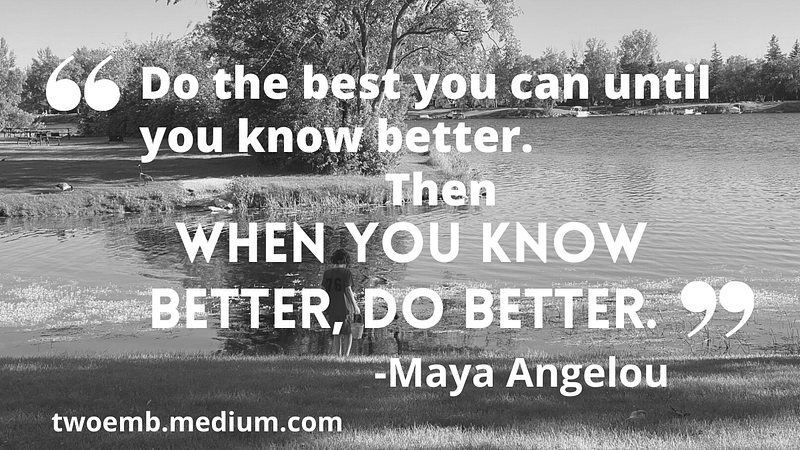
Photo by author — (quote by Mata Angelou)

Whatever next steps you choose, let your child know that you are on their side, and will do whatever is needed to support and advocate for them.

Try your best to maintain a positive working relationship with their school, but always prioritize your child’s emotional well-being first and foremost.

Good luck!

© Jillian Enright, Neurodiversity MB

Further Reading

References

Makin, C., Hill, V., & Pellicano, E. (2017). The primary-to-secondary school transition for children on the autism spectrum: A multi-informant mixed-methods study. Autism & Developmental Language Impairments. https://doi.org/10.1177/2396941516684834

Subscribe to Insights from Educate for a biweekly dose of professional learning and inspiration from authentic voices in education.

Education
Parenting
Inclusion
Schools
Transitions
Recommended from ReadMedium