Sensory Diets And Activities
Everyone has sensory needs, some more pressing than others
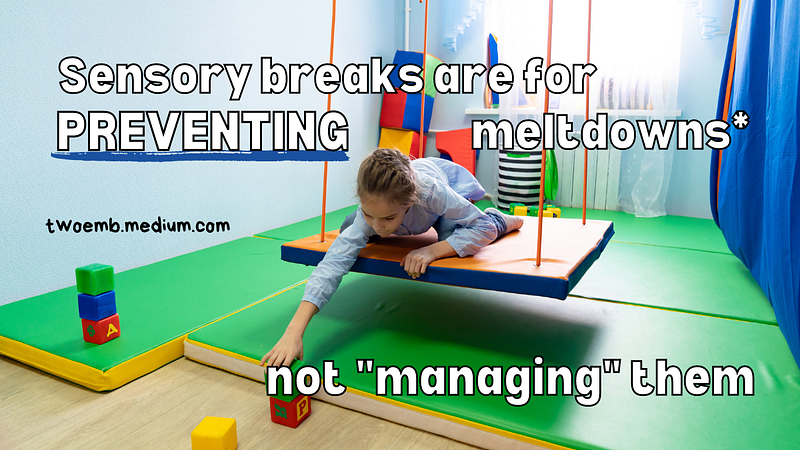
What is a sensory diet?
A sensory diet consists of a variety of sensory activities and accommodations which help to proactively meet an individual’s sensory needs.
Every person’s sensory profile is different, and what will meet those needs will change depending on their mood, environment, what’s being asked of them, and what sensory experiences they’ve had thus far that day.
When a person is feeling overwhelmed by sensory input, a sensory diet will be soothing activities with help calm the nervous system, and reduce sensory overload.
For example, if they’ve been in a loud or crowded environment, they may need to be in a quiet space to allow their nervous system to recover.
If a person is feeling low energy or motivation and is needing sensory input, their sensory diet will consist of activities which stimulate their senses and help make them feel more alert.
For example, if a child is struggling to focus in class and is feeling drowsy, getting outside for fresh air and exercise can help boost their mood and energy levels.
Providing a sensory diet also means being proactive and planning ahead to meet sensory needs before they become dysregulated.
What is a meltdown?
I used the word “meltdown” in the feature image because it’s a common phrase for overwhelm causing dysregulation.
Some people do not like the term as it is equated with having a “tantrum”, whereas others feel it is a fairly accurate description of their internal experience.
A meltdown or dysregulation are absolutely not tantrums.
These are an extreme stress response due to an overwhelmed nervous system. Once a person is so dysregulated they experience a meltdown, their brain is in survival mode, and they are no longer completely in control — and won’t be until they feel safe.
Sensory activities
There’s no prescription for a specific sensory diet, because our needs change regularly. However, an Occupational Therapist (OT) can make recommendations for activities that fit well with your child or student’s needs and abilities.
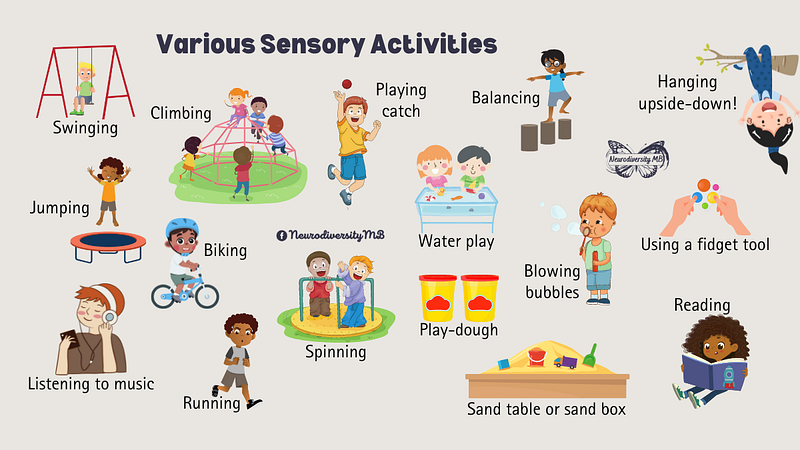
Sensory needs are important
The Canadian Pediatric Society recommends children get at least 60 minutes of vigorous physical activity every day.
Similarly, we should be considering children’s various sensory needs when planning their days.
This should include:
- Longer recesses (for all students)
- Never taking away recess as a consequence for any reason
- Multiple scheduled movement breaks every day (for everyone)
- Sensory tools always available (for everyone)
- A calming corner or calming kit in the household or classroom
A sensory diet is NOT:
- A “special privilege”
- Only bringing a student to the sensory room once they’re already dysregulated
- Sending or bringing a student to the sensory room as a consequence for ‘misbehaviour’
- Occasional, unplanned sensory breaks, or only providing sensory breaks when students ask for them
- Contingent on behaviour (i.e. removing or denying a child access to sensory activities as a consequence)
- A one-size-fits-all solution
All sensory needs differ
Each person’s sensory needs will be different, and will change throughout the day, depending on a myriad of factors.
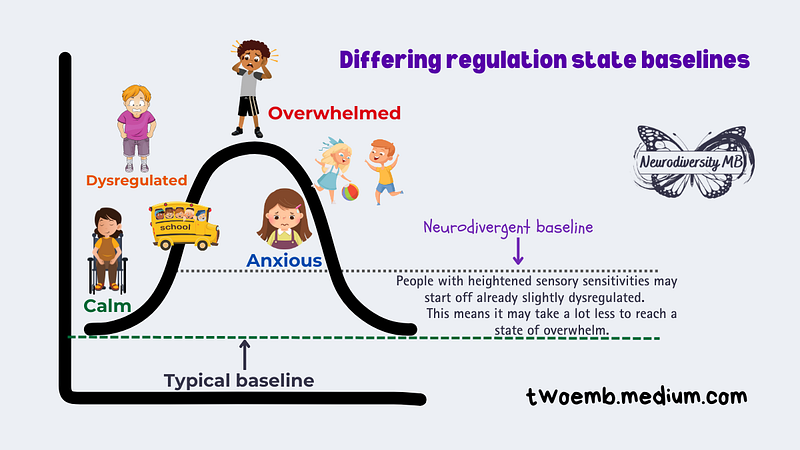
Whether we’re feeling over or under-whelmed, sluggish or hyper, stressed or distracted, etc. will influence the sensory input that will best meet our needs at that moment.
It’s important to offer a variety of options and support people to learn about their own sensory needs and sensory profile.
Schools can be incredibly overwhelming to our senses.
They are often loud, crowded, busy, and brightly lit. There may be a variety of posters, artwork, and other visual stimuli in addition to the sounds of the staff and students. There may be a cacophony of scents from school lunches to disinfectant to perfume or cologne.
When someone begins their day already slightly dysregulated due to sensitivities (or for any reason at all — personal stress, illness, etc.), it will take less for them to reach a state of overwhelm.
Proactive not reactive
This is why it’s so important to proactively provide children — and ourselves — opportunities to move our bodies, and to proactively provide a variety of sensory activities to meet those needs before we start becoming dysregulated.
Meeting children’s basic needs is a requirement, not a luxury, not a privilege, and not a “nice addition” for when there’s extra time (because, realistically, when is there actually extra time?).
© Jillian Enright, Neurodiversity MB
Related Articles
When you join medium, as a member you’ll have access to unlimited reads for only $5 per month. If you use my referral link, I’ll earn a small commission, and you’ll earn my undying gratitude.

If you’d prefer give a one-time tip, you can support my writing on Ko-Fi — also, it’s free to follow me on Facebook and LinkedIn!
Learn more
More resources
If you wish to learn more, or access resources, I also have products available for purchase on my website, as well as some free downloads.