avatarJillian Enright

Free AI web copilot to create summaries, insights and extended knowledge, download it at here

3576

Abstract

te a negative school environment for another person.</i></li><li><i>Bullying takes place in a context of a real or perceived power imbalance between the people involved and is typically, but need not be, repeated behaviour.</i></li></ul><h2 id="64d4">If a child tells you this is happening, you must take them seriously.</h2><p id="c474">Whether you’re the parent, teacher, coach, or other trusted adult in the child’s life — they came to you for a reason and they need your help.</p><ul><li>Believe the child.</li><li>Listen to the child.</li><li>Let them know it’s not their fault, you’re sorry this is happening, and that you will help them.</li><li>Tell them you care about them, they do not deserve this, and that it is not okay for someone to treat them this way.</li></ul><p id="ca5c">Please keep in mind that many children who bully other children (especially children who are younger, smaller, or otherwise vulnerable), are often victims of bullying elsewhere in their life, sometimes in their own home.</p><p id="3f99">While it is perfectly natural to be angry, keep in mind that they are still a child and this behaviour was likely taught to them somewhere along the way. This does not make it okay, however the onus is on the adults to teach and role-model kindness. Sadly, not all children have positive role-models in their lives.</p><blockquote id="9891"><p>Please keep in mind that many children who bully other children are often victims of bullying elsewhere in their life, sometimes in their own home.</p></blockquote><h1 id="6995">Advocate for Your Child</h1><p id="b5e9"><a href="https://twoemb.medium.com/how-do-i-advocate-for-my-child-f1d084bd68b1">Advocate</a> for your child and demand that bullying be taken seriously, whether it’s in team sports, at school, or elsewhere. Approach the situation calmly and respectfully, but be assertive and clear when you express your concerns and your expectation that it be dealt with accordingly.</p><p id="dfcb">All schools in Manitoba are required to have a student code of conduct that specifically addresses bullying. The <a href="https://www.edu.gov.mb.ca/k12/safe_schools/history.html">Manitoba Public Schools Act</a> also mandates that bullying be reported to the principal and to the student’s parent or caregiver.</p><p id="e11a">Request a meeting with the principal (and the classroom teacher if the bullying is happening in their classroom) and review your school’s student handbook or code of conduct as it relates to bullying before the meeting.</p><p id="f0b0">There is an <a href="https://raisingchildren.net.au/school-age/behaviour/bullying/school-bullying-helping">Australian parenting website</a> that has a great article on this topic.</p><p id="041d">Suggestions for working with your child’s classroom teacher are as follows:</p><ul><li>Make a time to speak privately with the teacher.</li><li>Calmly present your concerns as a joint issue for you both to deal with. For example, “<i>Tyler says Sam is hitting him at lunch time, calling him names and telling the other kids not to play with him. I’d like your help to find out what’s happening and to determine what we can do about it”</i>.</li><li>Discuss the problem with the teacher. Ask for the teacher’s views. You could also ask for a copy of the school’s anti-bullying policies and procedures (or obtain one from your school or division’s website).</li><li>Be assertive, but not accusatory. For example, “<i>Yes, children do tease sometimes. However, I do not agree this was just teasing, it is more serious than that</i>”.</li><li>En

Options

d the meeting with a plan for how the situation will be managed. For example, “<i>I am glad to hear that you will speak to the other teachers about this so they can watch the children carefully in the playground at lunch time. Thank you, and I look forward to talking again next week</i>”.</li><li>Keep in touch with the teacher, and arrange a date and time to follow-up on the conversation.</li></ul><p id="9bc1">If you have met with the classroom teacher and given them an opportunity to address the situation, yet you feel they have not, please request (in writing) to meet with the principal and/or their supervisor.</p><p id="4c3c">© Jillian Enright, Neurodiversity MB</p><p id="325d">If you found this article helpful, please feel free to share it anywhere, with anyone. You may also like my follow-up piece, <a href="https://readmedium.com/stop-gaslighting-children-8748facb82f3">stop gaslighting children</a>:</p><div id="e6bb" class="link-block"> <a href="https://aninjusticemag.com/stop-gaslighting-children-8748facb82f3"> <div> <div> <h2>Stop Gaslighting Children</h2> <div><h3>Being bullied is never the fault of the victim</h3></div> <div><p>aninjusticemag.com</p></div> </div> <div> <div style="background-image: url(https://miro.readmedium.com/v2/resize:fit:320/1*WC41LsRpbDz-WYrV6pjkow.jpeg)"></div> </div> </div> </a> </div><p id="7988"><i>When you join medium, as a member you’ll have access to unlimited reads for only $5 per month. If you use <a href="https://twoemb.medium.com/membership">my referral link</a>, I’ll earn a small commission, and you’ll earn my undying gratitude.</i></p><figure id="5801"><img src="https://cdn-images-1.readmedium.com/v2/resize:fit:800/1*OZ_OLnA1oZEexg4_5AuP-g.png"><figcaption></figcaption></figure><p id="72ea">For additional support and advice on how to effectively <a href="https://twoemb.medium.com/how-do-i-advocate-for-my-child-f1d084bd68b1">advocate<b></b></a><b> </b>for your child with their school, please visit my <a href="https://twoemb.medium.com/how-do-i-advocate-for-my-child-f1d084bd68b1">article</a> to read my step-by-step guide. If you need professional assistance in advocating for your child at school, please feel free to <a href="https://ADHDMB.ca/contact">contact me</a>.</p><h1 id="0576">Bullying Help & Resources</h1><figure id="de9c"><img src="https://cdn-images-1.readmedium.com/v2/resize:fit:800/1*CJBN9AJKE5wf-8oDA04o7w.png"><figcaption><a href="https://adhdmb.ca/bullying-help/">ADHDMB.ca/bullying-help</a></figcaption></figure><p id="8a77"><a href="https://adhdmb.ca/bullying-help">I have compiled</a> an extensive <a href="https://adhdmb.ca/bullying-help">list of resources</a> providing help and <a href="https://adhdmb.ca/bullying-help">support</a> for dealing with <a href="https://adhdmb.ca/bullying-help">bullying</a>.</p><p id="0534"><a href="https://adhdpro.ca/crisis-resources">Crisis Resources</a> |<a href="https://kidshelpphone.ca">Kids Help Phone</a></p><figure id="b46e"><img src="https://cdn-images-1.readmedium.com/v2/resize:fit:800/1*JMjqp6Odh9euSQOBkJOkOw.png"><figcaption></figcaption></figure><h2 id="8810">References</h2><p id="4b5c">Unnever, J. D. & Cornell, D. G. (2003). Bullying, Self Control and ADHD” <i>Journal of Interpersonal Violence</i>, <i>18</i>(2): 129–147. <a href="https://doi.org/10.1177%2F0886260502238731">https://doi.org/10.1177/0886260502238731</a></p></article></body>

I Survived Years of Relentless Bullying

I never thought I would tell this story publicly.

Photo by Morgan Basham on Unsplash

I was ashamed, embarrassed

I am now 38 years old and still reluctant to share.

The reason I am doing so is because now I have a child who is 8 years old and was mistreated at his former school.

The other reason I am sharing my story is because I work with children who have been, or are being, bullied and I want them to know they are not alone.

Students with ADHD are twice as likely to be bullied at school when compared to their neurotypical peers. I didn’t know then that I had ADHD, but I know now, and it makes a whole lot of sense.
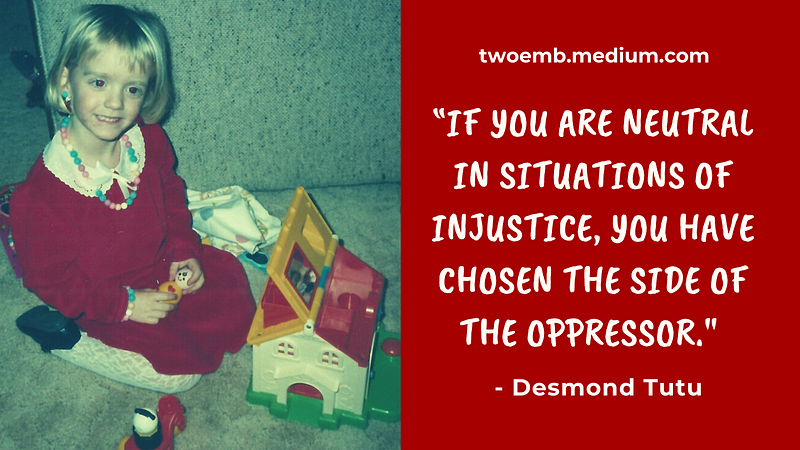
Image created by author, photo taken by author’s grandmother

You Are Not Alone

I don’t remember exactly when it started, but I know it was very early on. I remember incidents as early as grade two, so I must have been around 7 years old. As I got older it only got worse. I was chased in the playground by mobs of children, hit with a baseball bat, and constantly mocked, insulted, and made fun of. Once when I tried to tell a teacher she laughed at me. When I tried to tell the principal, he essentially shooed me out of his office, telling me to deal with it on my own.

If you are someone who is being bullied, please tell an adult you trust. You are not alone and you should not have to deal with this on your own. It is not your fault, it is the responsibility of the adults to protect children and youth, and you do not deserve this.

You do not deserve to be bullied and you do not have to deal with it alone.

I thought it was my fault. I was so embarrassed that I didn’t even tell my parents until I was 12 years old, when I was about to move from elementary to middle school, in the hopes that I could switch schools. Nope. I was not allowed to switch schools until two years later when I was moving to high school. It was a relief to finally be free of my tormenters after 7 years, but the psychological damage had been done.
ADHDMB.ca/bullying-help

If Your Child is Being Bullied

Bullying is very different from teasing, fighting, or students not getting along. The Manitoba Public Schools Act defines bullying as:

  • Behaviour that is intended to cause fear, intimidation, humiliation, distress or other forms of harm to another person’s feelings, self-esteem, body, or reputation or is intended to create a negative school environment for another person.
  • Bullying takes place in a context of a real or perceived power imbalance between the people involved and is typically, but need not be, repeated behaviour.

If a child tells you this is happening, you must take them seriously.

Whether you’re the parent, teacher, coach, or other trusted adult in the child’s life — they came to you for a reason and they need your help.

  • Believe the child.
  • Listen to the child.
  • Let them know it’s not their fault, you’re sorry this is happening, and that you will help them.
  • Tell them you care about them, they do not deserve this, and that it is not okay for someone to treat them this way.

Please keep in mind that many children who bully other children (especially children who are younger, smaller, or otherwise vulnerable), are often victims of bullying elsewhere in their life, sometimes in their own home.

While it is perfectly natural to be angry, keep in mind that they are still a child and this behaviour was likely taught to them somewhere along the way. This does not make it okay, however the onus is on the adults to teach and role-model kindness. Sadly, not all children have positive role-models in their lives.

Please keep in mind that many children who bully other children are often victims of bullying elsewhere in their life, sometimes in their own home.

Advocate for Your Child

Advocate for your child and demand that bullying be taken seriously, whether it’s in team sports, at school, or elsewhere. Approach the situation calmly and respectfully, but be assertive and clear when you express your concerns and your expectation that it be dealt with accordingly.

All schools in Manitoba are required to have a student code of conduct that specifically addresses bullying. The Manitoba Public Schools Act also mandates that bullying be reported to the principal and to the student’s parent or caregiver.

Request a meeting with the principal (and the classroom teacher if the bullying is happening in their classroom) and review your school’s student handbook or code of conduct as it relates to bullying before the meeting.

There is an Australian parenting website that has a great article on this topic.

Suggestions for working with your child’s classroom teacher are as follows:

  • Make a time to speak privately with the teacher.
  • Calmly present your concerns as a joint issue for you both to deal with. For example, “Tyler says Sam is hitting him at lunch time, calling him names and telling the other kids not to play with him. I’d like your help to find out what’s happening and to determine what we can do about it”.
  • Discuss the problem with the teacher. Ask for the teacher’s views. You could also ask for a copy of the school’s anti-bullying policies and procedures (or obtain one from your school or division’s website).
  • Be assertive, but not accusatory. For example, “Yes, children do tease sometimes. However, I do not agree this was just teasing, it is more serious than that”.
  • End the meeting with a plan for how the situation will be managed. For example, “I am glad to hear that you will speak to the other teachers about this so they can watch the children carefully in the playground at lunch time. Thank you, and I look forward to talking again next week”.
  • Keep in touch with the teacher, and arrange a date and time to follow-up on the conversation.

If you have met with the classroom teacher and given them an opportunity to address the situation, yet you feel they have not, please request (in writing) to meet with the principal and/or their supervisor.

© Jillian Enright, Neurodiversity MB

If you found this article helpful, please feel free to share it anywhere, with anyone. You may also like my follow-up piece, stop gaslighting children:

When you join medium, as a member you’ll have access to unlimited reads for only $5 per month. If you use my referral link, I’ll earn a small commission, and you’ll earn my undying gratitude.
For additional support and advice on how to effectively advocate for your child with their school, please visit my article to read my step-by-step guide. If you need professional assistance in advocating for your child at school, please feel free to contact me.

Bullying Help & Resources

ADHDMB.ca/bullying-help

I have compiled an extensive list of resources providing help and support for dealing with bullying.

Crisis Resources |Kids Help Phone

References

Unnever, J. D. & Cornell, D. G. (2003). Bullying, Self Control and ADHD” Journal of Interpersonal Violence, 18(2): 129–147. https://doi.org/10.1177/0886260502238731

Adhd
Bullying
Neurodiversity
Parenting
This Happened To Me
Recommended from ReadMedium
avatarGrowth & Resilience
High Functioning Autism

4 min read