
Practical Tips For Creating Inclusive Classrooms
Making spaces and lessons more accessible for all students
I’m not a teacher!
Dear teachers who are reading this, I have a confession: I am not a teacher. I have worked in schools and have spent many years working with the education system, but I am not a trained teacher.
My expertise is in supporting neurodivergent students and students needing additional supports (in particular students with Autism, ADHD, learning disabilities, challenging behaviours, etc.).
My suggestions here are based on extensive research, as well as personal and professional experience. I try to be fair and realistic, but acknowledge that my understanding comes from different experiences than those of teachers.
A teacher can make a significant difference in the life of a student — both positive and negative.
I support many students who don’t quite fit in the traditional box which the public education system requires. Many of these ideas come from those experiences, and from the voices and needs of students just like the ones in your class every day.
Lessons
- Use interactive and hands-on lessons as much as possible
- Students learn better from interacting with each other and asking questions than they do from long lectures
- Students learn better when they’re having fun and can apply what they are learning to real life
- Movement breaks benefit everyone — including the adults!
- Use real-life examples, visual aids, and teach to ask many different learning styles as possible
Physical classroom environment
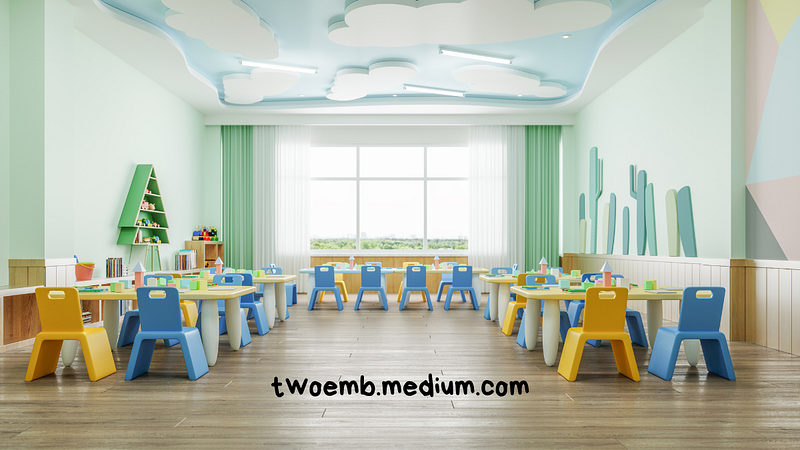
- Use soft colours
- Decorations are wonderful, but please don’t go overboard
- Ensure there are some spaces in the classroom that are sparse so students have somewhere visually quiet to look when experiencing sensory overload
- Reduce clutter, keep the classroom as organized as possible
- Provide and allow fidget and sensory tools
- Provide a “chill zone” where students can go to decompress when needed (and show them how to use it effectively)
- Provide ear defenders for students who are easily overwhelmed by a lot of noise
- Consider putting tennis balls on the bottoms of the chairs so they don’t screech when students push their chairs out
Administrators, senior admin, and government policy-makers:
- Facilitate the use of natural light wherever possible and avoid using fluorescent overhead lights
- Ensure class sizes are reasonable — I’m talking 12–18 students, depending on the age/grade, support needs, and staffing ratios in the classroom
- We must provide our teachers and school staff with adequate support and funding so they have the resources to follow best practices (this is currently not the case here in Manitoba, and in many other places)
Worksheets
- Use paperwork assignments sparingly
- Ask questions and give instructions using very straightforward and clear language
- Ask for exactly what you want from the students, rather than asking for one thing while expecting another
- Create handouts and worksheets with lots of white space
- Use bold sub-headings, point form, numbered lists, and visuals
- Chunk the work, avoid overwhelming students with large amounts of print clustered together on a single page
Classroom management
- Never keep a student indoors for recess — they need to move their bodies in order to learn
- Ditch behaviour charts and other out-dated methods of manipulating students to do what we want
- Do not pit students against each other. Rather than promoting competition, promote collaboration and learning from classmates
- If a student has an IEP, follow it. If you don’t know how or do not have the resources necessary, please bring this to the attention of your administrator and expect them to follow through
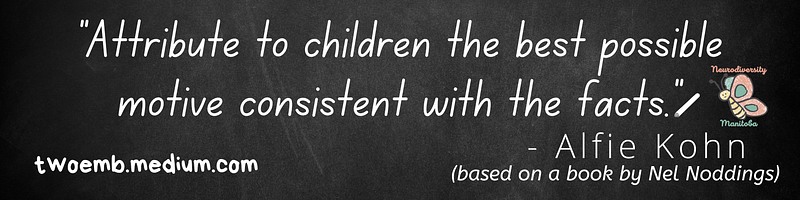
- Give students the benefit of the doubt. Most of them are trying their very best and may truly not be able to meet expectations at times
Prioritize relationships and safety
The best lesson plans and classroom management strategies will be rendered useless if students do not feel cared about and safe in school.
- Students cannot learn when they do not feel safe. This refers to their perception of safety, not ours, safety is in the eye of the beholder
- Encourage, rather than punish, mistakes. Students will be more likely to explore and willing to take risks when they feel connected and safe in their classroom
- Express unconditional positive regard. Demonstrate through your actions that you care about your student no matter what — even when they do not meet your expectations or follow your instructions
- Prioritize safety, inclusion, and acceptance. Your students will 100% know exactly how you feel about them, and will quickly catch on if you don’t like them or are not being authentic with them

Be on their side
Our system sucks, especially for students who don’t learn in traditional ways and need something a little different. The system also sucks for staff, who are expected to do increasingly more with less and less each year.
When you are feeling frustrated and burnt out, remember this: it is not their fault. Teachers often shoulder much of the blame while also having very little control over how the public education system works.
Children have even less control, so please be very careful not to take it out on them.
© Jillian Enright, Neurodiversity MB
When you join medium, as a member you’ll have access to unlimited reads for only $5 per month. If you use my referral link, I’ll earn a small commission, and you’ll earn my undying gratitude.

If you’d prefer give a one-time tip, you can support my writing on Ko-Fi — also, it’s free to follow me on Facebook!
Related Articles
References
Craig, S. E. (2017). Trauma Sensitive Schools for the Adolescent Years: Promoting resiliency and healing, grades 6–12. Teachers College Press.
Desautels, L. (2020). Connections Over Compliance: Rewiring our perceptions of discipline. Wyatt-MacKenzie Publishing.
Shen, T., & Konstantopoulos, S. (2022). Are class size and teacher characteristics associated with cognitive outcomes in early grades? School Effectiveness and School Improvement, 33(3), 333–359, DOI: 10.1080/09243453.2021.2023585
Shen, T., & Konstantopoulos, S. (2021). Estimating causal effects of class size in secondary education: evidence from TIMSS. Research Papers in Education, 36(5), 507–541, DOI: 10.1080/02671522.2019.1697733
Shevrin Venet, A. (2021). Equity-Centred Trauma-Informed Education. W. W. Norton & Co.