
Microsoft or: How I Learned to Stop Worrying and Love ChatGPT
how Google disapproves of this love and other stories related
In the last article, I discussed ChatGPT, where I explained what we know and how this is not exactly a threat to Google. Moreover, I explained how some claims have no basis.
OpenAI and Microsoft
The field is actually moving quickly and we can see there is some news. In fact, ChatGPT has been considered an earthquake in tech (ChatGPT sets record for fastest-growing user base). In fact, ChatGPT sparked a rising interest among investors and it is fueling an AI race. As noted by the NT Times:
As ChatGPT has captured the world’s imagination, Mr. Altman has been put in the rare position of trying to downplay a hit product. He is worried that too much hype for ChatGPT could provoke a regulatory backlash or create inflated expectations for future releases, two people familiar with his views said. — source
Anyway, I will start this article by discussing the news relative to Microsoft & OpenAI, which in the last days tightened the relationship.
The first one is that Microsoft is still very interested in OpenAI and investing 10 billion in the company:
Microsoft’s infusion would be part of a complicated deal in which the company would get 75% of OpenAI’s profits until it recoups its investment, the people said. (It’s not clear whether money that OpenAI spends on Microsoft’s cloud-computing arm would count toward evening its account.) — source
If you are interested in the details Fortune is describing them here.
In any case, the partnership between OpenAI and Microsoft is official as published by Microsoft’s blog. Microsoft will provide help to OpenAI with infrastructure (Azure) and implement OpenAI’s model in its products.
As seen before, Microsoft has already collaborated with OpenAI for GitHub copilot. However, Wired raises some skepticism on how there will be the integration of ChatGPT on Microsoft products.
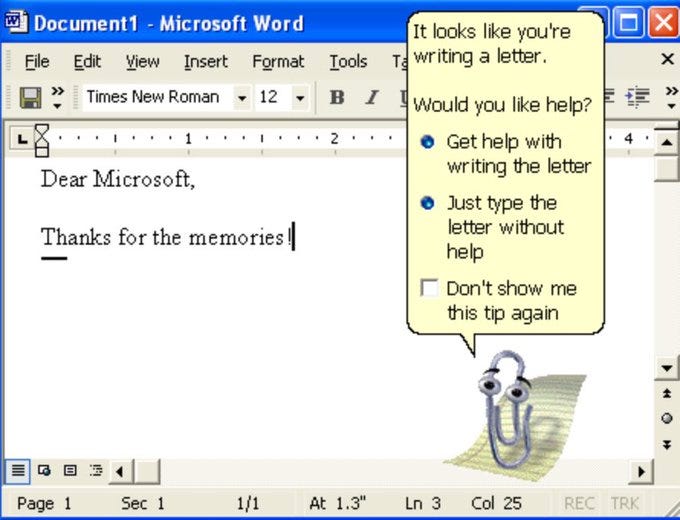
There are rumors that Microsoft will soon implement ChatGPT in Bing, but as I said in my last article, it is not an easy task. Anyway, as Paul DelSignore discusses in this article, these days the future of internet search will be reshaped.
Moreover, OpenAI models will be available in Microsoft Azure as declared by the company. But curb your enthusiasm, as detailed by Lorenzo Zarantonello you probably would not access it soon.
Second news, ChatGPT has been improved as declared by OpenAI:
We made more improvements to the ChatGPT model! It should be generally better across a wide range of topics and has improved factuality.
Stop generating: Based on your feedback, we’ve added the ability to stop generating ChatGPT’s response
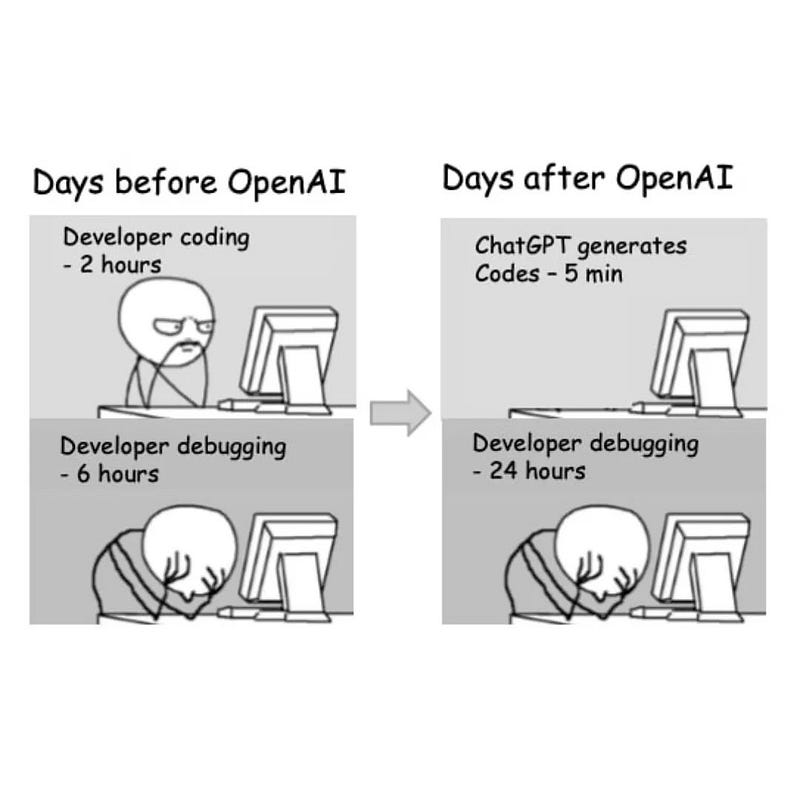
Apparently, it is more than just news, Christianlauer noticed that OpenAI is deeply interested in the idea that its model can be good a coding. OpenAI hired many contractors (over 1000 remote workers in Latin America and Eastern Europe) to improve the coding ability of ChatGPT.
From OpenAI is not the only news, they announced a pro-version:
In this pro-version, which should cost 20 $/month, the model should be always available (even during peak usage), the answers will be faster and you have no message limit. As LucianoSphere noted in the last days ChatGPT was often saturated, and OpenAI says that in these cases paid subscribers will have priority.
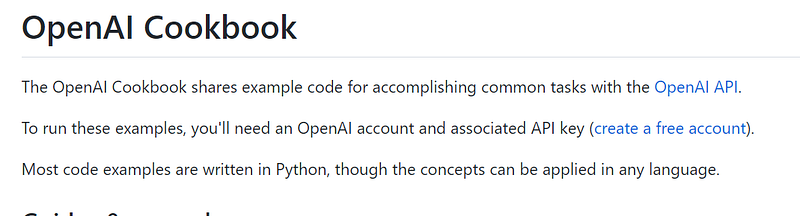
Moreover, they released a cookbook on GitHub:
And they released an AI classifier for detecting AI-written text (basically, providing the cure after releasing the disease). As noted by Henry L. Peck OpenAI is generally adding a watermark to its product so it can easily be detected what is produced by its models. But would it work with AI-generated text from other models?
Ah, many people are asking when would be released GPT-4? Apparently, there would be a delay.
Google and the rest of the world?
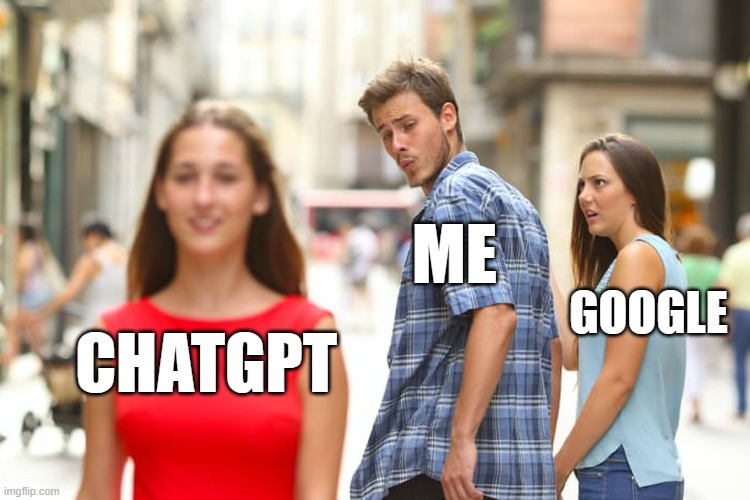
Latest news, Google is testing a potential ChatGPT-like chatbot called Apprentice Bard. A part of the name (which is awesome) we do not much about it. It seems it is based apparently on LaMDA:
“As a result of ChatGPT, the LaMDA team has been asked to prioritize working on a response to ChatGPT,” read one internal memo viewed by CNBC. “In the short term, it takes precedence over other projects,” — source
Rumors report Google’s model will have access to the internet and should cite the sources it uses.
It is not actually the first try, Google was working on a smart chatbot called Meena, but it has been discontinued. Moreover, there was already a chatbot demo based on LaMDA, called Pluto. So, it seems Google is actually working hard to respond to Microsoft & OpenAI.
Google last month has laid off around 12,000 workers but seems that many teams involved in AI research have not been impacted.
Anyway, Google is not the only one thinking about its chatbot. Claude is for example one of these alternatives (here is the research paper). Just a few days ago, Google announced to invest 300 million in Anthropic (which is basically the company behind Claude). Ah, curious detail Anthropic was founded by former OpenAI employees.
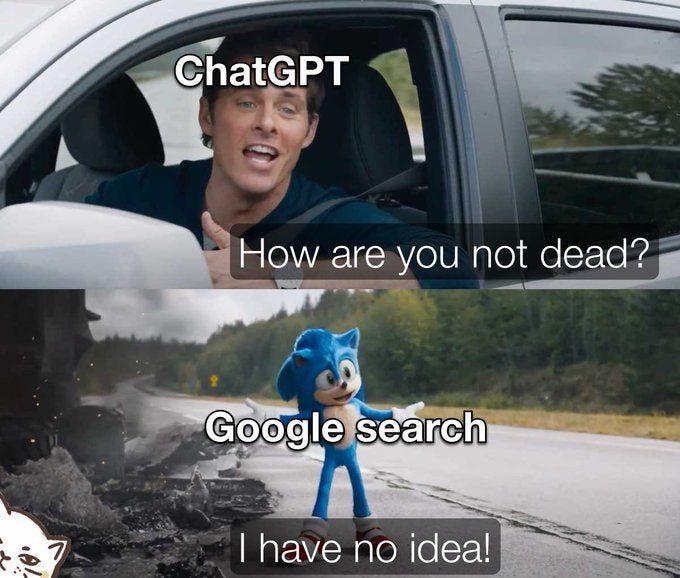
Perplexity is another alternative (you can use it for chrome as an extension). Or there are also alternatives specific to a particular domain like BioChatGPT.
Al Anany noticed that even if you are not creating your own ChatGPT you can still use it for your business. In fact, BuzzFeed stocks rose 311% because they announce they will use their ChatGPT for their news and polls.
As it is known, Jasper is wrapped around GPT3, so as Jae Duk Seo notices it is expected that other businesses will use ChatGPT as an engine.
Schools and academia?
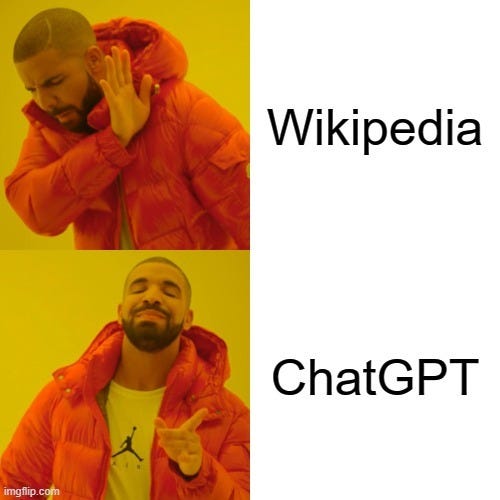
University and schools are worried that students will have now an unfair advantage and school essays are dead:
Now there’s a fresh concern: ChatGPT, an artificial intelligence (AI) powered chatbot that creates surprisingly intelligent-sounding text in response to user prompts, including homework assignments and exam-style questions. -source
The New York City school directly banned it. Australian universities decided that it was safer to go back to pen-and-paper exams to avoid students using AI tools. English lecturers are urging universities to review assessments.
As I discussed in the last article, this fear is probably exaggerated but it is actually time we rediscuss education.
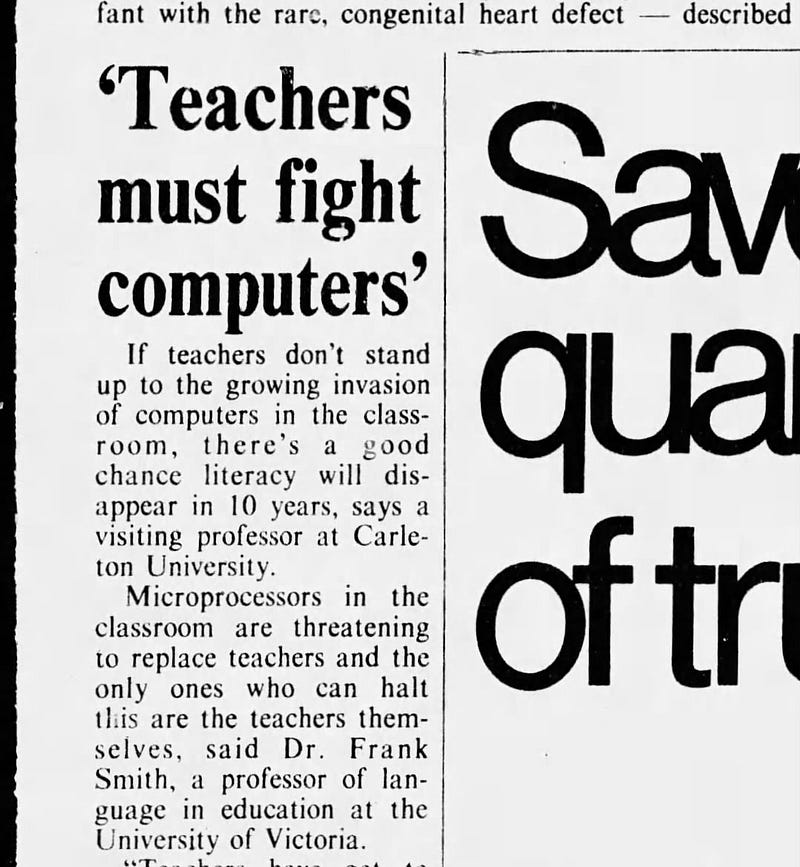
In fact, Giada Pistilli (ethicist at Hugging Face) has shared some thoughts on how education can use these tools. She noted, that once there was a fear of computers, but teachers did not disappear just adapted.
Another interesting point of view is shown by one of the brightest mathematicians of today:
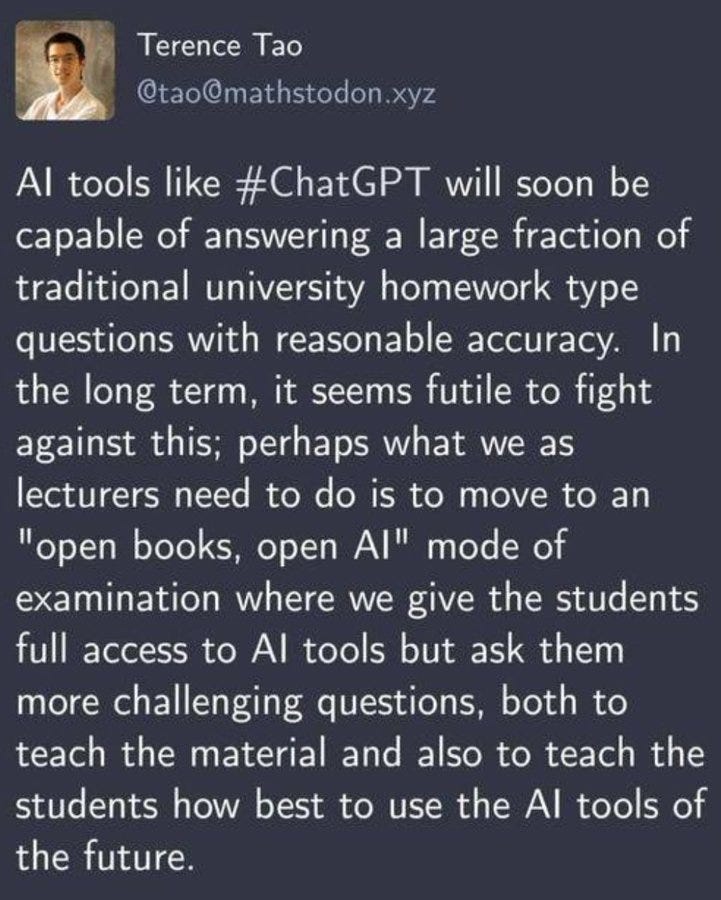
Catalunia decided to not ban ChatGPT but instead educate users about technology (students and professors).
Interestingly, as showed by Mircea Iosif ChatGPT has obtained passing grades at prestigious university tests: from the Wharton School of Business in Pennsylvania to law exams at the University of Minnesota.
In the end, as JoAnn Ryan suggested here, AI-generated writing is just plain old plagiarism. Thus, in the old times, students would ask someone else to write their essays, today they will use ChatGPT (nothing new).
Interestingly, as Curt Mercadante discusses here, there are also concerns if ChatGPT in its responses is plagiarizing sources. Taking into account the fact that the model is parroting what it has seen during the training, just a minimal part of its generated content is similar to an existing source (concerns about breaking copyright law are at the basis of the non-release of Google MusicLM).
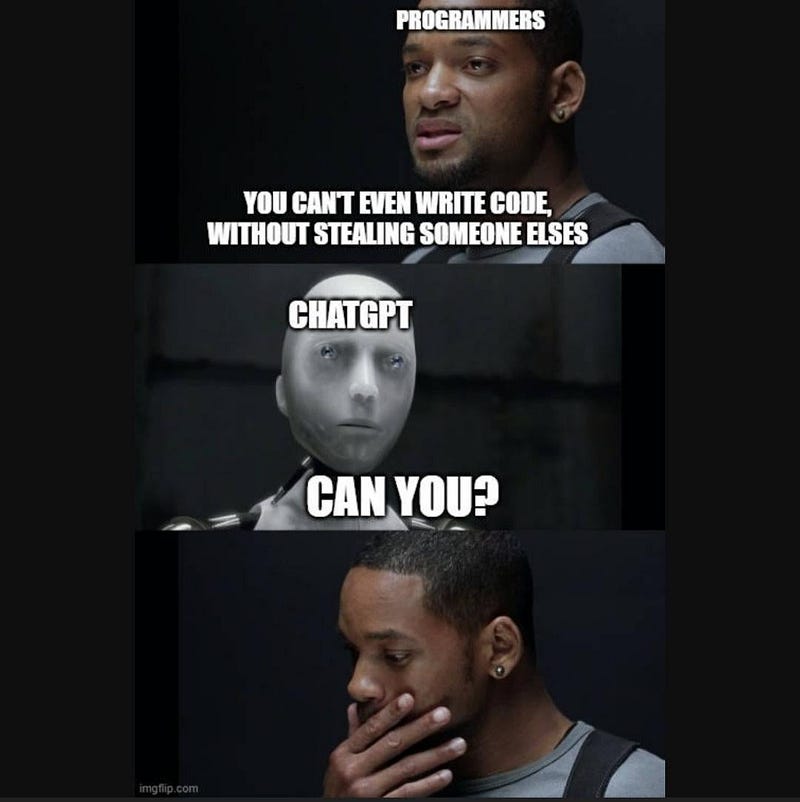
and some professors are roasting students who think to use ChatGPT:
Moreover, scientists are worried about the impact of ChatGPT:
Since a chatbot called ChatGPT was released late last year, it has become apparent that this type of artificial intelligence (AI) technology will have huge implications on the way in which researchers work. -source
In a report, scientists discuss that abstract written by the ChatGPT can be not spotted:
“I am very worried, if we’re now in a situation where the experts are not able to determine what’s true or not, we lose the middleman that we desperately need to guide us through complicated topics,” Sandra Wachter, University of Oxford, UK. source
There has been already an outcry when researchers listed ChatGPT as an author (which personally I think is a marketing move). As suggested, researchers should list in the methods they used a language model (as it is done when using any machine learning model).
In an editorial, Nature goes much far claiming that ChatGPT threatens transparent science and we need clear guidelines. Anyway, the fear is shared by Science journal, showing how the whole academia is worried.
Anyway, as noted by Rafe Brena, PhD ChatGPT is far from being perfect and if you want to use it for essays and/or science is not a good idea
Other interesting readings
If you are interested in how ChatGPT I suggest two articles: this by Opal A Roszell and this very detailed article by Molly Ruby. Moreover, if you are interested in GPT (the language model behind ChatGPT) you can read this article by Storius Magazine.
As RW Blackwelsh noted in this story, all platforms are starting to take a stance against ChatGPT. For example, StackOverflow banned it or Medium decided you have to declare if you used an AI tool (Timothy Key thinks ChatGPT will improve Medium, but I am still skeptical)
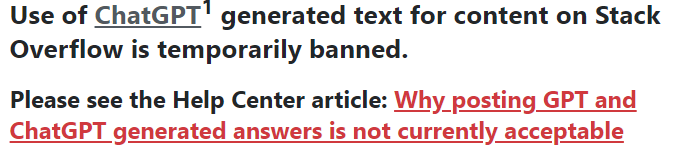
Aeisha Aslam noticed that also publications editors have spoken about ChatGPT: for example, The writing cooperative and Towards Data Science banned it entirely. Moreover, Luise Schulz noted that Medium is already full of AI-generated content (articles written by ChatGPT or one line and then the rest of AI-written content). While I agree banning AI-written content is not the solution and how Medium suggests AI-written content should be disclosed, authors should not exaggerate.
There is a discussion about the fact AI replacing jobs in the content industry. For example, Irene mmassy suggests here that some works like data entry, content generation, and market service can be automated by AI. I also suggest a nice perspective on the topic by Domenic Thomas. Still, on the ethics topic, EU regulations are coming and at the moment ChatGPT could not even comply with the GDPR (more on that here by Dennis Hillemann)
Among the best suggestions for ChatGPT:
- to pass the time, ask everything from the meaning of life to consciousness (Daniel Mihali, here)
- use to write contextually appropriate copy for your prototypes (Matthew Askari, here)
- create AI-powered personalized meditation videos (Ramsri Goutham, here)
- Clearly, you can use also it for your side hustle (some suggestions by Oguz Bayata, another example here) or for improving your business (Brendan Hayter, here), improve your SEO strategy (Apes Ascendance, here), or create a new business (Levente, here)
- save time in your work (Rodoljub Rakić, here)
- Update your cover letter to get more interviews (Mareeam, here)
- to better learn some topic or skill (Lucas Soares, here)
- to decide your next tattoo (Peter Varadi, here)
- write a song or invent even a whole new language (by Erie Astin). You can even create entire books (Steph Wynne, here) or you can use it to turn a podcast transcript into a comic (Srinivas Rao, here)
- You can also try one of the ChatGPT-derived apps (by Prakash Joshi Pax)
- In the future, ChatGPT could also be used as a plagiarism checker (The Tech Insider, here)
some fails of ChatGPT:
- do not use it as a physical therapist (Jason O'Connor, DPT, here)
- Ethical concerns about the use of ChatGPT and language models (Sharad Joshi, here)
- there is a ChatGPT failure archive if you are interested
- Yann LeCunn discusses why ChatGPT is not a step toward human-level AI in this podcast.
- Vice reports that ChatGPT gave advice on how to smuggle drugs.
- You can still use easy tricks to overcome OpenAI censorship (as shown by Michael King in this article)
As the field is moving quickly, probably I will have to do soon a follow-up article with the most recent news. What did you think about ChatGPT? Let me know in the comments and share also your best stories on ChatGPT, I am curious to read your ideas.
If you have found this interesting:
You can look for my other articles, you can also subscribe to get notified when I publish articles, and you can also connect or reach me on LinkedIn. If you want to support me, please clap and share, or you can also sign up here (I’ll earn a small commission at no extra cost to you).
Here is the link to my GitHub repository, where I am planning to collect code and many resources related to machine learning, artificial intelligence, and more.
or you may be interested in one of my recent articles:


