
5x10 ways ChatGPT saves me hours of work every day, and why you’ll never outcompete those who use AI effectively

- Text generation: ChatGPT can generate text based on a given prompt, saving time on writing emails, reports, and other documents.
- Language translation: ChatGPT can translate text from one language to another, saving time on manual translation.
- Summarization: ChatGPT can summarize text, making it easier to extract key information quickly.
- Sentiment analysis: ChatGPT can analyze text and determine the sentiment, which can save time on manual analysis of customer feedback.
- Data extraction: ChatGPT can extract relevant information from text, making it easier to organize and analyze data.
- Content creation: ChatGPT can generate creative content such as stories, articles, and even poetry.
- Virtual assistance: ChatGPT can assist with scheduling, reminder, and other administrative tasks.
- Chatbot development: ChatGPT can be used to train conversational agents, saving time on developing and maintaining chatbot systems.
- Language understanding: ChatGPT can understand natural language text, which can be used to improve search results, voice commands, and other language-based systems.
- Automation: ChatGPT can automate repetitive tasks, freeing up time for more important work.
AI like ChatGPT can save hours of work every day by automating repetitive tasks, extracting information, and even creating new content. However, effective use of AI requires understanding and knowledge of the technology, and those who use it effectively will always have an advantage over those who do not.
-A list for those who write code-
1. Explaining code: Take some code you want to understand and ask ChatGPT to explain it.
2. Improve existing code: Ask ChatGPT to improve existing code by describing what you want to accomplish. It will give you instructions about how to do it, including the modified code.
3. Rewriting code using the correct style: This is great when refactoring code written by non-native Python developers who used a different naming convention. ChatGPT not only gives you the updated code; it also explains the reason for the changes.
4. Rewriting code using idiomatic constructs: Very helpful when reviewing and refactoring code written by non-native Python developers.
5. Simplifying code: Ask ChatGPT to simplify complex code. The result will be a much more compact version of the original code.
6. Writing test cases: Ask it to help you test a function, and it will write test cases for you.
7. Exploring alternatives: ChatGPT told me its Quick Sort implementation wasn’t the most efficient, so I asked for an alternative implementation. This is great when you want to explore different ways to accomplish the same thing.
8. Writing documentation: Ask ChatGPT to write the documentation for a piece of code, and it usually does a great job. It even includes usage examples as part of the documentation!
9. Tracking down bugs: If you are having trouble finding a bug in your code, ask ChatGPT for help.
Something to keep in mind:
I have 2+ decades of programming experience. I like to think I know what I’m doing. I don’t trust people’s code (especially mine,) and I surely don’t trust ChatGPT’s output.
This is not about letting ChatGPT do my work. This is about using it to 10x my output.
ChatGPT is flawed. I find it makes mistakes when dealing with code, but that’s why I’m here: to supervise it. Together we form a more perfect Union. (Sorry, couldn’t help it)
Developers who shit on this are missing the point. The story is not about ChatGPT taking programmers’ jobs. It’s not about a missing import here or a subtle mistake there.
The story is how, overnight, AI gives programmers a 100x boost. Ignore this at your own peril.
-A list for those who write web content-
- Content generation: ChatGPT can generate web content such as blog posts, product descriptions, and FAQs.
- SEO optimization: ChatGPT can help optimize web content for search engines by suggesting keywords and meta tags.
- Headline generation: ChatGPT can generate headlines and titles that grab attention and improve click-through rates.
- Content optimization: ChatGPT can analyze web content and suggest ways to improve readability, structure, and formatting.
- Research assistance: ChatGPT can assist with research by suggesting sources and extracting information from them.
- Content curation: ChatGPT can suggest relevant content to include on a website, such as images, videos, and links.
- Content personalization: ChatGPT can personalize web content for different audiences and segments.
- AB testing: ChatGPT can help generate variations of web content to test and optimize for better performance.
- Chatbot development: ChatGPT can be used to train conversational agents for website chatbots, which can improve user engagement and customer service.
- Analytics: ChatGPT can analyze website traffic and user behavior to provide insights for improving the website.
-A list for those who develop SEO-
- Keyword research: ChatGPT can assist with keyword research by suggesting relevant keywords and phrases for a given topic.
- Content optimization: ChatGPT can analyze web content and suggest ways to optimize it for search engines, including meta tags and header tags.
- Link building: ChatGPT can assist with link building by suggesting relevant websites for backlinking
- SEO copywriting: ChatGPT can write web content that is optimized for search engines while still being engaging for users.
- Sitemap generation: ChatGPT can generate XML sitemaps that can help search engines crawl and index a website.
- Analytics: ChatGPT can analyze website traffic and user behavior to provide insights for improving the website’s SEO.
- Technical SEO: ChatGPT can assist with technical SEO issues, such as fixing broken links, optimizing page load speed and improving the website’s structure.
- Rich snippets: ChatGPT can help create rich snippets, which can make a website’s listing stand out in search results.
- Voice search optimization: ChatGPT can help optimize website content for voice search queries, which are becoming more popular.
- Local SEO: ChatGPT can assist with optimizing a website for local search results, including creating and optimizing Google My Business listings.
-A list for those who write blog and marketing content-
- Blog post generation: ChatGPT can generate blog posts on a variety of topics, saving time on research and writing.
- Email marketing: ChatGPT can write engaging and effective email marketing campaigns and subject lines.
- Social media content: ChatGPT can generate engaging social media posts, captions, and hashtags.
- Ad copy: ChatGPT can write effective ad copy that can increase click-through rates and conversions.
- Product descriptions: ChatGPT can write compelling product descriptions that can help boost sales.
- Landing page copy: ChatGPT can write compelling copy for landing pages that can improve conversions.
- Case studies: ChatGPT can generate case studies that can showcase the value of a product or service.
- White papers: ChatGPT can write white papers that can provide in-depth information about a product or service.
- Thought leadership: ChatGPT can generate thought leadership content that can position a company as an industry expert.
- Content optimization: ChatGPT can analyze content and suggest ways to improve readability, structure, and formatting.
-ChatGPT1-
ChatGPT-1 is the first version of the GPT (Generative Pre-training Transformer) language model developed by OpenAI. It was introduced in 2018 and it uses a transformer-based architecture to generate text based on a given prompt. Unlike GPT-3, which has 175 billion parameters, ChatGPT-1 has a smaller capacity, with only 1.5 billion parameters. This means that GPT-3 has more information to work with and is therefore more powerful when it comes to language understanding, generation, and other tasks. However, GPT-1 is still a powerful tool that can be used for a variety of natural language processing tasks, such as content generation and language translation.
-Chat GPT2-
ChatGPT-2 is the second version of the GPT (Generative Pre-training Transformer) language model developed by OpenAI. It was introduced in 2019 and it builds on the transformer-based architecture of the first version, GPT-1. GPT-2 has a larger capacity than GPT-1 with 1.5 billion parameters and it was trained on a much larger dataset than GPT-1. This means that GPT-2 is able to generate text that is more coherent and natural-sounding than GPT-1, and it can perform a wider range of natural language processing tasks. However, it’s important to note that it still has a smaller capacity than GPT-3, which was released later.
-ChatGPT3-
ChatGPT-3 is the third version of the GPT (Generative Pre-training Transformer) language model developed by OpenAI. It was introduced in 2020 and it uses a transformer-based architecture similar to the previous versions, GPT-1 and GPT-2. However, GPT-3 has a much larger capacity than its predecessors, with 175 billion parameters. This makes it one of the largest language models currently available and gives it the ability to perform a wide range of natural language processing tasks with a high level of accuracy and coherence. GPT-3 is able to generate human-like text, answer questions, summarize text, translate languages, and much more. Due to its large size and capabilities, it has been widely adopted in various industries such as customer service, content creation and language understanding.
GPT-3 based models like ChatGPT are powerful tools that can save time and improve efficiency in a variety of tasks, including content generation, SEO optimization, and virtual assistance. Additionally, as the technology continues to improve, it may become more and more beneficial for businesses to adopt and integrate it into their operations.
If your business is struggling with creating content, optimizing SEO, or automating repetitive tasks, then it may be worth exploring how ChatGPT can help. It’s important to note that like any tool, GPT-3 based models require knowledge and understanding to use effectively, so it may be necessary to invest in training or hiring experienced personnel to get the most out of it.
-ChatGPT4-
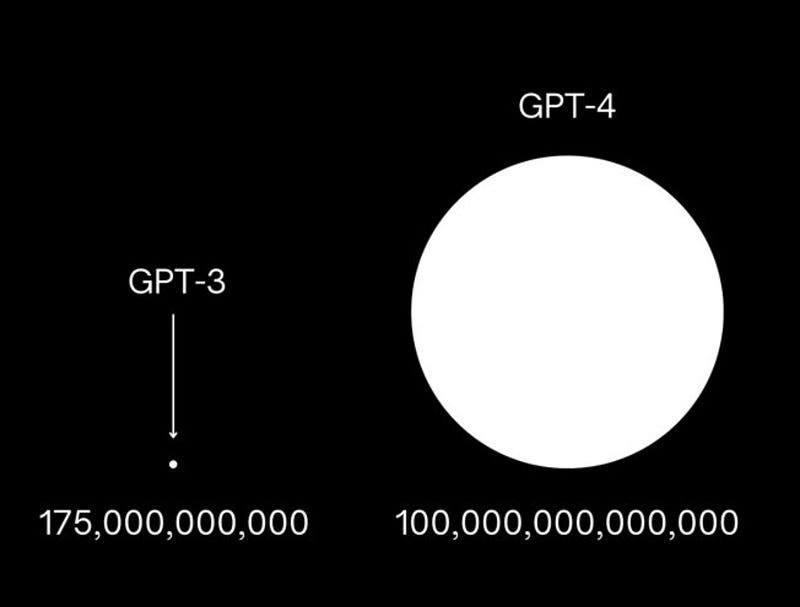
The next ChatGPT4 will be insane. 500 times more powerful than the version we are using (and it is coming soon).
Artificial Intelligence is not a joke. It grows exponentially and by the end of 2023 will be just unstoppable.