
Business of Chat GPT: From Chrome Extensions to Video Essays
Early Adopters, like Open AI, shaping the AI Industry
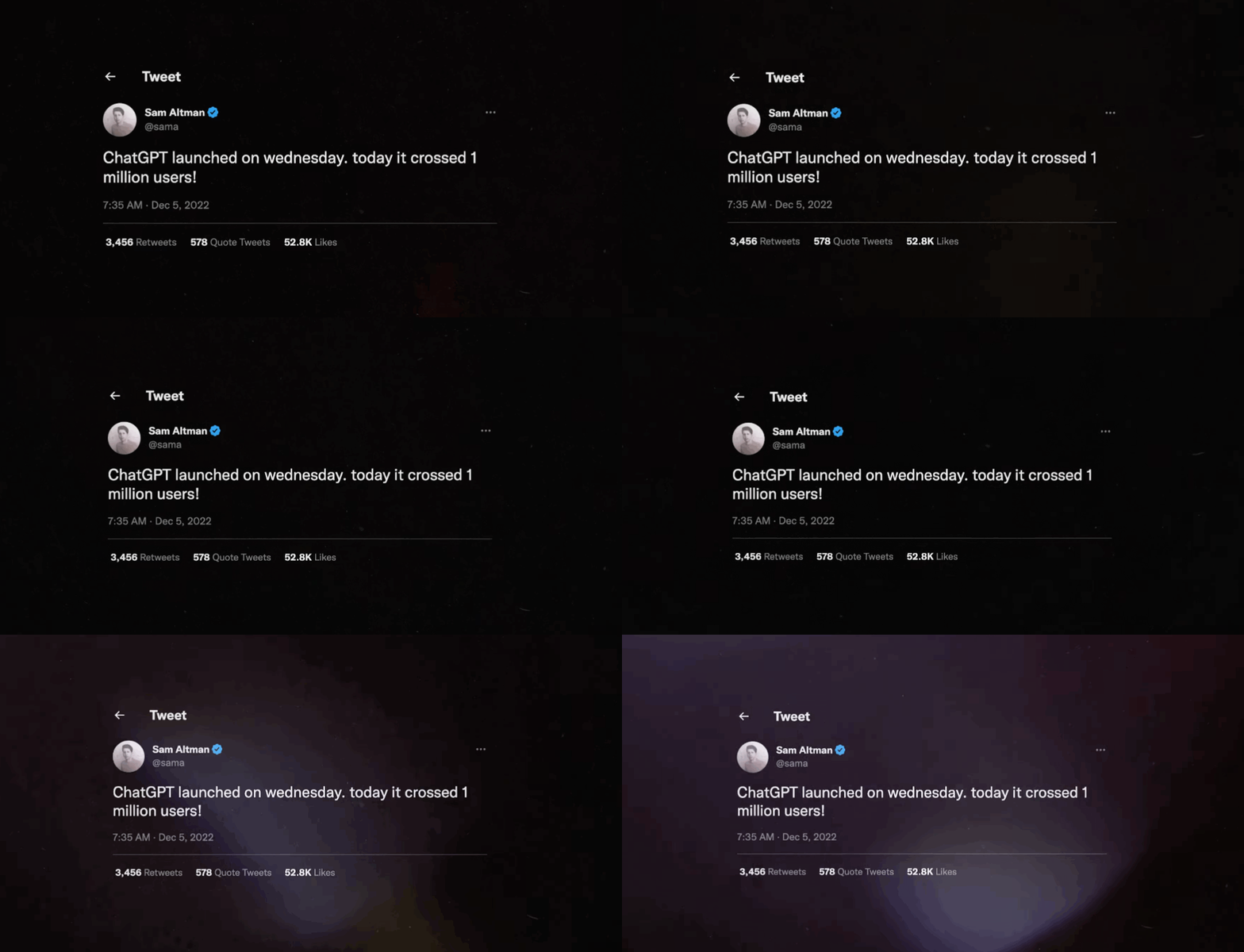
AI has come a long way, and OpenAI is the perfect example of how fast the rate of AI adoption can be in the era of 2023. Included in its recent releases was a large language model named Chat GPT, which attracted 1 million users in just 5 days.

It's more impressive when we consider that even for both Instagram and Spotify it took more than 2 months to get to the equivalent amount of users. Just gets to show how useful this AI tool is to the general public, which explains the fast adoption rate.
More about OpenAI…
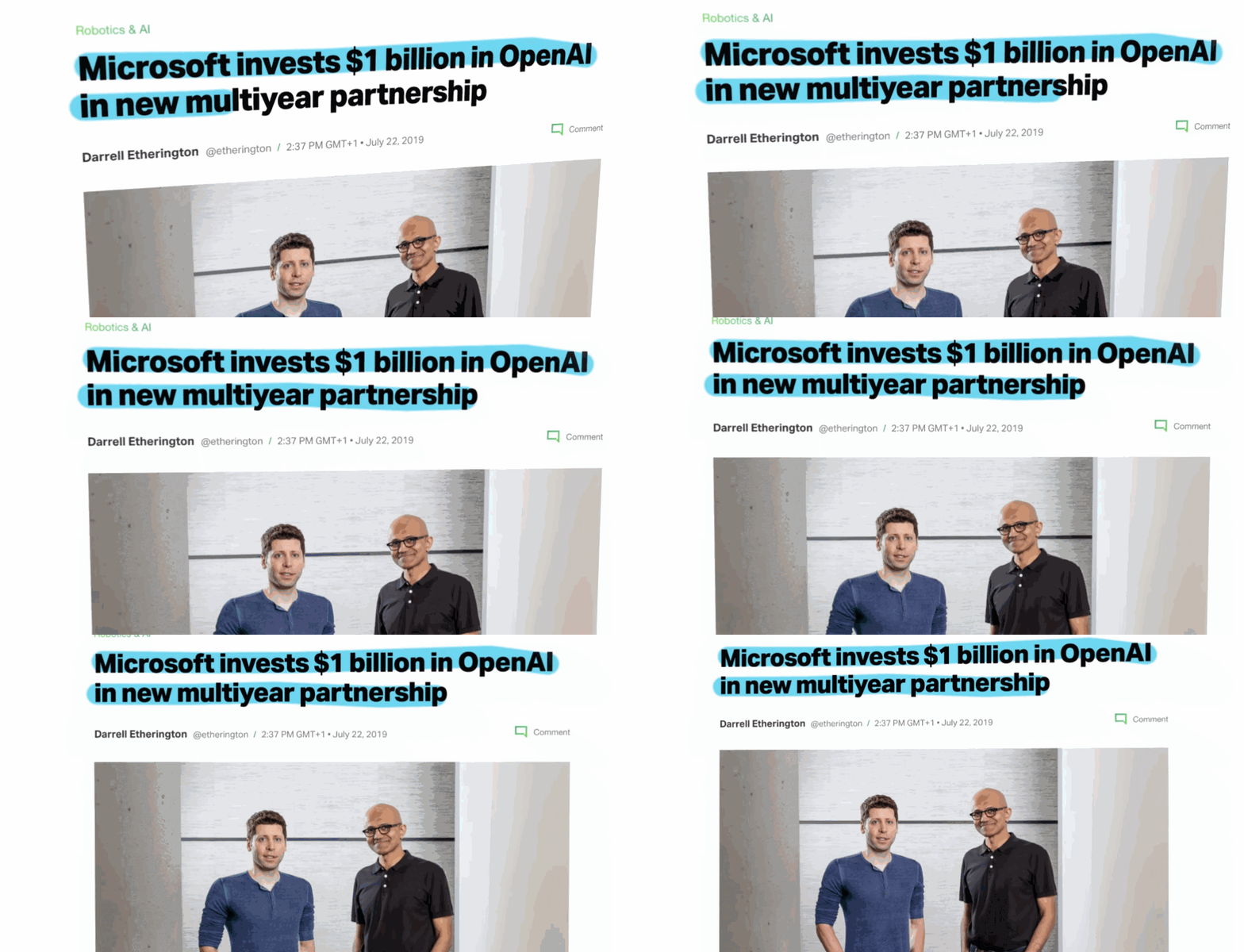
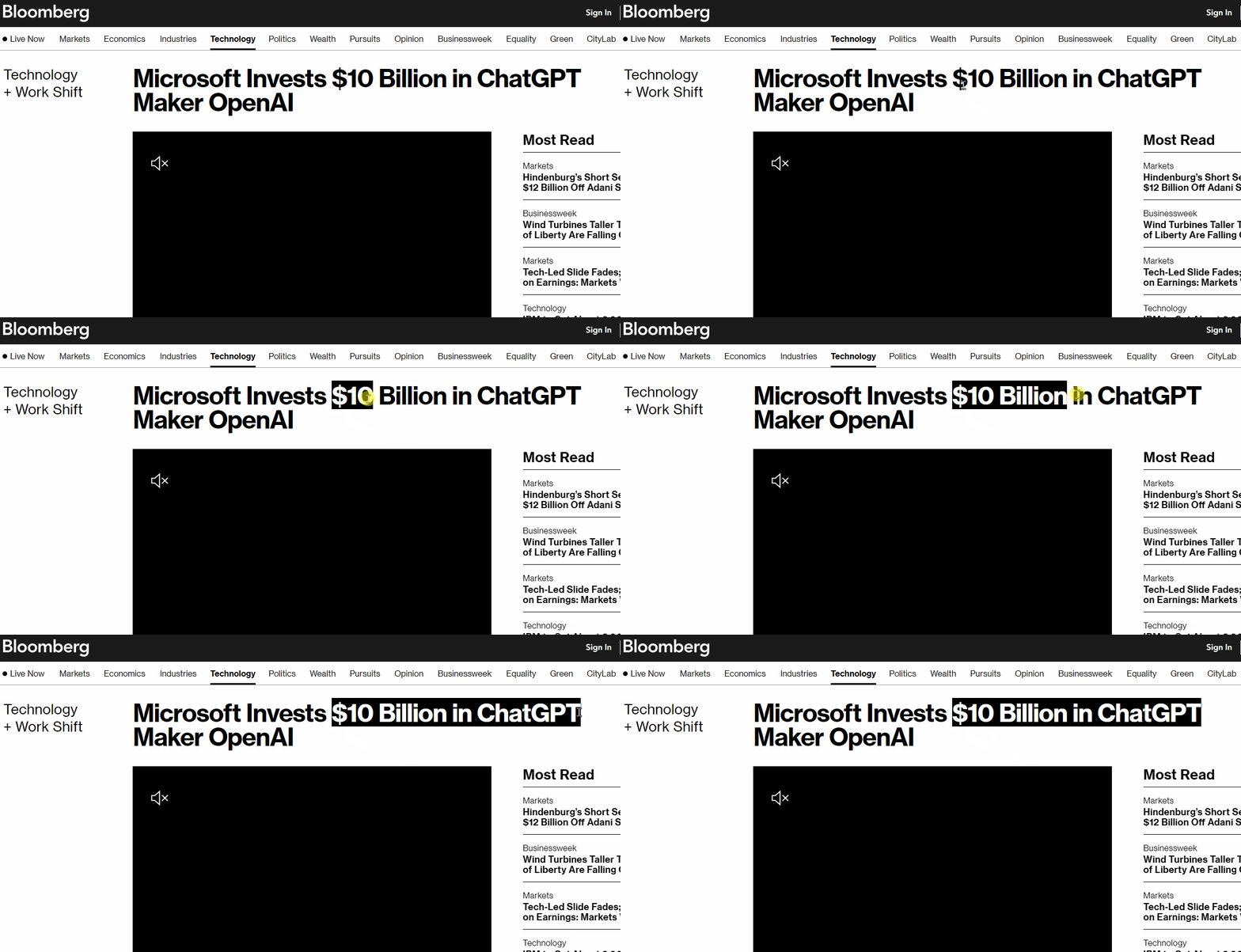
If we take a step back and observe the landscape of AI, we can see that some of the large tech companies are trying their best to be the ‘internet’ of AI. Since it’s hard and expensive to train models as LARGE as GPT3/4, mid-small-sized companies would rather pay a fee to use the pre-trained model in a form of APIs. Open AI is just one of the companies that are actively trying to fill that role. In just 3 years from 2019 to 2022, they were successful at bringing some useful tools to the market.
The release of Chat GPT really started to change how language models are perceived by the general public. Even before the release of Chat GPT, there were already useful language models floating around the internet. Models like OpenAI-Codex were fine-tuned on different programming syntaxes to make it code better. BLOOM is another AI fine-tuned in a similar fashion as Codex, along with a multi-lingual text corpus. Finally, Arcade & Character.ai are some interesting applications where you can interact with different AI models that were fined-tuned to mimic a specific character.
More about Chat GPT…

All the AI models mentioned above are impressive, but none of them have made quite a splash as Chat GPT has done. Why? Here we need to ask how was Chat GPT able to make all this noise, what made it different from language models that came previously? Mostly it’s an innovation related to improving user experience. It’s that much easier and natural to use Chat GPT. In fact, it’s so natural a lot of people don’t say that they are using Chat GPT they say they are interacting with it.
This is a huge deal since the tool is flexible enough that we can customize to fit our own unique problem. For example, I can tell Chat GPT to become a professional marketer when I am writing a blog post, and while applying for jobs I might ask it to become a professional recruiter.
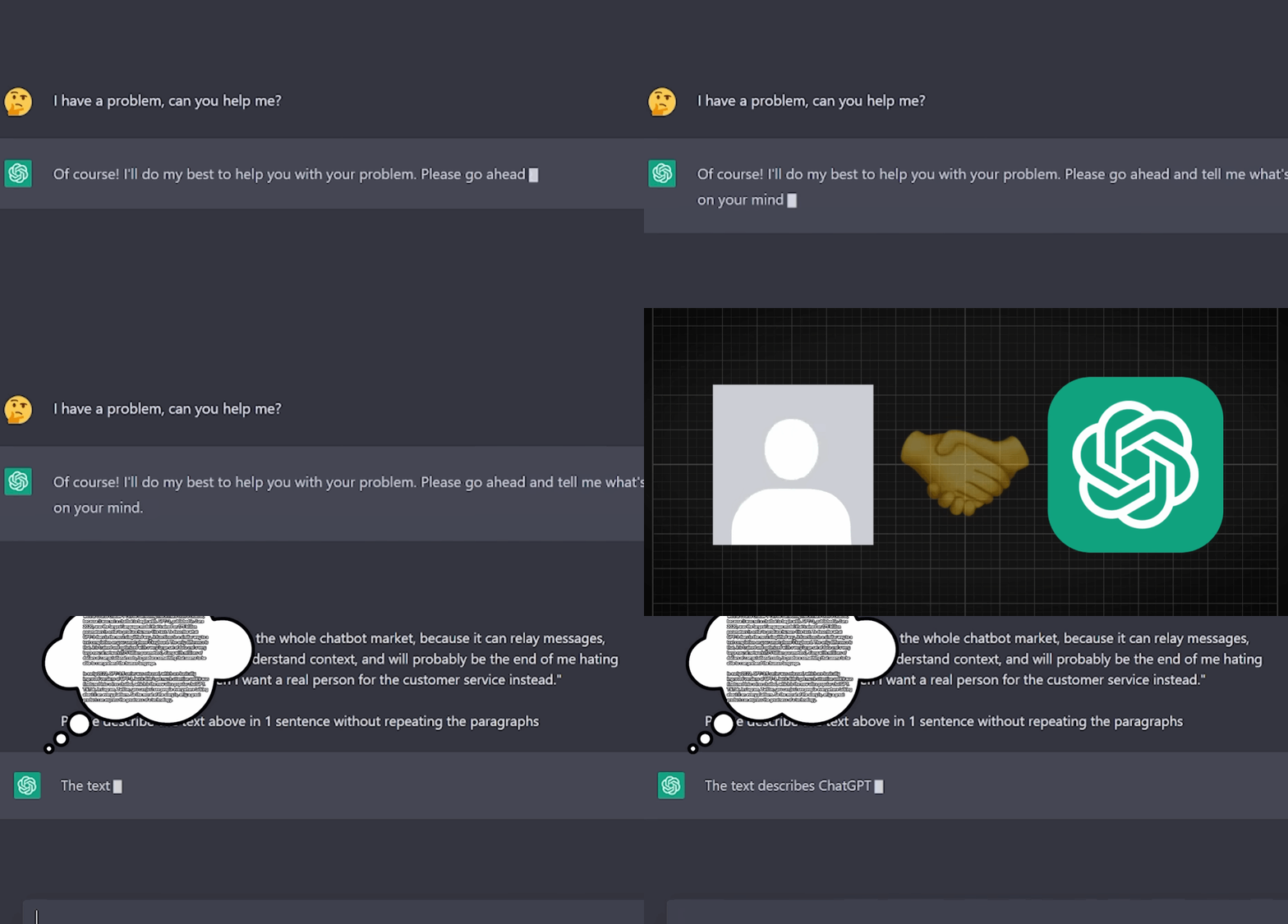
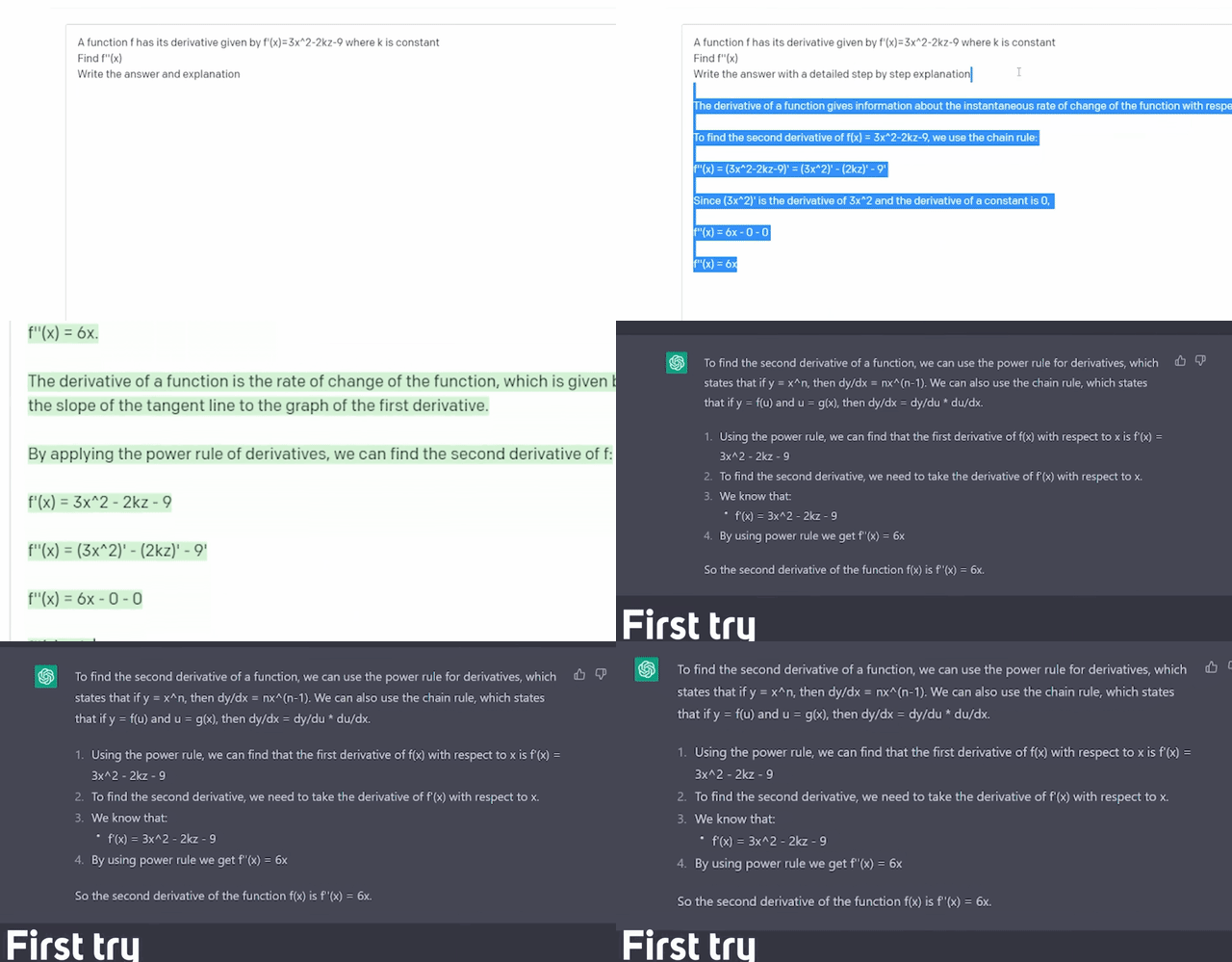
The potential value that this AI tool can bring to this world is huge, mostly by lowering the barrier of automation. And with even more investments along the way, we can only guess what’s next to come. Don’t forget, all of the business automation that is done via these tools will free our time up so we can spend it with our loved ones.
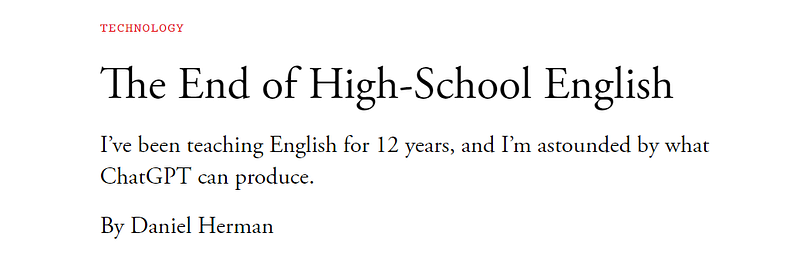
Of course, when innovation happens some players in the market get outdated. And we should not forget about the cost paid in human labor to make all of these innovations possible in the first place. While we shouldn’t stop innovation we also shouldn’t be moving at a speed that is so uncomfortable for the ones who are going to be obsolete. On the upside, the number of tasks automated thanks to AI will give us a chance to rethink how work is done and the relative amount of time needed.
AI tools have huge potential to save us time 🕒
Why now…?
Some experts say that this is a sign of what’s called “Hockey Stick Growth”, where a new innovation gets slowly adopted at the beginning but after a certain threshold, the rate of adoption compounds, and the whole market size grows exponentially.

So right now AI is around (either before/passed) the tipping point of mass adoption. We can make an argument that we already have voice-assisted personal devices everywhere, but they ain’t doing the same sh*t as GPT! 🤣 Here are some signs to take note of when judging if these language model AI tools are at their tipping point.
What are some innovations made by early adopters…?
Early adopters are the individuals who have the most desire or willingness to adopt this technology. In most cases, these individuals are motivated by something personal or the potential of financial gains. At the end of the day, these groups of people are the ones who set the trends and start to build out the overall framework of how the industry is going to form. And there are already signs of small signs of different communities bringing their own innovation to reality.
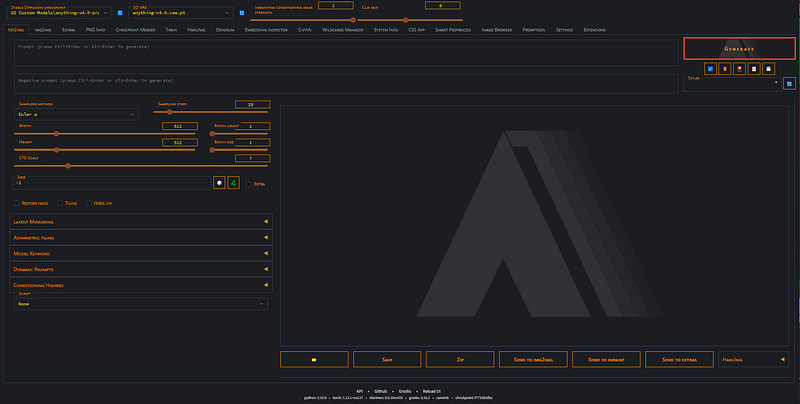
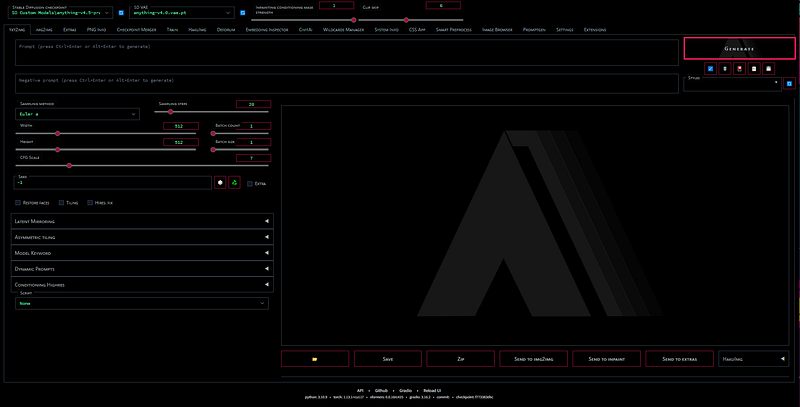
Some AI Art projects involve distributed computing for distributed art generation. Using software like Stable Horde you can effectively donate any excess GPU computing power you have. And as return you can also take advantage of Stable Horde’s large computing community, creating your own AI in images in seconds. Other innovations are simpler, the above two image shows an extension for Automatic1111 WebUI, adding more themes to suit different users' needs.
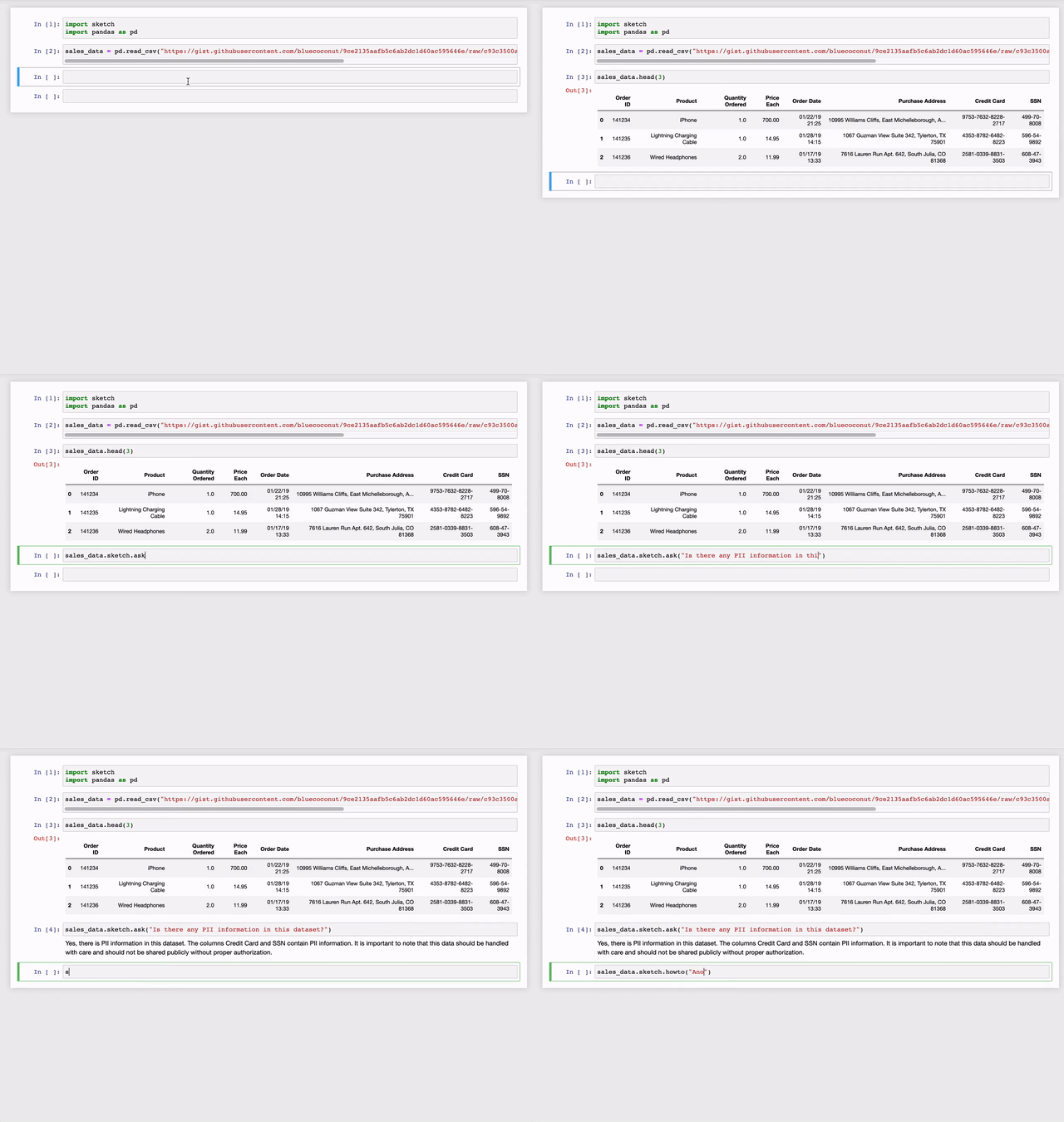
Finally, interactive language tools are making their way into data science as well, tools like Sketch let you directly ask questions about the data by direct text. While these innovations are small, it proves how active the AI community is. New tools that aim to meet different use cases pop up each day, making the whole ecosystem more efficient.
Business around Chat GPT
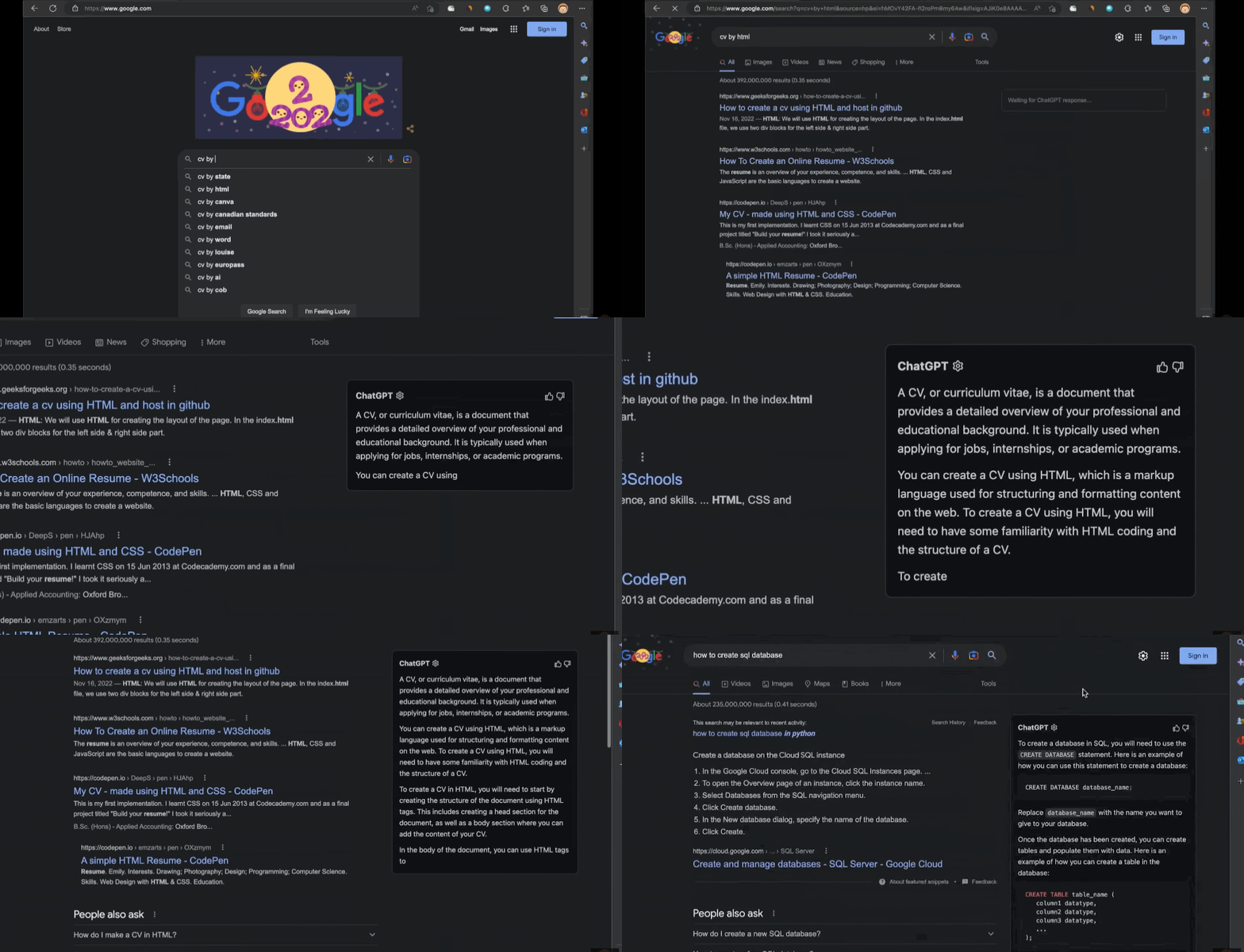
Other than using Chat GPT to build a web browser, or learning more advanced prompt engineering. To start off there is the smaller market of expanding chrome extensions. Add-ons like Chatonai allow you to directly use Chat GPT while you are surfing on the web, just like how you see above. Thanks to the flexibility of language, Chat GPT can be used in many different use cases, applications related to augmenting one’s writing ability, or even summarizing YouTube videos. A lot of common theme around this type of technology is saving time via automation.
OpenAI is becoming the “internet” of AI 🌐
Moving on to bigger markets, other companies are actually quickly adopting OpenAI’s API to create their own AI. The Notion team has recently released its own AI which was built on top of GPT3. Also, it's a well-known fact that the professional copywriting bot Jasper was also powered by GPT3. More and more of these tools are being introduced to the general public, each of them trying to solve a specific use case. It’s really exciting to see how the landscape progresses.
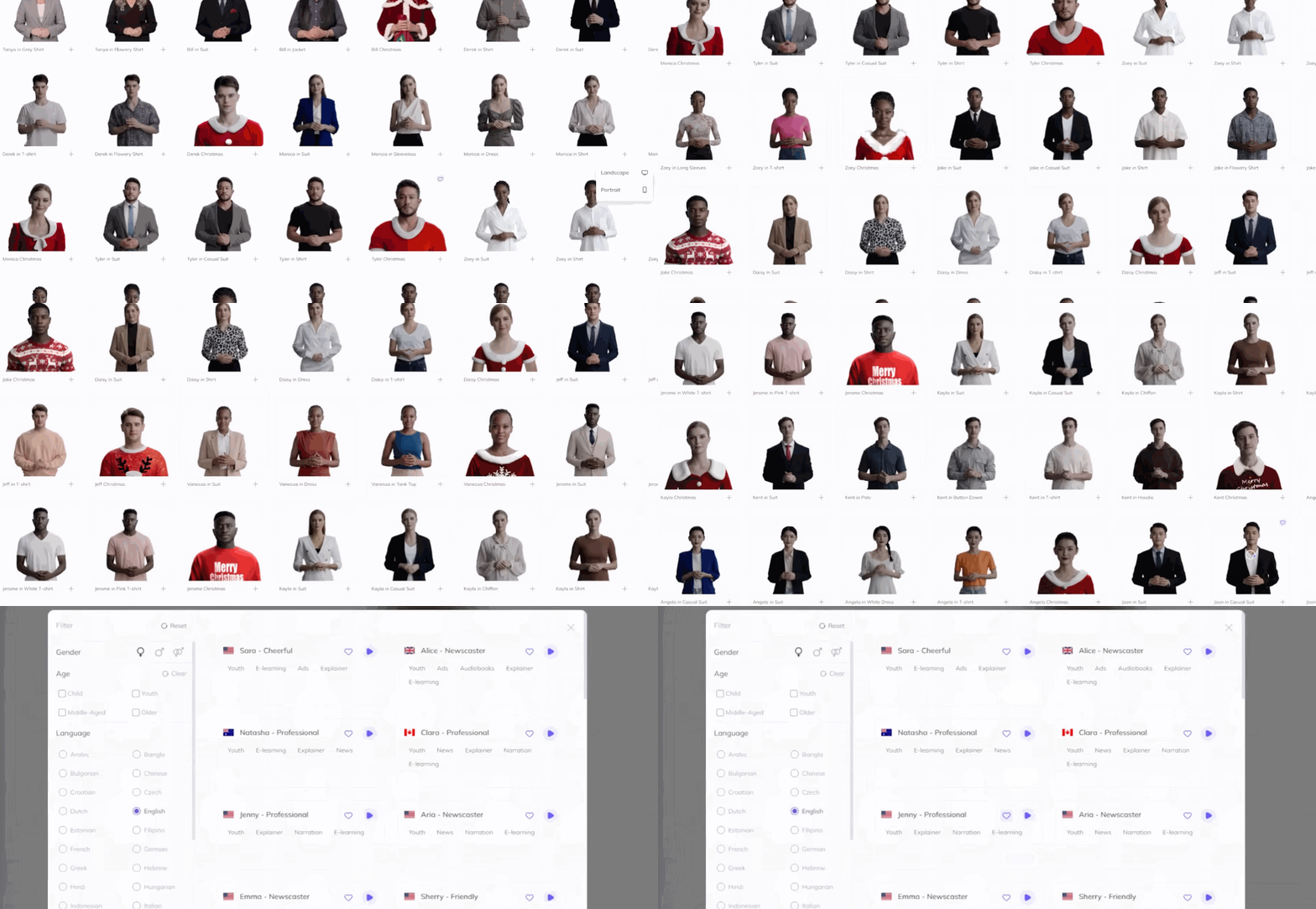
Finally, there is a business that utilizes more than language models, these bit more complex business models where companies utilize both vision & language models to build a product/service around it. A company like Movio generates a video of a spokesperson reading out the script we give it to via AI. And above we can see a large selection of spokesperson avatars we can choose from. Other AI tools restore faces from old photos, utilize an audio model along with a language model to convert videos into blogs, create presentational materials, and compose new music for you. If you are overwhelmed with all of these services coming out and don’t know which one to choose. Don’t worry, there is a site that tracks different AI tools, you know the market is actively growing when there is a custom tracker to solve different needs.
The AI tool market is growing so rapidly, it has its own tracker 🤯
Conclusion
At the end of the day, we should/can not stop innovation, while we should be cautious we shouldn’t be afraid. Hopefully, we should be moving at a pace that the majority of society’s population is comfortable with. And make sure the winners of AI aren’t only composed of large big tech companies. There are very specific use cases where AI can play a huge role, and I believe this will translate into new opportunities for all kinds of players.
If you like my writing and would like to read more, please refer to my profile. Notifications are a great way to stay in touch, if you want to be notified when I post, consider subscribing and finally why not join the Medium community?