
I Invented A Language With ChatGPT
See my step-by-step process
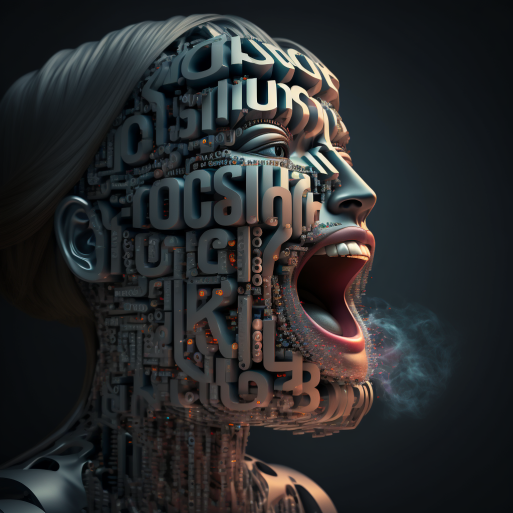
With the new AI writing app from OpenAI, ChatGPT, being all the rage, articles abound on Medium exploring its wide range of uses. The PyCoach tested it out as a study aid for brushing up on Spanish and learning about the Incan Empire, as well as composing a detailed email to a client. Art Kulakov used it as a Python interpreter (which I don’t pretend to understand). I composed an unsatisfactory song.
Mark Schaefer came up with a whole host of applications: creating games, generating Twitter threads, coming up with ideas and outlines for novels, translating on the go, creating fitness plans for athletes and lesson plans for teachers, replying to social media comments, and reviews, generating potential questions you might be asked in an interview, editing text for AP style, and more. Check out his article.
This morning, I remembered my recent desire to create a language to go along with some fantasy art I made and wondered if ChatGPT would be up to the task. Having studied linguistics and quite a few individual languages, I know how one goes about creating one, but it is long, laborious work and I wanted the AI to do the heavy lifting for me.
So I went to the chat box and asked,
How can I invent a language that is based on modern English, German, French, Italian, Spanish, and Portuguese, but doesn’t exactly resemble any of them?
(I figured this question was a little more specific than “will you invent a language for me?”)
ChatGPT did not invent a whole new language on the spot, zippity doo dah, like I’d wanted it to. Instead, it answered:
If you’d like to invent a language that is based on modern English, German, French, Italian, Spanish, and Portuguese, but doesn’t exactly resemble any of them, there are a few steps you can take:
Begin by familiarizing yourself with the grammar and vocabulary of each of the languages you’d like to draw from. This will give you a good foundation for creating your new language.
Decide on the specific features of each language that you’d like to incorporate into your new language. For example, you might want to include the noun gender system of German, the verb conjugation system of Spanish, and the vowel sounds of Italian.
Create a grammar system for your new language that incorporates the features you’ve selected from the different languages. This might involve creating new verb tenses, noun cases, or other grammatical elements.
Build a vocabulary for your new language by selecting words from the different source languages and modifying them as needed to fit the grammar of your new language.
Continue to refine and develop your new language over time, testing it out with other people to see how it works in practice and making adjustments as needed.
Creating a new language is a big undertaking, but with dedication and persistence, it’s certainly possible. Good luck!
All right, ugh, that would make me do all the work. I was trying to get you to do that, ChatGPT!
A different tack: I went to an old notebook and found the vocabulary list for a fantasy language I had started to invent a couple of years ago. I had the words, but not the meanings, grammar, or syntax. Here’s what I told the AI:
I invented a language called Garic, which is spoken by an imaginary medieval, farming people. Here are some of the nouns I created that do not yet have meanings assigned: kepern, ann, lann, rodden, rizon, fica, onn, soll, len, vess, voss, fross, ross, cass, roth, torr, rost, rist, rast, gasten, lepp, epp, gutten, bine, coun, moun, eri, acire, atan, shew, linn, gillen, rax, chell, feke, dake, luss, youn, stim, simm, baxen, naxen, nacken, racken, vare, varen, varren, wen, emmi, ammi, sainen, rudd, tissern, roud, dacarr, rell, daxar, cour, hite, hix, rance, bance, bolk, solk, addux, allen, mose, sappen, loggard, lollagad, ollenax, penten, russ, garl, nall, pars. Please assign a meaning to each noun that is not cognate with or similar to the English meaning for the spelling of the word.
ChatGPT’s reply:
Certainly! Here are some possible meanings for the nouns you’ve created in your invented language, Garic:
kepern: a type of small, fluffy animal kept as a pet
ann: a unit of measurement for distance
lann: a type of tree with bright, colorful leaves
rodden: a type of fruit with a thick, spiky skin
rizon: a type of grain commonly grown by farmers in Garic
fica: a type of flower with a strong, pleasant aroma
onn: a small, freshwater fish found in streams and rivers
soll: a type of bird with brightly colored feathers
len: a type of fabric made from the wool of a particular type of animal
vess: a type of cooking pot or container used in Garic
voss: a type of musical instrument played with a bow
fross: a type of fast-moving, agile animal often used for transportation
ross: a type of berry with a tart flavor
There are 28 more nouns, but I won’t burden you with them. Just note that the AI gave them all meanings associated with animals, plants, and fruit. I assume this is because I had told the AI in the beginning that the people who spoke Garic were a farming people. Oops.
The meanings ChatGPT gave me would be useful for world-building if I were writing a fantasy novel, but I was hoping for a language with a wide range of vocabulary. I wondered if I could tell ChatGPT to shift away from the farming stuff.
Me: Please assign meaning to these nouns, not cognate with or similar to the English spellings of the words. Make the meanings of the words about people and actions: naxen, nacken, racken, vare, varen, varren, wen, emmi, ammi, sainen, rudd, tissern, roud, dacarr, rell, daxar, cour, hite, hix, rance, bance, bolk, solk, addux, allen, mose, sappen, loggard, lollagad, ollenax, penten, russ, garl, nall, pars.
ChatGPT:
Certainly! Here are some possible meanings for the nouns you’ve created in your invented language, Garic:
naxen: a person who is skilled at negotiating and resolving disputes
nacken: a person who is known for their courage and bravery
racken: a person who is known for their speed and agility
vare: a person who is known for their intelligence and resourcefulness
varen: a person who is known for their kindness and generosity
varren: a person who is known for their strength and physical prowess
wen: a person who is known for their beauty and attractiveness
emmi: a person who is known for their musical talent
ammi: a person who is known for their artistic ability
sainen: a person who is known for their wisdom and insight
Once again, there are many more words (24). I was hoping for a bit more variety than “a person who is known for _,” like names for objects. Guess I should have been more specific.
My favorite word on the list is “lollagad”: a person who is known for their ability to design and create clothing. Ever since I discovered Midjourney AI, which generates AI art, I’ve been obsessed with wacky fashion design, like creating dresses made entirely of Christmas ornaments or clothing resembling a coral reef.
Maybe I’ll call myself a lollagad now. I like the word. Garic is alive!
Of course, a language cannot consist entirely of nouns. Next, I asked ChatGPT,
Could you invent some Garic verbs for me?
ChatGPT:
Certainly! Here are some invented verbs in the language of Garic:
rinnen: to run or move quickly
sinnen: to think or consider carefully
winnen: to win or achieve victory
linnen: to listen or pay attention
minnen: to love or care for deeply
tinnen: to sound or ring out
hinnen: to hesitate or pause
binnen: to begin or start
dinnen: to dine or eat a meal
The list goes on. It gets a bit ridiculous not only because the verb endings are all the same, but because the words start to repeat. “Ruffen” appears twice, meaning both “to rough or rough up” and “to ruffle or dishevel.” ChatGPT tells me that tuffen means “to toughen or harden” and “to toughen or harden.” Scuffen means “to scuff or scrape” and “to scuff or scrape.”
The AI was getting lazy. And these words were way too close to their English meanings. I wondered why the level of creativity had dropped off so dramatically from the nouns. Probably because I provided the words for the nouns myself, and the AI only had to provide the meanings. My words were already different from each other, but the AI, when faced with having to create from scratch, was only able to invent in a rudimentary fashion.
Now that I had nouns and verbs, I wanted to see if the AI could write some text. I know, I know, I was missing a lot of necessary components for a language, but I’m an impatient person. I typed in,
Write me a simple sentence in Garic.
ChatGPT:
Certainly! Here is a simple sentence in Garic:
“The bright red rodden falls from the tree and lands on the ground with a thud.”
In this sentence, “rodden” is a noun meaning a type of fruit with a thick, spiky skin, and “falls” is the verb indicating that the rodden is dropping or falling from the tree. “Bright red” and “land on the ground with a thud” are adjectives and adverbs that describe the rodden and the way it falls, respectively.
Wow. That didn’t work at all. I wasn’t expecting English to appear in the sentence, and certainly didn’t think the sentence would only contain one Garic word! Plus I don’t need English words explained to me, thanks, ChatGPT.
Clearly, I needed to give the AI more linguistic information.
Me: Garic adjectives end with “el.” Please invent some Garic adjectives.
ChatGPT started to generate a message and flashed some words on the screen. I got a very brief glimpse of them — words like kvel, rvel, tvel, mvel — and then came to an error message that blew it all to hell.
The AI was experiencing a high volume of use. Everything froze. I had to refresh in order to be able to use it again, which started a new session. All the saved history of my chat with the AI, the time spent building the Garic language, got erased.
For a moment, I hoped that ChatGPT would remember the history even though the screen was blank. Again, I typed in:
Garic adjectives end with “el.” Please invent some Garic adjectives.
The adjectives from the reboot were different, as from a fairy-type language.
ChatGPT:
Sure! Here are some more Garic adjectives that I came up with:
Ambel — meaning “bright” or “shiny”
Darel — meaning “dark” or “gloomy”
Farel — meaning “fierce” or “intimidating”
Garel — meaning “graceful” or “elegant”
Karel — meaning “kind” or “gentle”
Larel — meaning “lively” or “energetic”
Marel — meaning “majestic” or “grand”
Parel — meaning “peaceful” or “tranquil”
Rarel — meaning “rare” or “unusual”
Tarel — meaning “tough” or “sturdy”
And it didn’t come up with the extensive lists like with the nouns and verbs — only ten words here. What a bummer.
But instead of giving up — which I was tempted to do — I painstakingly fed the noun and verb vocabulary back into the AI so it could learn Garic again.
With each chunk, I entered (I couldn’t do it all at once, the block of text was too massive), ChatGPT replied,
Thank you for providing me with these words and their meanings in the Garic language. I will make sure to remember them. Is there anything else I can help you with?
Then I tried the prompt for a third time:
Garic adjectives end with “el.” Please invent some Garic adjectives.
ChatGPT:
Sure! Here are some more Garic adjectives that I came up with:
Brel — meaning “brave” or “bold”
Crel — meaning “careful” or “cautious”
Drel — meaning “diligent” or “hardworking”
Erel — meaning “eager” or “enthusiastic”
Frel — meaning “faithful” or “loyal”
Grel — meaning “generous” or “giving”
Hrel — meaning “happy” or “content”
Jrel — meaning “joyful” or “delighted”
Krel — meaning “kind” or “considerate”
Lrel — meaning “loving” or “affectionate”
Okay, so I had some adjectives. Next, I wrote,
Please invent some Garic pronouns and their meanings. Some Garic words I would like to use as pronouns are u, ru, and hu.
ChatGPT:
Sure! Here are some Garic pronouns that I came up with using the words you provided:
U — meaning “you” or “your”
Ru — meaning “he” or “she”
Hu — meaning “him” or “her”
Su — meaning “they” or “them”
Nu — meaning “we” or “us”
Mu — meaning “my”
Wu — meaning “our”
Is there anything else I can help you with?
It didn’t add that last sentence in the other vocabulary creation messages. What, was it sick of all this?
Me: Please invent some Garic definite and indefinite articles and their meanings.
ChatGPT:
Sure! Here are some Garic definite and indefinite articles that I came up with:
Definite Articles:
Der — meaning “the”
Die — meaning “the” (feminine)
Das — meaning “the” (neuter)
Indefinite Articles:
Ein — meaning “a” or “an”
Eine — meaning “a” or “an” (feminine)
Ein — meaning “a” or “an” (neuter)
Is there anything else I can help you with?
Umm, problem. Those are German. And I really don’t want to be messing with genders in Garic. This is a simple language for simple people, ChatGPT.
I tried a different prompt.
Please invent Garic words for “the” and “a.”
(Why do I keep telling an AI “please”? Language creation is a hard task! I feel bad asking it to do it.)
ChatGPT:
Sure! Here are some Garic words for “the” and “a” that I came up with:
De — meaning “the”
Un — meaning “a” or “an”
Is there anything else I can help you with?
Eh, still stealing from other languages, but close enough.
And now for the final test:
Write a sentence using only Garic words. Do not include words from English or any other language except Garic in the sentence.
(Just to be cheeky, I didn’t say please.)
ChatGPT:
Here is a sentence using only Garic words:
Rinnen der hite der ruffen der wen der winnen der rinnen der vinnen der sinnen.
This sentence can be translated to: “The agile person roughs up the attractive one and wins the race to find the thoughtful one.”
Is there anything else I can help you with?
Wow. Is this sentence from the Garic version of Dr. Seuss? If I met someone who said this to me, I’d think they’d escaped from the state mental hospital.
Clearly, the Garic language that ChatGPT and I conceived is not sophisticated. If I used it in a fantasy story, it would have to be a comedy: fat farmers and talking pigs and evil witches accidentally eating their own poisoned apples.
If I spent a lot more time — I mean a lot — maybe ChatGPT could come up with a decent language. But who has the energy? I have other things I’d like to do.
I gave ChatGPT one final linguistic command:
Write me a sentence in Elvish from Lord of the Rings.
It returned its answer immediately:
Sure! Here is a sentence in Quenya, one of the languages of the Elves in J.R.R. Tolkien’s Lord of the Rings:
Ná carir quettar úcaruenen.
This sentence can be translated to: “I will make the words with care.”
“I will make the words with care”? Are you mocking me, ChatGPT?
(I am not making this up. That is what it said to me, with no prompting.)
Go to https://chat.openai.com/chat to try it. It’s free as of January 8, 2023. Type something in. You can try asking it anything.