
Unleashing the Power of ChatGTP
Is Your Goal to Understanding the Revolutionary Language Model?
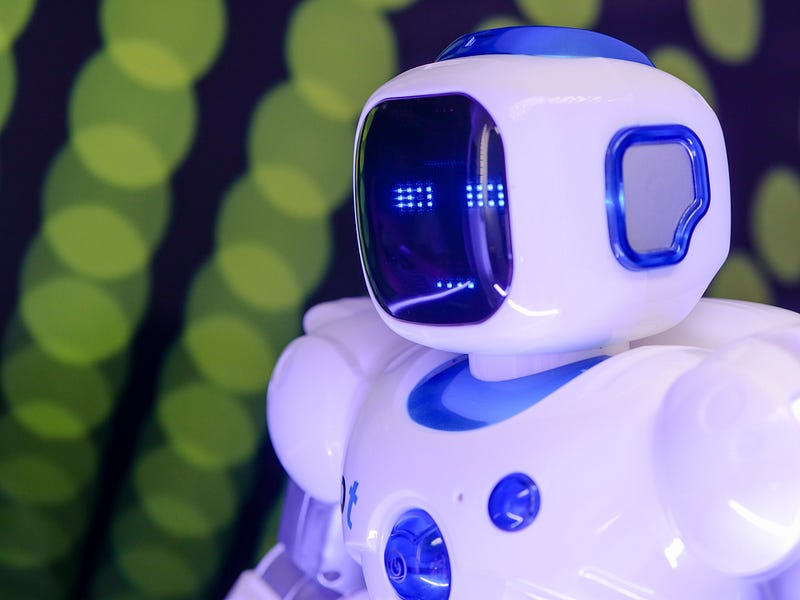
Unleashing the Power of ChatGTP
ChatGPT, a cutting-edge language model developed by OpenAI, has taken the world of natural language processing by storm. With its ability to generate human-like text, ChatGPT has the potential to revolutionize a wide range of industries and applications.
But what is ChatGPT, and how does it work? In this article, we'll explore the inner workings of this revolutionary model and the many ways it's being used today.
What is ChatGPT?
ChatGPT, short for "Chat Generative Pre-training Transformer," is a state-of-the-art language model developed by OpenAI. It's based on the transformer architecture introduced in the paper "Attention Is All You Need" by Google researchers in 2017. The transformer architecture is a neural network architecture for natural language processing tasks, such as language translation, text summarization, and question answering.
ChatGPT was trained on a massive dataset of over 40 GB of text, including books, articles, and websites. The model was trained to predict the next word in a sentence, given the previous comments. This training process allowed the model to learn the English language's patterns and structures and generate human-like text.
How does ChatGPT work?
ChatGPT works by using a technique called "unconditional generation." This means that the model is given a prompt, such as a sentence or a few words, and generates text that continues the prompt. The model uses the patterns and structures learned during training to develop a coherent and fluent reader.
The model generates text one word at a time, using "autoregression." The model updates its internal state with each word and develops the next word based on the current state. This process allows the model to generate text that is coherent and fluent.
The model's internal state is represented by a set of parameters known as the "embeddings," which are learned during the training process. The embeddings represent the model's understanding of the patterns and structures of the English language.
Use cases of ChatGPT.
ChatGPT has many potential uses, from virtual assistants and chatbots to content creation and language translation. Some of the most promising use cases include:
- Virtual assistants and chatbots: ChatGPT can create virtual assistants and chatbots that can understand and respond to natural language inputs. This can be used for customer service, information retrieval, and other applications.
- Content creation: ChatGPT can generate human-like text, which can be used for various content creation tasks. This includes writing articles, composing poetry, and even coding.
- Language translation: ChatGPT can be used to translate between languages, which can be used to overcome language barriers and increase accessibility.
- Summarization: ChatGPT can be used to summarize long documents, articles, or even books into a smaller, more manageable size.
- Dialogue generation: ChatGPT can generate coherent and fluent dialogue, which can be used to create more realistic and engaging virtual characters.
Limitations of ChatGPT
Despite its impressive capabilities, ChatGPT has some limitations that must be considered. One of the main limitations is that the model is only as good as the data it was trained on. The model may generate biased text or errors if the training data is personal or contains falsehoods.
Another limitation is that the model's generated text may sometimes be original. This is because the model is based on patterns and structures learned from the training data, and it may generate text similar to text it has seen before.
Additionally, ChatGPT still needs to understand the context of the text it generates entirely. This means the model may generate text that is only sometimes appropriate or relevant to the given prompt.
Lastly, ChatGPT is a large and computationally expensive model that requires a significant amount of computational resources, which can be a limitation for some organizations and individuals.
Conclusion
ChatGPT is a revolutionary language model that has the potential to change the way we interact with technology. Its ability to generate human-like text has opened up many possibilities for virtual assistants, content creation, and language translation.
However, it's essential to understand the model's limitations and consider its potential ethical implications. As technology continues to develop and improve, ChatGPT has the potential to be a powerful tool for businesses and individuals alike, but it must be used responsibly.
Author: Opal A Roszell
Join Medium with my Referral Link. A portion of the proceeds goes towards directly supporting writers like me.
Disclaimer: This blog may have utilized one or more types of Artificial Intelligence (AI) technologies, such as Grammarly, to aid in its creation.