avatarGhailene ben Marzouk

Summary

The website provides a guide on creating and using embedded task forms within a Camunda Spring Boot project, detailing the process from setting up the project to executing the forms within a workflow.

Abstract

The article outlines the process of integrating embedded task forms in a Camunda workflow using a Spring Boot project. It begins by illustrating the default project structure, which includes "start-form.html" and "task-form.html" as examples of task forms. The author explains how to create a new BPMN file and embed the task forms, which are used to collect and display variables within the workflow. The guide demonstrates how the start event triggers the embedded task form to input a name, which is then accessible in the subsequent user task to input an "approved" variable. The article emphasizes that the embedded forms allow for variables to be added to the execution scope, with an example showing a read-only name variable in the user task form. The author provides a link to a GitHub repository with the project's source code and invites readers to contact them for further information. Additionally, the article lists other Camunda-related topics covered in the author's previous writings.

Opinions

  • The author believes that the embedded task form is a key feature in Camunda for collecting user input during a workflow.
  • The article implies that using embedded forms simplifies the process of managing variables within the execution scope.
  • The author suggests that the read-only display of variables, such as the "name" in the user task, is a useful feature for users to reference previously entered data.
  • The provision of a GitHub repository link indicates the author's commitment to open-source practices and support for the Camunda community.
  • By mentioning related articles, the author conveys a comprehensive approach to learning Camunda, encouraging readers to explore more advanced topics.

How to use Embedded Task Form in Camunda

Embedded task form:

Now we gonna create a spring boot camunda project, as we can see the project structure by defaut contains two forms example, the first one named “start-form.html”:
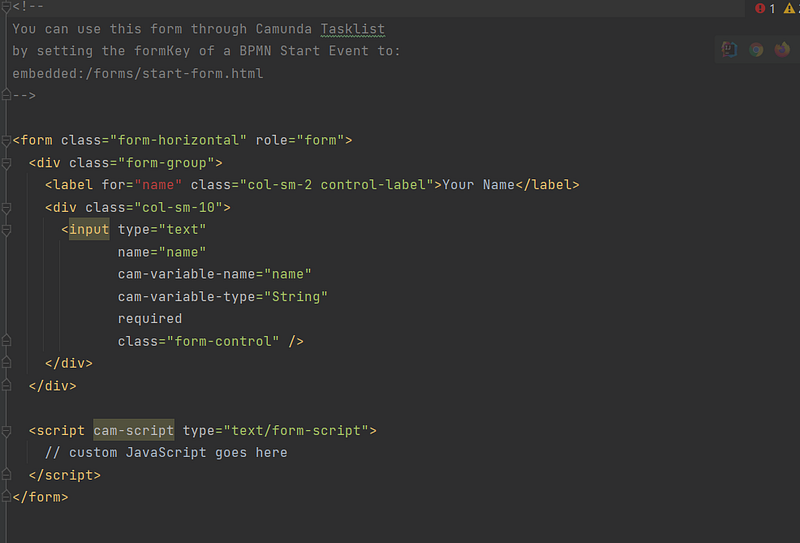
it contain the variable “name” it will be added to execution scope

the second form named “task-form.html”:
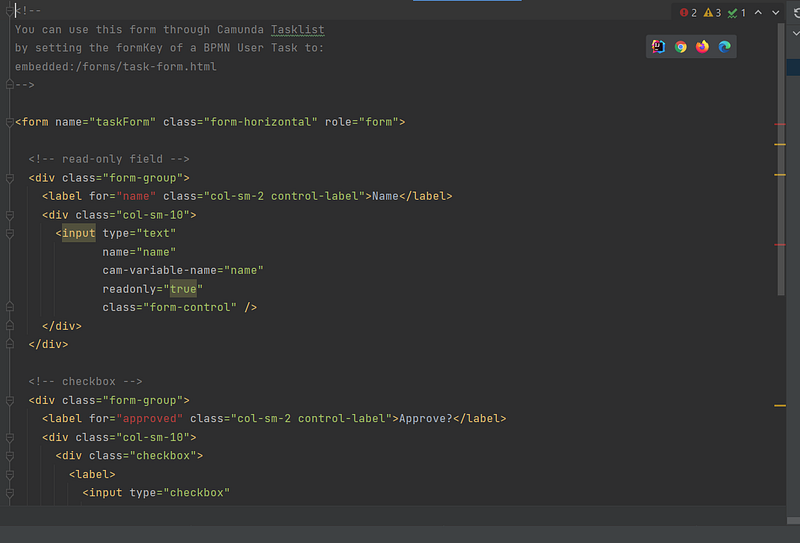
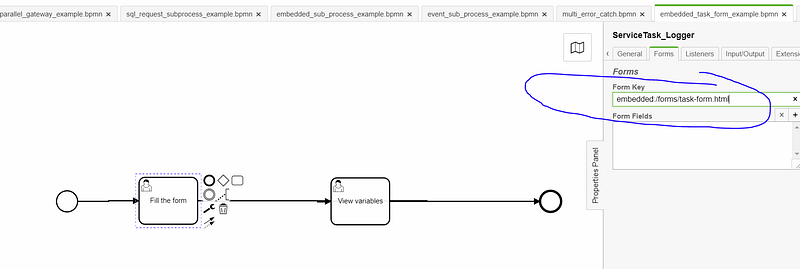
what we need to do is to create another bpmn file :
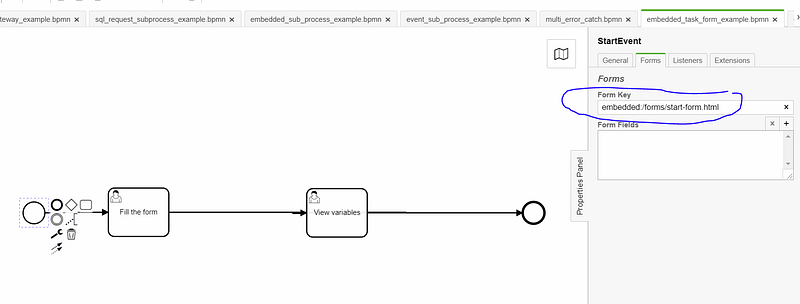
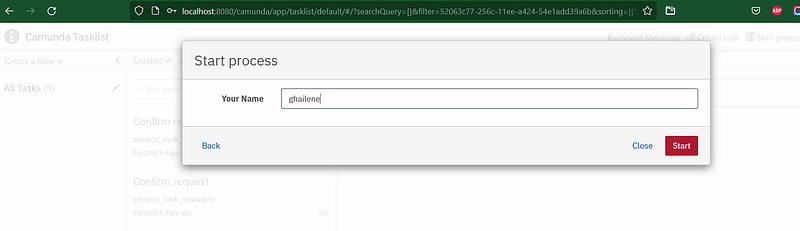
let s run the project , and start the process:

as we can see here : the start event use the embedded task form, it will ask us to insert the name
after that in the fill the form task (the user task), it will us to insert the approved variable and show also the name variable because it was inserted in the execution scope:
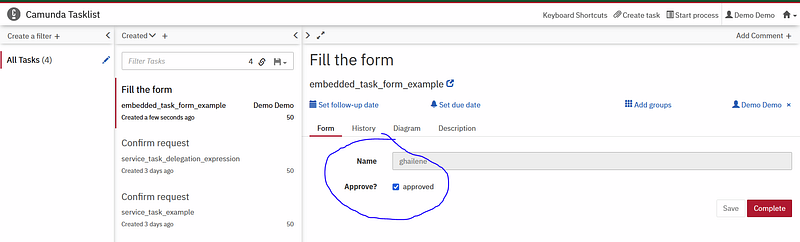
the name here , is in ready only mode.

github repo:https://github.com/ghailen/camunda_script_tast_external/tree/embedded_task_form

Thank you for reading my article, please contact me for any further information.

Other Camunda topics:

camunda task events notifier camunda genericuser task listener in camunda task marker multi-instance taskmarker loop in camunda feel language camunda how to work with dmn how to work with dmn how-to-use-embedded-task-form-in-camunda all-about-camunda-database error-handling-in-camunda sub-process-in-camunda gateways-in-camunda camunda-with-spring-boot-example task-in-camunda events-in-camunda

Embedded
Camunda
Bpmn
Bpmn2
Tasks
Recommended from ReadMedium