
Day 3 of 30 days of Machine Learning Ops
With examples and projects…
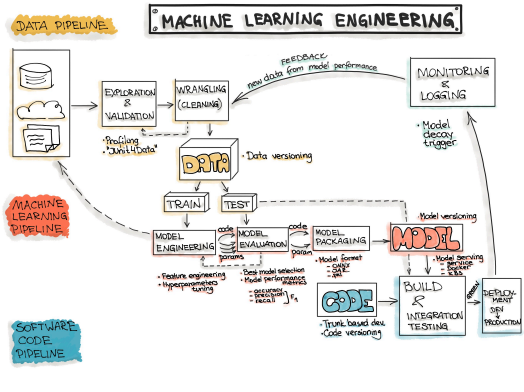
Welcome back peeps to the Day 3 of 30 days of MLOps. You can find Day 1 below —
Day 2 :
On Day 3, we will covering —
1. Pandas and Numpy — Part 2
Projects Videos —
All the projects, data structures, SQL, algorithms, system design, Data Science and ML , Data Analytics, Data Engineering, , Implemented Data Science and ML projects, Implemented Data Engineering Projects, Implemented Deep Learning Projects, Implemented Machine Learning Ops Projects, Implemented Time Series Analysis and Forecasting Projects, Implemented Applied Machine Learning Projects, Implemented Tensorflow and Keras Projects, Implemented PyTorch Projects, Implemented Scikit Learn Projects, Implemented Big Data Projects, Implemented Cloud Machine Learning Projects, Implemented Neural Networks Projects, Implemented OpenCV Projects,Complete ML Research Papers Summarized, Implemented Data Analytics projects, Implemented Data Visualization Projects, Implemented Data Mining Projects, Implemented Natural Leaning Processing Projects, MLOps and Deep Learning, Applied Machine Learning with Projects Series, PyTorch with Projects Series, Tensorflow and Keras with Projects Series, Scikit Learn Series with Projects, Time Series Analysis and Forecasting with Projects Series, ML System Design Case Studies Series videos will be published on our youtube channel ( just launched).
Subscribe today!
Highly Recommended Data Science and Machine Learning Courses that you MUST take ( with certificate) —
Find best data science and data engineering courses here
Find best Machine Learning and Deep Learning courses here
Our whole syllabi for 30 days of MLOps is as follows —
1.MLOps Basics and Principles
2. Data
Exploratory Data Analysis
Data preprocessing ( Collecting, Labeling and Validating data)
Data Labelling and Advanced Data Labeling Methods
Data Splitting
Feature Engineering
Data Augmentation
3.Modeling
Model Training and Evaluation
Model Baselines
Model Tuning and Optimization
Model Review and governance
Automated Model retraining
Model Deployment and monitoring
Model Inference and Serving
Model Resource Management Techniques
Model Analysis
High-Performance Modeling
4.Developing
End — to — End ML Workflow Cycle
ML workflows
MLOps Logging and Documentation
MLOps Makefile
ML Lake
ML Pipelines and toolkits
MLOps tools and Frameworks
5. Testing and Reproducibility
Versioning
Docker
6. Production
Continuous Integration
Continuous Delivery and Deployment
Monitoring and Logging
Feature Stores
MLOps architecture and Infrastructure Stack
Model Serving Patterns and Infrastructures
Model fairness, Explainability issues, and Mitigate bottlenecks
7. MLOps (Amazing) Papers
Some amazing MLOps research papers that I have read over the years to help you boot up to the industry standards and what’s next in this field.
Let’s get started with Day 3!
In Numpy, we will covering the most important Numpy concepts—
Create Numpy Arrays
Zeros arrays
Ones arrays
Full arrays
Identity Matrix
reshape()
flatten() function
Concatenation
Broadcasting
Scalar Product
Numpy is a python library for scientific computing — to work with multidimensional array objects and used to handle large amount of data. An array which is a grid of values and is indexed by a tuple of nonnegative integers is main data structure of the Numpy library. ndarray is acronym of N-Dimensional Array.
Lets dive in!
Import Numpy
import numpy as npCreate Numpy Arrays
a = np.array([1,2,3])Zeros arrays : returns a new array setting values to 0
np.zeros(12)Output —
array([0., 0., 0., 0., 0., 0., 0., 0., 0., 0., 0., 0.])Implementation 2 —
np.zeros(7,dtype=int)Output —
array([0, 0, 0, 0, 0, 0, 0])Ones arrays : Return a new array of given shape and type all filled with 1
Implementation 1 —
np.ones(5)Output —
array([1., 1., 1., 1., 1.])Implementation 2 —
np.ones((3,5),dtype="int")Output —
array([[1, 1, 1, 1, 1],
       [1, 1, 1, 1, 1],
       [1, 1, 1, 1, 1]])
Full arrays: Returns a new array of given shape filled with a specified value
Implementation —
np.full((3, 6), 9)Output —
array([[9, 9, 9, 9, 9, 9],
       [9, 9, 9, 9, 9, 9],
       [9, 9, 9, 9, 9, 9]])
Identity Matrix
Implementation —
np.eye(5)Output —
array([[1., 0., 0., 0., 0.],
       [0., 1., 0., 0., 0.],
       [0., 0., 1., 0., 0.],
       [0., 0., 0., 1., 0.],
       [0., 0., 0., 0., 1.]])
reshape()
Used to change shape of an array.
Implementation 1 —
np.arange(1,15).reshape(2,7)Output —
array([[ 1,  2,  3,  4,  5,  6,  7],
       [ 8,  9, 10, 11, 12, 13, 14]])
Implementation 2 —
arr = np.arange(1,10).reshape((1,9))Output —
array([[1, 2, 3, 4, 5, 6, 7, 8, 9]])Flattening the Arrays
Used to convert a multidimensional array into a 1D array. To implement it —
reshape(-1) function
flatten() function
Implementation —
a2 = np.arange(1,9).reshape((1,8))
a2.reshape(-1)
a2.flatten()
Output —
array([1, 2, 3, 4, 5, 6, 7, 8])Concatenation
To combine together two numpy arrays
Implementation 1 —
a1 = np.array([100,110,140])
a2 = np.array([120,121,220])
np.concatenate([a1,a2])
Output —
array([100, 110, 140, 120, 121, 220])Implementation 2 —
arr1 = np.array([[10,20,30],[40,50,60]])
arr2 = np.array([[101,102,103],[104,105,106]])
np.concatenate([arr1,arr2])
Output —
array([[ 10,  20,  30],
       [ 40,  50,  60],
       [101, 102, 103],
[104, 105, 106]])np.concatenate([arr1,arr2],axis=1)Output —
array([[ 10,  20,  30, 101, 102, 103],
       [ 40,  50,  60, 104, 105, 106]])
Broadcasting
It’s a powerful mechanism that allows numpy to work with arrays of different shapes when performing arithmetic operations.
If the arrays do not have the same rank, prepend the shape of the lower rank array with 1s until both shapes have the same length.
The two arrays are said to be compatible in a dimension if they have the same size in the dimension, or if one of the arrays has size 1 in that dimension.
The arrays can be broadcast together if they are compatible in all dimensions.
After broadcasting, each array behaves as if it had shape equal to the elementwise maximum of shapes of the two input arrays. In any dimension where one array had size 1 and the other array had size greater than 1, the first array behaves as if it were copied along that dimension
Implementation —
arr1 = np.array([1, 0, 1])
arr2 = np.array([1])
arr1 + arr2
Output —
array([2, 1, 2])Scalar Product
It takes two equal-length sequences of numbers and returns a single number.
Implementation —
arr1 = np.array([[30,15],[19,42]])
arr2 = np.array([[101,90],[45,64]])
np.dot(arr1,arr2)
Output —
array([[3705, 3660],
       [3809, 4398]])
That’s it for now! Tighten your belt and get ready to take a deep dive because Day 4 is Coming soon!
Subscribe/ Follow and Stay Tuned!!
Some of the other best Series —
30 days of Data Structures and Algorithms and System Design Simplified
Data Science and Machine Learning Research ( papers) Simplified **
100 days : Your Data Science and Machine Learning Degree Series with projects
Complete Data Visualization and Pre-processing Series with projects
Exceptional Github Repos — Part 1
Exceptional Github Repos — Part 2
Tech Newsletter —
If you are interested, you can join my newsletter through which I send tech interview tips, techniques, patterns, hacks — Software Development, ML, Data Science, Startups and Technology projects to more than 30K readers. You can subscribe to Tech Brew :
All the Complete System Design Series Parts —
6. Networking, How Browsers work, Content Network Delivery ( CDN)
Github —
Keep learning and coding :)
For Python Projects —
For complete 60 days of Data Science and ML : Day 1 — Day 60 : Quick Recap of 60 days of Data Science and ML
Follow for more updates. Stay tuned and keep coding! Disclosure: Some of the links are affiliates.
For other projects, tune to —
Build Machine Learning Pipelines( With Code)
Recurrent Neural Network with Keras
Clustering Geolocation Data in Python using DBSCAN and K-Means
Facial Expression Recognition using Keras
Hyperparameter Tuning with Keras Tuner
Custom Layers in Keras


