
Day 1 of 15 Days of Time Series Analysis and Forecasting with Projects Series
Welcome back peeps. Happy to share that we have just finished —
Finished Series —
60 Days of Data Science and Machine Learning with projects Series
We are now starting a new series — 15 days of Time Series Analysis and Forecasting with Projects Series.
Goal
Let’s set a clear objective.
The goal is to develop an intuition and understand (in the depth) the practical side of Time Series Analysis and Forecasting and build projects.
I have created a GitHub repo for this series where we will be maintaining our code.
Tools
We will be using Google Colabs/Jupyter Notebooks.
Projects Videos —
All the projects, data structures, SQL, algorithms, system design, Data Science and ML , Data Analytics, Data Engineering, , Implemented Data Science and ML projects, Implemented Data Engineering Projects, Implemented Deep Learning Projects, Implemented Machine Learning Ops Projects, Implemented Time Series Analysis and Forecasting Projects, Implemented Applied Machine Learning Projects, Implemented Tensorflow and Keras Projects, Implemented PyTorch Projects, Implemented Scikit Learn Projects, Implemented Big Data Projects, Implemented Cloud Machine Learning Projects, Implemented Neural Networks Projects, Implemented OpenCV Projects,Complete ML Research Papers Summarized, Implemented Data Analytics projects, Implemented Data Visualization Projects, Implemented Data Mining Projects, Implemented Natural Leaning Processing Projects, MLOps and Deep Learning, Applied Machine Learning with Projects Series, PyTorch with Projects Series, Tensorflow and Keras with Projects Series, Scikit Learn Series with Projects, Time Series Analysis and Forecasting with Projects Series, ML System Design Case Studies Series videos will be published on our youtube channel ( just launched).
Subscribe today!
In this we will cover —
Statistics
Statistics Basics
Advanced Statistics
Visualizing Time Series
Introduction to date and time
Importing time series data
Cleaning and preparing time series data
Visualizing the datasets
Timestamps
Periods
Shifting and lags
Resampling
Using date_range
Using to_datetime
Finance
Percent change
Stock returns
Time Series Comparison
SQL
Set Theory Operations, Stored Procedures and CASE statements in SQL
Wildcards, Aggregation and Sequences in SQL
Subqueries, Group by, order by and Having clauses in SQL and Analytical Functions
Window Functions, Grouping Sets and Constraints in SQL
Common Expression Table, UNNEST Clause, SQL vs NoSQL Databases
Triggers, Pivot and Cursors in SQL
Views, Indexes and Auto Increment in SQL
Query optimizations, Performance tuning in SQL
Charts
OHLC charts
Candlestick charts
Mean Square Convergence
Autocorrelation
Partial Autocorrelation
Trends
Error
Seasonality
Noise
White Noise
Random Walk
Stationarity
Q-Statistic
Time series decomposition
Modelling using statsmodels
AR models
MA models
ARMA models
ARIMA models
VAR models
State space methods
SARIMA models
Projects — 10
Time Series Analysis Projects ( 5 projects)
Time Series Forecasting Projects( 4 projects)
Demand Forecasting Project
What is Time Series Analysis and Forecasting?
In simple terms, time series analysis is all about visualizing and analyzing time series data points to be able to extract meaningful inputs and statistics.
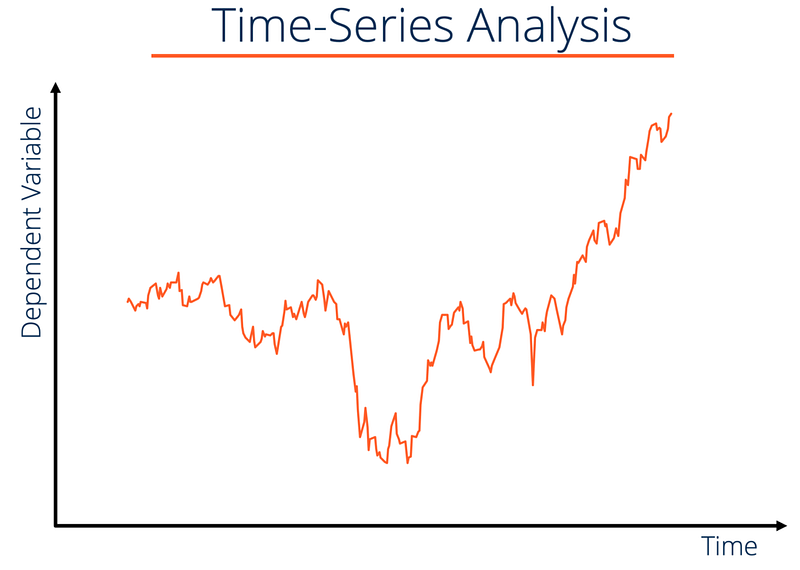
There are four components to the Time Series —
- Series with Trends — In this the observations change i.e increase or decrease regularly through the time.
- Series with Seasonality — Observations are high and lows sharply and the patterns repeat from one period of time to another.
- Series with cyclic component — These are observations which exhibit cyclic behaviour.
- Noise which is random variation — These are unpredictable with irregular graphs.
Time series Forecasting
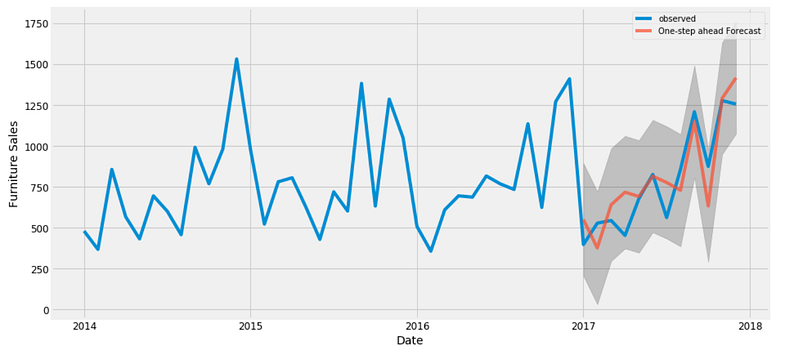
In simple terms, time series forecasting is used to forecast or predict the future values given the time period.
Time Series Forecasting Process involves analyzing the data, forecasting using one or more techniques and evaluate and pick the best technique.
There are different techniques for forecasting —
- Heuristics — Naive and exponential smoothing
- Regression — Linear and non linear regression
- Decomposition — Seasonal Index, Trend component
That’s it for now. Day 2 coming soon.
Stay Tuned!!
Let me know if you have questions in the comment section below. Subscribe/ Follow, Like/Clap as it would encourage me to write more in my free time
Stay Tuned!!
Read More —
11 most important System Design Base Concepts
6. Networking, How Browsers work, Content Network Delivery ( CDN)
13. System Design Template — How to solve any System Design Question
System Design Case Studies — In Depth
Design Instagram
Design Netflix
Design Reddit
Design Amazon
Design Messenger App
Design Twitter
Design URL Shortener
Design Dropbox
Design Youtube
Design API Rate Limiter
Design Web Crawler
Design Amazon Prime Video
Design Facebook’s Newsfeed
Design Yelp
Design Uber
Design Tinder
Design Tiktok
Design Whatsapp
Most Popular System Design Questions
Mega Compilation : Solved System Design Case studies
Complete Data Structures and Algorithm Series
Some of the other best Series —
30 days of Data Structures and Algorithms and System Design Simplified
Data Science and Machine Learning Research ( papers) Simplified **
100 days : Your Data Science and Machine Learning Degree Series with projects
Complete Data Visualization and Pre-processing Series with projects
Exceptional Github Repos — Part 1
Exceptional Github Repos — Part 2
Tech Newsletter —
If you are interested, you can join my newsletter through which I send tech interview tips, techniques, patterns, hacks — Software Development, ML, Data Science, Startups and Technology projects to more than 30K readers. You can subscribe to Tech Brew :
For Python Projects —
For complete 60 days of Data Science and ML : Day 1 — Day 60 : Quick Recap of 60 days of Data Science and ML
Follow for more updates. Stay tuned and keep coding!
For other projects, tune to —
Build Machine Learning Pipelines( With Code)
Recurrent Neural Network with Keras
Clustering Geolocation Data in Python using DBSCAN and K-Means
Facial Expression Recognition using Keras
Hyperparameter Tuning with Keras Tuner
Custom Layers in Keras


