
命运之轮·命-被束缚与被压抑的真相。当真相不再美丽,谎言就成为真理
当性爱的快感也无法满足时,人类就自我创造出可以带来快感的多巴胺(dopamine,简称DA)。这就是施虐-受虐(SM)的意义。前者,通过权力的掌控,实现在真实世界缺失的权力欲望。后者,通过服从和屈辱下的性爱,用痛苦的压抑,积累可以疾速喷发的快感。牺牲和献祭,既是交换,也是人类自我附加的、增加满足的,心理需求的“意义”。揉碎的樱花,比樱花本身,可以叠加了更多的价值。樱花本身仅仅是自然,影射在人眼中的美丽;被摧残的樱花,是人的行动,是附加在心里的更多的情感。
人和神都害怕真相。凡人的胆怯,让自己躲避看到真相。而神和英雄,依照手中的权力,消灭真相。波塞冬强奸美丽的少女美杜莎,代表对真相的侮辱和嘲笑。雅典娜惩罚被侮辱与被伤害的美杜莎,将她变成蛇妖,扭曲了真相本身。传说看到美杜莎蛇发头颅的人将被变成石头,这代表了人们内心对真相的害怕和逃避。珀尔修斯斩杀美杜莎,代表了在安全的情况下,人人都可以成为权力的帮凶(所谓权力下的英雄)。将美杜莎的头放入赫斯珀里得斯(Hesperides)的背包(kibisis),从此人类就可以假装再也没有真相,虽然真相其实一直在凝视着卑劣和胆怯的人类。
赤裸的真相
马修·普莱尔(Matthew Prior,1664年7月21日-1721年9月18日)是英国诗人和外交官。他生活的时代,恰恰经历了英国历史上的光荣革命(1688年-1689年)。这次革命是英国宪政的重大胜利,却是人类对平等权利的一次倒退。具体可参考《千年大变局》(ISBN:9781312740228)。在当时,遥远的东方,中国正处于历史上最暗黑的时代——清朝(1636年5月15日-1912年2月12日)。马修·普莱尔和清朝最著名的诗人纳兰性德(1655年1月19日 — 1685年7月1日,纳兰氏,又称作那拉氏)生活在同一时代。
马修·普莱尔创作的诗歌《真相和谎言,一个寓言》(Truth and Falsehood. a Tale),阐释了一个赤裸的真相。
Once on a time, in sunshine weather, Falsehood and Truth walk’d out together, The neighbouring woods and lawns to view, As opposites will sometimes do: Through many a blooming mead they pass’d, And at a brook arrived at last: The purling stream, the margin green, With flowers bedeck’d, a vernal scene, Invited each itinerant maid To rest a while beneath the shade; Under a spreading beech they sat, And pass’d the time with female chat; While each her thoughts, the other feign’d. At length, quoth Falsehood, Sister Truth, For so she call’d her from her youth, What if, to shun yon sultry beam, We bathe in this delightful stream, The bottom smooth, the water clear, And there’s no prying shepherd near? With all my heart, the nymph replied, And threw her snowy robes aside, Stripp’d herself naked to the skin, And with a spring leapp’d headlong in. Falsehood more leisurely undress’d, And laying by her tawdry vest, Trick’d herself out in Truth’s array, And cross the meadows tripp’d away. From this cursed hour the fraudful dame Of sacred Truth usurps the name, And with a vile perfidious mind Roams far and near to cheat mankind; False sighs suborns, and artful tears, And starts with vain pretended fears, In visits vain still appears most wise, And rolls at church her saint-like eyes; Talks very much, plays idle tricks, While rising stock her conscience pricks; When being, poor thing, extremely gravell’d, She secrets ope’d, and all unravell’d. But on she will, and secrets tell Of John and Joan, and Ned and Nell, Reviling every one she knows, As fancy leads, beneath the rose. Her tongue so voluble and kind It always runs before her mind; As times do serve she slily pleads, And copious tears still show her needs, With promises as thick as weeds - Speaks pro and con, is wondrous civil, To-day a saint, to-morrow devil. Poor Truth she stripp’d, as has been said, And naked left the lovely maid, Who, scorning from her cause to wince, Has gone stark naked ever since, And ever naked will appear, Beloved by all who Truth revere.
— — Matthew Prior,Truth and Falsehood. a Tale
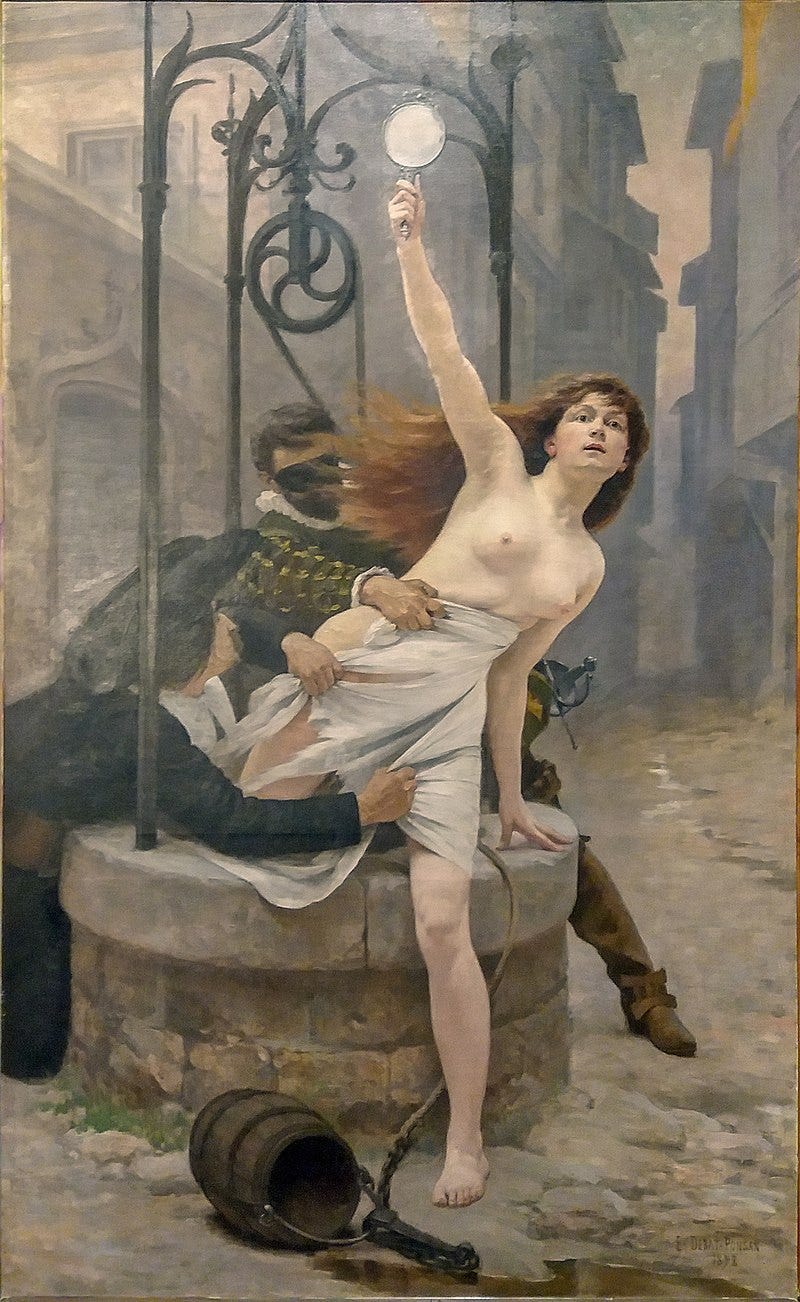
很久以前在一个阳光明媚的日子,真相与谎言一同外出,正如对立者有时做的那样,她们观赏着相邻的树林和草坪;
在穿过了一片片茂盛的草地后,她们最终到达了一条小溪,绿茵接壤着潺潺流动的溪水,花朵装点着和煦的风景,都似乎在邀请着徘徊着的少女们去绿荫下稍作休息,她们遂坐在茂密的山毛榉的阴翳里,用少女的相谈消磨时光,一个吐露真言而另一个却掩藏心思。
最终,谬误说道:“真相啊,我的姐妹”,一如她从幼年就这样呼唤她,“若要躲避着闷热的光线,我们何不如在那可爱的溪水里洗澡?那儿底部平稳水流清澈,也没有牧羊人在一旁偷窥”,那位美丽的少女真诚地应答着并脱去她洁白无瑕的长袍置于一边,她的皮肤因衣物脱落而裸露,伴随着涌现的浪花跃入水中。
而谎言则悠闲地脱下外衣,躺在她廉价俗丽的衣衫旁,用真相的衣服把自己打扮一新,跌跌撞撞地穿过草地。
从这个可耻的时刻开始,欺骗女士篡夺了神圣的真相的名字,用她低劣而背信弃义的思想漫游四方去欺骗人类,虚假的叹息、佯装的眼泪、伪作的恐惧,把空无伪装成智慧,像圣人一样在教堂里游走。她大话连篇,玩弄着闲来无用的把戏,当良心不安刺破了她上升的名誉,当可怜的人类感到困惑时,她(伪装成真相)的秘密才全部解开,同时她所知道的所有人的秘密也都被公开了,当谎言被玫瑰色幻象指挥时,她是多么健谈而友善,以至于言语之快超过她的思想,随着时间推移,她狡猾的恳求和滔滔不绝的眼泪仍显露她的本性,应许下的许诺多的如同茂密的杂草,谈起利弊仿佛出神入化,今天是圣人,明日是魔鬼。
正如之前所说,可怜的真相被剥夺了外衣,只留下这位少女赤身裸体,从此以后也一直如此,总以赤裸的外形现身,尽管有人因此嘲笑她,真相仍然被敬仰她的人所爱戴。
— — 马修·普莱尔, 真相和谎言,一个寓言
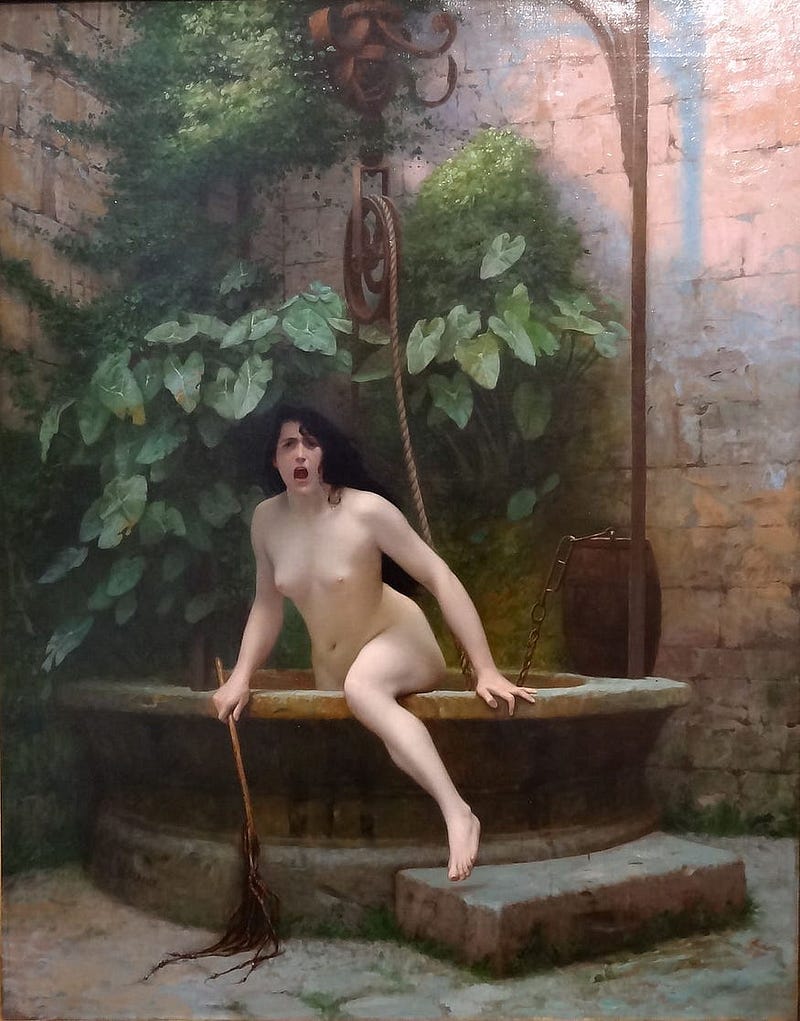
真相的对立是谎言,但是她们总是成对出现。谎言的目标就是掩盖真相,而掩盖的最好方式就是让人们不敢看真相,不相信真相。这个故事来源于埃及新王国时期第十九王朝的故事《虚假蒙蔽真相》(The Blinding of Truth by Falsehood)。新王国是公元前 16 世纪至公元前 11 世纪的古埃及帝国。这一时期的古埃及历史包括第十八、十九和二十王朝。通过放射性碳测年,新王国的建立时间被定为公元前 1570 年至公元前 1544 年之间。这是埃及最繁荣的时期,标志着埃及国力的顶峰。
在《虚假蒙蔽真相》的故事中,代表虚假 (Falsehood)的格瑞格(Gereg)向埃及神恩奈德(Ennead),指控代表真相(Truth)的马阿特(Ma’at)。恩奈德是古埃及最早的一组神,共计九位。恩奈德相信了格瑞格的指控,判决格瑞格弄瞎马阿特的眼睛,并强迫马阿特为格瑞格看门。虽然马阿特恪尽职守,但是谎言无法容纳真相,格瑞格命令两个仆人把马阿特带到沙漠里,让狮子吃掉马阿特。仆人们放了马阿特一条生路,一位美丽的女士收留了马阿特,并与他结婚生下了一个儿子。儿子长大后知道了真相,于是向恩奈德申述。格瑞格确信马阿特早已死去,他对神发誓如果发现马阿特还活着,他将甘愿弄瞎自己的双眼。当马阿特现身时,神判定格瑞格弄瞎双眼,为马阿特看门。
人在真相面前,总是视而不见。但同时,真相是人的镜子,映照的是人的本心。因此,双目失明的惩罚,其实是人在真相面前,拒绝观瞧自己内心的隐喻。赤裸的真相具备两个寓意。其一,真相没有任何矫饰,不像谎言那样,总是穿着鲜艳的服饰。其二,赤裸的真相映照了人的本身,在现实的耻感和理想的光辉之间,产生巨大的反差,造成人类即使看到了真相,也宁远选择视而不见。
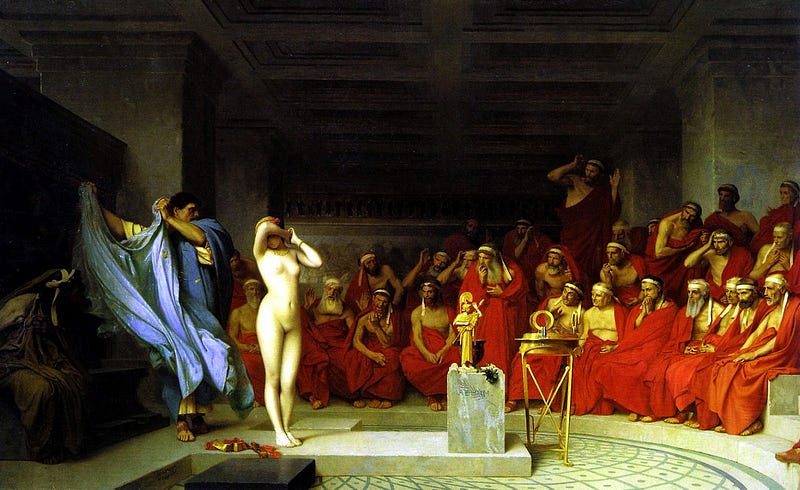
神话是远古人类观念的故事性叙述,没有太多思想束缚的古人,将思考中的精华凝练在这些传说中。这也是我们宁远去揭示远古思考的寓言,也不愿意在政治正确的桎梏下,探索美丽外衣下的谎言的原因。
见证者
普罗米修斯(古希腊语:Προμηθεύς)的父亲伊阿珀托斯(Iapetus;古希腊语:Ἰαπετός,字面意思是“穿刺者”)在克洛诺斯阉割父亲乌拉诺斯时,负责按住天空乌拉诺斯西边的肢体。因此后来伊阿珀托斯成为负责支撑西部天空的支柱。在提坦之战失败后,伊阿珀托斯被囚禁在塔尔塔罗斯。他的儿子,普罗米修斯的弟弟阿特拉斯(Atlas;希腊语: Ἄτλας, Átlas。也称为“Atlas Telamon”)负责继续托举住西边的天空。阿特拉斯也被称为“持久的阿特拉斯”。
阿特拉斯见证了两个“半神人”的“英雄事迹” —— 珀尔修斯的残忍和赫拉克勒斯的欺骗。残忍和欺骗,这也是人的原初之恶。
赫西俄德将伊阿珀托斯的四个儿子视为人类的共同祖先。因此,人类的恶劣的品质也是继承了这四位神的品德。“先知先觉”普罗米修斯代表着狡诈;“后知后觉”厄庇墨透斯代表着愚昧;坚忍不拔、最强壮有力的阿特拉斯代表着过度的胆大妄为;傲慢自大的墨诺提俄斯(Menoetius;希腊语:Μενοίτιος)代表着轻率的暴力。
伊阿珀托斯作为人类的祖先,被认为等同于诺亚(Noah)的儿子雅弗(Japheth;希伯来文:יֶפֶת Yép̄eṯ; 希腊文: Ἰάφεθ Iápheth;拉丁文: Iafeth, Iapheth, Iaphethus, Iapetus),他是 “雅弗人”(即印欧语系民族)的祖先。
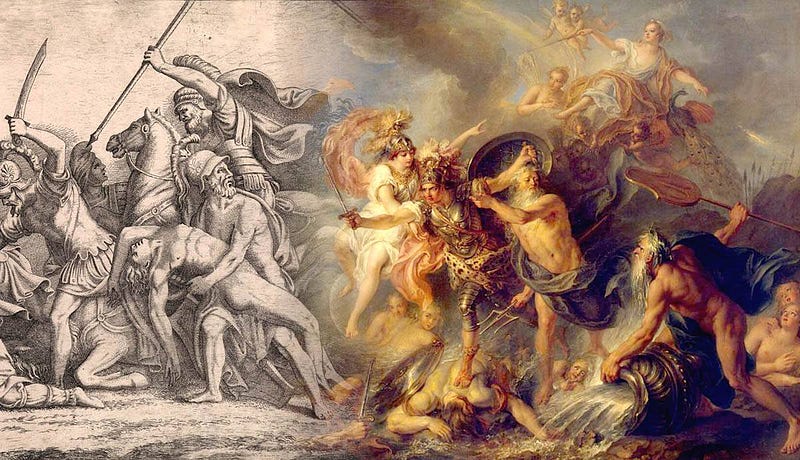
在奥维德的叙述中,阿特拉斯是位于西北非一个国家的国王。根据柏拉图的说法,阿特拉斯的王国就是亚特兰蒂斯(Atlantis)。另外也有传说他是毛里塔尼亚(Mauretania)的国王。当然,不少学者认为,这和普罗米修斯的弟弟应该是两个人。
珀尔修斯来到阿特拉斯的王国,宣称自己是宙斯的儿子,请求庇护。阿特拉斯害怕宙斯的儿子会从他的果园里偷走他的金苹果,拒绝接纳珀尔修斯。于是珀尔修斯向阿特拉斯展示了美杜莎的头颅,把阿特拉斯变成了石头:阿特拉斯的头变成了山峰(Atlas Mountains),肩膀变成了山脊,头发变成了树林。
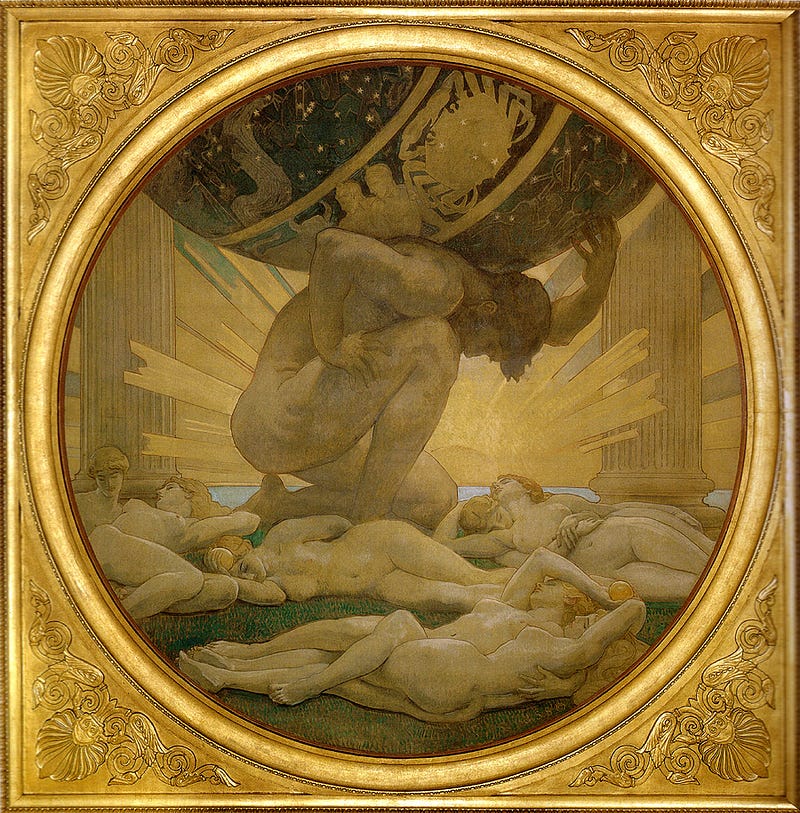
阿特拉斯山脉(Atlas Mountains)位于北非马格里布(Maghreb)。其最高峰图布卡尔峰(Tubkal ;阿拉伯语: توبقال Tūbqāl; 柏柏尔语: ⵜⵓⴱⵇⴰⵍ)位于摩洛哥中部,海拔 4,167 米(13,671 英尺)。阿特拉斯山脉贯穿摩洛哥、阿尔及利亚和突尼斯,绵延约 2,500 公里(1,600 英里)。它将撒哈拉沙漠、地中海和大西洋分隔开。大西洋 (Atlantic)的名字就来源于该山脉。
木秀于林
安德洛墨达(Andromeda;古希腊语:Ἀνδρομέδα,罗马化:Androméda or Ἀνδρομέδη, Andromédē)是埃塞俄比亚(Aethiopia)国王克甫斯(Cepheus;古希腊语:Κηφεύς Kepheús) 和卡西俄珀亚(Cassiopeia or Cassiepeia;古希腊语:Κασσιόπεια Kassiópeia or Κασσιόπη Kassiópē)的女儿。和美杜莎一样,她的美丽就是她的原罪。
傲慢而虚荣的卡西俄珀亚自夸她的女儿安德洛墨达,比所有的涅瑞伊得斯都要美丽。她忘记了,没有能力保护的美丽,不过是权力角逐的猎物。
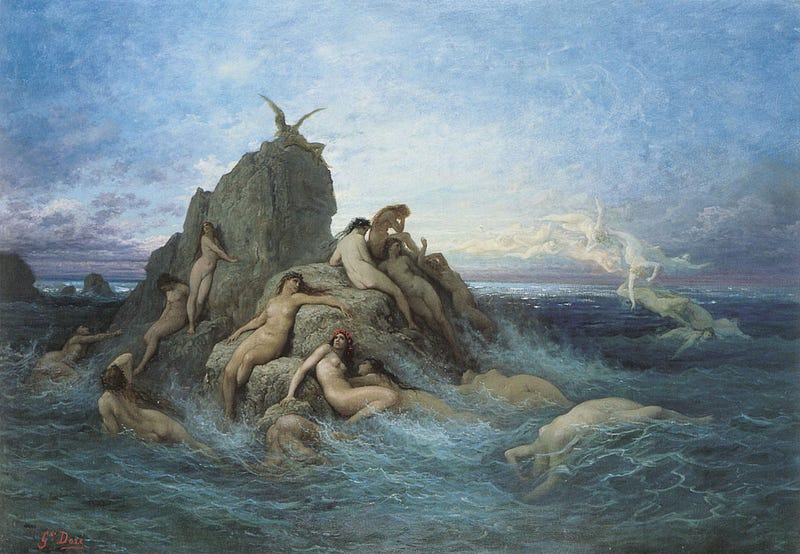
多里斯 ( Doris;古希腊语:Δωρίς/Δωρίδος,意为“赏金” )是三千海仙女俄刻阿尼得斯(Oceanids;古希腊语:Ὠκεανίδες)之一。她嫁给了海之老人涅柔斯(Nereus;古希腊语:Νηρεύς,罗马化:Nēreús),生育了50个美丽的女儿,被称为涅瑞伊得斯(Nereids or Nereides;古希腊语:单数:Νηρείς,复数:Νηρείδες或Νηρηίδες)。她们居住在地中海,同海神波塞冬做伴。
在50个涅瑞伊得斯中,安菲特里忒(Amphitrite;古希腊语:Ἀμφιτρίτη, 转写:Amphitrítē)被海王波塞冬看中。安菲特里忒为了保护 “她的贞操”,逃到了阿特拉斯山脉。波塞冬派了许多生物去寻找,一只海豚遇到了安菲特里忒,并说服她嫁给波塞冬。为了报答海豚的帮助,波塞冬把它安放在天空,成为海豚座(Delphinus;希腊语:δελφίς)星座。
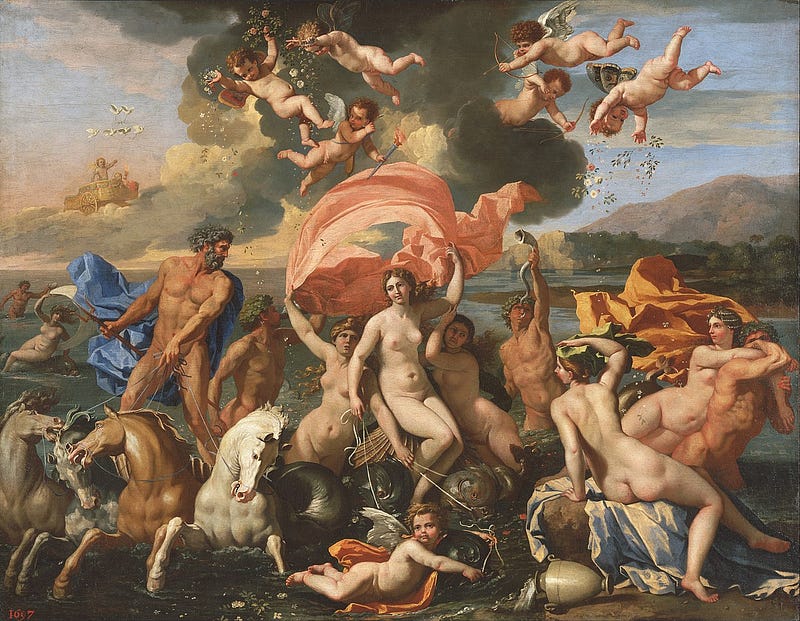
卡西俄珀亚的炫耀引起了安菲特里忒的愤怒,安菲特里忒向海王申诉。波塞冬派出海怪克图斯(Ceto or Cetus;希腊语:Κητος,意谓“海怪”)攻击埃塞俄比亚。惊慌失措的埃塞俄比亚国王克甫斯,向阿蒙(Ammon,also Amon, Amen, Amana;古希腊语:jmn)请教。阿蒙是非洲埃及神话中的神王,他给出神谕,除非国王将女儿安德洛墨达献祭给克图斯吞食,才能平息大海的愤怒。于是,安德洛墨达被剥光衣服,用铁链锁在雅法(Jaffa)海边的一块岩石上献祭。
牺牲
BDSM 是一种成人之间的性爱活动。这里 B 代表捆缚(Bondage);D 代表纪律(Discipline)或者支配(Dominance);S 代表施虐(Sadism);M 代表受虐(Masochism)。

最早的BDSM记录,和苏美尔神话中女神伊南娜(Inanna)有关。伊南娜也被称做伊什塔尔(Ishtar)和阿斯塔蒂(Astarte),她是苏美尔神话中的“圣女”,或者“天之女主人(天后)”。在苏美尔语中,通常读为“宁·安娜(nin-anna)”。她是古代美索不达米亚神话中,性爱、繁殖和战争之神,也和神法和政治权力有关,同时也是金星的代表神。伊南娜掌握着河流中的甜水和能生育的男性精液,她被认为是性爱女神阿佛洛狄忒(希腊语:Ἀφροδίτη,罗马化:Aphrodítē)和神处女雅典娜的原型。
伊南娜尤其受到亚述人的喜爱,亚述人将她提升为万神殿中最高的神灵,地位高于他们自己的民族之神阿舒尔(Ashur)。她就是《希伯来圣经》中提到的伊南娜/伊什塔尔。
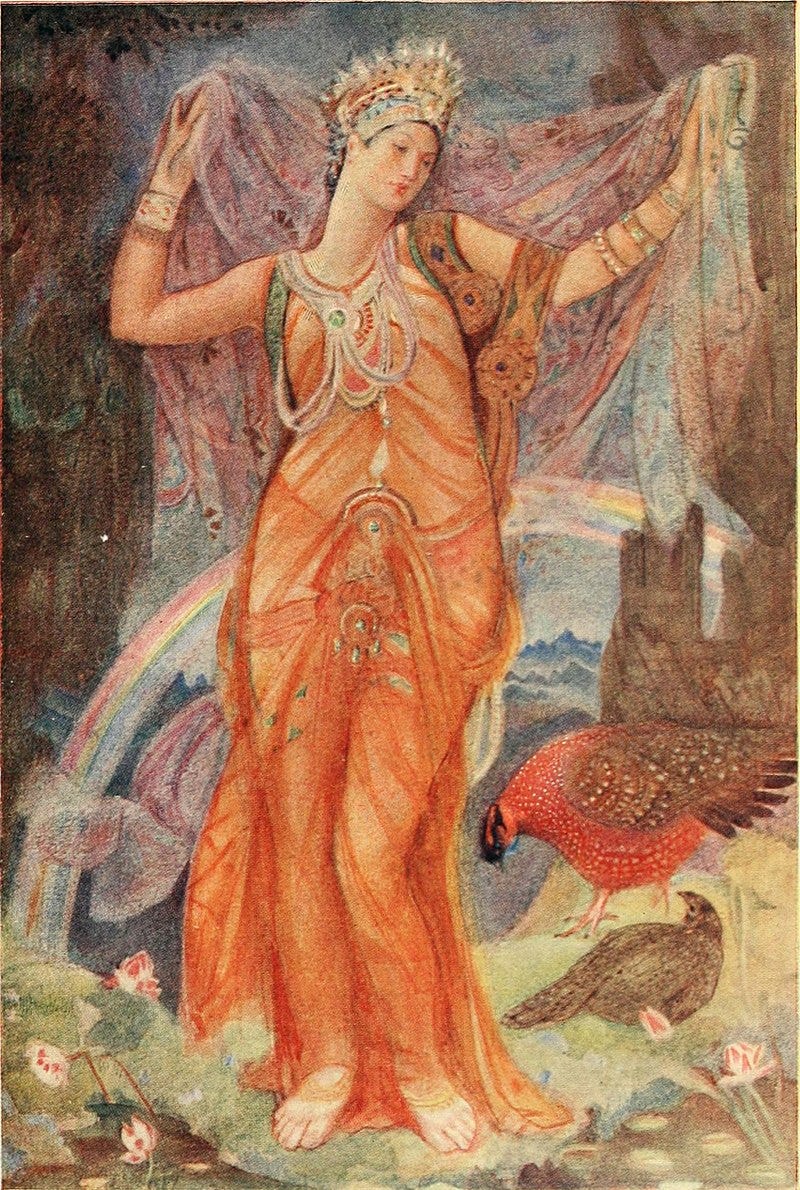
伊南娜还有一个称号叫“天界的妓女(天之娼妇)”,她不是在战争的路上,就是在做爱的路上。他每天都会在路上寻找年轻的男子交合,和人类男子交合时需要象征生命的水。她是古乌鲁克城(Uruk, 今天伊拉克穆塔纳东的 Warka)的守护神。该城也被称为“妓女的圣城”,人们相信伊南娜是妓女和酒馆的保护神。
伊南娜神庙(Temple of Eanna,苏美尔语:e-anna),意思为“天堂之屋”或是“安努神之屋”。世界上最早的圣妓(又称庙妓,为朝拜者提供性服务)在这里出现,这里的女祭司代表伊南娜女神,以祭祀的名义为朝拜者提供性服务。
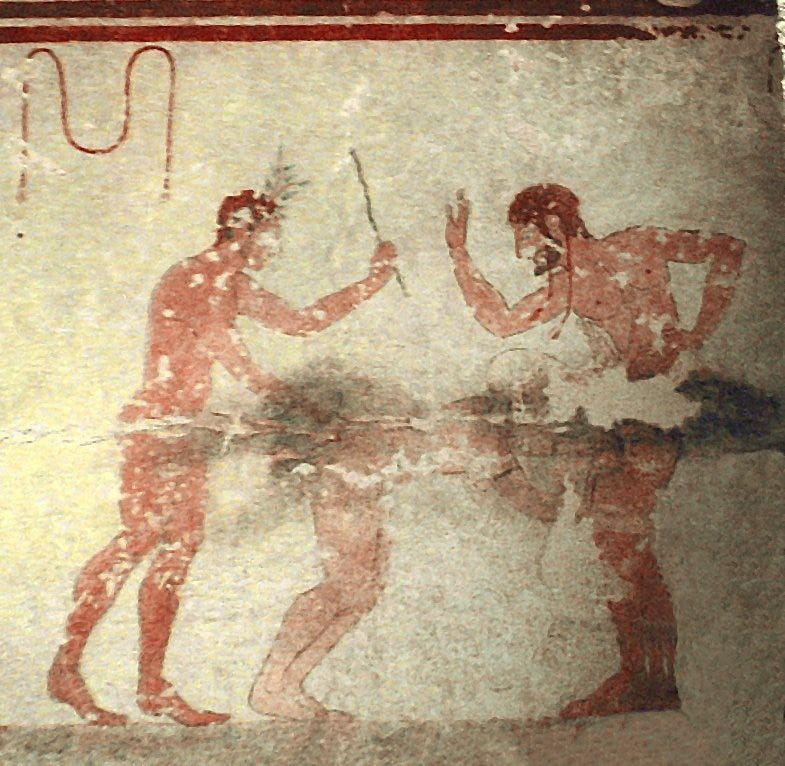
在《伊娜娜与伊比》(Inanna and Ebih)和《伊娜娜赞美诗》(Hymn to Inanna)等古代著作描述了异装变身等仪式。
imbued with pain and ecstasy, bringing about initation [sic?] and journeys of altered states of consciousness; punishment, moaning, ecstasy, lament and song, participants exhausting themselves in weeping and grief.
充满痛苦和狂喜,带来唤醒[原文如此]和改变意识状态的旅程;惩罚、呻吟、狂喜、哀叹和歌唱,参与者在哭泣和悲伤中耗尽自己的精力。
—— “Lady of the Largest Heart” or “A Hymn to Inana C” available at Electronic Text Corpus of Sumerian Literature, University of Oxford
在日本,樱花代表了极致的美丽,和短暂的生命。被春风揉碎,洒落一地的樱花瓣,也代表了被摧残美丽的另一面,残缺之美。美、无力、破碎,这也是权力禁锢之下,普通人的镜像。
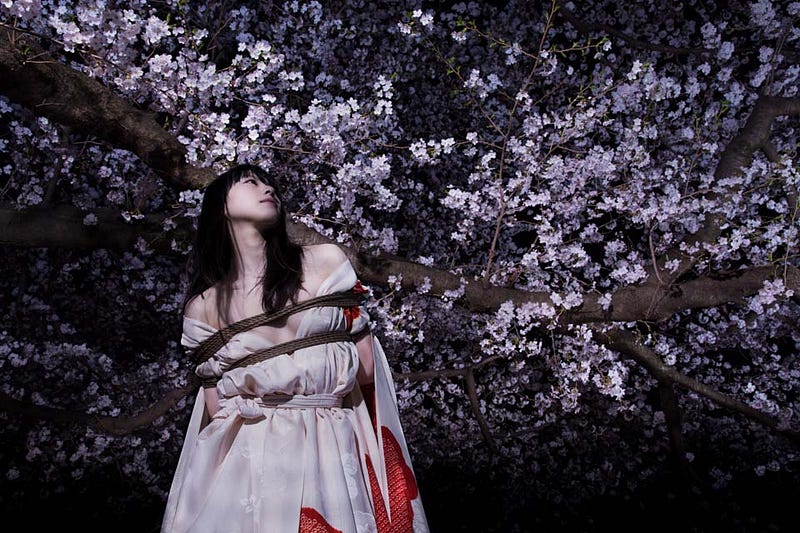
束缚下的禁锢之美,吸引了穿着飞鞋正在经过此地的珀尔修斯。一见钟情的珀尔修斯请求克甫斯承诺,如果他能够杀死海怪,就可以娶安德洛墨达为妻。在得到确切的答复后,珀尔修斯用美杜莎的头,将怪物变成了石头。这个行为,我们前一节已经分析过,在弗洛伊德(德语:Sigmund Freud,出生名:Sigismund Schlomo Freud;1856年5月6日 — 1939年9月23日)的解剖中,这代表用暴露阴部击退妖孽。
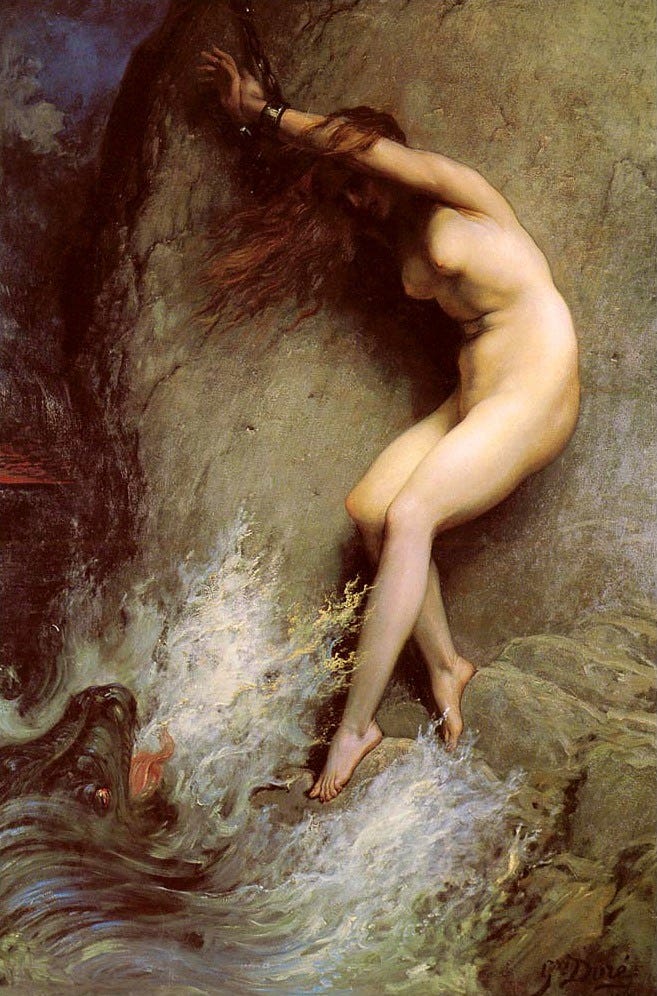
但是在此之前,安德洛墨达已经许配给了她的叔叔,色雷斯国王菲纽斯(Phineus;古希腊语:Φινεύς)。在珀尔修斯和安德洛墨达的婚礼上,菲纽斯挥起长矛攻击珀尔修斯。珀尔修斯再次用美杜莎的头,将菲纽斯和他的随从都变成了石头。
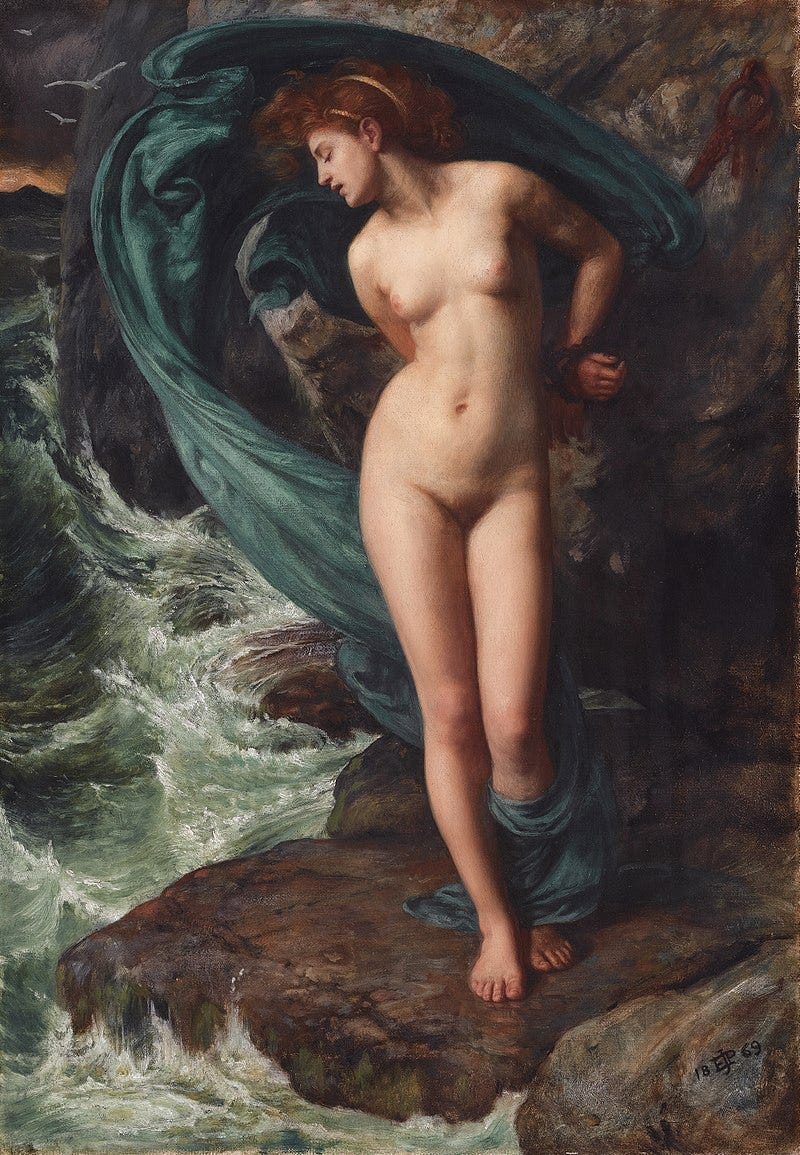
波塞冬将被杀死的海怪提升到天空,变为鲸鱼座(Cetus)。他认为卡西俄珀亚不应该逃脱惩罚,他于是把她放在天上,用铁链锁在王座上,成为仙后座。这个星座最初代表刑具的椅子。
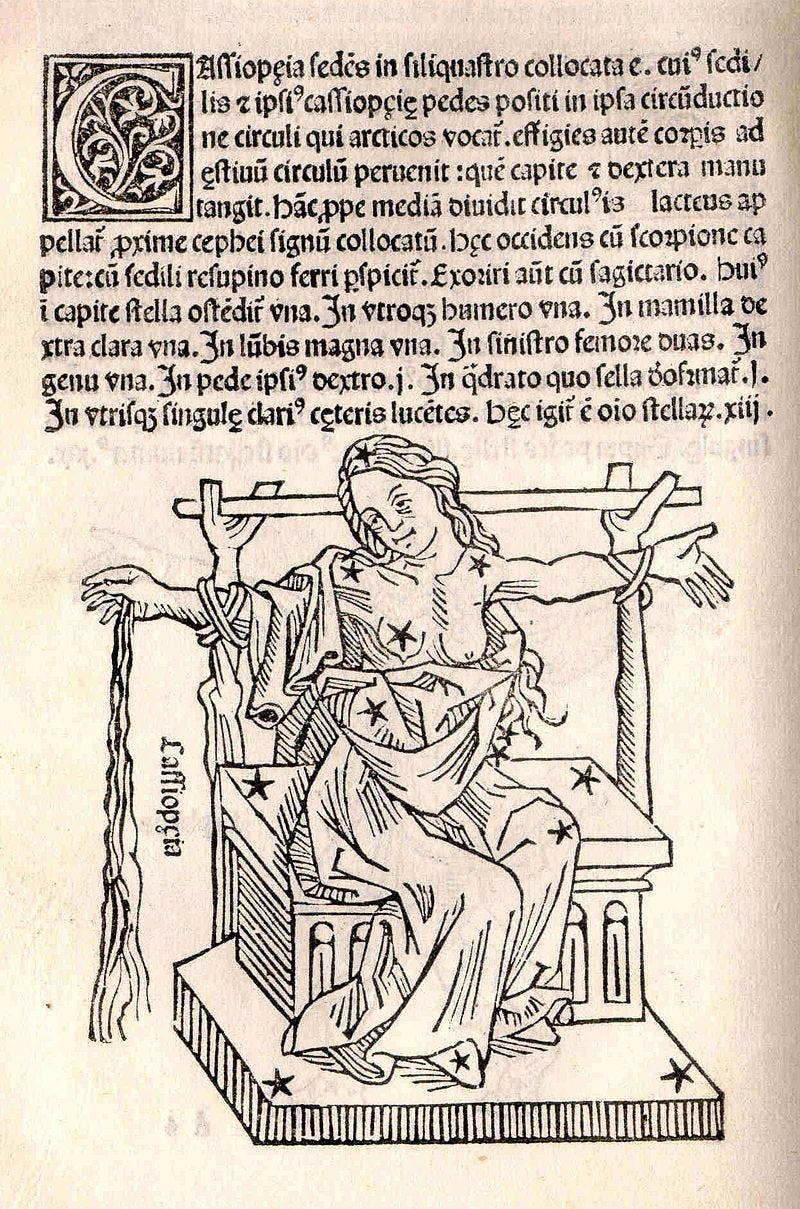
而安德洛墨达死后,也被雅典娜放置在天空中,成为仙女座,她四肢被迫展开,成为受刑的姿势。
最终,两个女人仅仅因为美丽,被迫永远接受BDSM的绝罚。
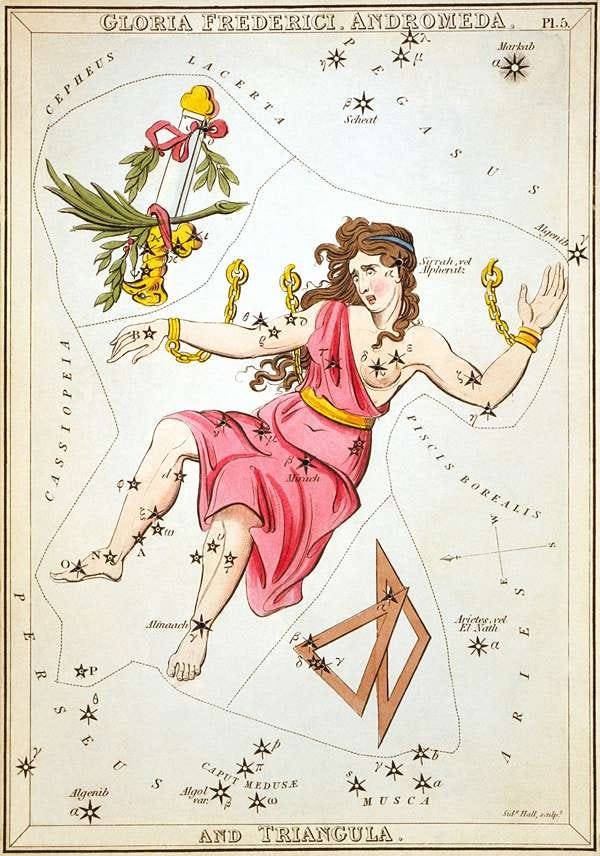
在克甫斯的宫廷居住了大约一年后,珀尔修斯和安德洛墨达生下儿子珀耳塞斯(希腊语:Πέρσης)。因为克甫斯没有男性继承人,因此收养了珀耳塞斯。珀耳塞斯被认为是波斯人的祖先。
克甫斯死后成为仙王座。珀尔修斯死后成为了英仙座。
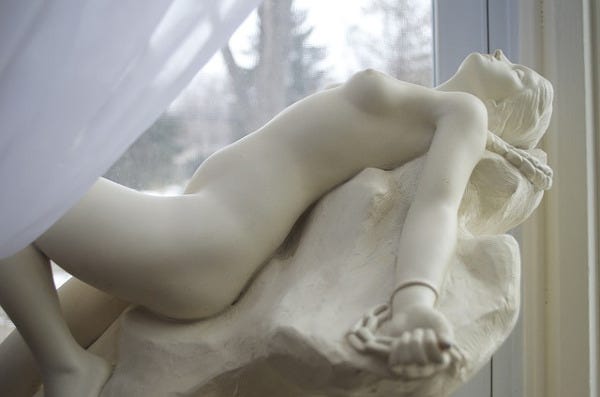
英国诗人约翰·济慈(John Keats,1795年10月31日 -1821年2月23日)与拜伦(George Gordon Byron, 6th Baron Byron,1788年1月22 日 — 1824年4月19日)、雪莱(Percy Bysshe Shelley,4 August 1792–8 July 1822)并称为浪漫主义第二代诗人。在东方,清朝最著名的诗人纳兰性德(1655年1月19日 — 1685年7月1日,纳兰氏,又称作那拉氏)已经辞世一百多年。其后,清朝的文学家龚自珍(1792年8月22日 — 1841年9月26日)深感中国文坛在禁锢下的衰蔽,正在大声疾呼。
九州生气恃风雷,万马齐喑究可哀。 我劝天公重抖擞,不拘一格降人才。
— 龚自珍,己亥杂诗,1839年
约翰·济慈在《关于十四行诗》中,阐述了束缚,对人类的心灵冲击力。越美丽,越是在束缚下,呈现出转瞬即逝的动情力。这也是诗歌中,对安德洛墨达故事的解读。诗歌也在反复吟诵人类的另一对矛盾:反叛和束缚。
If by dull rhymes our English must be chain’d, And like, Andromeda, the sonnet sweet Fetter’d, in spite of pained loveliness; Let us find out, if we must be constrain’d, Sandals more interwoven and complete To fit the naked foot of Poesy: Let us inspect the lyre, and weigh the stress Of every chord, and see what may be gain’d By ear industrious, and attention meet; Misers of sound and syllable, no less Than Midas of his coinage, let us be Jealous of dead leaves in the bay wreath crown; So, if we may not let the muse be free, She will be bound with garlands of her own.
— John Keats,On the Sonnet (1819)
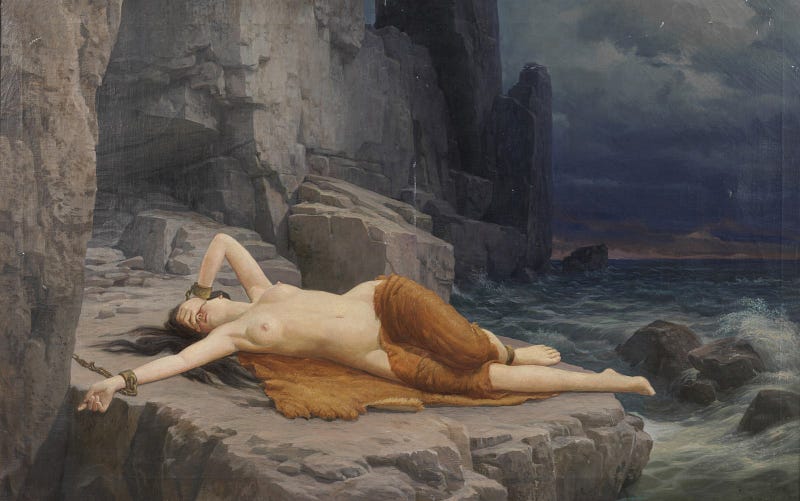
如果英语,必须被乏味的韵律束缚、 就像安德洛墨达,甜蜜的十四行诗 不管如何痛苦可爱,却被羁绊; 让我们发现,如果我们必须受到束缚、 编织完整的鞋 适配诗歌的裸足: 让我们检查琴,弹起每个和弦的力度 通过勤奋的双耳细心聆听 勤于聆听,专心致志; 声音和音节的吝啬鬼 就像迈达斯吝惜他的钱币一样,让我们 妒忌月桂花冠上的枯叶; 如果我们不让缪斯自由、 她将被自己的花环束缚。
— — 约翰·济慈,关于十四行诗(1819)
真相令人沮丧,谎言使人愉悦。请关注我,分享我,期待您与我,和更多的人一起,在神话——这个诗意化的哲学中,撕开更多真相的假面。
旭,2023年12月1日,2024年2月1日修改
《观念与神话》觉醒
《观念与神话》人类的目的
《观念与神话》命运之轮·命
命运之轮·命 — 悲剧人生
命运之轮·命 — 弑夫之妻
命运之轮·命 — 被侮辱与被阉割的女人
命运之轮·命 — 被束缚与被压抑的真相
命运之轮·命 — 无处可逃
命运之轮·命 — 直面人生
《观念与神话》命运之轮·运
《观念与神话》命运之轮·咒
《观念与神话》解放


