
Life Discovery: Running A Developmental Project
Transform yourself one project at a time
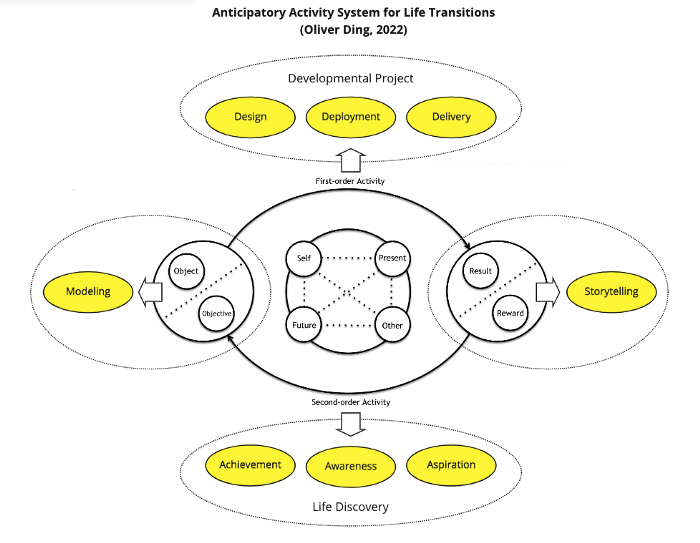
I am recently working on the AAS4LT 1:1 life coaching program. AAS stands for the Anticipatory Activity System framework while LT refers to Life Transitions.
The AAS4LT is inspired by the following knowledge resources:
- Anticipatory Activity System: The center of the above diagram.
- Life Discovery Activity: It is a Second-order Activity.
- Developmental Project: It is a First-order Activity.
The Anticipatory Activity System framework (AAS) is an abstract model which aims to understand a special type of human activity that highlights “Self, Other, Present, Future”.
As an application of AAS, the AAS4LT was developed with eight steps for guiding a life transition coaching program.
You can find more details about the AAS framework and the AAS4LT program here.
The second part of the AAS4LT program is Running A Developmental Project. Today I am going to share more details about this topic.
1. What’s a Developmental Project?
what’s a Developmental Project? What’s the difference between a Developmental Project and a normal Project?
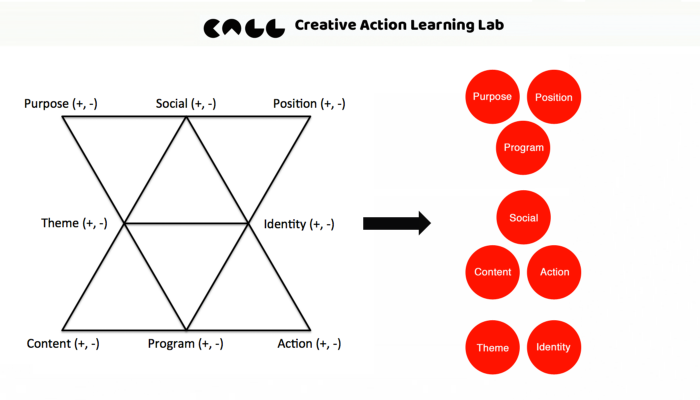
The term “Developmental Project” is adopted from my work the Developmental Project Model. See the diagram below.
The Developmental Project Model was originally developed as version 1.0 of the Platform-for-Development framework. The original idea is very simple:
Platform(Project)
I used the above idea Platform(Project) to define a new unit of analysis. On March 31, 2021, I renamed the framework Developmental Project Model.
Now the Developmental Project model is an independent knowledge framework that is curated into several toolkits or other knowledge frameworks.
2. Developmental Project is a theoretical perspective
From a theoretical perspective of adult development, the concept of “Developmental Project” emphasizes the life development of individuals within the context of Projects. It cares about the transformation of a person’s life themes and her or his identity in the stream of Projects.
You join a project, you leave a project. You initiate a project, you close a project. All kinds of activities form a chain of projects and they are projections of the development of your life.
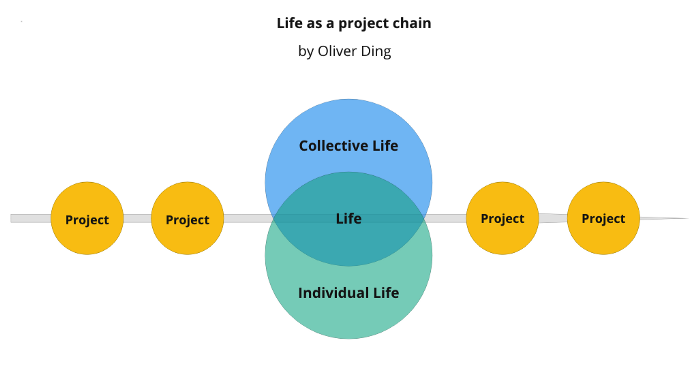
If we read the chain of projects of your life, it is also a projection of social life.
By adopting the Developmental Project model, we have a way to reflect on the development of personal life and social life in one unit of analysis. We can connect psychology, sociology, and others.
3. Any project can be a Developmental Project
It all depends on your perception and awareness, any project can be a Developmental Project. The term “Development” can be understood from various dimensions and levels of abstraction.
Anyway, we can perceive a project as a Developmental Project if we believe it can contribute to our life development.
You can initiate a Developmental Project, or you can join an existing project and consider it a Developmental Project.
For example, the #Tim_Unscripted project is initiated by Tim Dickey. It is a Developmental Project for him.
4. The Developmental Project Model
I developed a model to describe the general structure of Development Projects. Based on the model, we can design, improve, evaluate, select, reflect, and act on Developmental Projects.
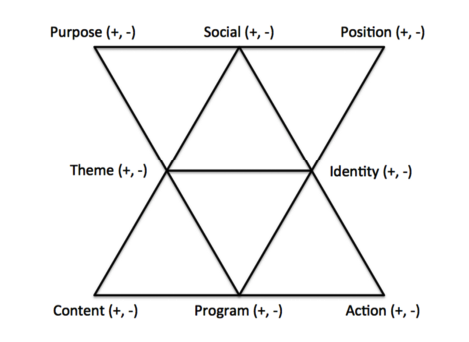
The above picture is the standard diagram of the Developmental Project Model. It uses eight elements to describe a developmental project:
- Purpose: Why do you want to initiate or join the project?
- Position: What’s the social structure of the project?
- Program: Does the project have formal organizational processes?
- Social: How do you connect with others due to joining the project?
- Content: How do you acquire new information and knowledge due to joining the project?
- Action: What actually do you do due to joining the project?
- Theme: Do you find some new and interesting themes for your career development?
- Identity: How do you perceive your identity before and after joining the project?
In the past few years, the Activity U project (2020–2022) is one of my Developmental Projects. I started the Activity U project on August 19, 2020. Initially, I just made a diagram called “Activity U” which is a test of the “HERO U” framework. I wrote a post to explain the diagram “Activity U”. The original title of the post is Activity U: The Landscape of Activity Theory. Later, I added “(Part I)” to the end of the title. It expanded from one post to a series of articles.
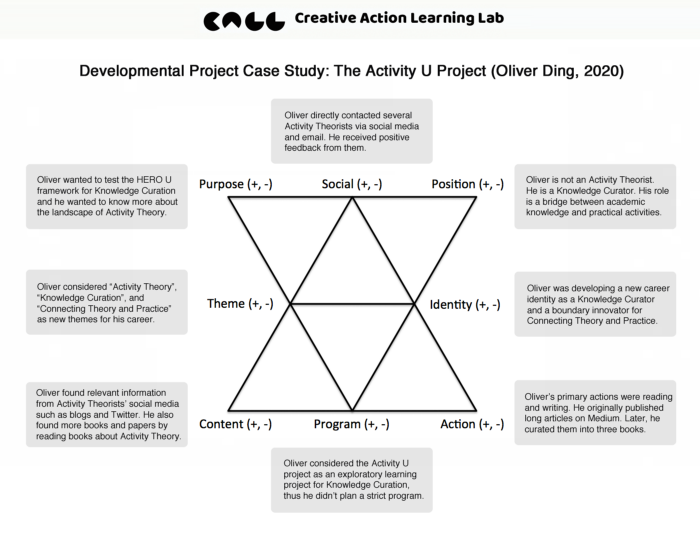
My primary actions were reading and writing. I originally published long articles on Medium. Later, I curated them into three books.
While the Activity U project is a three-year journey, a Developmental Project can be a three-week project. It depends on your goals. You can find more details in Developmental Project Canvas.
5. First-order Activity
As mentioned above, the AAS4LT program considers Developmental Projects as a special type of First-order Activity.
The AAS4LT program is an application of the Anticipatory Activity System framework. The diagram below is the basic model of the AAS framework.
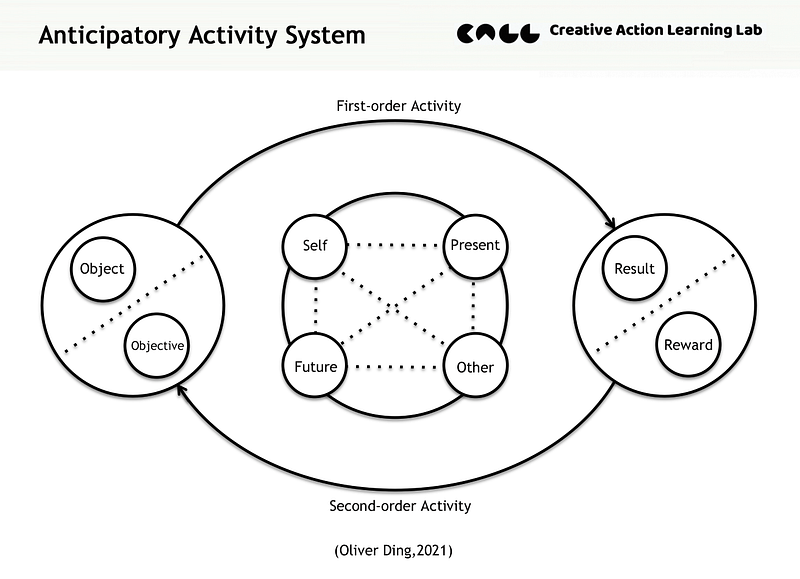
The difference between First-order Activity and Second-order Activity is very simple: Second-order Activity aims to discover an objective for First-order Activity.
From the perspective of Activity Theory, an Activity is defined by its Object/Objective. There is a special type of Activity: Object Activity.
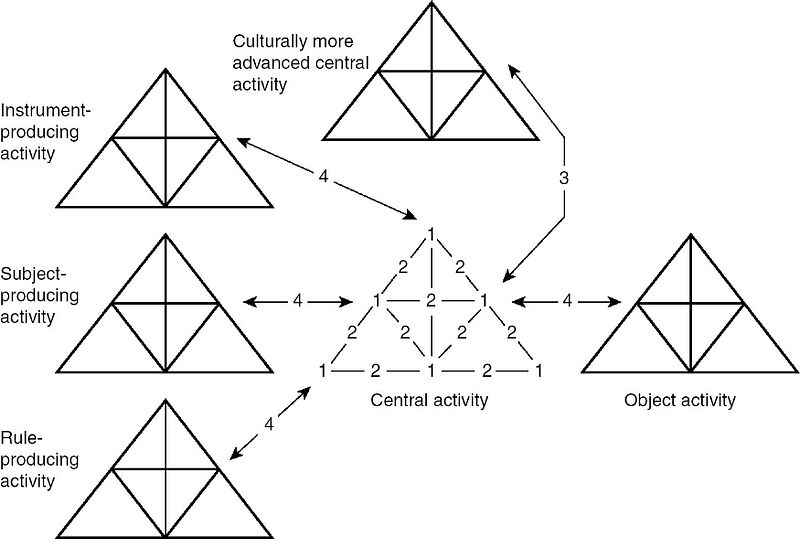
The above diagram is the model of the “Activity Network” which is developed by Yrjö Engeström. The Object Activity aims to discover a new object/objective for a new activity.
For the AAS framework, I use Second-order Activity to rename Object Activity.
For the AAS4LT program, Second-order Activity means Life Discovery Activity which produces Significant Insights as its outcome.
Significant Insights lead to First-order Activity.
6. Start A Developmental Project
Significant Insights could lead to Developmental Projects. For the AAS4LT 1:1 life coaching program, we ask people to design a developmental project with one or more significant insights.
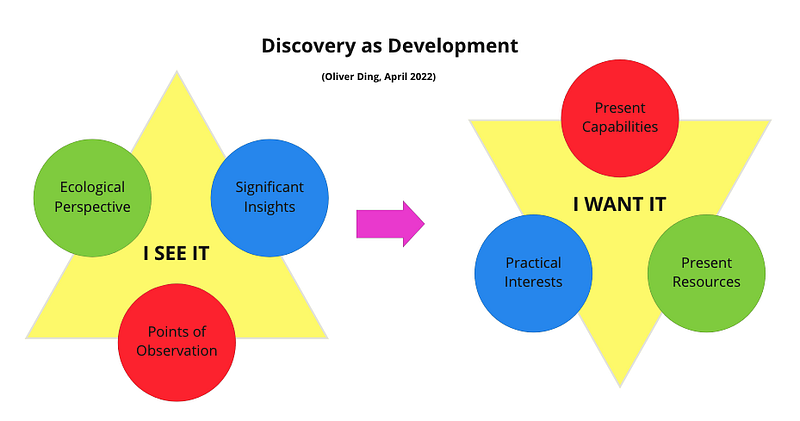
The above diagram shows the process of decision-making of start a development project.
- I SEE IT: The outcome of the Life Discovery Activity refers to Significant Insights.
- I WANT IT: Not all Significant Insights lead to Developmental Projects.
Since Developmental Projects are about present performance, we need to consider at least the following three things:
- Practical Interests: our motivation for running a development project.
- Present Capabilities: our skills and knowledge for running a development project.
- Present Resources: our material and other things that could support our performance.
Finally, we will have a decision that describes a plan for a Developmental Project. The plan doesn’t need rich details, but it should determine the following two things:
- Objective: the final outcome of the Developmental Project.
- Object: the thing you want to work on.
For example, I started the Activity U project in August 2020. The original objective of the project is to use Activity Theory as a case to test the HERO U framework while objects refer to Activity Theory and the HERO U framework.
The initial plan can be ambitious or realistic.
For example, I didn’t set a goal to write three books about Activity Theory for the Activity U project. My initial plan is only about writing one article.
I even didn’t know Andy Blunden’s idea of “project as a unit of activity”. The unfolding of the Activity U project guided me to discover Andy Blunden’s ideas and books. Then, I wrote several articles about his ideas. Then, I edited these articles and turned them into a book: Project-oriented Activity Theory.
However, the development of the Ecological Practice approach is an ambitious goal.
In Feb 2020, I wrote a 160-page private document titled Life Theory.
The “Life Theory” document is both a theoretical plan and a toolkit. As a theoretical plan, it describes the position and the direction of expanding the Ecological Practice approach to a social theory. As a toolkit, it curates six frameworks together. It is the beta version of the Ecological Practice approach.
Then I decided to write one book one year. Each year I write a book and each book introduces one theoretical concept of the approach. It is a long-term project. You can find more details in The Development of Ecological Practice Approach: Three versions of Ecological Practice Approach.
7. Unfold A Development Project
The AAS4LT program is designed in two parts and eight steps. For the second part, the five steps are about Deciding and Unfolding a Developmental Project.
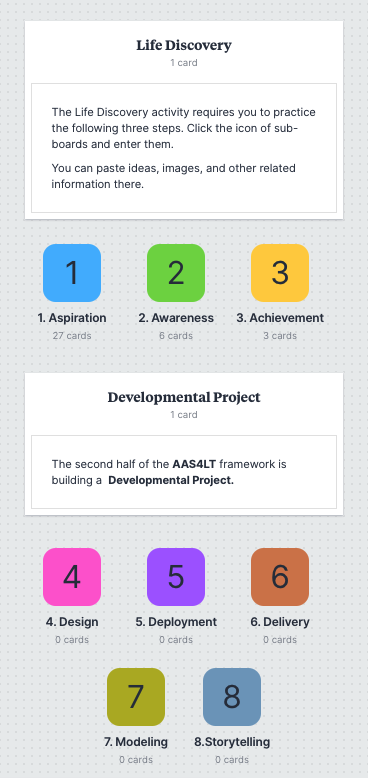
Step 4 (Design) can be formal or informal. Once you have one or more significant insights, you have to connect them with our present situations and future possible selves. You need some creative ideas and strategic ideas to improve your design.
Step 5(Deployment) is about working on a Developmental Project and watching it.
Step 6 (Delivery) is about evaluating the outcome of the Developmental Project.
Step 7 (Modeling) is about using the visualizing technique to represent your thoughts about the project for self-reflection or collaborative communication.
Step 8 (Storytelling) is about sharing your performance and emotions of running the Developmental Project with others.
I use “Step” to name these actions for the AA44LT 1:1 life coaching program because this is a learning process for the program. For real practice, I call them “Movement” since it is not a linear process.
You can find more details about the notion of “unfoldness” in Life Discovery: The Unfoldness of Activity.
You can find more details about the notion of “predictive model” and “modeling” in Life Discovery: The Predictive Model and Anticipatory Activity System and CALL for LIFE: Modeling A Developmental Project.
8. Embrace the Complexity of Project Network
While I encourage you to run one Developmental Project at a time, I also want to encourage you to pay attention to the complexity of Project Network.
A Developmental Project will lead to several sub-projects, it also connects to other Developmental Projects. Your Developmental Projects is part of a large Project Network where you can see others’ Developmental Projects.
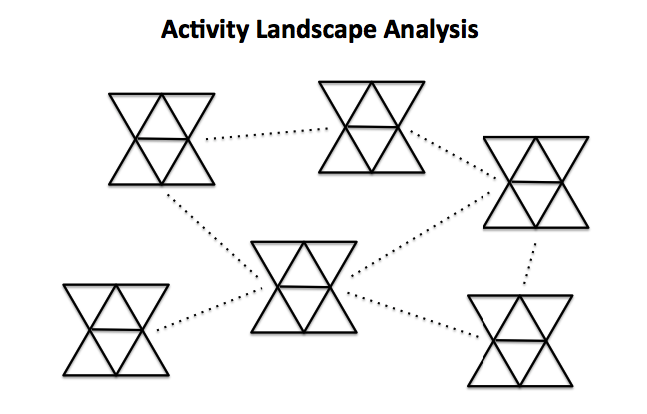
The complexity of Project Network means opportunities too. We need to understand the connections between different projects and discover potential structural tensions and opportunities.
Related articles
- Life Discovery: The AAS Framework
- CALL for LIFE: Anticipatory Activity System for Life Transitions
- CALL for LIFE: Modeling A Developmental Project
- The Project Engagement Toolkit (2022)
- Life Discovery: The Life-as-Project Approach
- The Life Discovery Toolkit (v1)
- The Life Discovery Canvas (v1.0) — Part 1: Theoretical Background
- The Life Discovery Canvas (v1.0) — Part 2: Spatial Structure
- The Life Discovery Canvas (v1.0) — Part 3A: Concepts (THINK and LEARN)
- The Life Discovery Canvas (v1.0) — Part 3B: Concepts (SAY and DO)
- The Life Discovery Canvas (v1.0) — Part 4: Inspirations
- Life Discovery: The “Being by Doing” Principle
- Life Discovery: The “Performance as Experiment” Principle
- Life Discovery: The “Engagement as Projection” Principle
- Life Discovery: The “Discovery as Development” Principle
- CALL for LIFE: Oliver Ding @ 2021 and Second-order Activity
- Life Discovery: Twelve Significant Insights from Four Months
- Life Discovery: “Points of Observation” and “Significant Insights”
- Life Discovery: Significant Insights Analysis
- Life Discovery: The “Tacit” Type of Second-order Activity
- Life Discovery: The Unfoldness of Activity
I am also working on building a new website for the Platform Ecology project. You can save the following links:
- PlatformEcology.org
- Twitter: @PlatformEcology
- Linkedin: @PlatformEcology
You are most welcome to connect via the following social platforms:
Linkedin: https://www.linkedin.com/in/oliverding Twitter: https://twitter.com/oliverding Polywork: https://www.polywork.com/oliverding Boardle: https://www.boardle.io/users/oliver-ding


