
Life Discovery: The “Performance as Experiment” Principle
One of six basic principles of the Life-as-Project Approach
The Life-as-Project Approach is inspired by Project-oriented Activity Theory, Anticipatory Systems Theory, Curativity Theory, and other theoretical resources, it was developed with the following six basic principles:
- Being by Doing
- Engagement as Method
- End as Means
- Discovery as Development
- Performance as Experiment
- Curativity as Creativity
This article offers some related ideas for the “Performance as Experiment” principle.
The Anticipation — Performance Complexity
The primary challenge of Life Development is the “Present — Future” Dynamics. From the perspective of the Anticipatory Activity System framework, this issue is understood as the “Anticipation — Performance” Complexity. See the diagram below.
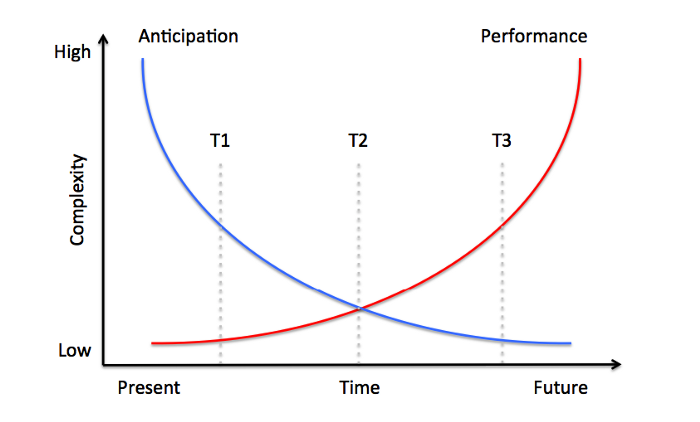
Anticipation refers to an Objective that is about the future while Performance refers to an Object which is about present work.
The Life-as-Project Approach considers Performance as an Experiment for testing Anticipation.
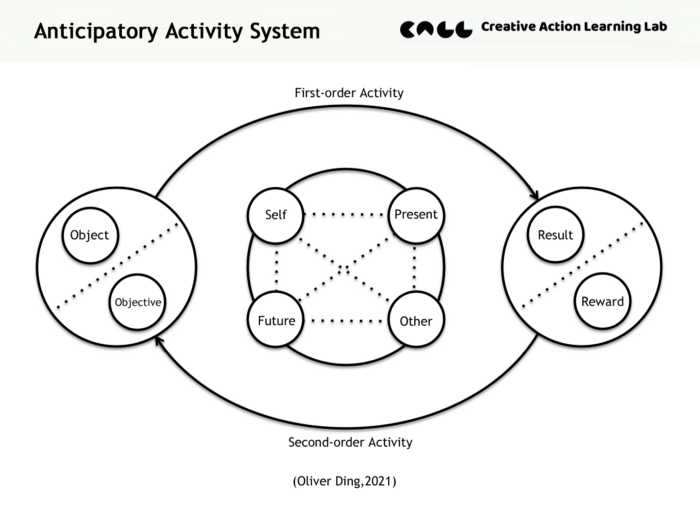
From the perspective of the Anticipatory Activity System framework, Performance belongs to both First-order Activity (producing Results) and Second-order Activity (modifying Objectives).
The “Life Performance” Perspective
I also discuss the concept of “Performance” in Mapping Thematic Space #6: The “Life” thematic space. The article used the following diagram to reflect on the “Life” theme and generated a practical perspective called “Life Performance”.
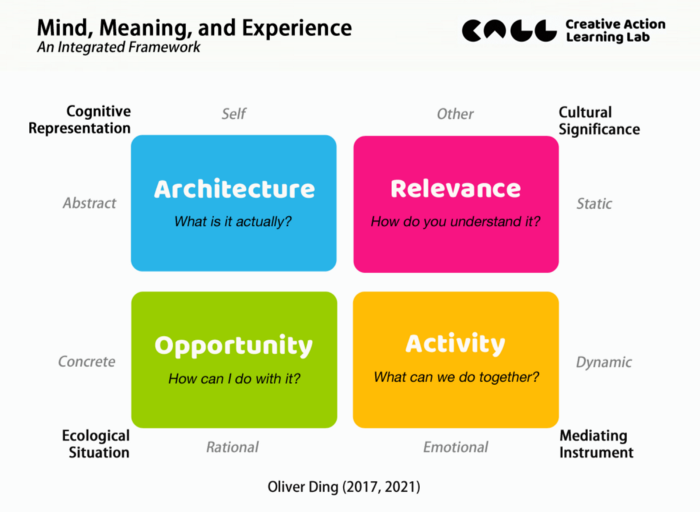
In the above diagram, the “Activity” thematic space refers to Activity Theory, Social Practice theories, and similar theoretical approaches.
For the Diagramming as Practice Framework, I used the “Activity” thematic space to generate a practical perspective: “Mediating Instrument”(1, 2). This perspective is adopted from Activity Theory.
For discussing Strategy, I use “Strategic Acting” as a practical perspective. And we can find some theoretical approaches:
- Strategy as Practice: an activity-based approach (Paula Jarzabkowski, 2005)
- Strategic Doing (Edward Morrison, 2019)
- More “Strategy-as-Practice” approaches: Cambridge Handbook of Strategy as Practice (2010, 2015)
The “Strategic Acting” perspective echoes what strategic management scholars called “Strategic process”.
For the “Life” thematic space, I’d like to use Life Performance as a practical perspective.
What does Life Performance mean? I’d like to share some related ideas.
- The “Performance” Zone of Project
- The Stage Metaphor
- Fred Newman’s cultural-performatory approach
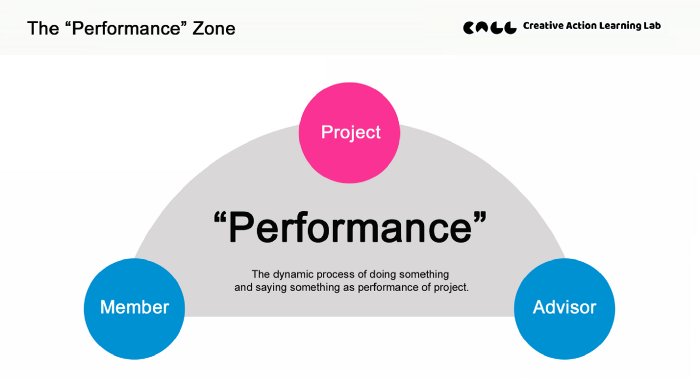
The “Performance” Zone is one of five Zones of Project. For the initial version of Zone of Project, I identified five themes, five positions, and the following five zones:
- “Idea”
- “Resource”
- “Program”
- “Performance”
- “Solution”
I defined “Performance” as “the dynamic process of doing something and saying something as the performance of project”.
The “Performance” refers to the concrete actions of a project. It also refers to the various ways of participating in a project. For example, I have mentioned the TEDx project in the previous article. According to the official website of TED, as of December 31, 2020, there are 35,713 local TEDx events that were held in more than 130 countries. The TEDx Talks library contained over 30,000 videos from these local TEDx events. There are various ways of participating in the TEDx community, such as organizing, curating, hosting, designing, speaking, sponsoring, photographing, videoing, lighting, translating, listening, watching, sharing, etc. It’s not the word “TEDx” and the slogan “independently organized TED event” that define the movement, but the real actions of thousands upon thousands of volunteers define the movement.
Basically, “performance” means actions. However, the term action is a general word. The term “Performance” is also related to the Stage metaphor.
The Stage metaphor is inspired by the American sociologist Erving Goffman’s The Presentation of Self in Everyday Life. Goffman viewed theater as a metaphor and developed the dramaturgical analysis method for sociological study. For Goffman, everyday life is a theater.
In fact, I use the Mind as Play as a metaphor to understand everyday cognitive activities. Now we can use a similar metaphor to understand everyday life performance.
The difference between my approach and Goffman’s approach is that I can use the Mind as Play metaphor and the Stage metaphor together. It means a person’s Life Performance is both an object of his own mind and others’ minds. While Goffman emphasizes Impression Management which refers to influencing others’ minds, I emphasize Reflective Management which refers to managing one’s own mind.
In addition, I want to mention Fred Newman’s cultural-performatory approach and Social Therapy. Fred Newman and Lois Holzman read Lev Vygotsky from their own perspective and they adopt Vygotsky’s idea about play as a core for their approach. You can find a draft chapter titled Activity and Performance in Social Therapeutic Method on their website. The below three pieces are samples of their ideas.
- Developmental psychology tends to relate to culture in one of two ways. Within the broad mainstream of the discipline, culture is considered to be a factor in human development, that is, something that influences the developmental process. Within constructionist and cultural-historical psychology, development is cultural, in that what it means for children to develop is that they adopt (“appropriate”) the culture that they are born in to. My own perspective is that human development consists of both the appropriating and the creating of culture, and that their dialectic interplay is what is most interesting and relevant to understand. That is one way I see the social therapeutic activity of transforming narrative into performance.
- This kind of play (and, thereby, learning in early childhood) is performatory, that is, non-didactic, non-cognitively based, and non-individuated. Fifteen-month olds who do not yet know the language of their family perform as speakers of it; two-year olds who are not literate perform as readers; three-year olds who know nothing of perspective or representation perform as artists. The performatory zpd supports them doing things they don’t yet know how to do; it activates what Vygotsky referred to as “the child’s potential to move from what he is able to do to what he is not” (Vygotsky 1987, p. 212). In the performatory zpd children develop because they are both who they are and beyond, or other than, who they are at the same time. This is akin to Vygotsky’s notion that play is developmental for children because it is when they act as if “a head taller” (Vygotsky 1978, p. 102). Perhaps the collective form of working together in early childhood is better identified as a collective form of playing together. It is a playing together in which culture (i.e., the “stage” and the performance) is created and simultaneously appropriated.
- Within a performatory (as opposed to a cognitive) modality (community), we (social therapy/social therapists) seek to help create a pointless dialectical (a mixture of Plato’s and Marx’s) group conversation (a conversation oriented toward discovery/creation) in order to generate a new game (a Wittgensteinian game) which completes (in a Vygotskian sense) the thinking, and is itself (by magic, a.k.a. art) a performance (though more activity than an action). (p. 229)
Fred Newman and Lois Holzman consider Lev Vygotsky as a Revolutionary Scientist in their 1993 book Lev Vygotsky: Revolutionary Scientist.
Dramatic Development
On Jan 8, 2022, I had a 99-minute call with a friend of mine and we discussed the challenge of applying theories to youth charity education and youth development in general.
I adopted Activity Theory, Lev Vygotsky’s cultural-historical theory, Self-Determination Theory (SDT), and Ecological Psychology for our discussion. We also discussed some Practice Perspectives and Operational Heuristics. Based on the discussions, we also explored some possible directions for further development.
After the meeting, I adopted the ECHO Way meta-diagram and designed a new diagram called Drama-fit. You can find more details here.
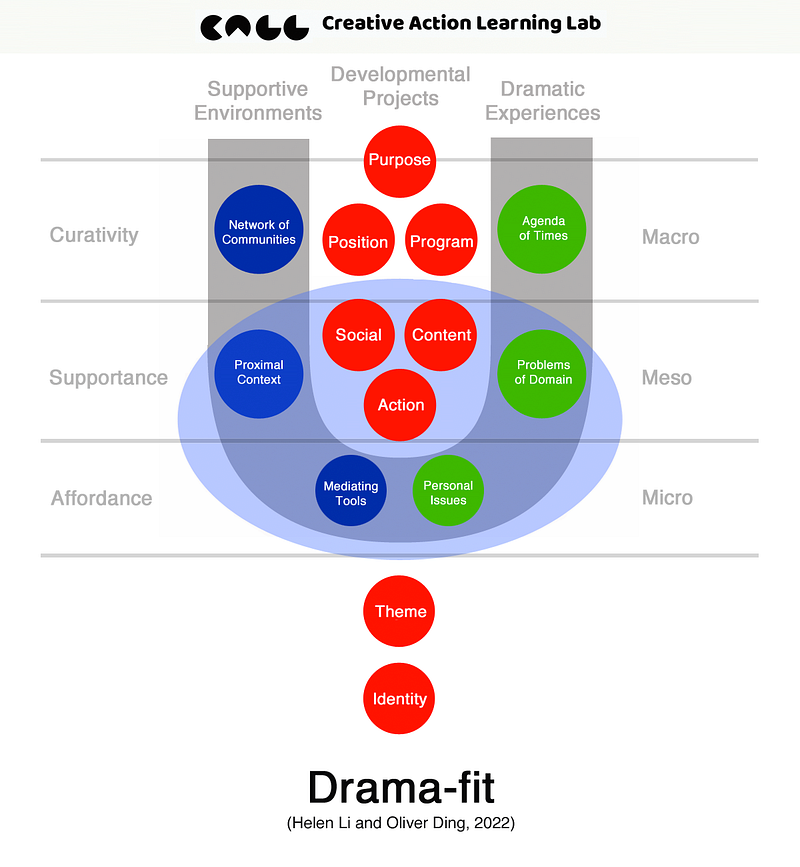
I used terms such as Drama-fit and Dramatic Experiences for the above diagram. These terms are inspired by Lev Vygotsky’s Dramatic Experiences.
As Vygotsky emphasized, “The basic principle of the functioning of higher functions (personality) is social, entailing interaction of functions, in place of interaction between people. They can be most fully developed in the form of drama” (Vygotsky 1929/1989, p. 59). According to Nikolai Veresov, “The dramatic frame of the personality as the unique organization and hierarchy of mental functions is the result of unique dramatic inter-psychological collisions that have happened in the life of the human being and their overcoming by a human being, the intra-psychological result of the individual’s unique developmental trajectory. Therefore, psychology must be developed in the concepts of drama, not in the concepts of processes’ (Vygotsky,1929/1989 p. 71). Overcoming social dramatical collisions (dramas of life) the human being creates his/her unique personality.” (2014)
The notion of “Dramatic Development” is a fantastic idea. Nikolai Veresov also points out, “The drama of the personality as a participant in the drama of life is the essential contradiction and the moving force for development. Thus, the intra-psychological consists of internalized dramatic social interactions: ‘the dynamic of the personality is drama’ (Vygotsky, 1929/1989 p. 67). Here an abstract dialectical idea of a contradiction as a moving force of development obtains its concrete psychological content in the concept of the drama of life as a moving force in the development of human personality. This introduces a theoretical perspective of rethinking human psychology in terms of drama.” (2014)
Why did Vygotsky use the term “Drama” for his psychological theory? Because his early study was about the psychology of art.
Related articles:
- Life Discovery: The “Being by Doing” Principle
- Life Discovery: The “Problem — Solution” Challenge and Response
- Youth Development as Drama-fit
- Mapping Thematic Space #6: The “Life” thematic space
- The Life Discovery Canvas (v1.0) — Part 1: Theoretical Background
You are most welcome to connect via the following social platforms:
Linkedin: https://www.linkedin.com/in/oliverding Twitter: https://twitter.com/oliverding Polywork: https://www.polywork.com/oliverding Boardle: https://www.boardle.io/users/oliver-ding