
Developmental Project Canvas
A practical tool for studying the relationship of Project — People
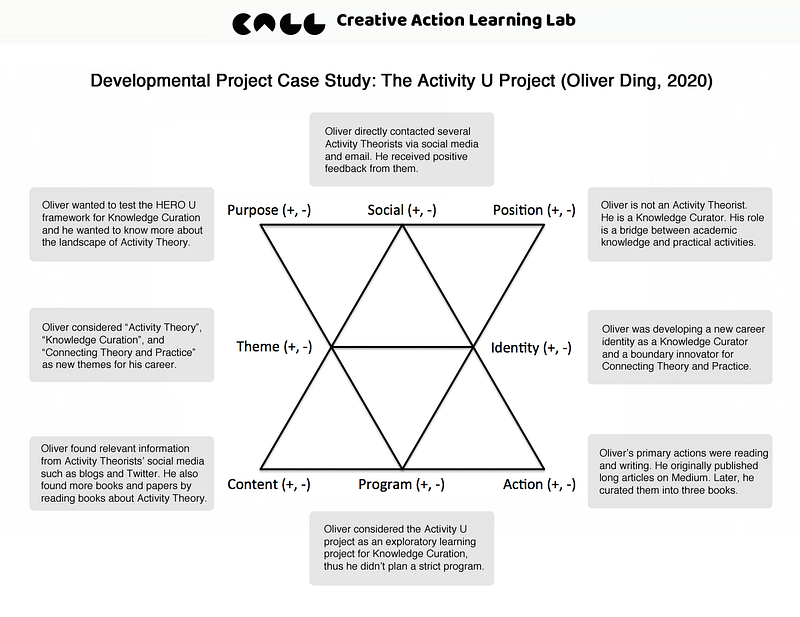
I recently designed the Developmental Project Canvas for studying Projectivity. This article aims to review the historical development of the Developmental Project Model.
Developmental Project Model
On Dec 13, 2020, I published the Platform-for-Development (P4D) framework (v1.0). The article defined a new unit of analysis: Platform(Project). Later, I developed the Platform-for-Development (P4D) framework (v2.0) and I renamed the original framework as Developmental Project Model on Mar 31, 2021.
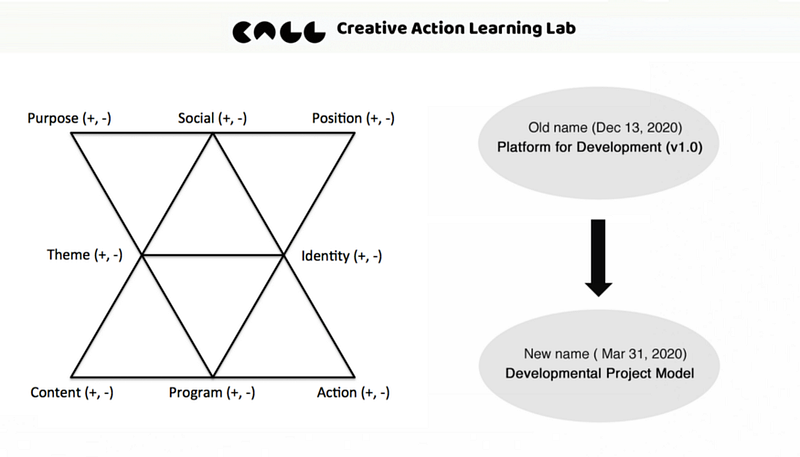
The v2.0 of P4D framework is a brand new approach for studying platform-based social practice. It has a set of sub-frameworks. The Developmental Project Model is part of the P4D family. However, we can use it individually.
Projectivity: Project(People)
On Jan 9, 2021, I coined a term called Projectivity for Cultural Projection Analysis. The Concept of “Projectivity” is inspired by Ecological Psychologist James J. Gibson’s Affordance Theory and Andy Blunden’s Project-oriented Activity Theory. The concept of Projectivity can be considered as a new idea for the Project-oriented Activity Theory and other Project-oriented approaches.
What’s Projectivity? It refers to potential action opportunities of forming a project or participating in a project for people to actualize their development with others. I have discussed three types of Projectivity:
- Primary Projectivity
- Secondary Projectivity
- Tertiary Projectivity
On April 24, 2021, I introduced the Infoniche Model and adopte Project to expand the original Infoniche framework. Now we can consider Projectivity as as a special type of Supportance.
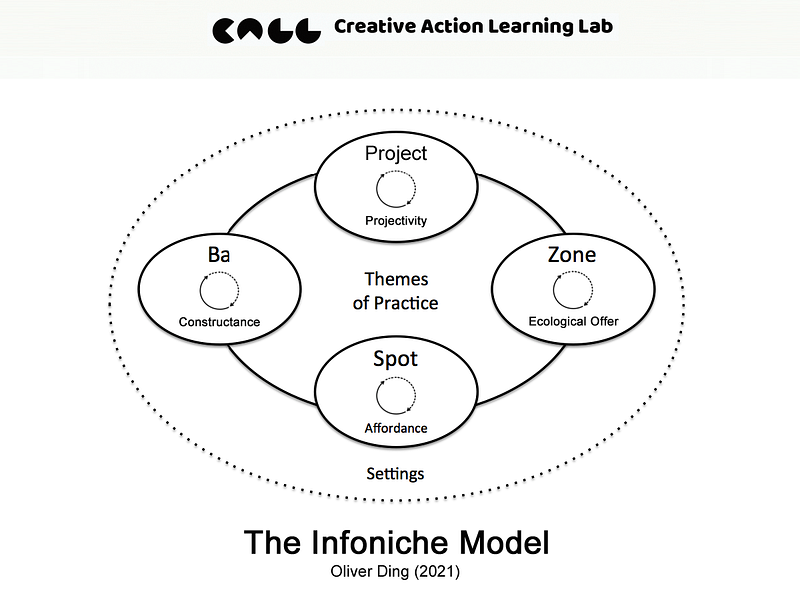
In fact, the Platform-for-Development (P4D) Framework (v2.0) is supported by the Infoniche Model and the concept of Supportance.
Project I
On May 25, 2021, I published Personal Innovation as Career-fit. In order to reflect on my own career experience,I adopted the Developmental Project Model and HERO U diagram for developing the Career-fit framework.
There is a new form of the Developmental Project Model: Project I.
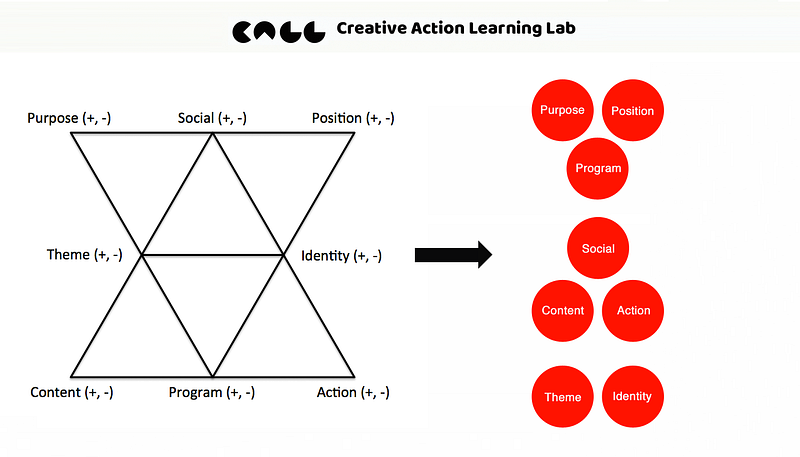
The Career-fit framework uses Theme U to display six career themes. The diagram looks like U+I=Ψ.
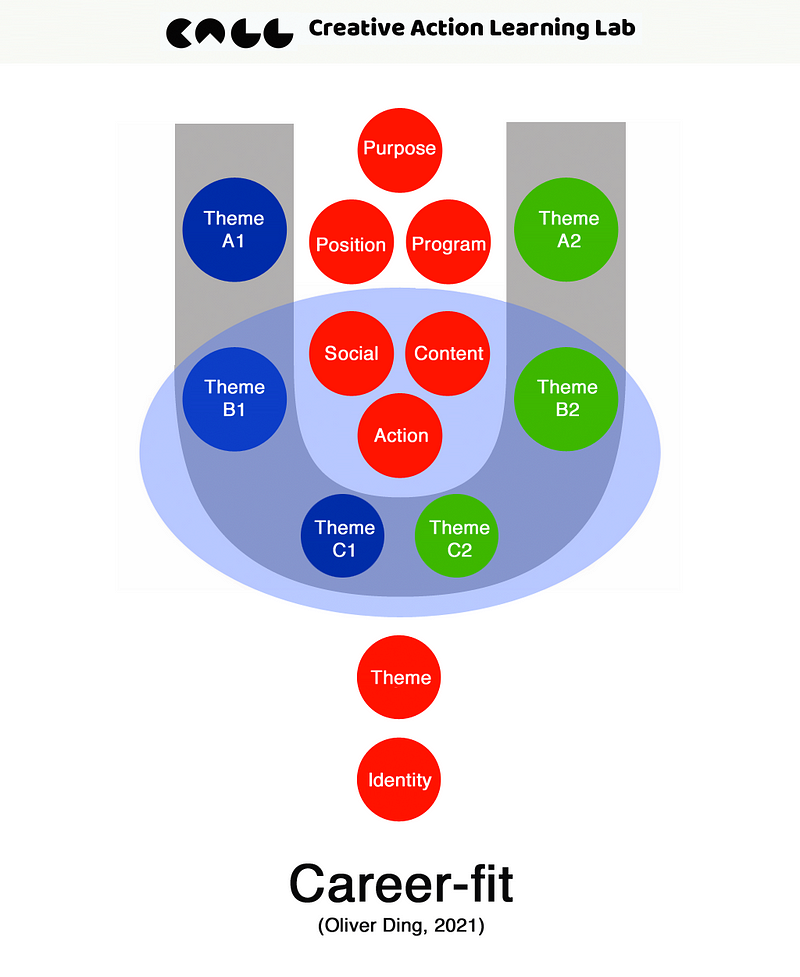

The Ψ is a greek capital letter psi. It is often used as psychology symbol. What a wonderful coincidence! I really like psychology!!!
Developmental Project Canvas
I also developed the Developmental Project Canvas for case study.
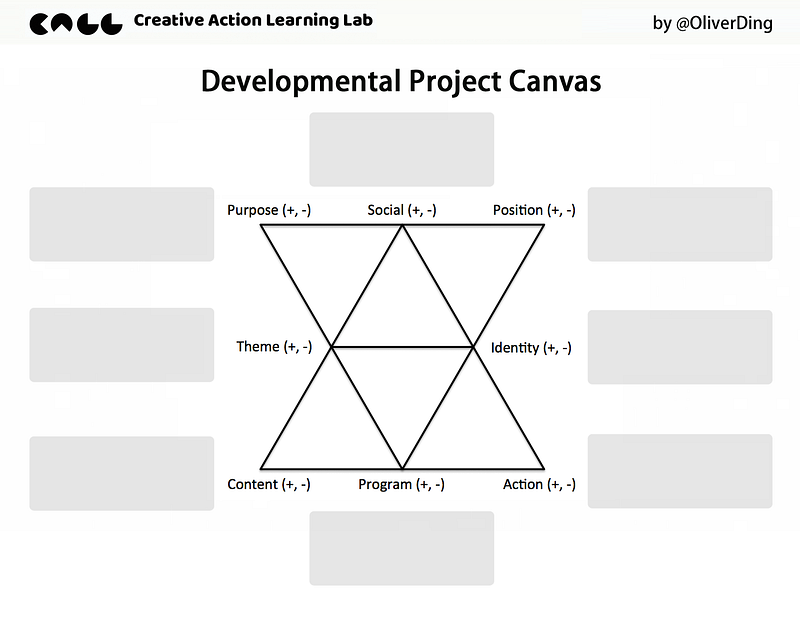
I used the Activity U project as a case to conduct the first case study with the canvas.
I started the Activity U project on August 19, 2020. Initially, I just made a diagram called “Activity U” which is a test of the “HERO U” framework. I wrote a post to explain the diagram “Activity U”. The original title of the post is Activity U: The Landscape of Activity Theory. Later, I added “(Part I)” to the end of the title. It expanded from one post to a series of articles.
On October 1, I wrote a post to review the first year of CALL (Creative Action Learning Lab) and claimed that Activity Theory as a learning object for Transdisciplinary Thinking which means the knowing between academic domains and non-academic domains. I pointed out four reasons of selecting Activity Theory for Transdisciplinary Thinking:
- It is an established theoretical tradition.
- It is an interdisciplinary philosophical framework for studying both individual and social aspects of human behavior.
- It has inspired many empirical studies in various domains.
- Its root is in a cultural background and psychological research tradition outside North America.
The last reason is unique. In a general sense, the mainstream of North America psychology is dominated by individual perspectives. In contrast, the psychological root of Activity Theory is social perspective. Thus, I want to bring a new perspective to the next generation of knowledge workers and boundary creators in North America.
My primary actions were reading and writing. I originally published long articles on Medium. Later, I curated them into three books.
How to Use the Developmental Project Canvas?
There are two ways to use the Developmental Project Canvas.
- Project-for-Me
- Project-for-Us
If you are a project participant, you can adopt the Project-for-Me approach which pays attention to the development of yourself. If you are a project curator, you can adopt the Project-for-Us approach, your goal is the development of the project.
In other words, the difference between these two ways are Piece and Whole.
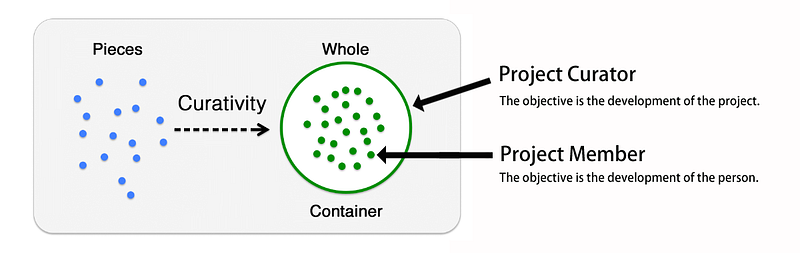
The above diagram is inspired by Curativity Theory. We can consider the Developmental Project as Container.
Project Member: the Project-for-Me View
The Project-for-Me view adopts the perspective of Project Member. Your focus is your actions. The Developmental Project Model offers eight dimensions for reflecting on your actions.
- Purpose: Why do you want to join the project? What’s your motivation?
- Position: What’s the social structure of the project? Do you take a certain responsibility in the project? Do you change your role in the process?
- Program: Does the project have formal organizational processes? How do you get involved with the program?
- Social: How do you connect with others due to joining the project?
- Content: How do you acquire new information and knowledge due to joining the project?
- Action: What actually do you do due to joining the project?
- Theme: Do you find some new and interesting themes for your career development?
- Identity: How do you perceive your identity before and after joining the project?
Though I am the curator of the Activity U project, I am the only one official member of the project at this stage. Thus, the above case study is adopted from the Project-for-Me View.
Project Curator: the Project-for-Us View
The Project-for-Me view adopts the perspective of Project Curator which refers to the initiator or leader of the project. You should reflect on the status of the project from eight dimensions of the Developmental Project Model.
- Purpose: What is the purpose behind the project? Why do people need to join the project?
- Position: What’s the social structure of the project? Does the project have different formal roles for members?
- Program: Does the project have formal organizational processes? How do you manage the program?
- Social: How does the project offer opportunities for members to connect with others?
- Content: How does the project offer new information and knowledge for members?
- Action: What actually members can do after they join the project?
- Theme: What are the themes of the project? Are these themes attractive enough?
- Identity: What is the brand identity of the project? How do people perceive the brand identity of the project?
To be honest, I didn’t take the Project-for-Us view for the above case study about the Activity U project.
Project as Developmental Environment
From the perspective of the Ecological Practice approach, Project can be considered as Container and Developmental Environment.
From the perspective of Project-oriented Activity Theory, Project can be considered as Lev Vygotsky’s “Social Situation of Development”.
The Developmental Project Canvas offers us a simple and powerful practical tool for studying the relationship between Project and People.
What are your developmental projects?
You are most welcome to connect via the following social platforms:
Twitter: https://twitter.com/oliverding Doowit: https://doowit.co/profile/gm0k2ax9 Linkedin: https://www.linkedin.com/in/oliverding
License
This work is licensed under the Creative Commons Attribution-NonCommercial-ShareAlike 4.0 International (CC BY-NC-SA 4.0) License. Please click on the link for details.


