
How Bullying Impacts the Brain and What We Can Do About It
Peer victimization might affect both the receiver and giver, leading to harmful health consequences and creating a vicious cycle

Bullying is a complex psychological and social issue that has detrimental effects on both the receiver (victim) and the giver (bully), contributing to a harmful cycle. Extensive research in psychology and neuroscience has shed light on the mechanisms and consequences of peer victimization.
Being a victim of bullying in childhood, adolescence, and adulthood motivated me to research the topic in-depth and analyze it from biological, genetic, and psychological angles using scientific rigor.
During my studies, I noticed that bullying adversely impacted the brain and cognitive system, leaving everlasting effects on stakeholders.
Bullying might occur in subtle and overt forms, like spreading rumors, belittling, calling names, destroying victims' belongings, and pushing or hitting them, causing physical injuries and psychological suffering.
Without going into complex scientific and technical details, I unfold this societal issue from multiple angles, leveraging a growing body of knowledge and my professional experience.
I aim to create awareness of its physical and psychological effects and provide practical steps to overcome the issue assertively, sustainably, and collectively.
Why Bullying and Being a Victim of It Matters
For the victim, bullying can create physiological and psychological effects. Stress due to bullying can cause hormonal imbalances, which might create long-term effects on health and well-being.
Neuroimaging studies have shown that victims of bullying exhibit structural and functional changes in brain regions involved in emotional processing.
These alterations in the brain can lead to heightened emotional reactivity, impaired self-regulation, and increased vulnerability to mental health disorders (anxiety, depression, and post-traumatic stress disorder).
The impact on the victim’s mental health can persist into adulthood, affecting their overall quality of life and social functioning.
People who engage in bullying behavior also demonstrate exceptional neurological and psychological characteristics.
Bullies exhibit reduced empathy and increased impulsivity, with differences observed in brain regions (the anterior cingulate cortex and insula) associated with empathy and emotion regulation.
These traits contribute to a higher tendency for aggression and an enhanced reward response when exerting power and dominance over others.
The consequences of bullying extend beyond the people involved, impacting the broader social and societal contexts.
For example, in school and workplace settings, persistent bullying can create a hostile environment, affecting the well-being of students and workers, leading to lower performance, reduced engagement, and increased absenteeism rates.
The harmful effects of bullying might perpetuate a cycle of aggression and victimization, as victims might develop maladaptive coping strategies and internalize the bullying experiences, increasing their likelihood of becoming bullies themselves.
Why do some people choose to bully and hurt others?
Bullying behavior is complex. A combination of multiple factors like biological, genetic, cognitive, psychological, and social can influence it.
For example, abnormalities in the prefrontal cortex, amygdala, and brain regions involved in emotional regulation and impulse control have been associated with aggressive tendencies.
Testosterone has been implicated in aggressive behavior in men. Higher testosterone levels can increase dominance, competitiveness, and aggression. Effects of excessive testosterone were observed in road rages.
Bullying behavior can be learned through observation and imitation of aggressive models. People witnessing or experiencing aggression in their environment might exhibit bullying behaviors themselves.
People might use bullying as a maladaptive coping mechanism to deal with their insecurities or frustrations. They might use aggression as a tool to gain power, control, or boost their self-esteem.
Such behavior might originate from a desire to assert dominance and control over others. Bullies might seek to establish a social hierarchy or exert power to compensate for their own feelings of inadequacy or vulnerability.
Some people might have deficits in empathy and compassion, making it difficult for them to understand or consider the feelings and experiences of others. This emotional immaturity might contribute to the willingness to engage in bullying behavior.
A High-Level Overview of the Research into Bullying
Research on bullying dates back to the 1960s, starting with the outstanding book of Konrad Lorenz titled On Aggression in 1963.
In those days, bullying was called “mobbing,” describing collective aggression among people of the same tribes, communities, or workplaces.
The term is still used in the workplace context. Then the phrases “peer victimization” and “bullying” have been widely used in the scientific literature.
This review paper stated, “Research on bullying has increased dramatically worldwide, from only 62 citations in PsycINFO from 1900–1990 to 289 in the 1990s, to 562 from 2000–2004.” Pubmed indexed 10,910 scientific reports.
As the paper informs, “It is not known how genes, parents, peers, cultural values, and school practices interact to affect bullying and victimization nor why some schools fail to reduce the harm.”
After the 2000s, systematic intervention research gained momentum following tragic events in Norway where young boys took their own lives after being bullied by their peers. In my adolescent years, a friend also committed suicide due to societal pressure.
Since then, numerous studies have consistently shown that being a victim of bullying increases the risk of various adverse outcomes, like physical health problems, emotional and behavioral issues, depression, and even suicidal thoughts and attempts.
People who engage in bullying behavior are more likely to exhibit a propensity for offending in childhood. For example, a study Published in the JAMA Psychiatry in 2013 concluded:
“The effects of being bullied are direct, pleiotropic, and long-lasting, with the worst effects for those who are both victims and bullies.”
The study investigated the long-term effects of bullying involvement in childhood and adolescence on self-reported psychiatric outcomes in young adulthood, including suicidality.
Then a study published in Nature in 2018 concluded that “The experience of chronic peer victimization during adolescence might induce psychopathology-relevant deviations from normative brain development. Early peer victimization interventions could prevent such pathological changes.”
This paper in Frontiers’ Psychiatry informs that “Over the past few decades, bullying has been recognized as a considerable public health concern. Involvement in bullying is associated with poor long-term social and psychiatric outcomes for both perpetrators and targets of bullying.”
The paper points out, "Despite this concerning prognosis, few studies have investigated possible neurobiological correlates of bullying involvement that may explain the long-term impact of bullying.”
Some people view bullying as a harmless part of growing up. Yet, the impact of bullying extends beyond childhood. Longitudinal studies have focused on the long-term effects of bullying involvement, following people into adolescence and adulthood.
For example, this 2010 metanalysis published in Child Abuse & Neglect concluded, “Internalizing problems function as both antecedents and consequences of peer victimization. These reciprocal influences suggest a vicious cycle that contributes to the high stability of peer victimization.”
Numerous studies have revealed that the effects of being bullied might persist into adulthood, with boys experiencing higher rates of anxiety disorders and antisocial personality traits.
For girls, peer victimization appears to have a more profound impact, with an increased risk for psychopathology and suicidality even after childhood emotional problems evident in adulthood years extending to the workplace.
Ironically some girls find bullies attractive “Because they bring excitement, adventure, drama, and mischief, which is alluring, especially to females who are bullies themselves.”
As pointed out in this paper, “Previous studies indicate that wellness and health of the victims who have been subjected to mobbing at the workplace were affected adversely.”
The paper defined mobbing at the workplace as “cases as verbal harassment, aggressive words, sarcasm, slander, or social isolation repeatedly targeted at a specific person at a specific period of time.”
From the literature, I understand that peer victimization might be a marker of existing and future psychopathology rather than the sole cause of adverse outcomes.
How does the brain manage bullying effects?
Bullying can have consequential implications on our biology. It involves brain regions working together to process and regulate emotional responses. Bullying can change the structure of the brain, including white matter integrity.
This study using 2,602 participants informed that “Bullying involvement in young children was associated with differential cortical morphology. Specifically, the fusiform gyrus, often involved in facial processing, showed a thicker cortex in targets of frequent bullying.”
Results of this study suggest “bullying in late adolescence is uniquely related to abnormal brain microstructure among individuals with current diagnoses of depression, possibly due to an overactive fear response.”
The limbic system is involved in emotional processing and memory formation. Heightened activation of the amygdala in response to bullying-related cues can lead to increased emotional reactivity.
Bullying can impact the development and functioning of the prefrontal cortex, leading to difficulties in emotional regulation and self-control.
Reduced prefrontal cortex activity might contribute to increased emotional vulnerability and impaired coping strategies in response to bullying.
Bullying can activate the HBA Axis, releasing stress hormones. Chronic exposure to bullying-induced stress can harm the brain, causing changes in neural plasticity, neurotransmitter systems, and neuroendocrine regulation.
Alterations in stress-related brain regions, like the hypothalamus and hippocampus, were evident in people who have experienced bullying.
Bullying involves complex social interactions and cognitive processes. The brain regions involved in social cognition are vital in understanding and responding to social situations.
Bullying can impact social cognitive processing, leading to altered perceptions of social cues, decreased empathy, and difficulties understanding others’ emotions.
Victims who experience bullying might have impaired perspective-taking abilities, making it challenging to understand others’ perspectives and empathize with their experiences.
The stress hormones released during bullying can affect the immune system. They can lead to increased inflammation. Chronic inflammation is associated with depression, anxiety disorders, hypertension, and cardiometabolic disorders.
The IMAGEN study, which is a decade of imaging genetics in adolescents, was documented in Nature in 2020. About 30 percent of participants in the study said they had experienced chronic bullying and experienced structural changes in the brain.
Genetic Implications of Bullying
Some studies suggest that genetic factors can contribute to people’s vulnerability to bullying and their response to bullying experiences.
This 2019 study investigated polygenic risk score (PRS) derived from a conduct disorder of genome-wide associations. Researchers identified latent profile analysis. The study explored the role of genetics on early childhood bullying behavior.
“561 children participated in a longitudinal randomized control trial of a preventive intervention beginning in first grade. Early childhood bullying provided genetic data (the age 19–21 year follow-up) in the form of blood or saliva.”
Results suggest that “the PRS was significantly associated with class membership, with individuals in the moderate bully-victim profile having the highest levels of the PRS and those in the high bully-victim profile having the lowest levels.”
Genetic associations with bullying are complex and multifactorial. I noticed potential genetic markers might influence susceptibility to bullying. I will briefly unfold them based on my research.
Genetic variations can interact with environmental factors, like bullying experiences, to influence a victim’s response.
Some genetic variants might amplify or lower the effects of bullying on mental health outcomes. For example, gene variations in stress response and neurotransmitter regulation might affect a victim’s susceptibility to developing psychological problems.
In my research, I looked into the genetic aspects of three neurotransmitters. They are serotonin, dopamine, and oxytocin, which I introduced in previous articles.
Variations in genes related to serotonin function (SLC6A4) are linked to increased vulnerability to bullying victimization. These variants might affect people’s emotional reactivity and stress resilience, making them more susceptible to the adverse effects of bullying.
Genetic variations in dopamine-related genes (DRD4) are associated with behavioral traits related to aggression and victimization. These genetic factors might influence people’s risk of engaging in bullying behaviors or being targeted by bullies.
Genetic variations in genes related to oxytocin signaling (OXTR) are implicated in social behaviors and interpersonal relationships. Variations might impact people’s social sensitivity and ability to form supportive relationships, potentially influencing their vulnerability to bullying.
Leveraging the research in the field, I concluded that genetic factors play a role but do not determine people’s outcomes regarding bullying. For example, environmental factors, like family dynamics, school climate, workplace rules, and social support, are vital.
The interconnection between genetic predispositions and environmental influences is complex. This issue requires further research to understand how they interact and contribute to bullying experiences clearly. Our knowledge in this domain is limited and inconclusive.
Short and Long-Term Solution Approaches to Bullying
Addressing bullying requires a comprehensive approach that can address the needs of both the victims and people who engage in bullying behavior.
To address the detrimental impact of bullying, interventions should focus on multiple levels (individuals, families, schools, workplaces, law enforcement, and communities), promoting empathy and emotional regulation skills to help victims and bullies break free from the vicious cycle of bullying.
Implementing evidence-based programs that emphasize social-emotional learning, conflict resolution, and creating inclusive and supportive environments have shown promise in reducing bullying incidents and improving overall mental well-being.
Establishing a safe and supportive culture in schools, workplaces, and communities is crucial. Implementing clear anti-bullying policies and procedures, promoting positive social norms, and enabling inclusivity might create a culture of respect and empathy.
Providing immediate support to victims is essential. This can include counseling services, peer support programs, and access to trusted adults who can offer guidance and intervention. Empowering victims to speak up and report incidents is vital in addressing the immediate impact of bullying.
Integrating social and emotional learning programs into educational curricula allows the development of skills like empathy, self-awareness, and responsible decision-making.
Identifying and addressing risks and signs early might prevent bullying from escalating. Providing targeted interventions and support for people displaying bullying might address the underlying causes and promote healthier interaction patterns.
Engaging parents, caregivers, and the broader community is crucial in combating bullying. Providing resources and workshops that educate parents on recognizing and addressing bullying behaviors can facilitate early intervention and create a united front against bullying.
Implementing restorative justice can repair relationships and promote accountability. Restorative practices emphasize dialogue and understanding, allowing both victims and perpetrators to participate in resolving conflicts and rebuilding trust actively.
Empowering bystanders to intervene and support victims might lower bullying incidents. Encouraging a culture of responsibility for bystanders in safely and effectively intervening might create a supportive network that can discourage bullying.
By understanding the long-term consequences of bullying and nurturing a culture of empathy and respect, we can create safer environments that encourage well-being and better mental health during childhood, adolescence, and adulthood.
Takeaways for dealing with bullies in practical steps for children, adolescents, and adults
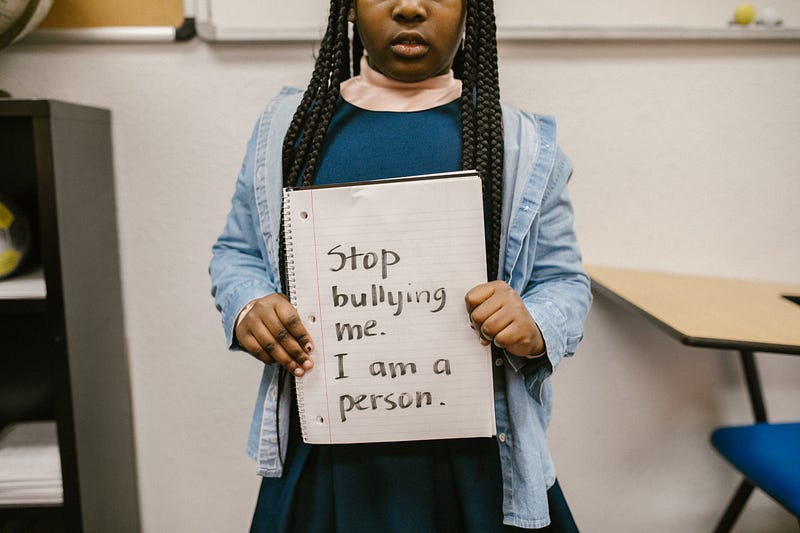
Dealing with bullies requires a proactive and multi-faceted approach.
1 — Encourage children to assertively and confidently communicate concerns to trusted adults.
2 — Help children develop self-esteem, assertiveness, and social skills to resist and cope with bullying situations.
3 — Teach empathy and compassion to children and adolescents. Encourage them to develop positive friendships and surround themselves with supportive peers.
4 — Learn about the signs of bullying, its impact, and the importance of intervention to create a safer environment.
5 — Respond assertively to bullying by using strong body language, clear communication, and seeking help when needed.
6 — Develop problem-solving skills to navigate conflicts and find constructive solutions.
7 — Participate in creating a safe and inclusive school, work, or community environment by reporting bullying incidents and supporting others.
8 — Advocate for anti-bullying policies in schools, workplaces, and communities, emphasizing zero tolerance for bullying behaviors.
9— Use support systems like counseling services, peer support groups, helplines, and law enforcement.
10 — Inform teachers, parents, managers, and professionals on recognizing and addressing bullying in school, workplace, and community effectively.
11 — Intervene promptly by taking immediate action when bullying is reported and observed, investigating the situation thoroughly.
12 — Encourage positive interactions and respect among people, emphasizing the importance of tolerance, acceptance, and empathy.
The body of knowledge on bullying highlights its profound effects on both victims and bullies. Understanding the mechanisms and factors can provide insights into the complexities of bullying dynamics.
By applying this knowledge, we can develop targeted interventions and strategies to mitigate the harmful consequences of bullying, creating safer and more inclusive environments.
Here’s How I Train My Brain Daily for Mental Clarity and Intellectual Productivity.
Thank you for reading my perspectives. I wish you a healthy and happy life.
As a new reader, please check my holistic health and well-being stories reflecting my reviews, observations, and decades of experiments optimizing my hormones and neurotransmitters. I write about health as it matters. I believe health is all about homeostasis.
Petechiae, ALS, Metabolic Syndrome, Type II Diabetes, Fatty Liver Disease, Heart Disease, Strokes, Obesity, Liver Cancer, Autoimmune Disorders, Homocysteine, Lungs Health, Pancreas Health, Kidneys Health, NCDs, Infectious Diseases, Brain Health, Dementia, Depression, Brain Atrophy, Neonatal Disorders, Skin Health, Dental Health, Bone Health, Leaky Gut, Leaky Brain, Brain Fog, Chronic Inflammation, Insulin Resistance, Elevated Cortisol, Leptin Resistance, Anabolic Resistance, Cholesterol, High Triglycerides, Metabolic Disorders, Gastrointestinal Disorders, Thyroid Disorders, Anemia, Dysautonomia, cardiac output, and urinary track disorders.
I also wrote about valuable nutrients. Here are the links for easy access:
Lutein/Zeaxanthin, Phosphatidylserine, Boron, Urolithin, taurine, citrulline malate, biotin, lithium orotate, alpha-lipoic acid, n-acetyl-cysteine, acetyl-l-carnitine, CoQ10, PQQ, NADH, TMG, creatine, choline, digestive enzymes, magnesium, zinc, hydrolyzed collagen, nootropics, pure nicotine, activated charcoal, Vitamin B12, Vitamin B1, Vitamin D, Vitamin K2, Omega-3 Fatty Acids, N-Acetyl L-Tyrosine, and other nutrients.
Disclaimer: My posts do not include professional or health advice. I only document my reviews, observations, experience, and perspectives to provide information and create awareness.
As part of my creative non-fiction writing goals, I’d like to share a few stories that might warm our hearts with a bit of humor into weighty topics.
Sample Humorous Stories
Finally, After Burning Her House, Georgia Found Enlightenment
Hilarious Tips to Prevent Brain Atrophy and Keep the Gray Matter Giggling
8 Psychological Points I Had to Unlearn and Relearn the Opposite
Based on my writing experience and observations, I documented findings and strategies that might help you amplify your voice, engage your audience, and achieve your desired outcomes in your writing journey.
I publish my lifestyle, health, and well-being stories on EUPHORIA. My focus is on cellular, mitochondrial, metabolic, and mental health. Here is my collection of Insightful Life Lessons from Personal Stories.
You might join my six publications on Medium as a writer by sending a request via this link. 22K writers contribute to my publications. You might find more information about my professional background.
As a writer, blogger, content developer, and reader, you might join Medium, Vocal Media, NewsBreak, Medium Writing Superstars, Writing Paychecks, WordPress, Cliqly, and Thinkers360 with my referral links. These affiliate links will not cost you extra to join the services.


