
Bloody Nights
Our dialysis story — chapter 27
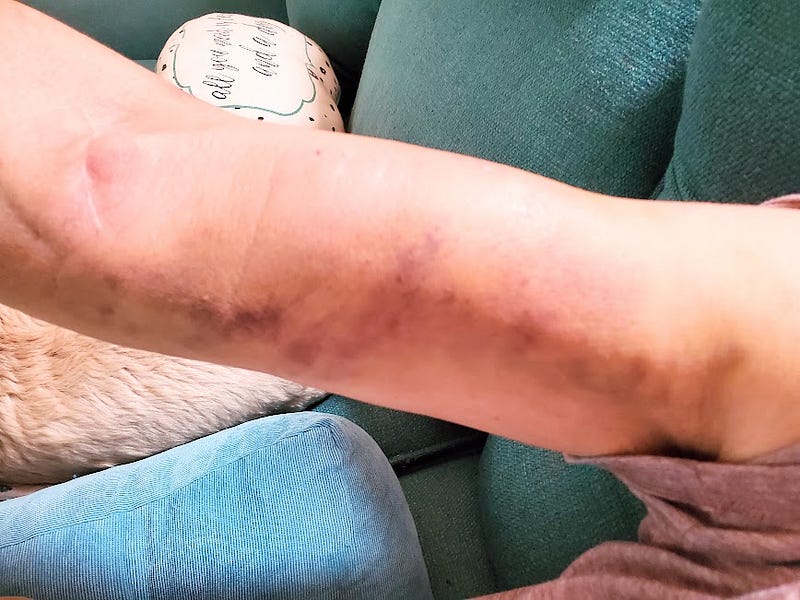
Friday, as usual, Ben came home from dialysis with his arm wrapped in bulky bandages and instructions to remove them no earlier than 8:30 p.m. After last week’s bloody experience, he planned to keep them on all night.
Do you know how your skin itches when healing from an injury? Well, his arm is being injured twice a week, and it itches — a lot. He refrains from scratching, but it’s very uncomfortable.
At one a.m., after three restless hours due to the itchiness, Ben decided to take off the two bandages. He thought getting air to his skin might relieve some of the itch.
I was sleeping — until he cried out for help.
I rushed to the bathroom to find blood splatter over the floor and counter and pooling in the sink. As soon as he removed the lower bandage, his puncture began bleeding — not a slight seepage of blood, not drops, but a steady stream.

I grabbed sterile gauze and told him to press it over the puncture wound, keeping his arm over the sink while I cleaned the floor and counter. The last thing we needed was to have the pets (or us) walk through the blood and track it over the house.
After cleaning, I pulled out the wound supplies left from Ben’s fall last year. I cleaned his arm with an antiseptic spray and dried it with sterile gauze. Then, I put two layers of gauze over the puncture spot and a waterproof bandage on top. Last week, I used the last of our large bandages and had to settle on a smaller one that I didn’t like as well but which adequately covered the area.
Lastly, I cleaned the bloody sink before we returned to bed.
4:00 am: Another call from the bathroom for help.
Ben got up to check his blood pressure — he does that at twice each night — and blood started flowing from under the new bandage.
The blood splatters were fewer than earlier, but a long red line trickled down his arm. I removed the bandage, washed the wound, and told him to hold gauze on it for 20 minutes.
I again bandaged the area, using three layers of gauze for extra insurance. Then, I settled him in bed with his arm elevated on two pillows by his side and instructed him to apply pressure for at least ten more minutes.
I stayed awake until he fell asleep, then checked his arm. No blood.
I fell asleep around 5:15.
When I spoke to the nurses before about his post-dialysis bleeding, they blamed blood thinners. He doesn’t take blood thinners. Then, I got the typical response of “it’s normal” — ah, it’s not normal to us.
If this bleeding continues, could he become anemic? He already has issues with his iron and hemoglobin.
I need guidance on how to handle these bloody nights.
If the nurses can’t help me, I’ll pay an impromptu visit to the doctor who performed Ben’s angioplasty.
Someone must have answers.
© Dennett 2023
Our Dialysis Stories:


