
Here — Waiting
Our dialysis story — chapter 7 — subtitle: What the Hell??

I haven’t written since May 3rd — in fact, I stopped my Medium membership until many of you pointed out that I could continue to make money on my old posts. My brain — crowded with dialysis and plumbing questions, facts, concerns, and confusion — hadn’t thought of that. I restarted my membership a few days later, leaving me surprisingly sad that I am now “a member since May 2023,” when it’s been so much longer than that.
Thank you, all, for suggesting I stay here.
It’s 7:30 am. I’m waiting on a plumber to finish the job he and his crew started a week ago, and I’m waiting to hear about Ben’s possible hospital discharge.
Let’s start with Ben. Last time I wrote, we’d made the decision to go with hemodialysis in a clinic rather than peritoneal dialysis at home. Not an easy decision but one that felt best for us.
Peritoneal dialysis requires surgery to implant a tube in the abdomen. Hemodialysis requires surgery to merge a vein and an artery and insert a permanent port for dialysis. That surgery takes two months to heal. If the patient needs dialysis sooner, a temporary port must be installed.
Ben’s nephrologist said:
We don’t want to wait so long that he has to go to the emergency room. Best to avoid that. We’ll refer you to a cardiac surgeon to get started as soon as possible.
We met with the cardiac surgeon one week ago, on the 9th. After an ultrasound of Ben’s arms to find the best vein and artery to use for the permanent port, he described the surgery and recovery. I asked him about the temporary port.
He said he only does the permanent port.
We understood from Ben’s nephrologist that you would do both.
Nope, not me.
Who does it?
I don’t know. I think an intervention radiologist might. But it’s not me.
But we didn’t get a referral to an intervention radiologist.
Call the nephrologist. I only know what I do and I don’t do that. Someone from my office will call you about the dates for pre-op and surgery.
I called and spoke to G in the nephrologist’s office. When I told her we understood that the cardiac surgeon installed both ports, she replied:
No, Ben has to go to the emergency room for that.
What?! I thought we were doing all of this to prevent him from going to the ER.
No, you have to go to the ER.
Why can’t we just get an appointment with an intervention radiologist and have him install the temporary port in his office or as an outpatient at the surgical center?
Because that’s not how it’s done. You go to the ER, and he gets admitted to the hospital. Then, the port is installed and he starts dialysis in the hospital.

None of this was explained to us. The doctor specifically said we wanted to avoid the ER at all costs.
This makes no sense. We sit for hours and hours in the ER exposing him to all sorts of sick people, germs, and viruses. Can’t he just be admitted without going through the ER?
No, that’s not how it’s done. You have to go to the ER to be admitted.
I insisted that the doctor call us. There had to be a different way. Just thinking about Ben in the ER triggered memories of the horrific 23 hours I spent there in 2021.
The doctor called on Thursday and repeated what G had said. Ben must go through the ER to get admitted. There is no other option.
I expressed my concerns about spending hours in the ER. The doctor said he’d send orders before our arrival, speeding things up.
Meanwhile, the plumbing situation worsened. After the plumber jackhammered our primary bathroom floor on May 3rd and didn’t find the slab leak, the leak detection guy returned on the 4th. After much back and forth and listening to floors and walls, he said:
The leak is under the shower. The plumber will have to jackhammer the shower to get to it.
Do you guarantee that’s where it is?
No, we don’t give any guarantees.
He continued:
You really should consider re-piping the entire house. To jackhammer a tile shower, fix the leak, and hire someone to rebuild your shower will cost in the neighborhood of $6,000 to $7,000. Re-piping the house won’t be too much more than that, and once you have one leak in old copper pipes, you’ll have more.
That evening I spoke to a neighbor who re-piped her unit two years ago. She paid to have two leaks repaired — about $7,000. When a third leak appeared, she re-piped the house. Her house is bigger than mine — the price tag was $11,000.
What choice did we have?
The owner of the plumbing company came on the 8th and gave me an estimate of just under $8,000. $8,000 we don’t have. And that doesn’t include hiring someone to fill holes in the walls and floor and repaint and retile—figure another $1,000 or more for that.
Meanwhile, my homeowner’s insurance went up 135% this month, and our HOA insurance increased by $120 a month. I will never retire. That’s a fact.
The re-piping started on the 11th and continued on the 12th and was supposed to be completed yesterday, but the lead plumber was sick. The crew arrived a short while ago. The lead guy estimates they’ll be done around 3:00.
Meanwhile, we’ve only had water for 30 minutes a day — 15 in the morning and 15 at night. Long enough to brush teeth, flush toilets, shower, and wash dishes. I turn the water on and off at the meter using a water shut-off key that I purchased from Lowe’s:

During my two 15-minute periods with water, I fill ten buckets so we can flush toilets and have water for other uses during the long dry hours. My back and shoulders ache from carrying the buckets and bending over a hole in the ground to turn the water on and off. One night, in the dark, bent over the hole, trying to attach the shut-off key to the valve and using a lantern-style flashlight (torch, for the Brits), I fell — not in the hole because it’s about 2x1 feet — but over it, landing with my head in a palmetto bush. I escaped injury from the sharp ends of the palmetto fronds but dislocated a rib.
I can’t leave the water on because our utility company said I’d have to pay the bill, even if the leak elevated it to a thousand dollars or more, and then fill out forms and submit plumbing invoices to request a refund.
I don’t have thousands of dollars for a water bill, so we do without for most of the day.
Back to Ben. The nephrologist wanted Ben at the ER last Friday, the 12th, when there was a crew of plumbers working at our home. Our pets were freaking out with the men in and out and all the noise. I couldn’t leave the house and pets unattended for hours.
As usual, my friend Gina came to the rescue, as she did when she provided buckets from her farm for us to use to store water. She rescheduled an appointment to install a computer for a client and spent the day petting and soothing Syau, Tango, and Sébastien while holes were cut into our walls and pipes were threaded down from the attic.
Ben and I went to the emergency room.
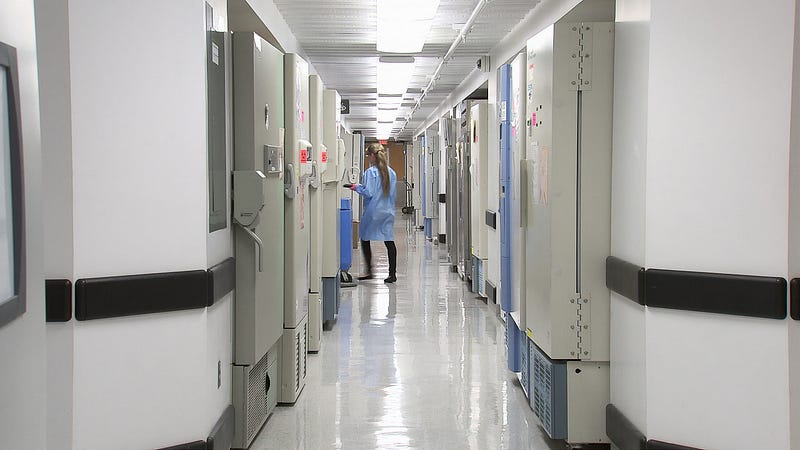
Yes, the ER had the doctor’s orders, but that didn’t assure fast service. We waited six hours in the ER before Ben got a room. Six hours in a crowded room where we were usually the only ones wearing masks. Almost none of the medical staff wore them, either.
Ben was weak and confused. When kidneys don’t function well, the blood fills with toxins that can cause mental confusion — a type of brain fog. His fog gets a little denser every day. At least, we hope that’s what’s causing his confusion. We hope it’s not an unrelated type of dementia. We hope it will get better with dialysis.
At hour five in the ER, we were told that anyone who wasn’t a patient needed to wait outside because the room was too crowded. I tried explaining to Ben why I had to leave him, but he didn’t totally understand. I went into the 91-degree heat, where the only place to sit was on a low stone wall around the ER parking lot—a wall in the sun.
After 20 minutes, an ER staff member came to take me inside. Ben was frantic, crying, and confused because he couldn’t find me and didn’t remember I said I’d be outside. I’ve never seen him so vulnerable and distraught. It took several minutes to quiet him. I was allowed to stay.
He’s been in the hospital since Friday.
Because he’s confused, I typed a sign that sits next to his bed. It explains where he is and why. It tells him I love him and will visit every day and that he can call me whenever he wants. Interestingly, he forgets so much but never forgets my cell phone number.
The temporary dialysis port was installed Saturday. While I was visiting, he felt something strange and pulled back the covers. He was covered in blood. Something had come loose. I turned on his call light. No one came. I ran down the hall and got a nurse, who walked very slowly to his room. When she saw all the blood — the blood I told her about — she went into action. A team of three nurses fixed it.
He had 1.5 hours of dialysis Saturday afternoon and two hours on Sunday. I had to work much of the weekend and wasn’t present when various doctors spoke to Ben. I requested that they call me because Ben is confused and forgetful. They never call me. Not one call. I get muddled information from Ben that may or may not be partially true. Or, might be totally wrong. I never know. The weekend nurses claimed to know nothing.
Ben said he was going home Monday. I panicked because the plumbers would return, and Gina couldn’t house and pet sit.
Turns out, the plumbers didn’t come and Ben didn’t go home.
When I visited Monday afternoon, I met his nurse, a different nurse than he’d had the other days. Amazingly, this nurse was very knowledgeable and willing to explain in detail what was happening — or not happening.
When toxins are in the blood, the body gets used to their presence — much like an addict’s body gets used to alcohol or drugs. When the blood gets cleaner, the body reacts negatively — somewhat like withdrawal symptoms when an addict is no longer using. It’s called DDS — dialysis disequilibrium syndrome. Mostly, it causes head and body aches, confusion, nausea, and muscle cramps. But it can also cause edema — fluid retention in the tissues — and can lead to water on the brain (cerebral edema) and swollen extremities.
After his second dialysis, the doctors determined Ben was experiencing DDS and were very concerned about cerebral edema, which can lead to death. Oddly, Ben doesn’t have any of the normal physical symptoms, and his confusion is no worse than it was before. I assume the doctors see something else that indicates the edema because I see no swelling in his legs, feet, or arms.
The nurse explained that’s why Ben did not have dialysis on Monday — his body needed to rest — and why he couldn't go home.
Also, he can’t be discharged until he’s registered as an outpatient with a dialysis clinic and future treatments are scheduled. A case worker is handling that.
Ben doesn’t understand — or remember — why he can’t come home. He asks over and over again to be discharged. I made another sign that tells him why he has to stay and what needs to happen before he can come home.
Sitting here, I just received a call from someone at Kidney Smart. She wants to educate Ben and me about his options for kidney care. She starts by saying:
You have four options: home peritoneal dialysis, home hemodialysis, clinical hemodialysis, and transplant. Let’s discuss each one, shall we?
Shocked, I reply:
He’s in the hospital having dialysis. His temporary port was installed Saturday. His permanent port will be installed next Friday. I think your phone call is a little late.
Well, you could consider peritoneal or a transplant. Never too late!
I already educated myself about peritoneal on the internet. I researched and read and watched YouTube videos. Yes, I received most of my kidney education from YouTube. Do you know how horrible that is?
Well, it’s also dangerous.
Exactly, that’s why we should have received the education you’re offering three weeks ago.
How about a transplant?
He’s 83 years old. He has heart and vascular disease and he’s diabetic. Do you really think he’s a viable transplant candidate?
Probably not. Sorry you didn’t receive the information you needed earlier. I just got the referral to call you. I understand your frustration. Call if I can help!
A moment later, a hospital dietician calls. She plans on meeting with Ben this afternoon to explain a renal diet. I tell her not to bother because he won’t remember what she says. She says she’ll leave dietary information for me. I ask if the diet is for a diabetic renal patient. No, she didn’t know he was diabetic. And she doesn’t have a diabetic renal diet.
The CDC website says that 44% of kidney dialysis patients have diabetes. But the hospital dietician doesn’t have a diabetic renal diet available! How is that possible? She says she’ll go through the renal diet foods and cross off what he can’t eat. Another perky, Call if I can help.
I am so fed-up. So exasperated. So tired.
So, I wait. He’s in dialysis now. I’m at home with plumbers and panicked pets. We’ll know if Ben’s DDS and edema are worse after this dialysis.
I wait for water and I wait for Ben to come home.
And through it all, I am so grateful for all of you. I haven’t had time to read all your comments and best wishes. I may never get through them all because there are so many, but I deeply appreciate every word. I’ve also received emails of encouragement. If I didn't respond to your message, please know that I read and appreciated it.
I’ve had a very special Medium angel through this. She is gifting us some money to help with the plumbing expenses. She was blessed with a similar gift years ago and is paying it forward. Ben and I are honored that she chose us to be her pay-it-forward recipients. Our gratitude is overflowing.

© Dennett 2023
Our Dialysis Story:


