
RECIPROCAL/JOURNEY OF LIFE/HEALTH
Broken
The Journey of Life March Prompt

Health is a chain. Break one link and the others weaken.
In 2021, I discovered how vulnerable my health is and how broken our health systems are.
It all started with the Covid pandemic. No, I didn’t get the virus. In fact, I did an admirable job of avoiding it while living in a state with one of the world's shortest lockdowns and very few public safeguards.
As soon as the Covid vaccine was available, my husband and I rolled up our sleeves. After our second shots, we felt confident enough to eat at a restaurant for the first time in 18 months.
Following dinner, my stomach felt tight and a little uncomfortable. No pain, no other problems, so I ignored it. Next day, after eating my leftovers, I was ill. After a night of diarrhea, I thought the worst was over. I was wrong.
After three days of diarrhea, I went to an emergency room clinic associated with one of the hospitals in our city. Although I was there for diarrhea, they didn’t take a stool sample. Still, the doctor diagnosed food poisoning without a test confirming it, sent me home with two antibiotics and told me to take Imodium, which I started taking the first time I experienced diarrhea. I hadn’t helped — at all.
After five days, I was worse. The antibiotics and diarrhea left me shaky and weak. I visited my primary care doctor, who was upset that the ER physician didn’t take a stool sample. He sent me home with a new antibiotic and an additional antidiarrheal.
Two weeks passed. Another visit to the ER. Another visit to my doctor. More meds. Both told me to see the GI doctor who performed my past colonoscopies. I called and was given the earliest available appointment — three weeks in the future.
After another week, I begged the GI doctor’s nurse for an earlier appointment. No luck. I started vomiting. A retired nurse neighbor insisted I go to the hospital in an ambulance because I needed immediate care.
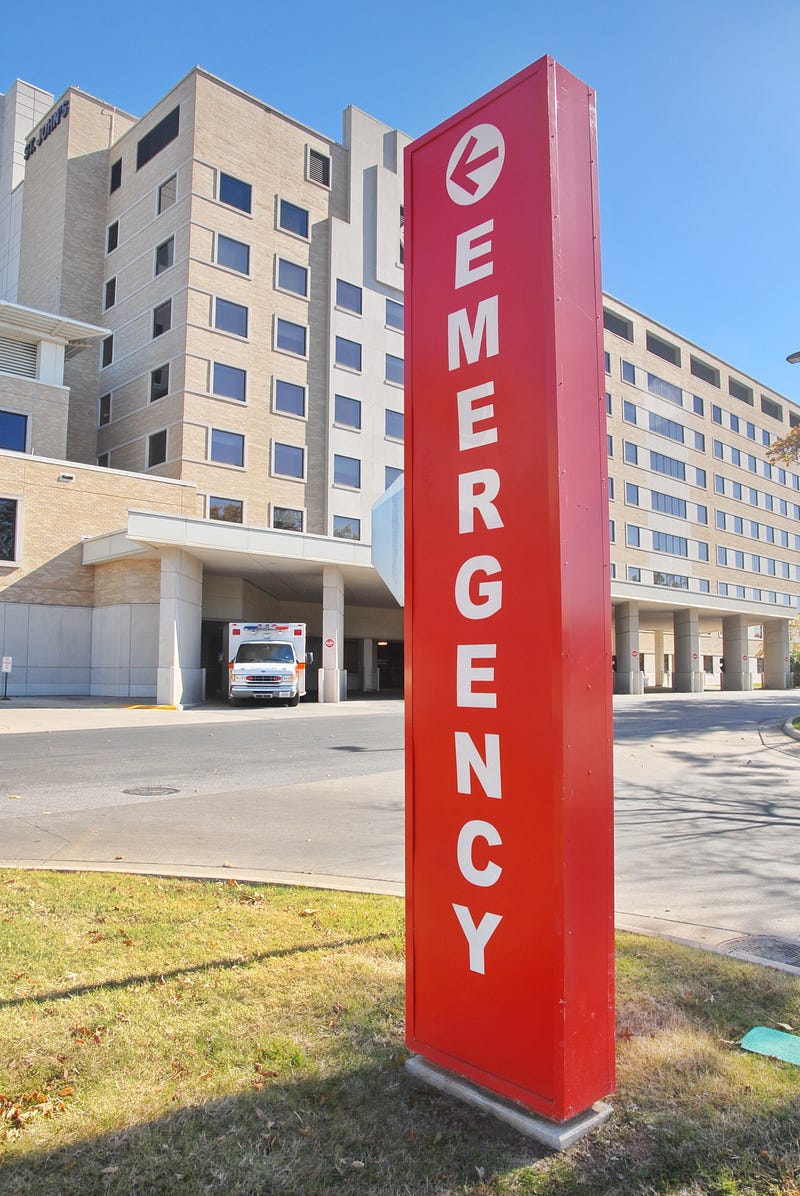
I was seen quickly, underwent a few tests, and was given anti-nausea medication but nothing for pain or diarrhea. Then, I spent the night in the ER waiting room in a wheelchair.
The diarrhea continued, forcing me to use the men’s bathroom, which was closer to the waiting room than the women’s. In the men’s room, I was aggressively confronted by three burly security guards — two males and one female — who ordered me to leave the bathroom immediately. Despite my begging that I had uncontrollable diarrhea, they wouldn’t allow me to go in the toilet cubicle.
Unable to control myself, diarrhea flowed right there, right then. I was humiliated and started crying. The guards responded gruffly, saying I shouldn’t have gone in the men’s room in the first place, ignoring that I had no choice. They radioed for a nurse. The nurse gave me a stack of towels and a gown and ordered me to clean up, then called for a janitor. I was left to manage on my own. No one guarded the door or put up a sign. Men continued to come in before taking one look and rushing out. I was mortified. Eventually, I was clean enough to leave the bathroom.
It wasn’t until 2 am that I received medication for diarrhea and pain.
It wasn’t until 7 am, thirteen hours after arriving, that I was given a room.
That night in the ER was the worst night of my life.
After multiple tests and four days and nights, I was released with a diagnosis of microscopic colitis, caused probably by food poisoning, and several prescriptions. I had lost 30 pounds in a little more than three weeks, and my blood pressure and potassium levels were dangerously low.
Two weeks later, I saw my GI doctor. She questioned why the hospital hadn’t given me an ultrasound. I didn't understand the importance of that test and didn’t feel well enough — yes, I was still sick — to ask.
I continued on meds. Eventually, the diarrhea stopped, but after two nights of pain and vomiting, I again saw my primary care physician. He thought my problem was psychological and gave me an anti-anxiety drug.
After a third night of vomiting, I saw the GI doctor again. She was horrified that my PC doc didn’t order an ultrasound. I asked why. She said:
Vomiting and abdominal pain are symptoms of gallbladder issues, not colitis. Because you were vomiting and had pain the ER, they should have done an ultrasound of your gallbladder. Because you’re continuing to vomit, your primary care doctor should have ordered an ultrasound. This is not my area of expertise, but I guess I’ll have to take care of it.
The ultrasound she ordered revealed an infected gallbladder with one large stone and two small ones.
Once my gallbladder was removed, my problems ceased.
My surgeon was excellent, and I’m so grateful for his caring, patient demeanor. I’m also thankful that my GI doctor did what many other doctors failed to do.
I took care of myself. I did all I could to remain healthy but fell victim to food poisoning caused by questionable meal preparation or inadequate dishwashing at a restaurant. This could happen to anyone.
We can’t always avoid health issues, but when we fall victim to an illness or experience an injury, we trust our healthcare systems and medical professionals to do what they’re supposed to do — take care of us promptly, thoroughly, and compassionately.
Many blame the pandemic for my shoddy care. I don’t. There is no excuse for multiple doctors overlooking basic symptoms and failing to order essential tests. There is no excuse for three security guards aggressively confronting any very ill patient in the bathroom of an ER.
Unfortunately, my negative medical experiences didn’t end in 2021. My husband was hospitalized twice last year in two different hospitals. One provided horrible care, and the other utterly messed up his medical records, causing dangerous delays to his post-hospital care.
In the United States, we pay dearly, either out-of-pocket or through insurance, for health care. We deserve better.
I haven’t been active on Reciprocal for several months due to my husband’s health problems and hospitalizations, and I hope to rectify that with this article.
Although I’ve written about my hospital experience before, this article is more detailed, and that detail was painful for me to express. I had to revisit the worst night of my life but felt it necessary because healthcare is so important and our healthcare systems are terribly broken.
Thank you to Sahil Patel for this prompt which inspired my piece:
I recommend these health-related stories by two of my favorite Medium writers:
© Dennett 2023


