
Recovering From Burnout
Practical ways to take care of yourself while recovering from burnout

What is burnout?
Burnout can happen any time, to anyone.
Burnout is a state of emotional, physical and mental exhaustion caused by excessive and prolonged stress. People often talk about it in relation to jobs, but burnout can be caused by a whole host of life stressors.
People with divergent neurotypes, mental health issues, and disabilities are at a much higher risk for experiencing burnout because we tend to experience more daily stress.
Sometimes this comes in the form of a multitude of “minor” issues that add up over time, and sometimes burnout happens after an extreme period of being unwell.
It may seem counterintuitive, but a time we are particularly vulnerable is after a prolonged stressful period ends. We’ve been holding ourselves together for so long that when it’s finally “safe” to breakdown, we do. All the unexpressed emotions we’d been pushing aside to focus on survival catch up with us.
Happy new year
If you’re feeling burnt out from the holidays, like I am, here are some practical and realistic suggestions for ways you can recover and take care of yourself.
Please be patient with yourself and your loved ones. Recovering from burnout can take a really long time, depending on how long we’ve been pushing ourselves, and how deeply exhausted and over-extended we’ve been.
These are things that help me, but what works for each person will be different. It can help to keep track of how each strategy you try makes you feel, especially if exploring self care is new to you, or if you struggle with interoception (or alexithymia).
Read lots
Read books that inspire you, books that entertain you, and books that inform you.
Listen to music
Listen to music that moves you, music that provokes positive emotions, and music you can dance and stim to!
Get outdoors
Whether you enjoy camping, going for walks, or just sitting outside and breathing the air, any exposure to nature is beneficial.
Do puzzles
Whichever kind you enjoy: crosswords, sudoku, logic puzzles, jigsaw puzzles, Lego — something just challenging enough that it focuses your mind without stressing or frustrating you.
Consider your sensory needs
Are you primarily a sensory seeker or avoider? Do you tend to enjoy loud music and strong scents or flavours? Or do you seek peace and quiet, preferring your environment to be low key?
Everybody is different, and most people have some senses which they seek to stimulate, and others which they prefer to avoid. Know your preferences and seek to meet your own sensory needs however you see fit.
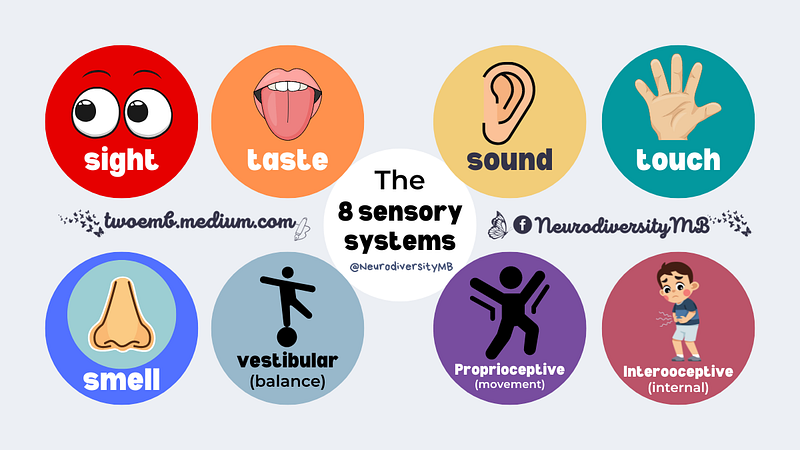
Suggestions for sensory-seekers:
- Listen to your favourite music
- Use sensory and fidget tools
- Cook or purchase a favourite meal
- Buy yourself a scented candle or body wash
- Try snuggling under a weighted blanket, or favourite comforter
- Snuggle with a significant other
- Watch a favourite movie or series
- Go for a walk with a friend, or take your dog for a walk
Suggestions for sensory-avoiders:
- Use noise-cancelling headphones
- Schedule in some alone time
- Read, do puzzles, or other favourite quiet activities
- Go for a walk on a quiet path or trail
- Turn your phone off and put it out of reach for an hour or two
- Take a bath (if you find them relaxing)
- Any of the above, but low-key
Sleep if you can
A lot of Autistics and ADHDers struggle with sleep issues. We also frequently struggle with interoception, which can include difficulty recognizing when we’re tired (or completely exhausted).
Catching up on sleep, or allowing ourselves to sleep in order to recover, can go a long way to help alleviate burnout — or at least the fatigue that comes along with it.
Finding space to safely unmask
Masking, or trying to change yourself to please others, is absolutely draining and exhausting. It may be necessary in the short-term for safety and to avoid negative social repercussions.
However, masking or camouflaging in the long-run can cause serious psychological and physical health issues, with burnout being one of them.
Find people and places that safely allow you to gradually unmask, unwind, and be your authentic self. It’s okay if you don’t fully know who that is yet, but the more you practice in supportive company, the more you will discover your true self.
© Jillian Enright, Neurodiversity MB
Related Stories
Articles about emotional regulation
When you join medium, as a member you’ll have access to unlimited reads for only $5 per month. If you use my referral link, I’ll earn a small commission, and you’ll earn my undying gratitude.
If you’d prefer give a one-time tip, you can support my writing on Ko-Fi — also, it’s free to follow me on Facebook!

References
InformedHealth.org. (2006). Cologne, Germany: Institute for Quality and Efficiency in Health Care. Depression: What is burnout? [Updated 2020 Jun 18]. Available from: https://www.ncbi.nlm.nih.gov/books/NBK279286


