
Helping Kids (and Parents) Sleep Better
Sleep Issues in Autistic & ADHD kids, and sleep tips from a fellow neurodivergent & former insomniac
Sleep awareness
It’s very common for people to have trouble falling asleep or staying asleep at night, especially for Autistic and ADHD kids. I am lucky that I usually sleep well now that I’m older, but this comes after many, many years of insomnia and sleep issues.
The only reason I sleep well now is that I have a very active job which keeps me outdoors a lot and because I stick to a strict sleeping schedule at least 6 days of the week.
Being home during Covid and then being off school for the summer break can really throw off our routines, making sleep issues worse.
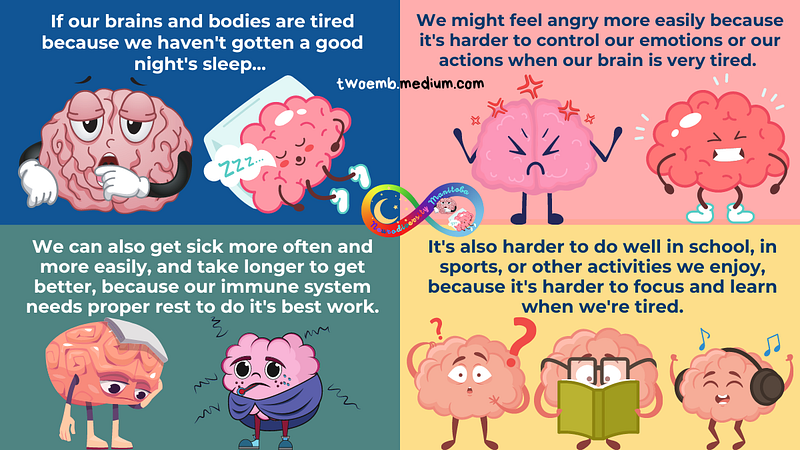
Not getting enough sleep can make us more grumpy, and can even lead to making decisions we later regret, because our brains don’t work as well when we’re tired. We don’t think as clearly when we haven’t had a good night’s sleep.
If our brains and bodies are tired because we haven’t had a good night’s sleep, we might feel angry more easily because it’s harder to control our emotions — and our actions — when our brains are tired.
We can also get sick more often and more easily, and take longer to get better, because our immune system needs proper rest to do it’s best work. It’s also harder to do well in school, in sports, or other activities we enjoy, because it’s much harder to focus and learn when we’re tired.
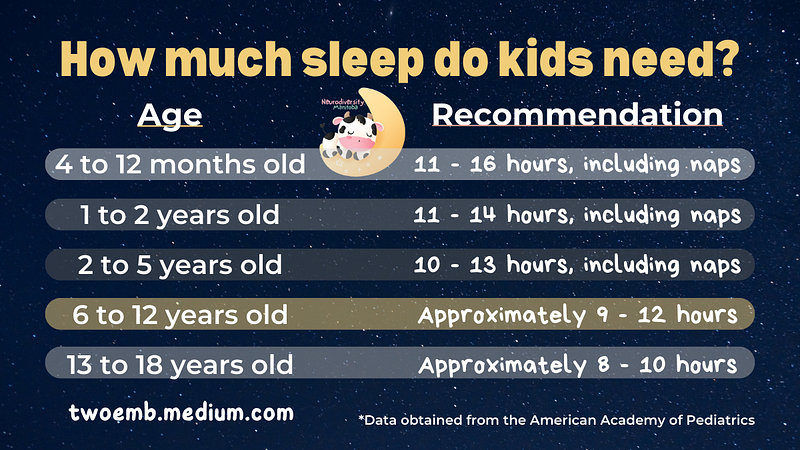
In fact, many professional athletes nap on game day, and say they get even more sleep than the recommended amount, because a good sleep helps them perform better.
Sleep issues
Not only are sleep disorders common in Autistics and people with ADHD, but sleep disorders are made worse by sensory issues. Difficulty blocking out sensory stimuli make it difficult for us to tune out unpleasant, distracting, or overwhelming sensory input.
An interesting study found that 30% of children with ADHD but no sensory processing issues had sleep disorders, whereas 85% of children who had both ADHD and Sensory Processing Disorder (SPD) also had disordered sleep.
Strategies for better sleep
The most effective strategy for sleeping better has been what doctors call “sleep hygiene”. Sleep hygiene means practicing good habits that help us sleep better.
Need more than sleep hygiene? I have a resource for purchase on my website called A Neurodivergent’s Complete Guide to Better Sleep. More than 100 pages which include five chapters of sleep information, and a fillable companion workbook.
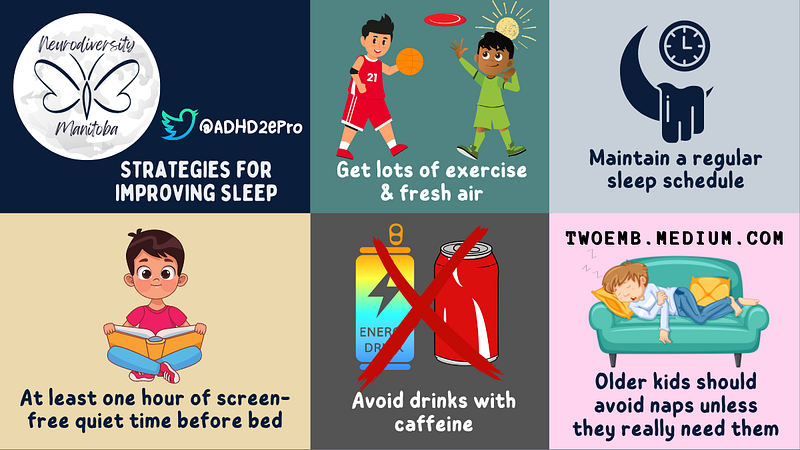
Some helpful sleep habits can include:
- Try to go to sleep around the same time and wake up around the same time every day.
- Avoid drinking energy drinks or sodas with caffeine as these will interfere with sleep.
- Get plenty of exercise and fresh air.
- Give yourself at least an hour (preferably two) to wind down before bed by doing quiet, screen-free activities such as reading, playing with puzzles, listening to calming music (or brown noise), or taking a bath.
- This includes unplugging and avoiding electronics for at least an hour before bed. I charge my phone on a bookshelf a few feet from my bed, or downstairs in my living room, so that I don’t have it right next to me when I’m trying to sleep.
- Older kids and teens should try to avoid naps unless they really need one.
A bedtime routine
Having a regular bedtime routine also helps signal to your body that it’s time to get ready to sleep.
It may help to change into comfortable pyjamas, dim the lights in your room, or listen to quiet and relaxing music. You can try meditation, deep breathing, mindfulness exercises, or other relaxation exercises.
A note for parents
Dear parents, I know first-hand how tough sleep can be for many families. When my son was an infant, whenever I chatted with fellow parents, the conversation inevitably turned to how much sleep everyone was getting.
My son regularly had 20-minute naps as a baby. I was told his naps should be between 1–3 hours in length, but that very rarely ever happened. I’d just get him to sleep, maybe make myself a cup of coffee and try to get started on the dishes, then he’d be awake again.
He didn’t start sleeping well until he started school and stopped napping altogether. He’s now 9 years old and sleeps 10 hours straight almost every night.
My point being, don’t force it. There’s really no point. Every child has a different rhythm and trying to force them into a prescribed schedule usually ends up in frustration and exhaustion.
No one can force themselves to fall asleep, neither can we force another person to sleep.
If a baby or child is having trouble sleeping, and we try to enforce some schedule because we believe it’s necessary (I definitely thought so at one point!), we’re only ramping things up.
If a baby or child is upset and needs comforting, forget the clock and help them settle. They’re not going to sleep better when they’re crying, they’re going to sleep better when they feel secure, safe, and comfortable.
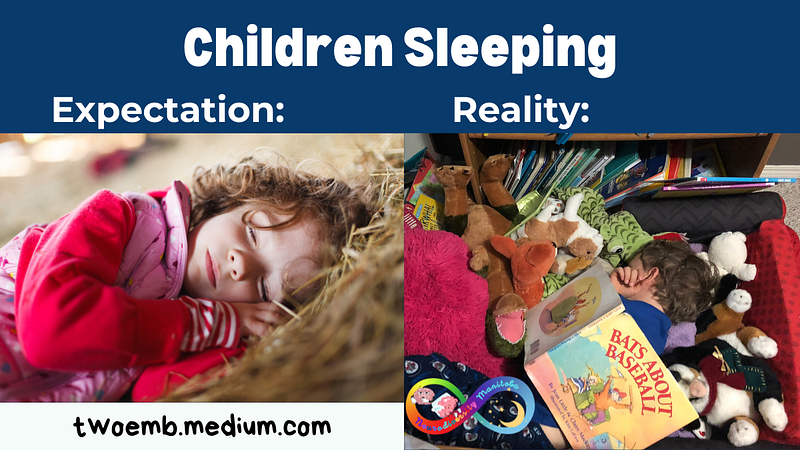
No one can force themselves to fall asleep, neither can we force another person to sleep. As challenging as it can be when we’re exhausted, and anxious thinking about how cranky everyone is going to be tomorrow, getting frustrated or angry will only increase this likelihood.
Do your best to guide them through healthy bed-time habits and sleep hygiene, perhaps doing meditation or mindfulness exercises with them before bed, or reading them their favourite stories.
These strategies will become ingrained in them, and as they get older and more independent, they’ll start doing these things for themselves, because you’ve taught them how.
Sleep well!
© Jillian Enright, Neurodiversity MB
Related Stories
When you join medium, as a member you’ll have access to unlimited reads for only $5 per month. If you use my referral link, I’ll earn a small commission, and you’ll earn my undying gratitude.

References
Al-Beltagi, M. (2021). Autism medical comorbidities. World journal of clinical pediatrics, 10(3), 15–28. https://doi.org/10.5409/wjcp.v10.i3.15
Bush G. (2010). Attention-deficit/hyperactivity disorder and attention networks. Neuropsychopharmacology : official publication of the American College of Neuropsychopharmacology, 35(1), 278–300. https://doi.org/10.1038/npp.2009.120
Crasta, J. E., Salzinger, E., Lin, M. H., Gavin, W. J., & Davies, P. L. (2020). Sensory Processing and Attention Profiles Among Children With Sensory Processing Disorders and Autism Spectrum Disorders. Frontiers in integrative neuroscience, 14, 22. https://doi.org/10.3389/fnint.2020.00022
Dorrian, J., Centofanti, J., Smith, A., McDermott, K. D. (2019). Self-regulation and social behavior during sleep deprivation. In (eds.): Hans P.A. Van Dongen, Paul Whitney, John M. Hinson, Kimberly A. Honn, Michael W.L. Chee. Progress in Brain Research, 246, 73–110. Elsevier. https://doi.org/10.1016/bs.pbr.2019.03.010
Fadeuilhe, C., Daigre, C., Richarte, V., Grau-López, L., Palma-Álvarez, R. F., Corrales, M., & Ramos-Quiroga, J. A. (2021). Insomnia Disorder in Adult Attention-Deficit/Hyperactivity Disorder Patients: Clinical, Comorbidity, and Treatment Correlates. Frontiers in psychiatry, 12, 663889. https://doi.org/10.3389/fpsyt.2021.663889
Hanson, J.A., & Huecker, M.R. (2019). Sleep Deprivation. StatPearls Publishing. PMID: 31613456. https://europepmc.org/article/NBK/nbk547676
Hohn, V. D., de Veld, D., Mataw, K., van Someren, E., & Begeer, S. (2019). Insomnia Severity in Adults with Autism Spectrum Disorder is Associated with sensory Hyper-Reactivity and Social Skill Impairment. Journal of autism and developmental disorders, 49(5), 2146–2155. https://doi.org/10.1007/s10803-019-03891-8
Hossain, J.L., Shapiro, C.M. (2002). The Prevalence, Cost Implications, and Management of Sleep Disorders: An Overview. Sleeping and Breathing 6, 85–102 . https://doi.org/10.1007/s11325-002-0085-1
Manelis-Baram, L., Meiri, G., Ilan, M. et al. (2022). Sleep Disturbances and Sensory Sensitivities Co-Vary in a Longitudinal Manner in Pre-School Children with Autism Spectrum Disorders. Journal of Autism and Developmental Disorders 52, 923–937. https://doi.org/10.1007/s10803-021-04973-2
Mimouni-Bloch, A., Offek, H., Engel-Yeger, B., Rosenblum, S., Posener, E., Silman, Z., Tauman, R. (2021). Association between sensory modulation and sleep difficulties in children with Attention Deficit Hyperactivity Disorder (ADHD). Sleep Medicine, 84, 107–113. https://doi.org/10.1016/j.sleep.2021.05.027
Recommended Amount of Sleep for Pediatric Populations. Pediatrics August 2016; 138 (2): e20161601. https://doi.org/10.1542/peds.2016-1601
Sciberras, E. (2022). Sleep in Individuals with ADHD: Prevalence, Impacts, Causes, and Treatments. In: Current Topics in Behavioral Neurosciences. Springer. https://doi.org/10.1007/7854_2022_336
Seton, C. , & Fitzgerald, D. A. (2021). Chronic sleep deprivation in teenagers: Practical ways to help. Paediatric Respiratory Reviews, 40, 73–79. https://doi.org/10.1016/j.prrv.2021.05.001
Tomchek, S. D., Dunn, W. (2007). Sensory Processing in Children With and Without Autism: A Comparative Study Using the Short Sensory Profile. American Journal of Occupational Therapy, 61(2), 190–200. https://doi.org/10.5014/ajot.61.2.190
Xavier S. D. (2021). The relationship between autism spectrum disorder and sleep. Sleep science (Sao Paulo, Brazil), 14(3), 193–195. https://doi.org/10.5935/1984-0063.20210050


