
Preventing Holiday Burnout
Advice for my fellow Autistic-ADHD-anxious-introverts
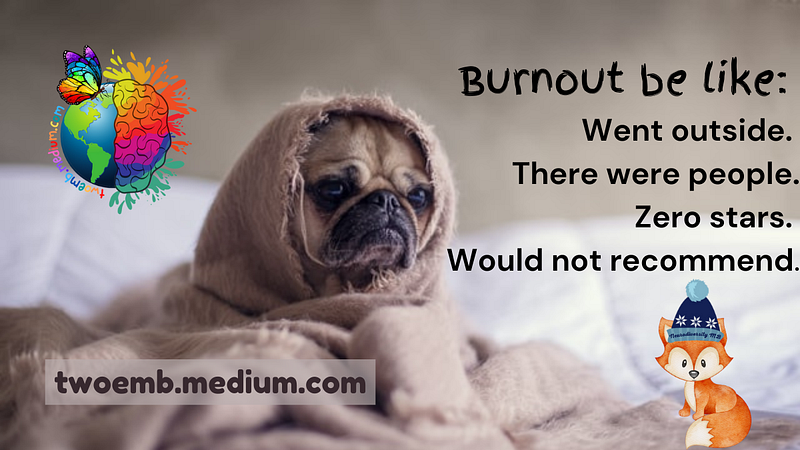
Story time
We live in a different province from the rest of our family, and have lived here for nearly 15 years. Over the years, we’ve travelled back to visit our family — covid restrictions notwithstanding — approximately three times each year.
Our son is nine years old, so a huge portion of that involved travelling with a baby, a toddler, and then a young child. My spouse and I both lived in Ontario for a significant portion of our lives, including College and University, so we both have friends and family there.
Our visits are whirlwinds. We fly there for about a week, visit as many people as we can, and then fly home. It’s bloody exhausting.
It used to be even worse, before I recognized what was happening to me on these trips. I remember once I was tired, cranky, and definitely overstimulated. I don’t remember what I was saying, but my husband snapped at me (which he very rarely does) and told me to stop complaining.
Ouch.
What was happening was, we were prioritizing our friends and family because we only see them a few times a year, but I had no conceptualization or understanding of my needs.
Many years, and an Autism and ADHD diagnosis later, I now understand much better. We were driving around to various cities, sleeping in different beds or hotel rooms every night, and spending our entire visit — well, visiting.
In our valiant efforts to not leave anyone out, I had almost zero downtime. I have come to learn that no downtime is a huge problem for me, and a good way to send myself into burnout, or even a meltdown.
Xmas holidays
With the holidays coming up, you might be really looking forward to time spent with family and friends. You might be dreading it. If you’re anything like me, probably a bit of both.
I love spending time with my family and close friends. One of my best friends is very much into the holidays, so she gets very excited about getting everyone together and hosting dinners.
These are my close friends (who are few) with whom I feel very comfortable and am able to be myself, so it’s much more relaxing and enjoyable to celebrate with them.
That said, something can be both very enjoyable yet still exhausting, and that is the case for all the visiting and socializing during the holidays.
If you’ve ever found yourself completely run-down, exhausted, and totally burnt-out after the holidays, you’re definitely not alone.
This is more common for neurodivergent people — (Something I explain in greater detail in my article, Autistic and ADHD Burnout), but it can affect anyone.
One particular point I wish to expand on is the strain of masking. Especially during the holidays, there can be a social expectation to attend parties, dinners, gatherings, and do lots of people-ing. Sometimes even more challenging, there is a social expectation to be “cheerful”, merry, bright, and all that crap.
Masking — putting on a persona to avoid rejection and criticism — may be necessary sometimes for our self-preservation, but that alone can take a huge toll on our psychological and emotional health.
Give yourself permission to turn down invitations if you need to, and be your authentic self where it feels safe to do so. Whether you’re more like Scrooge McDuck or Will Ferrel in Elf, your feelings about the holidays are entirely valid.

What works for me won’t necessarily work for everyone, but I will share some strategies I’ve learned in the hopes you might find them helpful.
Happy Holidays!
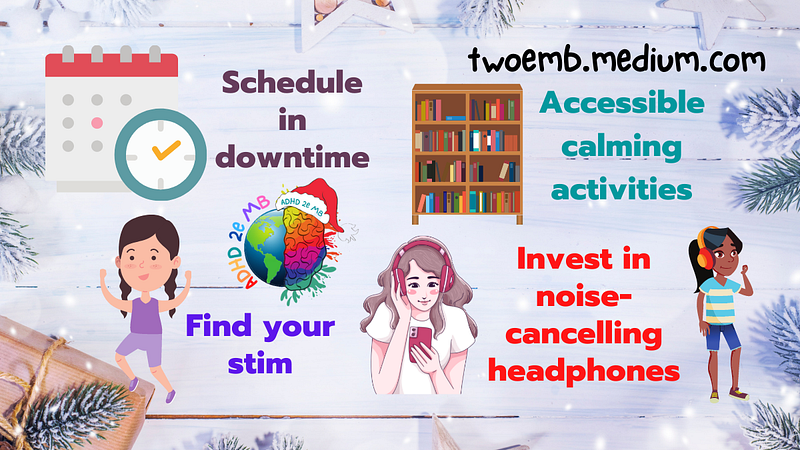
Schedule downtime
Schedule it in, otherwise, it may not happen. Make it a priority. Say no upon occasion, when you notice your list of commitments starting to grow, or when you just don’t feel like doing the thing.
Rest when you can. If you’re someone who feels guilty for “doing nothing”, remember: self-preservation and self-care are not nothing, they’re vitally important. (Yes, easier said than done, I find this difficult too — working on it!).
Wear headphones
It’s worth the investment in some noise-cancelling headphones, especially if you’re noise-sensitive, or become overwhelmed by loud and busy environments.
Not only that, I find they help with other types of sensory overload too. For example, if a lot of people are talking and you need a break from conversation, putting on headphones will send a clear message that you’re not available for chatting at the moment.
Music is also one of my favourite self-regulatory activities. I love listening to my favourite songs really loud, immersing myself in the sound, and losing myself in the music. It’s a whole-body experience for me, and it really helps me reset when I’m feeling overwhelmed. Also, music can simply be enjoyable for its own sake.
Calming activities
Keep a reserve of calming activities. When you’re feeling upset or burnt out, it can be harder to think of things you enjoy doing, and things that help reduce your stress. It helps to have a box or shelf with some fidgets, sensory items, books, or whatever you prefer.
My favourite is reading, always reading. I also enjoy doing puzzles, painting and going for walks. There’s also good evidence that mindfulness helps, but I have yet to sit still long enough to try it out:
Maintain healthy boundaries
It’s okay to say “no thank you” when you’ve had enough socializing, or when you just don’t feel up to attending yet another gathering.
For kids, who have a lot fewer options, it’s very important to listen to them. Respect their experiences and take their concerns seriously. If they’re expressing (either in words or through their behaviour) the need to slow down, then find ways to give them more quiet time to decompress.
Most importantly, it’s essential they not be forced to engage in ways which make them uncomfortable. If they do not want to sit on Santa’s lap, or get hugs and kisses from relatives they hardly know, they’re allowed to politely decline.
We can help them by practicing ways they can say “no thank you” to hugs or kisses that are respectful to both parties, and by advocating for our children if someone is pressuring them to do something they are not comfortable with.
Find your stim
Find the stim that works for you. For me, it’s really loud music that takes over my whole nervous system. I also find tapping really calming. I tap on my shoulder or the inside of my wrists, or I tap each of my fingers to my thumb in succession.
Sometimes I shake my hands out or twirl my hair. I also do “cricket feet” where I rub my feet together. Some people like to flap their hands, jump, run, rock, twirl… whatever works for you, give it a go!
Read my article about Autistic and ADHD burnout on Invisible Illness.
Happy Holidays!
…or humbug. Whichever you prefer.
© Jillian Enright, Neurodiversity MB
Related Stories
When you join medium, as a member you’ll have access to unlimited reads for only $5 per month. If you use my referral link, I’ll earn a small commission, and you’ll earn my undying gratitude.
For more great reads about neurodiversity, parenting, and advocacy, follow Neurodiversified.
We’re always on the lookout for more educational, informative, and well-written articles about ADHD, Autism, twice exceptionality, neurodiversity, parenting, advocacy, and education.
Want to write for us? Check out our submission guidelines.


