
Nouveau or Deco?
Discussing how Art Nouveau transformed into Art Deco and how to distinguish them…
One of the perennial questions from students on my Art History courses is, “What’s the difference between Art Nouveau and Art Deco?” Well, there’s a simple answer that lacks accuracy and an accurate answer that’s not that simple. Basically, Art Nouveau and Art Deco are decorative styles signified by typical motifs and the periods in which they were created.
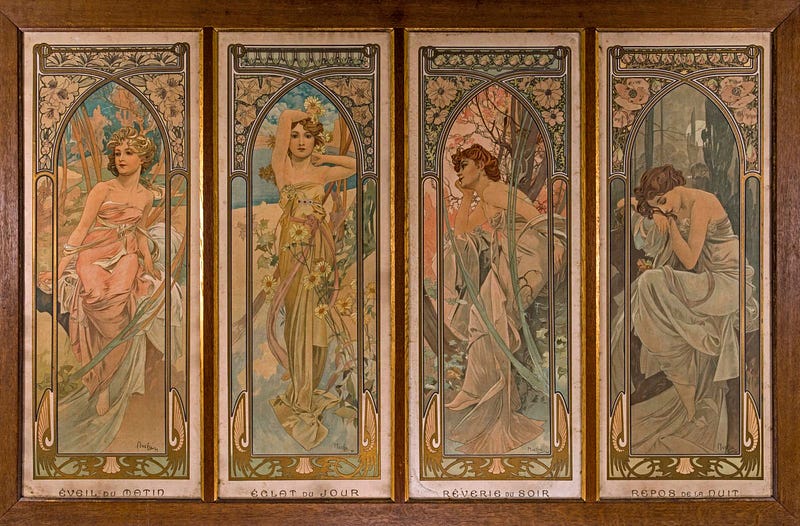

Art Nouveau is dominated by flowing forms adapted from the observation of nature, such as the sensual intertwining curves found in vines or the spirals of unfurling ferns, often incorporating floral patterns and animal forms. The term ‘Art Nouveau’ was first used to describe the work of a group of artists exhibiting in Brussels in the early 1890s that identified as the ‘The Twenty’ or Les Société XX. The style was dominant in Europe and is indelibly associated with the period known as La Belle Époque, which ended with the outbreak of the First World War in 1914.
Art Deco also features natural forms but tends to dramatically simplify them, often to a level of abstraction, and introduces cleaner geometric aspects. Deco initially grew out of the Paris fashion scene and incorporated the aesthetics of Modernism, with initial influences from Cubism and Futurism. The label of ‘Art Deco’ was coined at the 1925 Paris Exposition Internationale des Arts Décoratifs et Industriels Modernes. Internationally, it was the dominant style during the ‘interwar years’, the 1920s and 30s, until the outbreak of the Second World War in 1939.
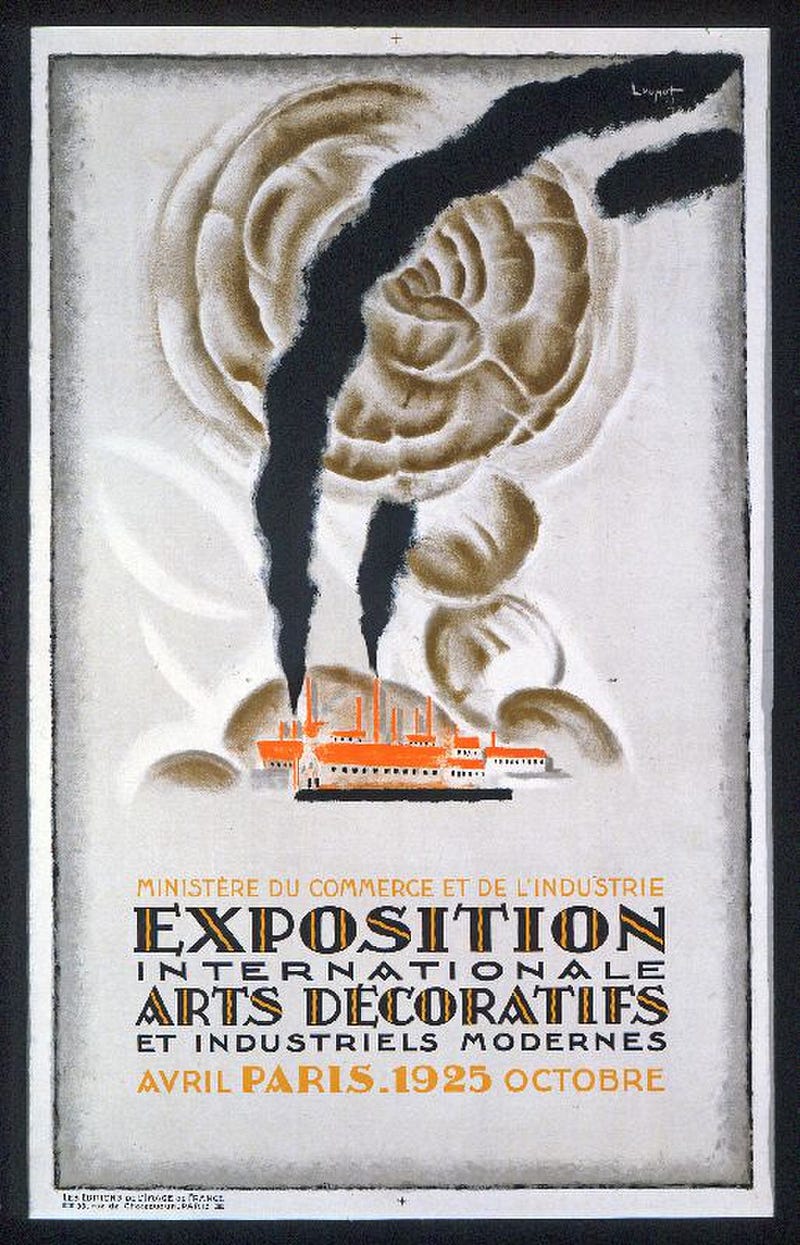
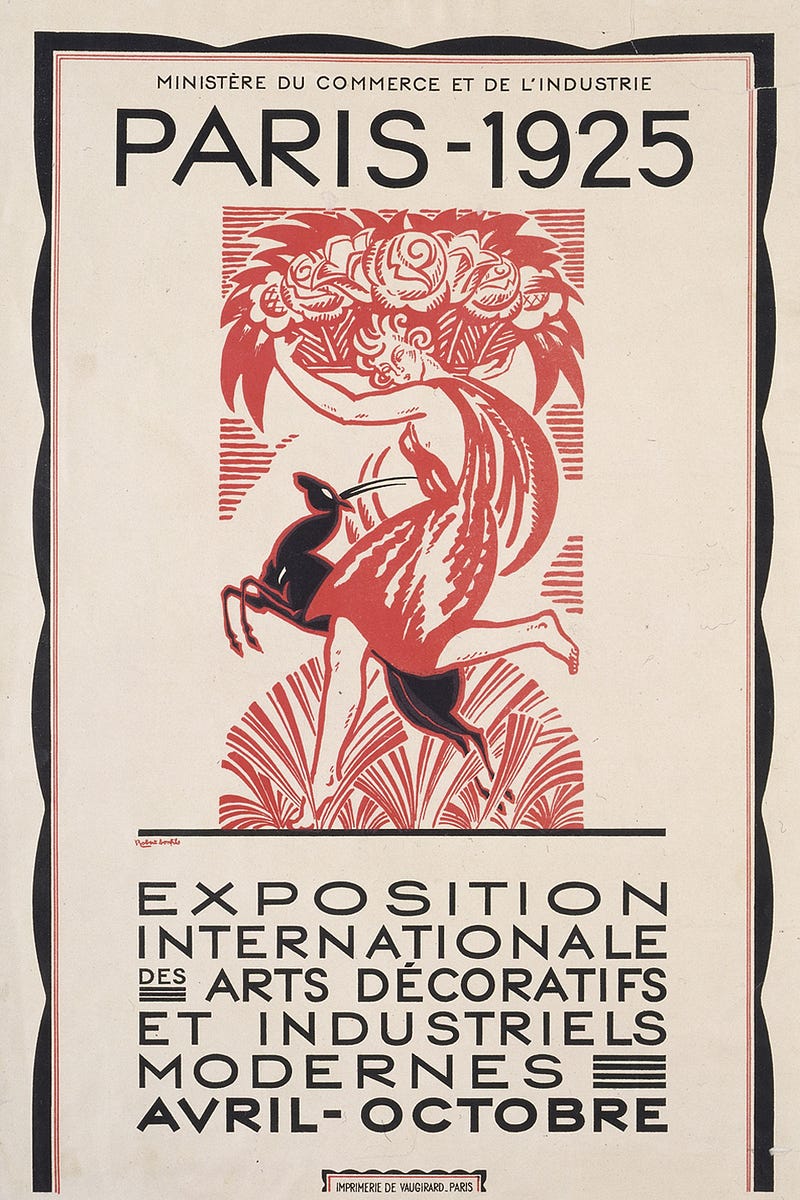

Apart from the historic marker of the First World War, the transition from Art Nouveau to Art Deco does not have a clear boundary as many of the same artists, designers, and craft-makers, are strongly associated with both. Also, the two styles share roots running back to the Industrial Revolution and connecting with several preceding art and design movements across Europe. Likewise, the Second World War may signal the end of the Art Deco era, but the style could be said to have persisted, blending with the Modernism that followed in the mid twentieth-century post-war period.
What unites Nouveau and Deco is the equal respect they afford to the applied arts, manufactured goods, graphic design, craft, sculpture, the easel painter, and the fine artist. Both movements sought a holistic approach to all aspects of the designed environment. The seeds of this innovative approach were sowed in the British Arts and Crafts Movement which sprang up in the wake of the Industrial Revolution. They were opposed to the perceived decline in quality and aesthetics exemplified by the chintzy fussiness of the manufactured Victoriana, displayed in the Great Exhibition of 1851.
This coincided with the Gothic Revival and designs espoused by the Pugin family that harked back to medievalism when the ancient art of Celtic knotwork fused with the decorative iconography of Christian religious texts with results that Art Nouveau would visually echo.
.jpg)

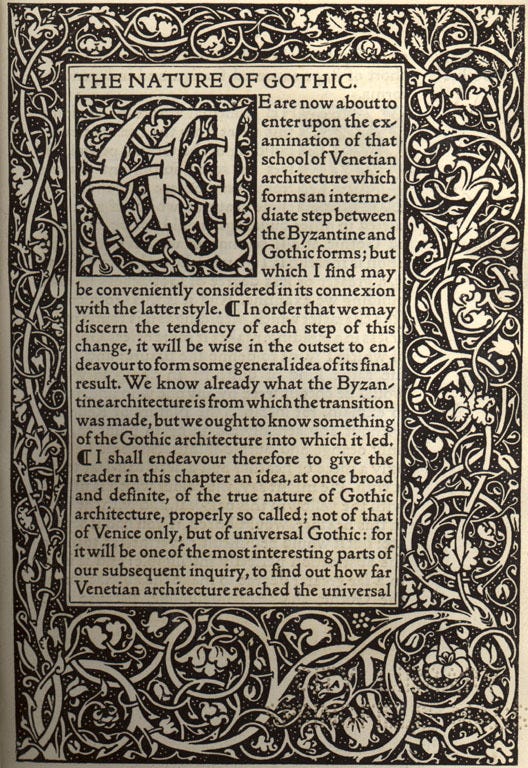
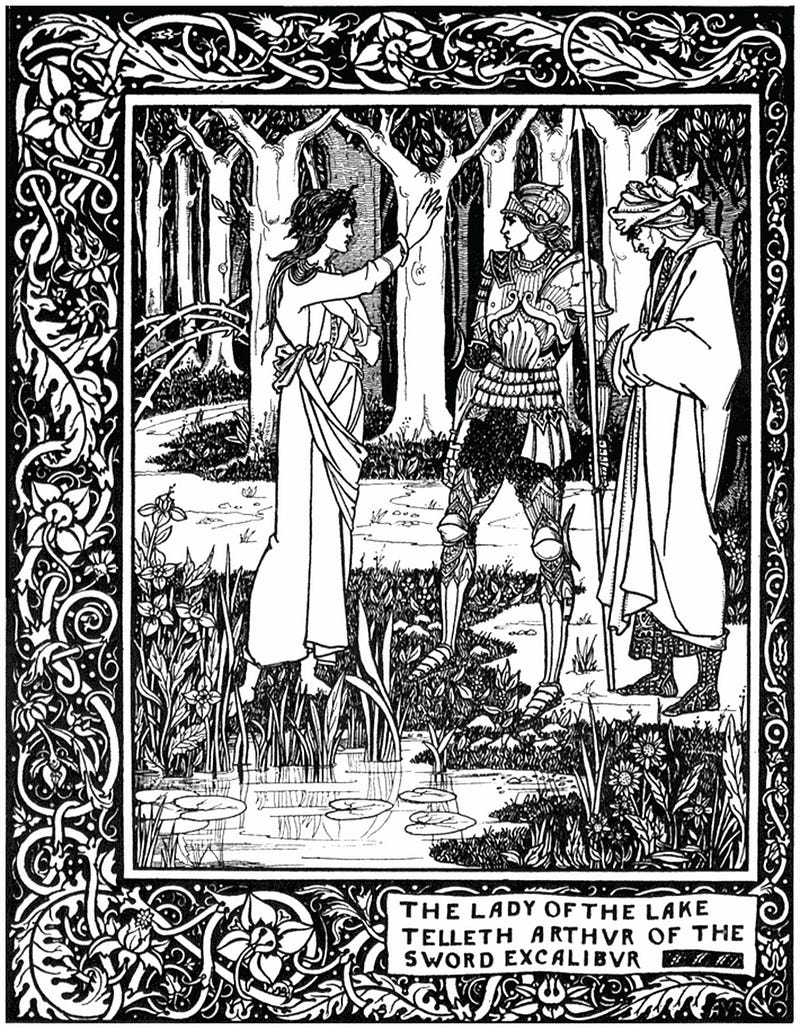
The style of decorative borders combined with an illustrative treatment of typography that once typified illuminated manuscripts, influenced the look of The Stones of Venice, a major work, penned by the highly influential art critic John Ruskin. It was designed and printed by William Morris at the Kelmscott Press in three volumes, 1851–1853. Clearly, this was a big influence on the work of Aubrey Beardsley, particularly apparent in his illustrations for the sumptuous 1893 edition of Thomas Malory’s epic poem Morte d’Arthur, now seen as a definitive work in the Art Nouveau style.
Although not a founder-member of the Arts and Crafts Movement, William Morris shared their early Socialist ideology and became one of the most important proponents of the design philosophy supported by the group. That philosophy was to preserve the skills of the craft-maker and use the traditional artisan methods in making household goods and furnishings that were of higher quality than those coming off production lines. Yet such things should be affordable, if not to the lower working classes, then at least to the newly established middle-class strata of society.
They believed that good quality product would become ‘aspirational’ and therefore industrially produced equivalents would have to meet the bar set by their hand-made examples in order to successfully compete. This would mean improved quality all round, even for the cheaper versions that were mass-manufactured in factories.
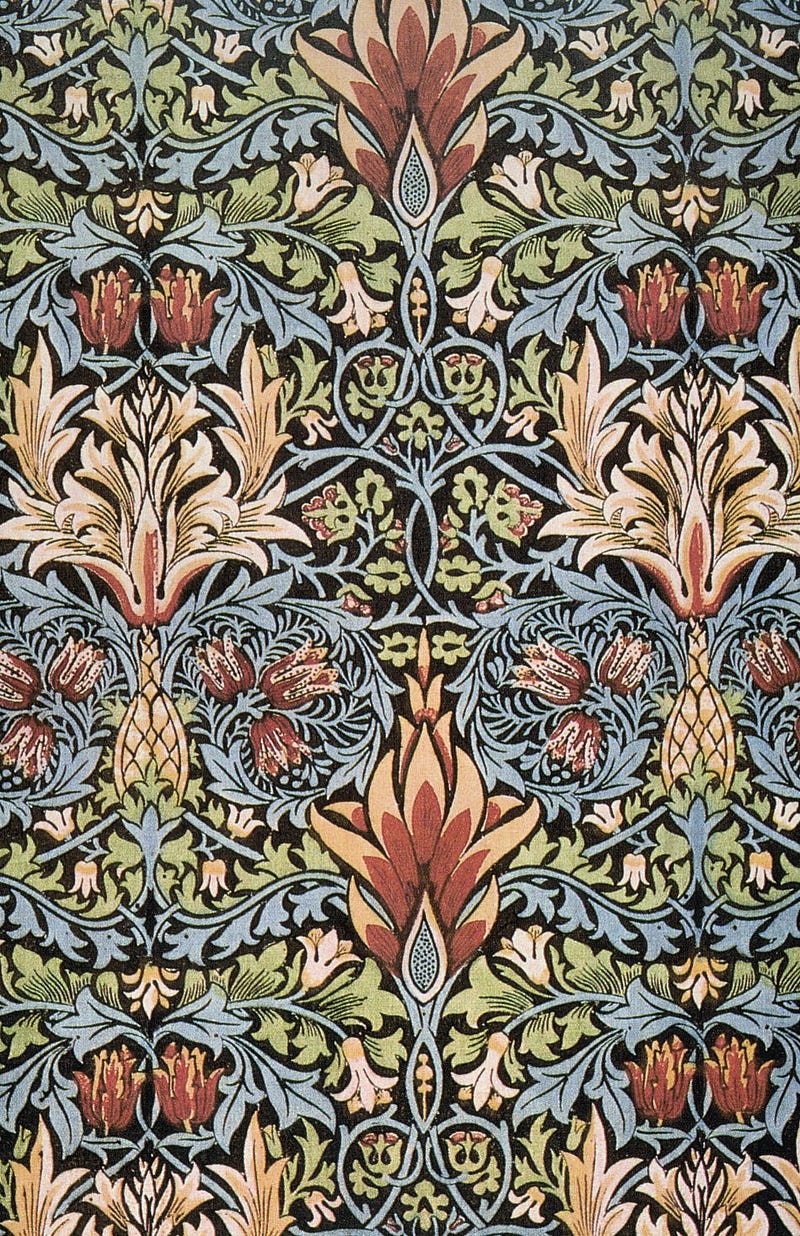
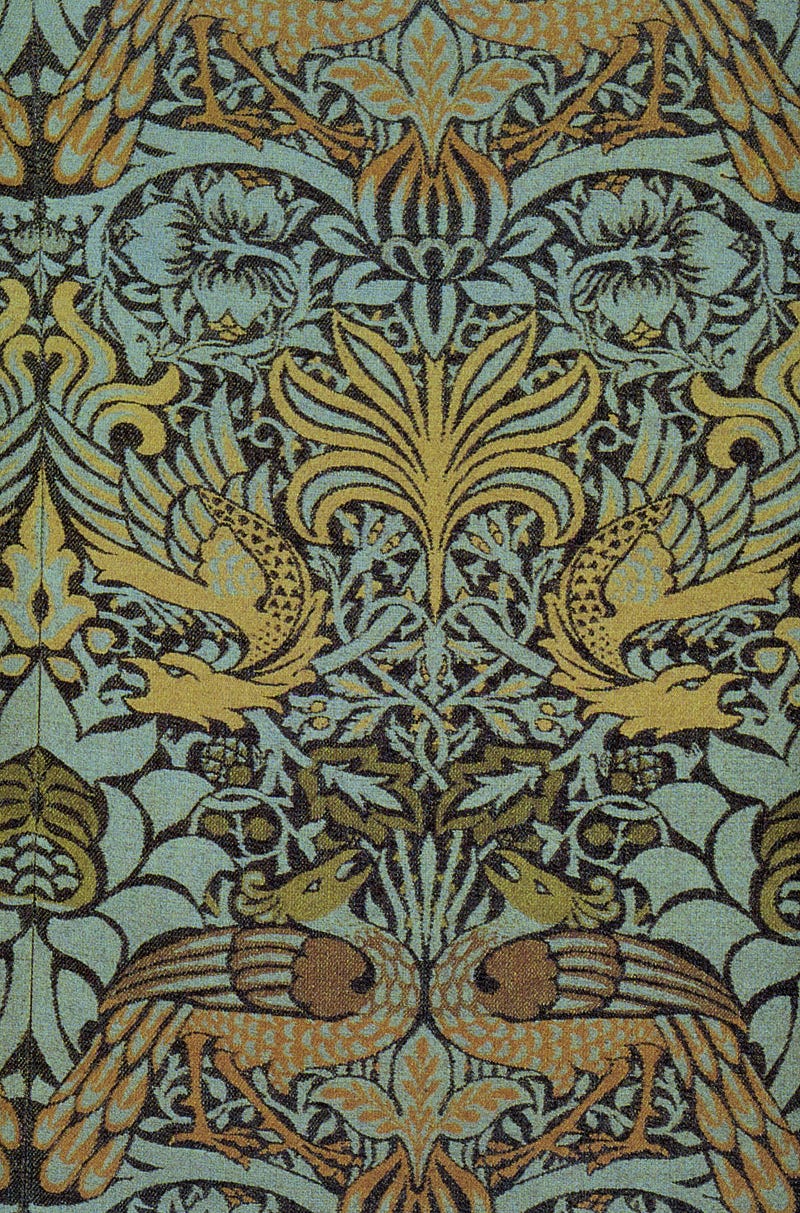
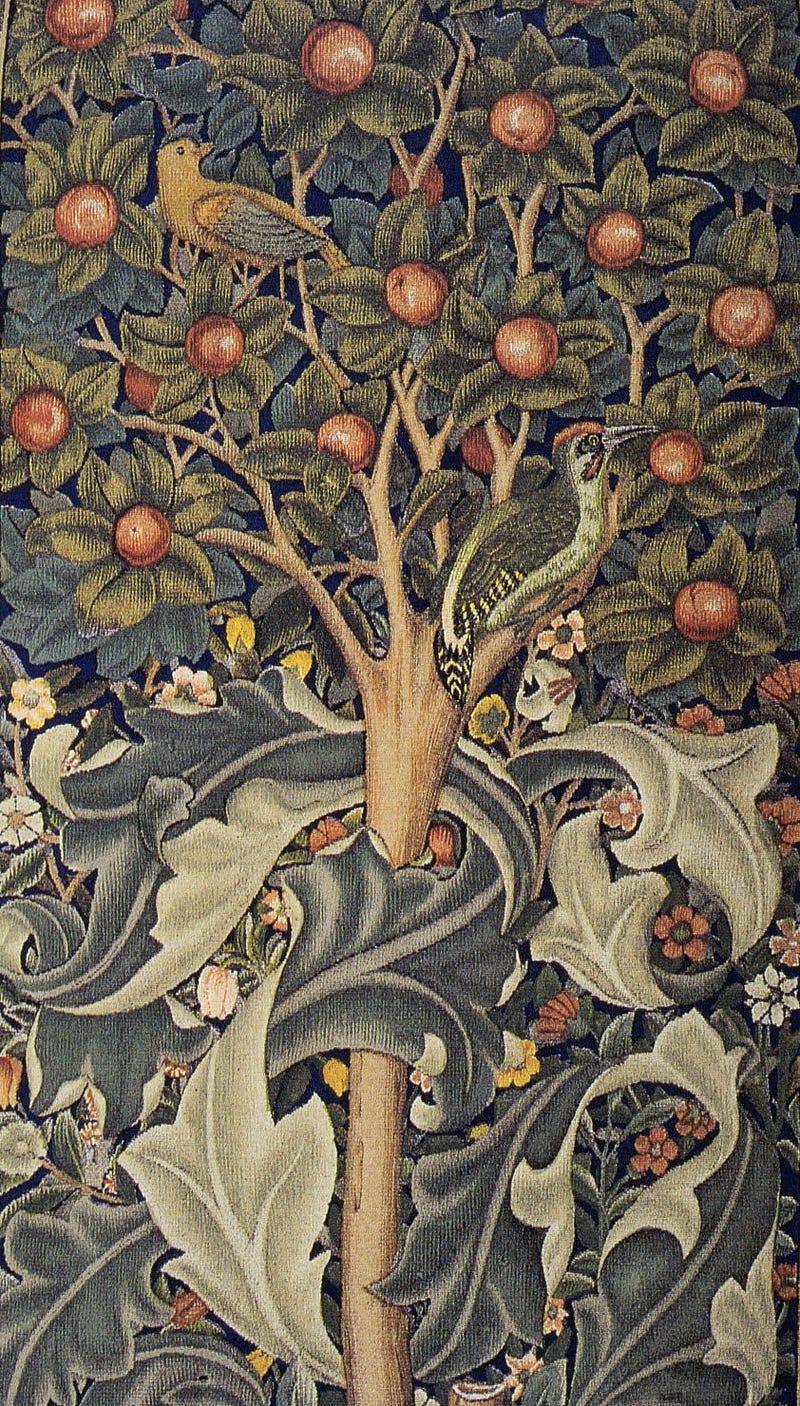


Morris favoured the woodblock printing technique for wallpaper and fabric designs and his close association with the Pre-Raphaelites led him to focus on motifs of flora and fauna. His interest in both could also be linked to another prominent figure of the Arts and Crafts Movement, and the designer who could, perhaps, claim to be the first maker of Art Nouveau objects…
Christopher Dresser, who was a professor of botany and is cited as the ‘First Product Designer’, has been discussed previously in Signifier. He was looking to nature and combining manufacturing with design disciplines that could be taught in an academic setting. His import of Japanese prints and craft objects influenced much of Modern design that was to follow, and his Clutha Glass Vases, made during the 1880s were among the first objects to be selected for display in the salons and shop of La Maison de l’Art Nouveau, which opened in Paris in 1895 and gave the style its name.
The famous emporium was established by German businessman, Siegfried Bing. Today, we would call him ‘an influencer’ because what he did was curate collections of furnishings, fabrics, functional objects, craft items, decorative and fine art, presenting them together in idealised interiors. The forms, materials, patterning, and colour palette created tasteful combinations where all things sat next to each other in harmonious accord. So, this was the ‘ground zero’ of Art Nouveau and it was the curatorial tastes of Bing that initially defined a style that would dominate European and American tastes for the following decades, and see in a new millennium…
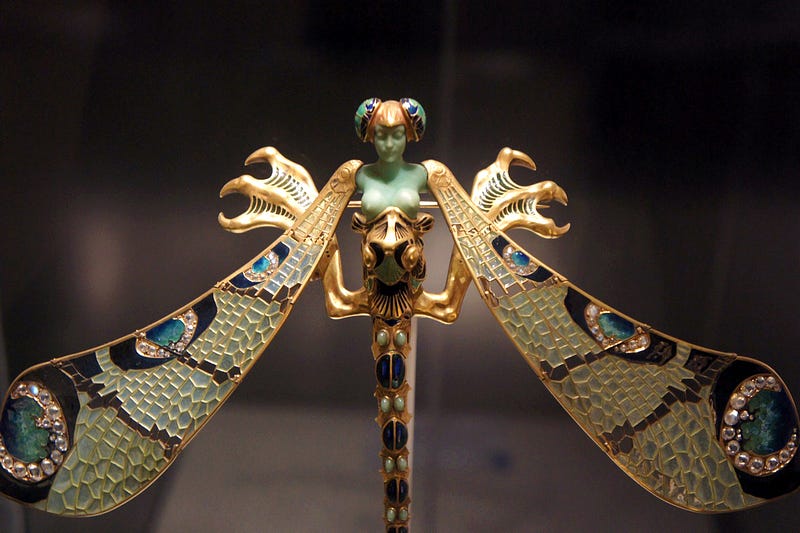
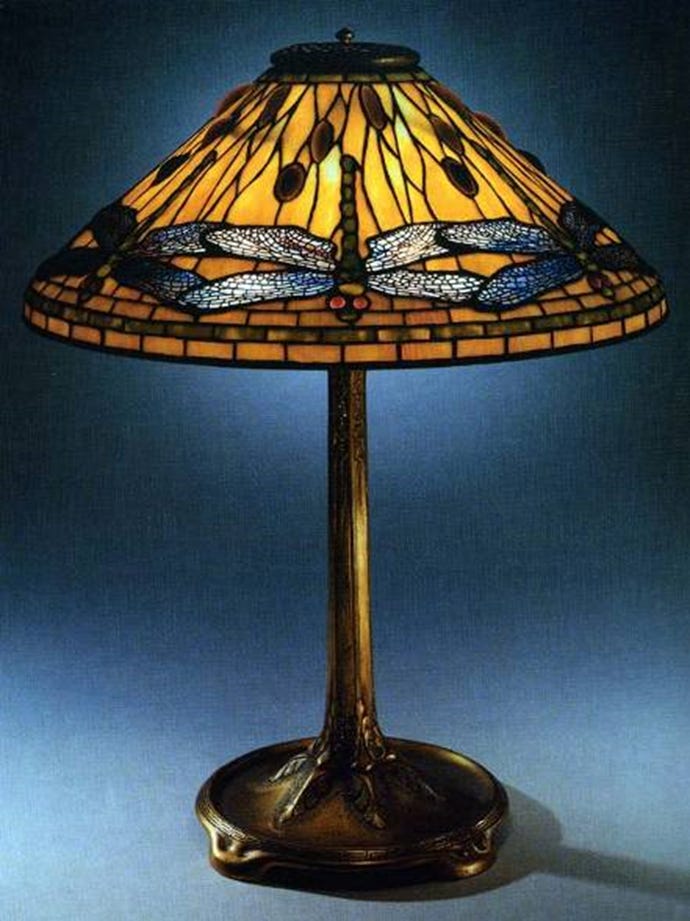

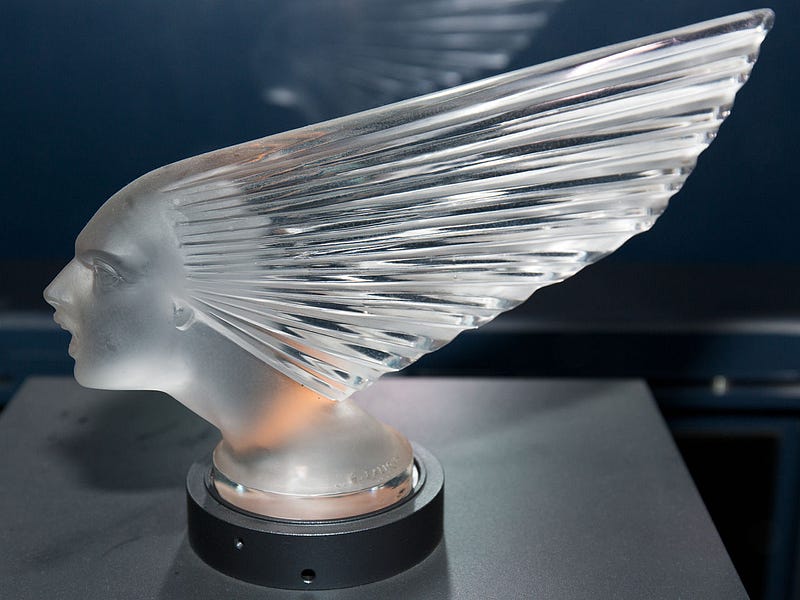
Dresser’s designs sat in the emporium’s opening displays alongside work by Henri de Toulouse-Lautrec and Louis Comfort Tiffany, one of the international manufactures to define what Art Nouveau would become, particularly with his architectural stained glass and lamp designs that his company name still brings to mind. Though, perhaps, it’s another maker of glass artware and fine jewellery showcased by La Maison de l’Art Nouveau who became even more emblematic of the style before moving on to help define Deco — René Lalique.
However, it was a handful of human-scale designers that are the most important figures of the movement and best embodied its holistic design ethos.
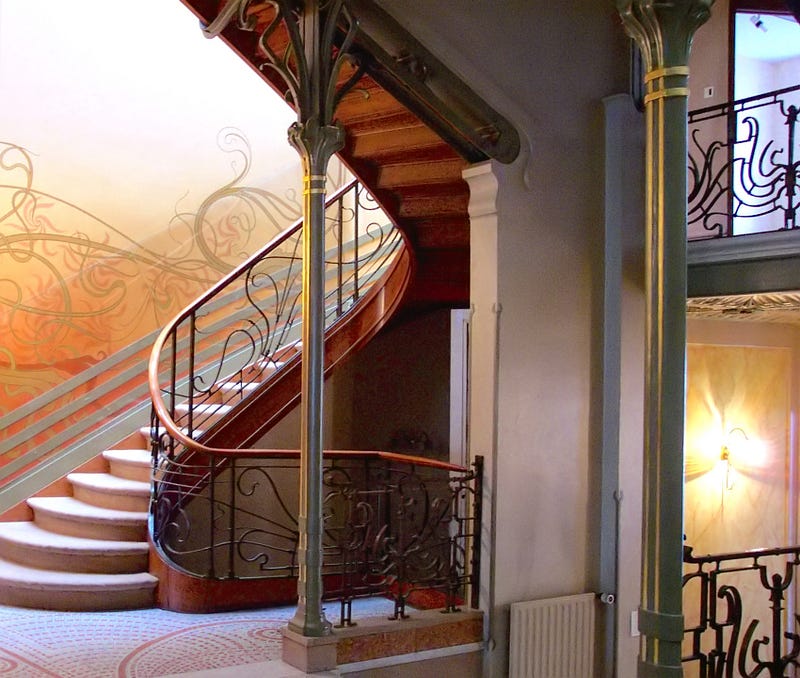
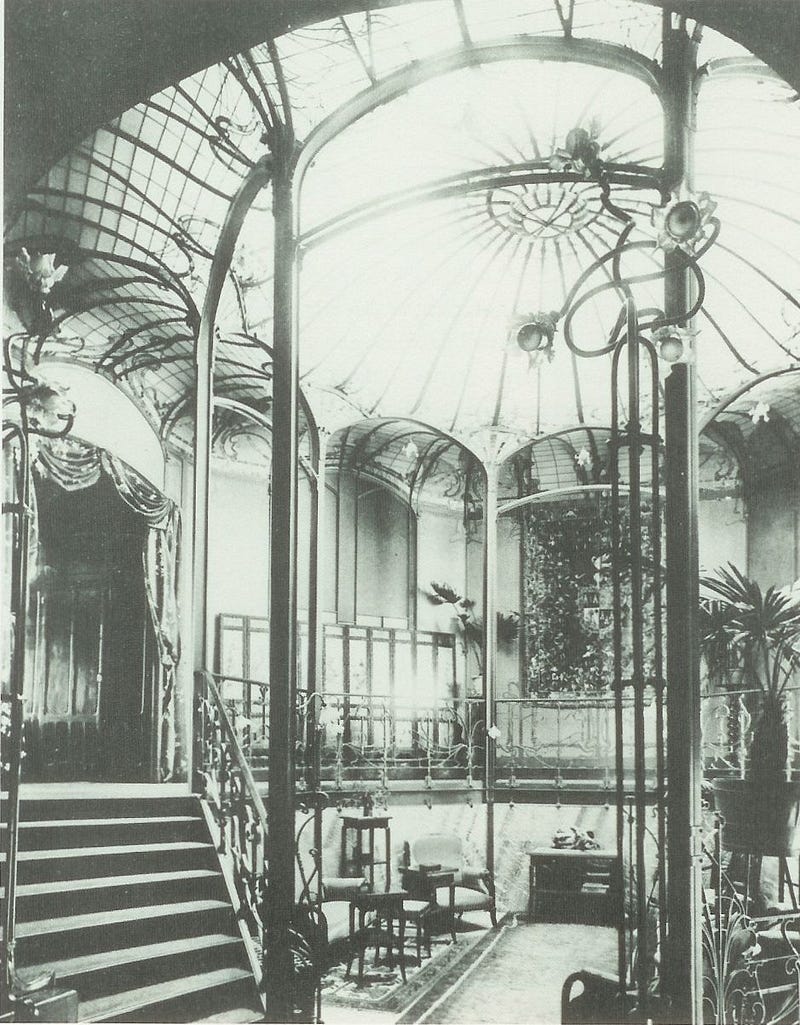
Belgian architect Victor Horta, one of the founders of Art Nouveau, designed every detail of his buildings, celebrating interior volume with open floorplans that showcased features such as doorways, embellished casements, and spectacular, sinuous staircases. He also designed the furnishings, ornamentation, and surface patterns within that drew upon natural forms and historical sources. His influence may even be detected in that other master of architectural Art Nouveau, Antoni Gaudi. Only in Spain the style was generally known as Catalan Modernism and bridged Nouveau and Deco, without completely aligning with either.

.jpg)
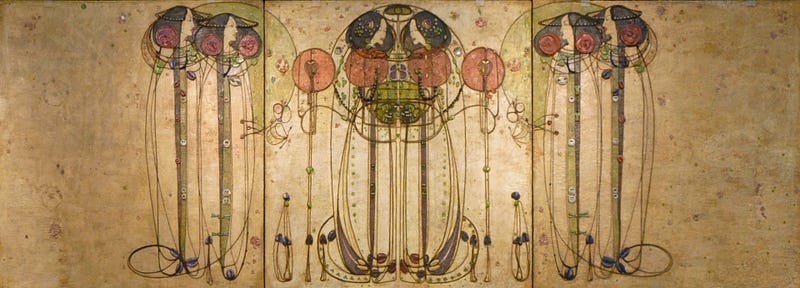
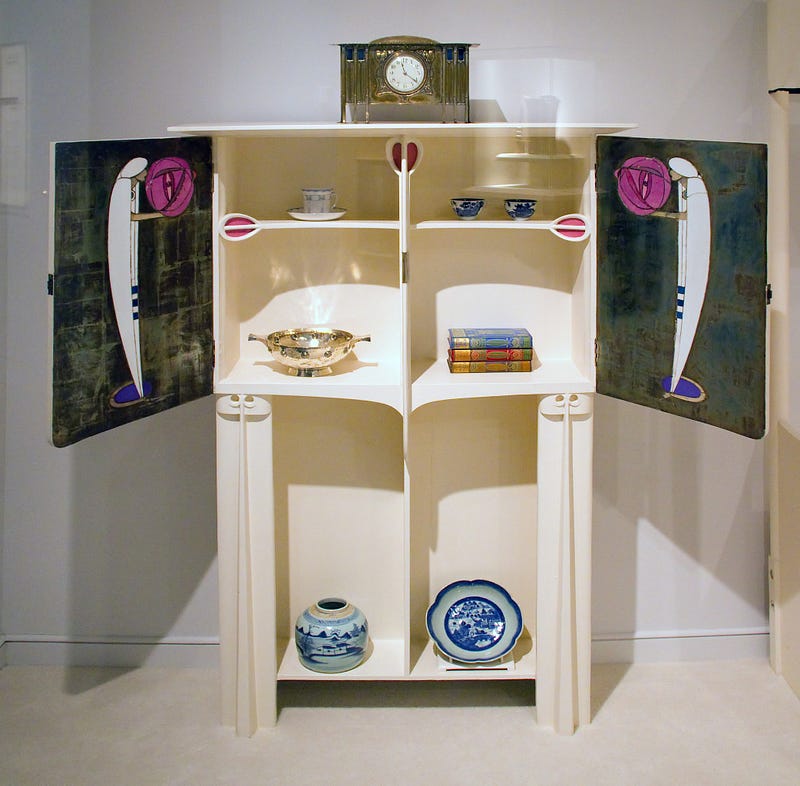
Another artist-designer that bridged from Nouveau to Deco, helping to define both as he went was Charles Rennie Mackintosh. Like his fellow Scott, Christopher Dresser, and their American contemporary Frank Lloyd Wright, his aesthetic was overtly affected by Japanese design, mainly in its holistic approach, use of space, and simplification of form, to which he added his signature use of ebonised wood that contrasted with predominantly white décor interrupted by meticulously placed floral motifs designed by his wife, Margaret.
Possibly the other most important influence on the development of the Mackintosh style was the work produced by the artists and designers of the Vienna Secession — including Gustav Klimt and Josef Hoffmann — which had been inspired by Arts and Crafts principles and led to the founding of the Wiener Werkstätte, in turn, a precursor of the Bauhaus…
_(3802874247).jpg)
.jpg)
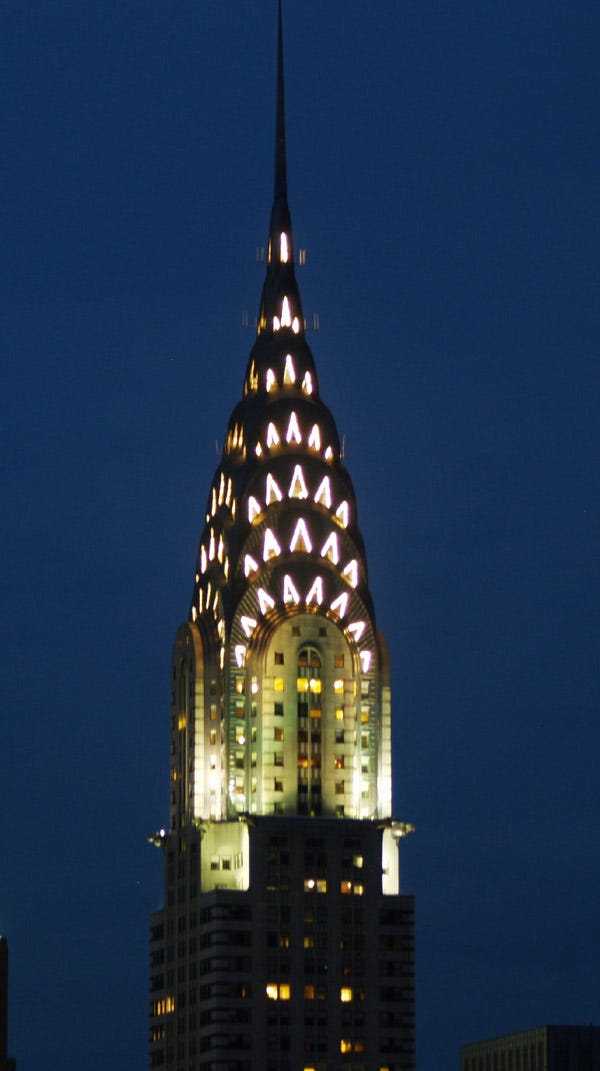
Deco style began to reflect the modern industrial world, referencing planes, trains and automobiles and Deco architecture took on the appearance of ocean liners and fuselages. Wheel and cog motifs could replace roses and feathers in patterning, and in turn, Deco stylings began to affect the aesthetics of heavy engineering.
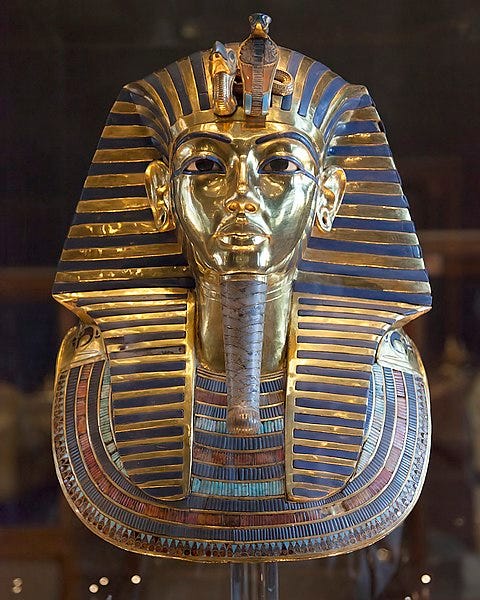
Probably, though, the main catalyst that accelerated the stylistic metamorphosis was the discovery of Tutankhamun’s Tomb in 1922 and the fervent obsession with Egyptology that followed. The boy pharaoh’s Death Mask is one of the most influential single objects in the history of art that impacted materials, processes, techniques, and aesthetics. If it had been made in the Art Deco era, rather than three millennia prior, it would be the defining objet of the style.




* All images are used with permission or are presented here for educational purposes under fair usage policy.