
When East Met West, a New Art Grew
Christopher Dresser, often cited as ‘the first Product Designer’, also created the first objects to be labelled as ‘Art Nouveau’, drawing on his botanical knowledge and experiences in Japan…
In a startling aesthetic revolution, Christopher Dresser rejected the superfluous decoration typical of the Victoriana around him and asserted that beauty can be a result of pure, simple forms that are derived from, and are harmonious with, the function of an object. He suggested that “form follows function” should become a guiding concept. The revelation that led him to this design revolution came about as a result of several factors…
Christopher Dresser was born in Glasgow, 1834, and by 1850 was a Doctor of Botany. He’d observed that flowers, fruits and many natural forms often possessed an innate beauty that was a result of their simplicity. A flower is defined by its function alone. Indeed, the survival of its species had depended on how well it functioned! Yet these functional forms, although transient, were almost universally regarded as things of beauty. In 1855, as Professor of Artistic Botany in London at the Department of Science and Art, he introduced and taught the new subject of Art Botany.
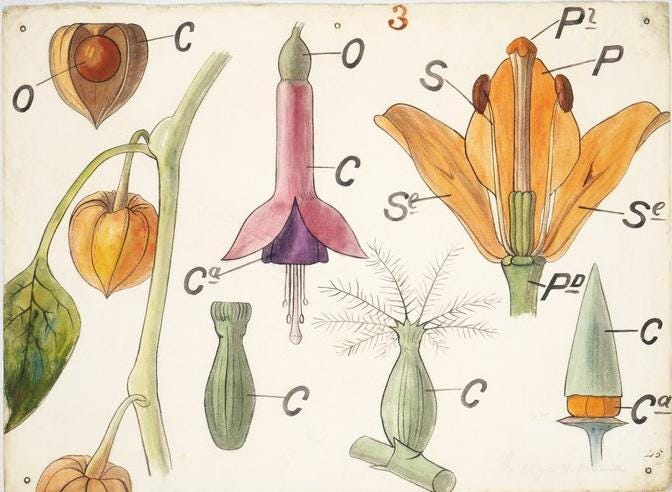
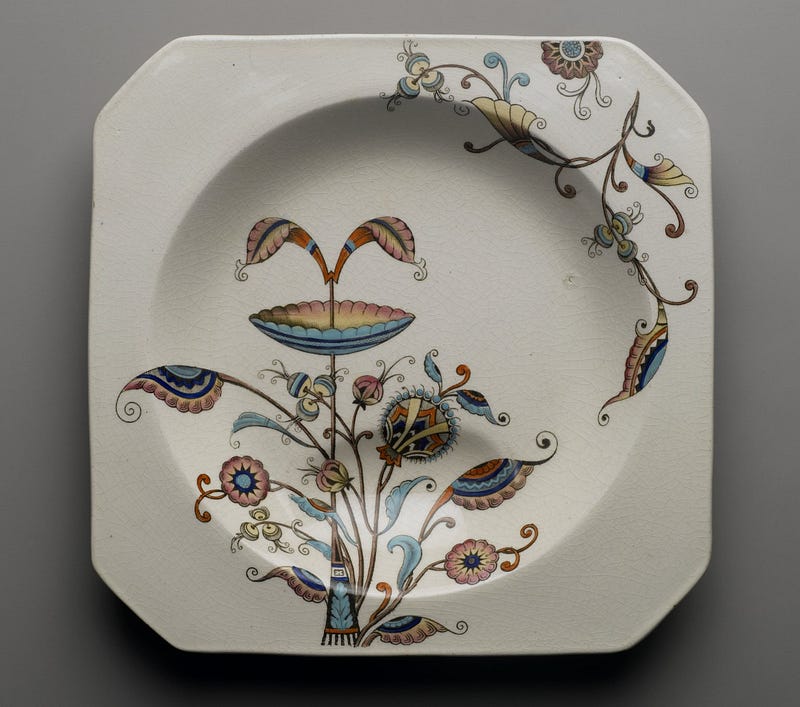
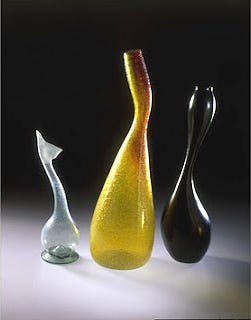
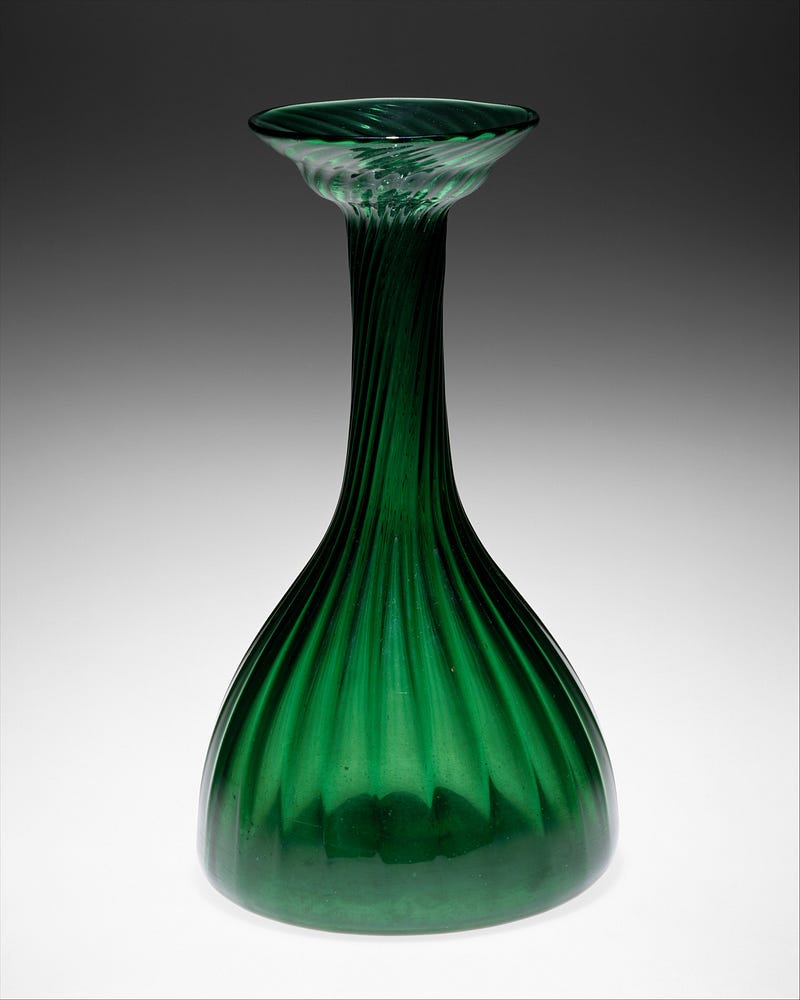
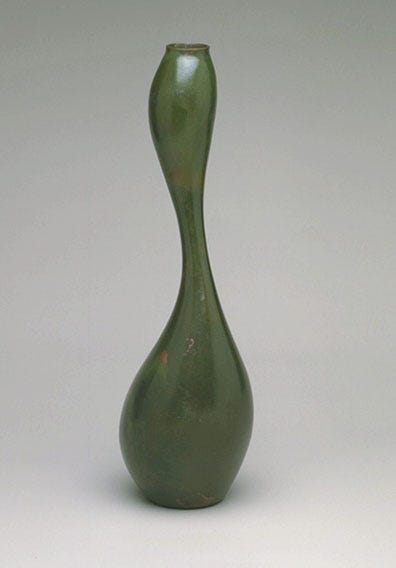
His exploration of natural forms later defined and consolidated the Art Nouveau style. His glass vases, including one based on a Japanese bronze vessel, were in the opening display of the shop L’Art Nouveau, in Paris, where the style derived its name.
Dresser held a new belief that a functional object should be “fit for purpose”. Whatever you create should be effective, whether it’s a milk jug or an expressive painting intended to communicate and elicit a response. Such a belief seems obvious to us now, but for the time this was a radical departure from the accepted norm that focused on fashionable decoration and ostentation.
Most significantly, he’d visited Japan as an industrial envoy in 1876. During his time there, he visited 68 potters and a great many makers and manufacturing companies. He placed orders for thousands of Japanese objects on behalf of New York’s Tiffany store and Londos, a British wholesaler for which he was an artistic director. Later, he formed his own import-export company, Dresser & Holme, with international trader and art critic Charles Holme. The company had branches in Britain and Japan. So, he was almost single-handedly responsible for a huge influx of what were generalised as ‘oriental objects’ and for the simple yet subtle aesthetics of Japan having a far wider exposure.
His book Japan: Its Architecture, Art and Art Manufactures, published in 1882, furthered this influence from the east and helped to increase the demand for all things ‘Japonais’.
With the increased importation of furniture and pottery from Japan, came other aspects of their visual culture including popular woodcut prints, such as Hokusai’s famous The Great Wave Off Kanagawa (1830s). This exposure to the art and philosophy of another culture had a huge impact on the arts and crafts practitioners of the time including Dresser himself, and his colleagues in the British Arts and Crafts Movement, such as fellow Glaswegian, Charles Rennie Mackintosh.
Dresser’s import and promotion of Japanese visual culture was probably the most profound influence upon the early Modernists, notably Vincent Van Gogh, Gustav Klimt and also many of those later involved with the Bauhaus, particularly Ludwig Mies Van Der Rohe, who eloquently expressed Japanese influences in his 1929 Barcelona Pavilion.
The Bauhaus owed a great debt to Dresser and perpetuated his core ideologies. He’s now hailed as “the first Product Designer”. He was certainly one of the first to set down cohesive principles of design, effectively creating a new discipline that could be taught as a structured curriculum.
*All images used here for educational purposes under fair usage policy.
A version of this article was first published in my book Evolution of Western Art (questing beast books, 2012)


