
How To Know If You’re Autistic
Step one: learn from the experiences of actually autistic people
Some autistic traits described by an autistic adult
Spoiler alert: If you clicked this article, have been wondering if you might be autistic, and have been trying to research autistic traits — you probably are.
Caveat: Please note that I am not qualified to diagnose someone with autism, nor would any clinician worth their salt confirm or rule out a diagnosis based on an article.
A note for readers: I don’t use the term Autism Symptoms because I’m Autistic, I don’t have the flu. I don’t have “symptoms”, I have traits. Autism is an entire neurotype, so it impacts a person’s entire brain. This means it impacts everything about a person. Autism is a divergent neurotype, it is not a disease.
This story is about my personal experiences and is intended for informational purposes only.
Also, having some autistic traits does not necessarily mean a person is autistic. Autistic traits are human traits, they just tend to be amplified or significantly different due to our markedly different neurology.
Further, one does not need to have all of these traits to be Autistic.
Here are some signs that you might be autistic:
You feel (or have felt in the past) unsure of who you are
This experience can be very common for a lot of people, definitely not just autistics. That said, many autistics have masked, or camouflaged, our traits and personalities for self-preservation.
Being different can make life challenging and can cause significant problems. A lifetime of being ostracized, criticized, corrected, or even punished for “autistic behaviours” can lead us to hide who we are in order to avoid those negative experiences.
A lot of autistics who have masked for a long time may come to find they aren’t sure of who they are. Many of us feel we have lost our sense of identity after suppressing it for so long and having taken on a neurotypical-like persona just to get by.
You have physical differences
Again, this could be the case for a lot of people for a lot of different reasons, and all autistics will experience their autism differently.
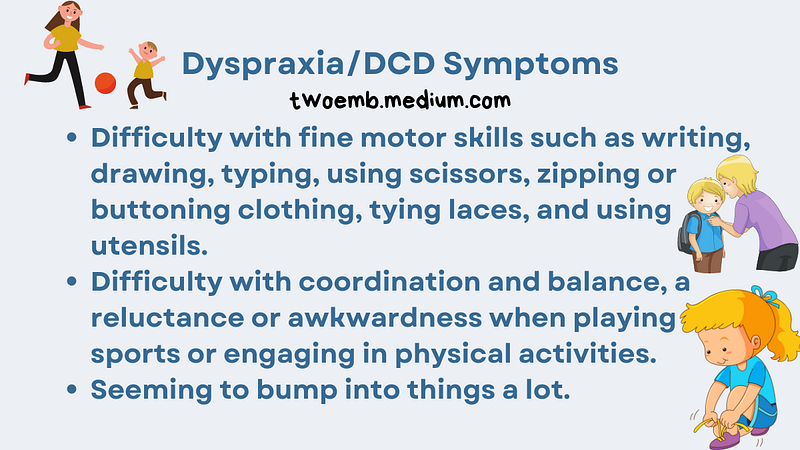
A lot of autistics feel uncoordinated for a variety of reasons. Developmental Coordination Disorder (DCD, or dyspraxia), commonly co-occurs with autism.
A recent study found that over 90% of autistic participants met the criteria for DCD. (It is important to note, however, that this particular study only had 61 participants altogether).
Another recent — and larger — study had very similar results, indicating that 88% of autistic children were at risk for motor impairments such as dyspraxia.
Another physical difference in some Autistics is toe-walking. Obviously walking on one’s toes is not diagnostic of autism, but it is a common gait for many Autistics, especially young children.
Some research points to tight heel chords (better known by achilles tendons) as a cause of toe walking, and that certainly fits with my personal experiences.
Despite the fact that I have hypermobility in my peroneal tendons (the tendons on the outside of the ankles, commonly sprained when one “rolls” an ankle), I actually have extremely tight achilles tendons.
I still toe-walk upon occasion, but am not sure if this was a concern when I was learning to walk, or when I was quite young. I do know I started walking later than usual (14–15 months, rather than the average of one year).
You find yourself practicing for social interactions
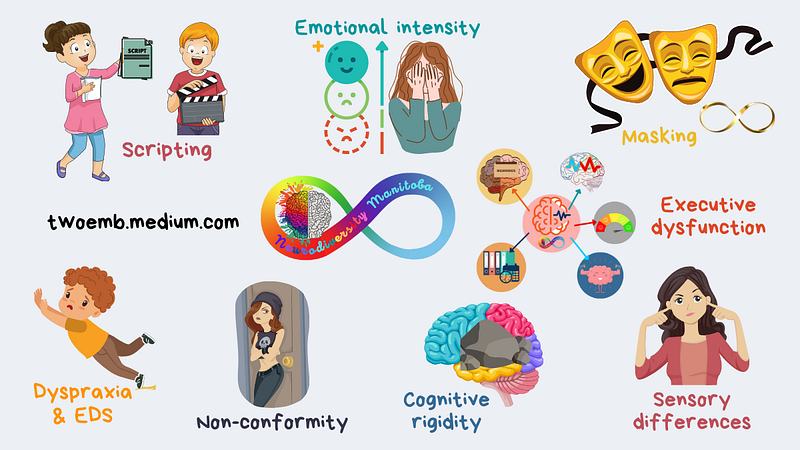
You feel the need to rehearse conversations in your head before you have them or rely on dialogue you’ve read, overheard, or seen on T.V.
This is called scripting, and I wrote all about it here.
Part of the reason for this is that we often struggle to understand the neurotypical (NT) styles of communication. Everyone is different, but generally speaking, neurodivergent (ND) folks tend to be more direct, while NTs tend to use a lot more subtext.
Autistics often say that NTs speak in “code”, rather than just saying what they mean in plain language. NTs and NDs also have different cultural expectations for non-verbal communication, such as sustained eye contact and keeping one’s body still while listening.
“For neurotypical people to successfully communicate with neurodivergent people, they may need to reconsider their assumptions about what ‘paying attention’ and ‘respect’ look like, and consider the utility of multimodal communication.” — Alyssa Hillary
You have difficulty remembering people by faces alone
Another common trait in autistics is something called prosopagnosia, also known as face blindness. Many of us recognize people by other physical features more easily than their faces.
I tend to recognize people by their gait (how they walk), their mannerisms, how they dress, their hair, and through context. When I see someone out of context, or if they’ve drastically changed their hair or clothing style, I have a much harder time recognizing them and remembering who they are.
I’ll be aware of familiarity, that feeling of “I know them from somewhere… but where?” Of course, everyone has had that experience upon occasion, especially with people they don’t know well and have only met a few times.
I’ve had this experience with people I’ve known for years.
You experience very intense emotions
A lot of people are intense, or have “big feelings”. Other neurotypes, such as people with ADHD, also similarly struggle with emotional dysregulation.
This is different from an autistic meltdown.
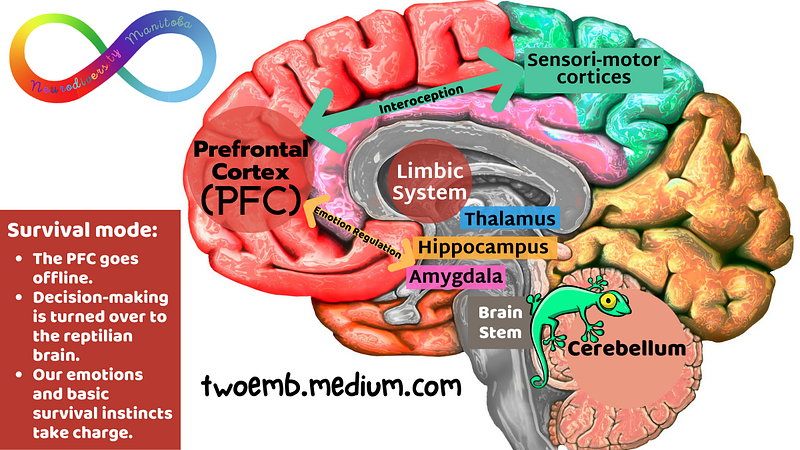
This experience will be different for everyone, but for me, I become so overwhelmed that I feel completely out of control.
My emotions, my behaviour, everything in my brain reverts completely to survival mode. Depending on the situation, I may be yelling and crying, or withdrawing and isolating.
It’s a horrible feeling and it can leave me feeling guilty, exhausted, upset, or burnt out for hours, or even days.
It’s important to note that this intensity of feelings is not limited to distressing emotions. One can experience intense joy, happiness, and enjoyment as well.
This is in contrast to the inaccurate stereotype that Autistics are unfeeling. We experience and express emotions differently, but many Autistics are hyper-empathic, or experience the entire range of emotions very intensely.
You’ve got “rock brain”
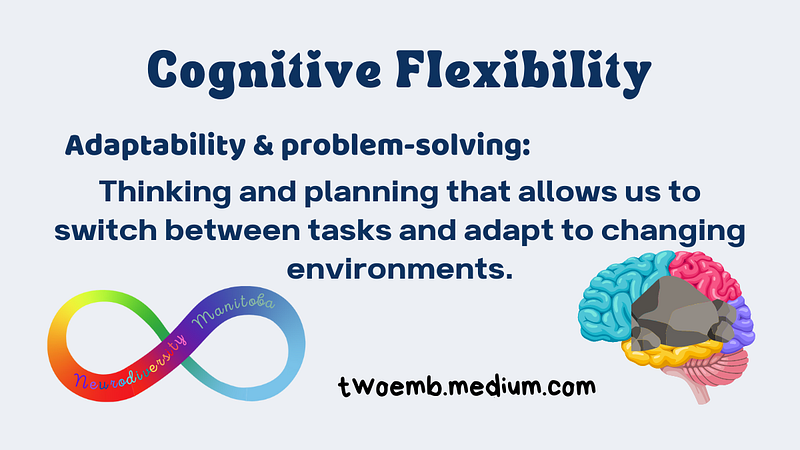
I don’t mean you’re less intelligent, many autistics are incredibly smart, some of us are intellectually gifted. Rock brain refers to cognitive rigidity, including difficulty with change and mental adaptability, also called black and white thinking.
I don’t like last-minute plans or abrupt changes in routine. I also struggle with changing my approach to something once it’s in motion, even if what I’m doing is not working out well.
I’ve always had an extreme sense of right and wrong, also called justice sensitivity. I have strong opinions and values and will stick to them, even to my own detriment at times.
I struggle to set switch, or task switch, meaning I can get “stuck” on what I’m doing and struggle to pull myself away, a type of hyperfocus that can be common in both autism and ADHD.
You’re a nonconformist
You’re not one to go along with the crowd, even if it means being the odd one out. You have a strong sense of right and wrong, such as the justice sensitivity I mentioned earlier.
You are quick to question rules or expectations that don’t make sense, and to challenge authority. You have little concern for social hierarchies, even in the workplace, which can get you into trouble.
My son and I are both very much like this. If we feel someone is out of line, we’ll be the first to call them out, regardless of their title or role. We may have trouble picking our battles, but we will not suffer fools gladly.
This is probably why I’m self-employed, and why many neurodiverse people have started their own small businesses, rather than work for someone else.
We’re also more likely to subvert other social norms, such as gender roles and heteronormativity. In recent years, research has shown autistics are more likely to have gender-diverse preferences, as well as mannerisms and appearances which fall outside of traditional gender norms.
Your sensory experiences are different from most
You tend to have intense responses to certain sensory stimuli, yet strangely dulled responses to others. Like me, you may feel overwhelmed in a loud, busy environment, yet have an unusually high pain tolerance.
Some autistics have extreme sensory sensitivities to light, textures, certain sounds, tastes, etc.
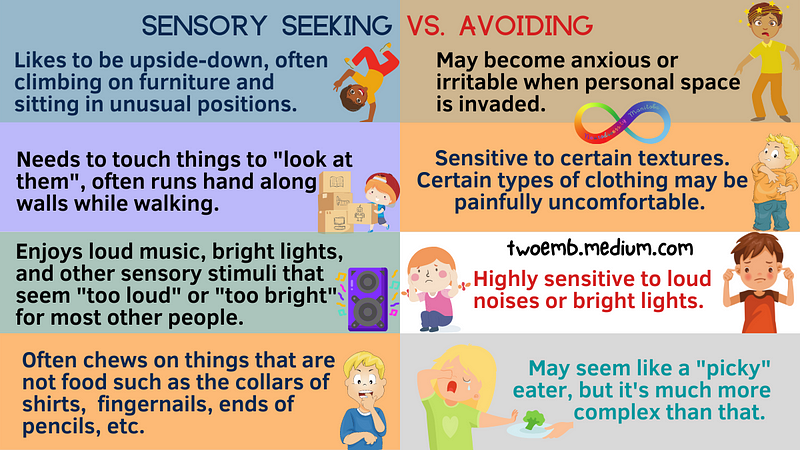
I get easily overwhelmed, irritable, and uncomfortable when there is too much going on. My particular sensitivities are mostly auditory and physical sensations, but autistics can experience hypo- or hyper-sensitivity in any of the senses.
Most autistics aren’t exclusively sensory seekers or avoiders. Most people are a combination of the two, depending on our stress and tolerance levels, the environment, personal preferences, and nervous systems.
You struggle with executive functioning
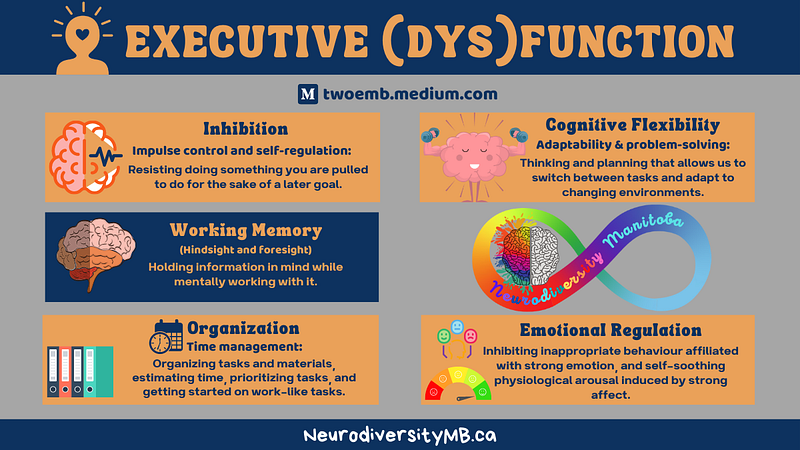
Emotional intensity, impulsivity, and cognitive rigidity are all part of executive functions. There are others, such as working memory, time management, and organization.
I explored these in great detail in a previous article, which you can find here.
Still reading?
If you’re still here, and you’ve been nodding along, or finding you identify with a lot of these experiences, there’s a good chance you could be autistic.
Like I said earlier, one should not self-identify, nor rule anything out, based on a single article. If you’re reading this and have been wondering whether you might be autistic, you’ve probably been doing a lot of reading.
Your best source of information is actually autistic people. Many others have also written about their own experiences, describing what their autistic traits and characteristics feel like for them.
In the end, no one can decide for you except you. Unless you need official paperwork in order to pursue health benefits or specific accommodations, in which case your ideal clinician is an autistic one or someone who truly understands autism beyond the DSM-V’s stereotypical description.
If you don’t need a formal diagnosis, then learn from the autistic community, and see if their experiences resonate with you.
© Jillian Enright, Neurodiversity MB
Still unsure?
I have an updated article outlining Atypical Autistic Traits. If you’re gender non-conforming, cis-female, LGBTQIA+, or simply not what one imagines when thinking of Autistics, this may help provide some clarity:
Related articles
Ways to support my work
You can leave a “tip” on Ko-Fi at https://Ko-Fi.com/NeurodiversityMB
Become a paid subscriber to my Substack publication
Check out my online store at https://NeurodiversityMB.ca/shop
Read and share my articles from twoemb.medium.com
Learn more
References
Bhat, A.N. (2021), Motor Impairment Increases in Children With Autism Spectrum Disorder as a Function of Social Communication, Cognitive and Functional Impairment, Repetitive Behavior Severity, and Comorbid Diagnoses: A SPARK Study Report. Autism Research, 14: 202–219. https://doi.org/10.1002/aur.2453
Hillary, A. (2020). Neurodiversity and cross-cultural communication. In Bertilsdotter Rosqvist, H., Chown, N., & Stenning, A. (Eds). Neurodiversity Studies: A new critical paradigm. Routledge.
Kallitsounaki, A., Williams, D.M. & Lind, S.E. (2021). Links Between Autistic Traits, Feelings of Gender Dysphoria, and Mentalising Ability: Replication and Extension of Previous Findings from the General Population. Journal of Autism and Developmental Disorders 51, 1458–1465. https://doi.org/10.1007/s10803-020-04626-w
MacLennan, K., O’Brien, S., Tavassoli, T. (2021). In Our Own Words: The Complex Sensory Experiences of Autistic Adults. Journal of Autism and Developmental Disorders. https://doi.org/10.1007/s10803-021-05186-3
Miller, H.L., Sherrod, G.M., Mauk, J.E. Fears, N.E., Hynan, L.S., Tamplain, P.M. (2021). Shared Features or Co-occurrence? Evaluating Symptoms of Developmental Coordination Disorder in Children and Adolescents with Autism Spectrum Disorder. Journal of Autism and Developmental Disorders 51, 3443–3455. https://doi.org/10.1007/s10803-020-04766-z
Stark, E., Stacey, J., Mandy, W., Kringelbach, M.L. Happé, F. (2021). Autistic Cognition: Charting Routes to Anxiety. Trends in Cognitive Sciences, 25(7), 571–581. https://doi.org/10.1016/j.tics.2021.03.014


