avatarJillian Enright

Free AI web copilot to create summaries, insights and extended knowledge, download it at here

4369

Abstract

<i>I know them from somewhere… but where</i>?” Of course, everyone has had that experience upon occasion, especially with people they don’t know well and have only met a few times.</p><p id="3627">Worse is when I <i>don’t</i> have that feeling, I’m thinking I know this person from a particular place and time, and it’s after speaking with them for a while I realize I had them mixed up with someone else.</p><p id="a49d">I’ve even had this experience with people I’ve known for <i>years</i>.</p><p id="98d9">There are two women on my hockey team — a team I’ve been on for the past four years. Our goalie and another teammate are both blonde, talkative, friendly young moms. I have gotten them mixed up on more than one occasion, despite seeing them every week for the past four years.</p><h2 id="cf4e">It gets worse</h2><p id="e10c">There have even been a few situations in which I didn’t even recognize my own son. On a typical day, I can pick him out from miles away. I know his outline, his form, his gait, the ways he moves his body, and his mannerisms.</p><p id="c383">One evening during hockey practice, a team parent approached to give me my son’s team photos. She went through the pile and asked me to point out when she got to his picture. She went through the entire team and had to start over again before I recognized which one was him.</p><p id="3924">This isn’t because I don’t pay attention to what my son’s face looks like, it’s likely due to a number of factors. Arenas are bright, loud, and busy on hockey nights. There are a lot of families there, kids running around the rink, plus actual hockey being played.</p><p id="4d82">When Autistics experience <a href="https://readmedium.com/sensory-overload-double-trouble-acb79533b255">sensory overstimulation</a>, this can cause us quite a bit of stress. If we’re using up mental and emotional energy to self-regulate and process all of the intense stimuli coming at us, it makes sense that we’d have difficulty paying close attention to details like facial features.</p><p id="9878">Further, if we’re interacting with unfamiliar people in an unfamiliar environment, our attention is likely elsewhere.</p><p id="2af5">When I’m talking to someone new (<i>or even someone I know well but with whom I am not fully comfortable</i>) I am probably thinking about making the right facial expressions, using the right body language, trying to make a bit of eye contact, and trying not to fidget too much.</p><p id="46eb">It’s not that I don’t care about people’s faces, it’s that there is so much else to worry about. A person’s brain can only process and retain so much information at once.</p><h2 id="4043">What’s in a name?</h2><p id="e1e6">Forgetting names isn’t an aspect of prosopagnosia, but I also have a really hard time remembering people’s names if I’ve only met them a few times.</p><p id="5acf">Even if I <i>can</i> recognize someone by their physical features, gait, or through context…. I <i>still</i> may not be able to remember their name.</p><p id="1ff4">Can’t we all just wear name tags, please?</p><p id="e89a">© Jillian Enright, Neurodiversity MB</p><figure id="22dc"><img src="https://cdn-images-1.readmedium.com/v2/resize:fit:800/1*1uklcchFXlwx6wmURJYemA.png"><figcaption>Created by author</figcaption></figure><h2 id="d688">Related articles</h2><div id="d9a6" class="link-block"> <a href="https://readmedium.com/aphantasia-adhd-and-autism-881a3be3d5c8"> <div> <div> <h2>Aphantasia and Autism</h2> <div><h3>What is aphantasia, and how does it relate to neurodivergence?</h3></div> <div><p>medium.com</p></div> </div> <div> <div style="background-image: url(https://miro.readmedium.com/v2/resize:fit:320/1*gQeLun-Dr5qUvL7M9p4Emg.png)"></div> </div> </div> </a> </div><div id="1408" class="link-block"> <a href="https://readmedium.com/how-to-know-if-youre-autistic-644ea6050596"> <div> <div> <h2>How To Know If You’re Autistic</h2> <div><h3>Step one: learn from the experiences of actually autistic people</h3></div> <div><p>medium.com</p></div> </div> <div> <div style="background-image:

Options

url(https://miro.readmedium.com/v2/resize:fit:320/1*ZQ8fZEMEn74yzjR2WmUA0Q.png)"></div> </div> </div> </a> </div><div id="1c62" class="link-block"> <a href="https://readmedium.com/working-memory-explained-cb8416846524"> <div> <div> <h2>Working Memory Explained</h2> <div><h3>What exactly is this ‘working memory’ thing?</h3></div> <div><p>medium.com</p></div> </div> <div> <div style="background-image: url(https://miro.readmedium.com/v2/resize:fit:320/1*hr551GboZaDO5MpCjAPX3g.png)"></div> </div> </div> </a> </div><h2 id="7100">Ways to support my work</h2><p id="3fdb">You can leave a “tip” on Ko-Fi at <a href="https://Ko-Fi.com/NeurodiversityMB">https://Ko-Fi.com/NeurodiversityMB</a></p><p id="4ed7">Become a paid subscriber to <a href="https://twoemb.substack.com">my Substack publication</a></p><p id="3edc">Check out my online store at <a href="https://NeurodiversityMB.ca/shop">https://NeurodiversityMB.ca/shop</a></p><p id="c83d">Read and share my articles from <a href="https://twoemb.medium.com">twoemb.medium.com</a></p><h2 id="5e7b">Learn more</h2><div id="ff43" class="link-block"> <a href="https://readmedium.com/schools-are-sensory-nightmares-d2f57d0c61db"> <div> <div> <h2>Schools Are Sensory Nightmares</h2> <div><h3>They’re bad enough for neurotypical folks, but can be hell for neurodivergent students</h3></div> <div><p>medium.com</p></div> </div> <div> <div style="background-image: url(https://miro.readmedium.com/v2/resize:fit:320/1*gxbl-HTNiWWY-XQazmVpWw.png)"></div> </div> </div> </a> </div><div id="d1ee" class="link-block"> <a href="https://readmedium.com/sensory-overload-double-trouble-acb79533b255"> <div> <div> <h2>Help For Sensory Overload & Overwhelm</h2> <div><h3>Triple trouble: Covid, a blizzard, then flooding — oh my!</h3></div> <div><p>medium.com</p></div> </div> <div> <div style="background-image: url(https://miro.readmedium.com/v2/resize:fit:320/1*Ay97Fhr7pMfxiTS3w7zXPQ.png)"></div> </div> </div> </a> </div><div id="c9af" class="link-block"> <a href="https://readmedium.com/my-lightbulb-moments-dbbdefb0a110"> <div> <div> <h2>Things That Made Me Go “Duh!”</h2> <div><h3>Realizations I put together to conclude that I am Autistic as well as ADHD</h3></div> <div><p>medium.com</p></div> </div> <div> <div style="background-image: url(https://miro.readmedium.com/v2/resize:fit:320/1*HLUUKvc0yL19oI09_dC6VQ.png)"></div> </div> </div> </a> </div><h2 id="f871">References</h2><p id="7f56">Kamensek, T., Susilo, T., Iarocci, G., Oruc, I. (2021). Social motivation in autism and developmental prosopagnosia. <i>Journal of Vision 21</i>(9), 2815. <a href="https://doi.org/10.1167/jov.21.9.2815">https://doi.org/10.1167/jov.21.9.2815</a></p><p id="7890">Minio-Paluello, I., Porciello, G., Pascual-Leone, A. <i>et al.</i> (2020). Face individual identity recognition: a potential endophenotype in autism. <i>Molecular Autism</i> <i>11</i>, 81. <a href="https://doi.org/10.1186/s13229-020-00371-0">https://doi.org/10.1186/s13229-020-00371-0</a></p><p id="4cad">Murray, E., Chase, S., Gregory, N. J., Moseley, R. and Bate, S. (2021). <i>Using Gaze Behaviour to Differentiate Between Developmental Prosopagnosia and Autism Spectrum Condition.</i> (Unpublished). <a href="https://eprints.bournemouth.ac.uk/35666/">https://eprints.bournemouth.ac.uk/35666</a></p><p id="e0ed">Suri, K., Lewis, M., Minar, N. <i>et al.</i> (2021). Face Memory Deficits in Children and Adolescents with Autism Spectrum Disorder. <i>Journal of Psychopathology and Behavioral Assessment 43</i>, 108–118. <a href="https://doi.org/10.1007/s10862-020-09840-5">https://doi.org/10.1007/s10862-020-09840-5</a></p></article></body>

Autism And Prosopagnosia

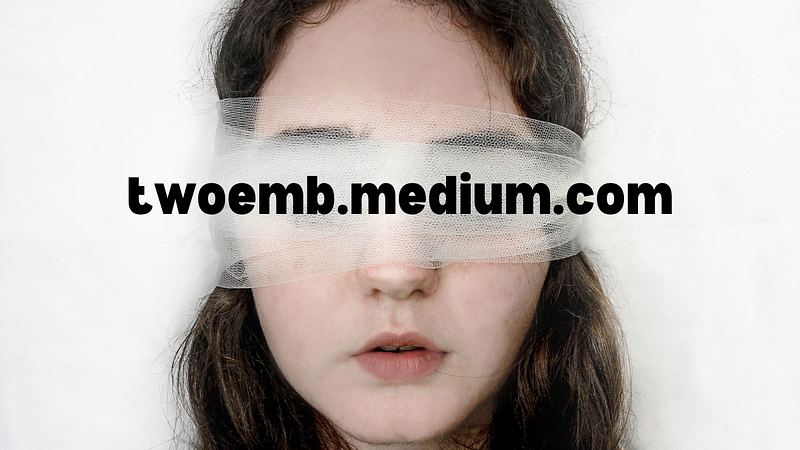
“Face blindness” and difficulty recognizing people by facial features
Created by author on Canva

Prosopagnosia

I have a mild form of prosopagnosia, also known as face blindness. I can recognize very familiar faces, those of close friends, family I see regularly.

If I’ve only met a person once or twice, I will not recognize their face and will need context in order to remember it. I may also mix them up with another acquaintance if they have similar features or mannerisms.

Sometimes I even get faces of familiar acquaintances or teammates mixed up if they look similar, especially in a crowded environment, or when I am feeling stressed or anxious.

People seem to think I essentially see a blank space where people’s faces are meant to be, but that’s not what it’s like for me. Like anything, it’s on a spectrum of ranging severity. I can recognize faces, but I very easily get people confused if they have similar characteristics (height, body type, hair colour, skin tone, etc.).

I have a lot of difficulty recognizing people out of context. I tend to recognize people by their mannerisms and gait more than anything else, definitely not facial features. I do see faces, they’re just “background” information, secondary to the way people move.

I tend to avoid eye-contact, so perhaps I take in fewer facial features compared to neurotypicals (NTs), but I don’t see a blank area where the face should be. If I look at someone’s face, I can see their face, their facial features doesn’t register as prominently for me.

Autism and “faceblindness”

It’s not entirely clear why Autistics struggle with prosopagnosia more than allistics (non-Autistic people). In fact, there is no agreed upon prevalence rate for co-occurring prosopagnosia and autism.

Many have hypothesized that Autistics are more likely to experience face-blindness because many of us are uncomfortable with prolonged eye-contact, and therefore spend less time looking at people’s faces.

Others posit our so-called low social motivation is responsible. Apparently we don’t care enough to study and remember your face.

That’s not very nice, and is there no evidence to support either of those ideas. Recent research found non-Autistic people with severe developmental prosopagnosia did not have reduced social motivation when compared to Autistics, nor when compared to allistic people.

As if adolescence weren’t challenging enough

I remember once in my teens, I had changed schools and was in a brand new environment, surrounded by new faces. On the first day of school, I made friends with a short red-headed teen, and we spent a lot of time hanging out in between classes.

The next day, there was a somewhat tall red-headed teen with a locker near mine, and I started talking to her as if we had spent the previous day together. I was both embarrassed and completely thrown off when she acted like she didn’t know me.

Come to find out, I had mixed her up with another red-head, I just didn’t remember her face, or apparently her height.

Mistaken identities

Instead of facial features, I tend to recognize people by their gait (how they walk), their mannerisms, how they dress, their hair, and through context.

When I see someone out of context, or if they’ve drastically changed their hair or clothing style, I have a much harder time recognizing them and remembering who they are.

I’ll be aware of familiarity, that feeling of “I know them from somewhere… but where?” Of course, everyone has had that experience upon occasion, especially with people they don’t know well and have only met a few times.

Worse is when I don’t have that feeling, I’m thinking I know this person from a particular place and time, and it’s after speaking with them for a while I realize I had them mixed up with someone else.

I’ve even had this experience with people I’ve known for years.

There are two women on my hockey team — a team I’ve been on for the past four years. Our goalie and another teammate are both blonde, talkative, friendly young moms. I have gotten them mixed up on more than one occasion, despite seeing them every week for the past four years.

It gets worse

There have even been a few situations in which I didn’t even recognize my own son. On a typical day, I can pick him out from miles away. I know his outline, his form, his gait, the ways he moves his body, and his mannerisms.

One evening during hockey practice, a team parent approached to give me my son’s team photos. She went through the pile and asked me to point out when she got to his picture. She went through the entire team and had to start over again before I recognized which one was him.

This isn’t because I don’t pay attention to what my son’s face looks like, it’s likely due to a number of factors. Arenas are bright, loud, and busy on hockey nights. There are a lot of families there, kids running around the rink, plus actual hockey being played.

When Autistics experience sensory overstimulation, this can cause us quite a bit of stress. If we’re using up mental and emotional energy to self-regulate and process all of the intense stimuli coming at us, it makes sense that we’d have difficulty paying close attention to details like facial features.

Further, if we’re interacting with unfamiliar people in an unfamiliar environment, our attention is likely elsewhere.

When I’m talking to someone new (or even someone I know well but with whom I am not fully comfortable) I am probably thinking about making the right facial expressions, using the right body language, trying to make a bit of eye contact, and trying not to fidget too much.

It’s not that I don’t care about people’s faces, it’s that there is so much else to worry about. A person’s brain can only process and retain so much information at once.

What’s in a name?

Forgetting names isn’t an aspect of prosopagnosia, but I also have a really hard time remembering people’s names if I’ve only met them a few times.

Even if I can recognize someone by their physical features, gait, or through context…. I still may not be able to remember their name.

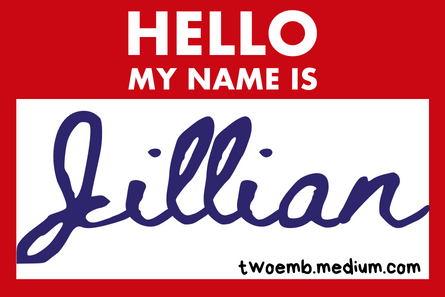
Can’t we all just wear name tags, please?

© Jillian Enright, Neurodiversity MB
Created by author

Related articles

Ways to support my work

You can leave a “tip” on Ko-Fi at https://Ko-Fi.com/NeurodiversityMB

Become a paid subscriber to my Substack publication

Check out my online store at https://NeurodiversityMB.ca/shop

Read and share my articles from twoemb.medium.com

Learn more

References

Kamensek, T., Susilo, T., Iarocci, G., Oruc, I. (2021). Social motivation in autism and developmental prosopagnosia. Journal of Vision 21(9), 2815. https://doi.org/10.1167/jov.21.9.2815

Minio-Paluello, I., Porciello, G., Pascual-Leone, A. et al. (2020). Face individual identity recognition: a potential endophenotype in autism. Molecular Autism 11, 81. https://doi.org/10.1186/s13229-020-00371-0

Murray, E., Chase, S., Gregory, N. J., Moseley, R. and Bate, S. (2021). Using Gaze Behaviour to Differentiate Between Developmental Prosopagnosia and Autism Spectrum Condition. (Unpublished). https://eprints.bournemouth.ac.uk/35666

Suri, K., Lewis, M., Minar, N. et al. (2021). Face Memory Deficits in Children and Adolescents with Autism Spectrum Disorder. Journal of Psychopathology and Behavioral Assessment 43, 108–118. https://doi.org/10.1007/s10862-020-09840-5

Autism
Prosopagnosia
Neurodiversity
Psychology
Neuroscience
Recommended from ReadMedium