
What it Means to be Autistic (Pt. 2)
Sensory sensitivities and sensory processing differences
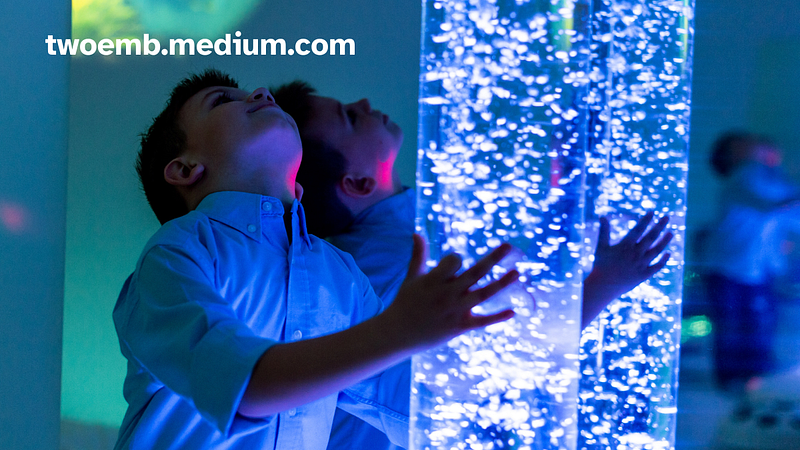
The purpose of my new eBook
I began writing this eBook after my son was formally diagnosed with Autism, at age 11.
I’d been pretty certain about both of us being Autistic for a few years, so it didn’t come as much of a surprise to me… but my spouse and son didn’t have the benefit of 20 years’ experience and two relevant post-secondary degrees to help them process this new information.
I wanted my family, and all families, to have access to easy-to-understand, neuro-affirming, non-pathologizing information about autism.
I recently shared an introductory article including some elements from my new eBook. The following is another excerpt from that book, with a focus on our sensory differences.
Sensory sensitivities
Almost all (or maybe all) Autistic people experience our senses differently from others. Many have sensory processing disorder (SPD) or what we call sensory sensitivities. These are ways in which our senses are more sensitive than most other people our age.
This may be for all of our senses, only one of them, or just a few. Some people are really sensitive in some ways, while their other senses are actually much less sensitive than other people their age.
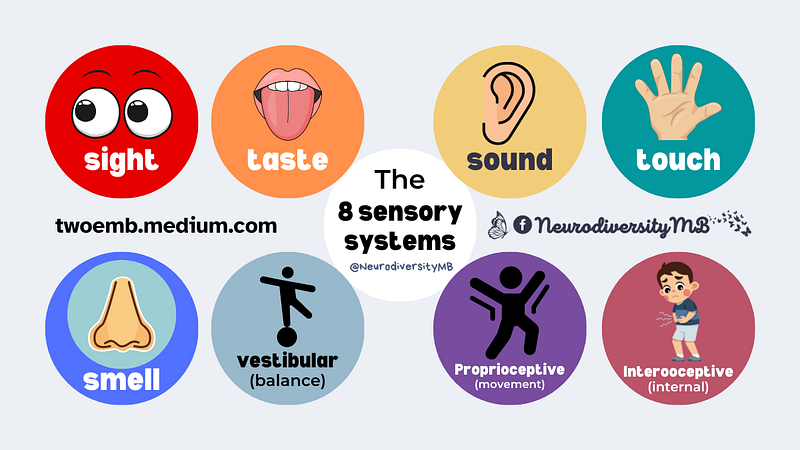
What are those senses, anyway? If you’re reading this, you probably already know the basic five senses: sight, sound, taste, touch, and smell. Some Autistic people are very sensitive in one or all of these areas.
Did you know, there are three other senses that most people don’t know about?
Sensory systems
In addition to smell, sight, taste, touch, and hearing, our bodies have three other sensory systems.
Those are:
Interoceptive
(internal)
Interoception is what helps us notice signals coming from inside our bodies.
These can be emotions like anxiety or worry, or feelings like hunger, thirst, or needing to go to the bathroom.
If you tend to forget to eat, or don’t notice you need to go to the bathroom until you really need to go, these may be difficulties with interoception.
Proprioceptive
(external)
Proprioception is what helps us be aware of our surroundings, and how our body moves through our environment.
If you tend to bump into things that don’t move like the counter or wall when going around a corner or through doorways, you might have some difficulty with proprioception.
If you tend to stub your toe, trip over things, or accidentally hurt yourself a lot, you may have some trouble with proprioception. Autistic people are more likely than others to have some difficulties with proprioception.
Vestibular
(balance)
Our vestibular system is what helps us keep our balance.
If you have a strong sense of balance, you might be very good at gymnastics, bike riding, or yoga. Standing on one foot or balancing on a ladder are examples of using our vestibular system.
Autistic people are more likely than others to have some difficulties with balance. Some people have a lot of difficulty, some people have a little, and some have none.
Sensory differences
Many Autistic people find it more difficult than others to filter out the sensory information in our environment, and even experience it as being more intense than others do.
For example:
- We may find bright lights more intense, or even painful, compared to others
- We may be more sensitive to sounds, certain pitches or frequencies, or sudden noises
- We might be more sensitive to certain fabrics or sensations, or unexpected touch like a tap on the shoulder, even if it’s gentle.
- Some Autistic folks have particular clothing they prefer because it feels most comfortable.
- Some prefer (or need) to have tags cut out of their clothes, or buy socks with no seams, as they are very uncomfortable or even painful on their skin.
- You may have a more sensitive nose than most others, finding certain scents overwhelming, unpleasant, or very irritating.
- You may have very sensitive taste buds and struggle to try new foods, or you may be very sensitive to certain food textures.
- You may have been described as a “picky” eater, but certain foods genuinely make you feel unwell.
Sensory positives
Having a more sensitive nervous system (or sensory system in particular) doesn’t have to be all bad!
Many Autistic people feel great enjoyment and pleasure from certain sensory experiences.
- Some love jumping on a trampoline
- Others love swinging on a swing or hanging upside-down
- Some people love running fast or riding their bike down a big hill
- Some love spinning around and around and may even enjoy feeling dizzy
- Some love the thrill of rollercoasters
- Some people love loud music or certain types of music that make them feel good
- Some love beautiful scenery, vibrant colours or lights
- Some love strong, intense flavours Some love certain scents and may enjoy having a more sensitive sense of smell
- Some love the feeling of physical touch, whether that be snuggling with someone they care about, the feeling of certain fabrics on their skin, or sensory tools and toys.
- Some love the feeling of moving their body in different ways.
Every single person experiences the world differently, and while we may sometimes feel overwhelmed by certain senses, there are many ways we can enjoy our sensory experiences.
Stimming
Stimming is moving my body in ways that feel good. Sometimes I flap or wiggle my hands, jump up and down, run around, spin around, rock back and forth, or tap my fingers.
There is no single “right” or “wrong” way to experience our senses, only different ways.
As long as what you’re doing is safe for yourself and others, then it’s perfectly okay!
© Jillian Enright, Neurodiversity MB
Related articles
Ways to support my work
Check out my online store at https://NeurodiversityMB.ca/shop
That includes downloading my brand new eBook! :)

Read and share my articles from twoemb.medium.com
Become a paid subscriber to my Substack publication
You can leave a “tip” on Ko-Fi at https://Ko-Fi.com/NeurodiversityMB
Read parts 1 & 3
References
Goodall, E., & Brownlow, C. (2022). Interoception and Regulation: Teaching skills of body awareness and supporting connection with others. Jessica Kingsley Publishers.
Mahler, K. (2016). Interoception: The Eighth Sensory System. AAPC Publishing.


