
Exciting Paleontological Discoveries You Probably Missed in January
A month full of remarkable finds…
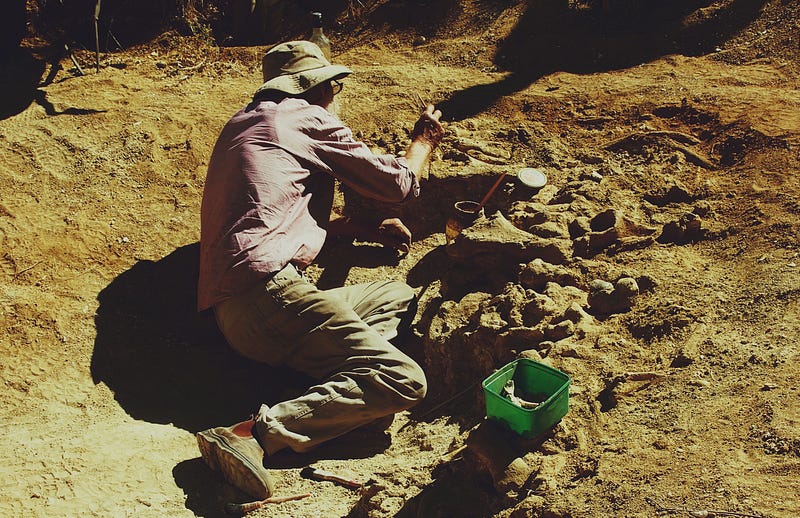
January was a month filled with remarkable discoveries in paleontology. During the past 31 days, scientists working in the field published numerous studies, described new species, and proposed exciting theories about the biology and behavior of many extinct animals.
In this article, we will do a quick recap of the most important paleontological discoveries from January 2021.
Let’s go!
Tyrannosaurs had a taste for their own flesh & their hatchlings were about the size of an average dog
Starting up with the discovery of three tyrannosaur bones from New Mexico which preserve several bite marks and other feeding traces made by another tyrannosaur. These finds, combined with evidence from the past, further confirm the idea that tyrannosaurs- including the fearsome T.rex, engaged in cannibalistic behavior from time to time.
Read more about this discovery below:
In addition, scientists from the University of Edinburgh described the first-known fossils of tyrannosaur embryos and concluded that their hatchlings were about as big as a medium-sized dog.
According to the researchers involved in the study, young tyrannosaurs were approximately 1 meter (3 ft) long when they were born and they would have been fairly active soon after they hatched.
A family of saber-toothed cats
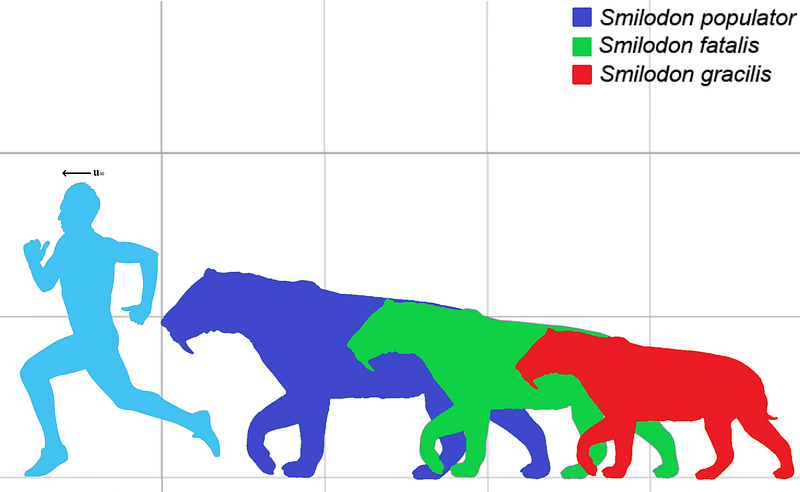
A remarkable paper describing the discovery of at least two subadult and one adult specimen of Smilodon fatalis was published this month.
The presence of a unique type of tooth in both subadult species suggests they most likely were siblings. The immature individuals were at least two years old and were associated with an adult (likely their mother), indicating that Smilodon had a prolonged period of parental care. In addition, Smilodon seems to have had a unique growth strategy among big cats that combined a growth rate that is similar to a tiger and the extended growth period of a lion.
The specimens, recovered from Ecuador, provide a rare instance of familial relatedness in the fossil record and offer remarkable insights into the behavior of the famous saber-toothed cats.
Fossilized dinosaur sitting on egg-filled nest
The discovery of an oviraptorid dinosaur sitting above its soon-to-hatch babies from China was one of the highlight studies published in January.
The discovery proves that some dinosaurs were affectionate parents nurturing their offspring in a fashion similar to modern birds. The particular specimen from the Jiangxi Province provides a shred of compelling behavioral evidence coming from an extinct animal, which is a rare occurrence in paleontology.
To find out more about this remarkable specimen, read the article below:
Why crocodiles have changed little since the time of the dinosaurs?
Lizards and birds have achieved a diversity of many thousands of species during the last 200 million years. In contrast, crocodiles have changed little since the time of the dinosaurs, and today they are represented by only 25 species. A recent study led by scientists from the University of Bristol tried to find out why.
Scientists concluded that the limited diversity of crocodiles and their apparent lack of evolution are the result of a slow evolutionary rate. It seems crocodiles arrived at a body plan that was efficient and versatile enough that they didn’t need to change much in order to survive.
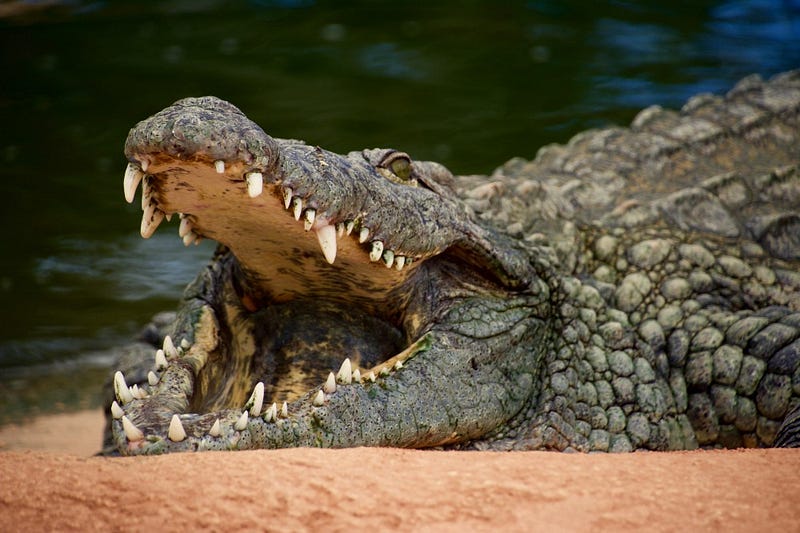
The study also showed that crocodile evolution speeds up and their body size tends to increase when the climate is warmer. The fact that the climate during the age of dinosaurs was warmer than it is today, likely explains why in the past there were many more varieties of crocodile-like reptiles than in present.
To find out the most terrifying and extinct members of these varieties read the article below:
One of the largest dinosaurs to exist?
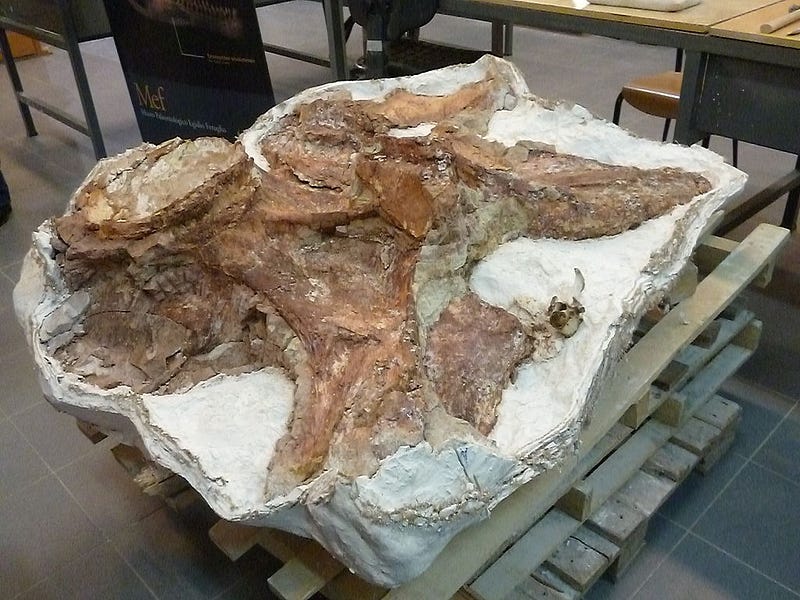
New fossils that may belong to one of the largest animals that ever walked the earth unearthed in Patagonia, Argentina. The fossils, which so far comprise 24 tail vertebrae and parts of the pelvic and pectoral girdle, belong to a giant long-necked dinosaur that lived 98 million years ago during the Cretaceous period.
“It is a huge dinosaur, but we expect to find much more of the skeleton in future field trips, so we’ll have the possibility to address with confidence how really big it was,” said Alejandro Otero, study corresponding author and a paleontologist at Argentina’s Museo de La Plata.
Scientists do not yet know whether the latest specimen belongs to a new species or not. Yet, they are confident that this important find will help them better understand the evolution and diversification of the giant dinosaurs during the Late Cretaceous Period.
Dire wolves weren’t…wolves after all
This month also brought some fascinating news about the dire wolf, the famous ancient predator that many people came to learn through the Game of Thrones series.
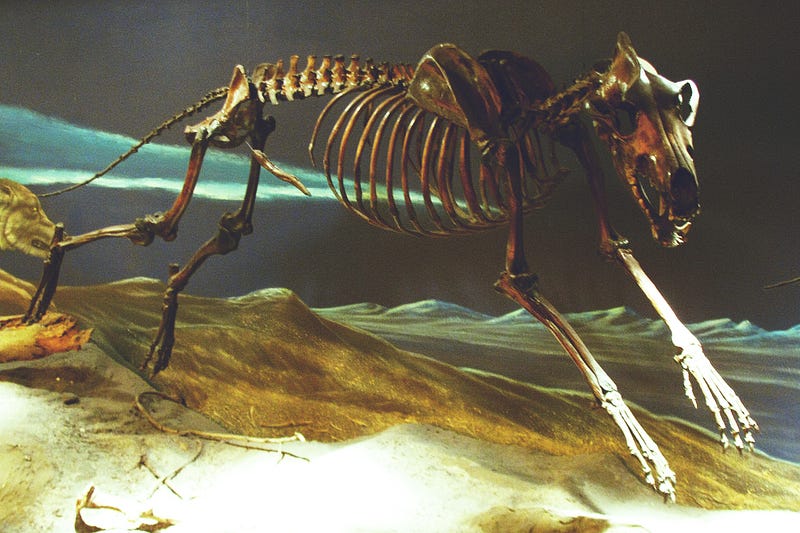
An international team of genetic researchers sequenced five genomes from fossilized remains of this creature dating from 50,000 to 12,900 years ago, providing the first concrete analysis of dire wolf DNA. The results of the analysis were surprising: contrary to what scientists believed till now, dire wolves were not closely related to the modern gray wolf at all.
“Even though they look like wolves, dire wolves actually have nothing to do with wolves,” says Angela Perri, an archaeologist at Durham University and one of the study’s lead authors.
Researchers concluded that dire wolves in fact occupy their own lineage, which is separated from the one that gave rise to African jackals, gray wolves, coyotes, and dogs by nearly 6 million years!
New genus of raptor dinosaur joins the pack
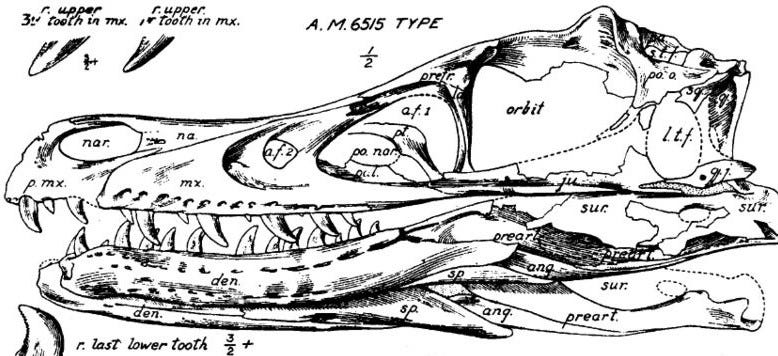
A new dinosaur genus from Mongolia was announced in January. The new species was named Shri devi (after the Buddhist deity of Palden Lhamo) and was a member of the ‘raptor’ family, the group of dinosaurs that include Deinonychus and Velociraptor.
Shri was originally discovered in 1991, but the particular specimen was initially thought to belong to Velociraptor. After paleontologist Alan H. Turner and his colleagues noted a couple of distinguishing traits between it and its famous cousin, they concluded the fossil represented a new genus.
Shri lived 72 million years ago and like its relatives, it was fully feathered and bore a large, recurved claw on the second foot toe.
A mosasaur with shark-like teeth
A new, bizarre genus of mosasaur was described this month. Mosasaurs were a group of marine reptiles closely related to varanoid lizards. They were the apex predators of the Late Cretaceous seas and showed a wide range of body sizes, movement styles, and diets.
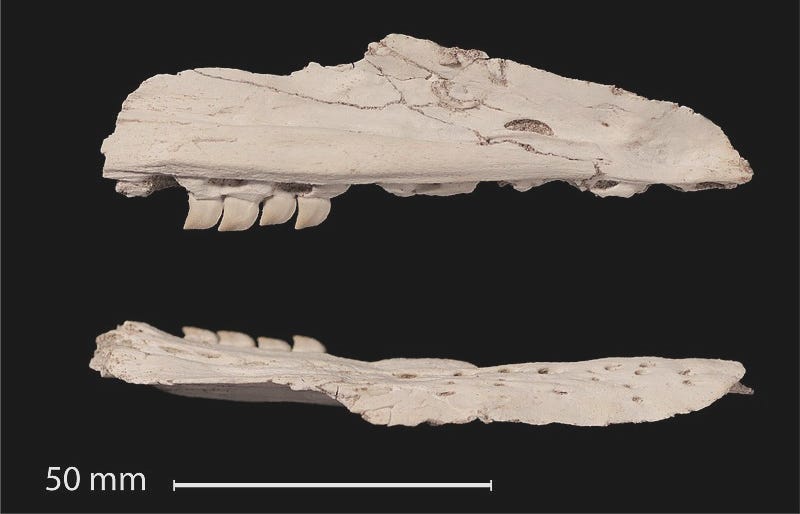
Scientists named the newly found genus Xenodens or ‘strange tooth’ due to the animal’s distinctive, knife-like teeth. These teeth were packed edge to edge to make a serrated blade and resemble those of certain sharks.
The discovery of Xenodens is unique because this is the first time this kind of dentary is seen in any reptile. Researchers believe the knife-like teeth enabled this creature to punch above its weight, cut fish in half, and take large bites from bigger animals.
The new mosasaur is estimated to have measured around 1.6 meters (5.2 ft) in length and lived approximately 69 million years ago on the coasts of Africa.
An exquisitely preserved…tube
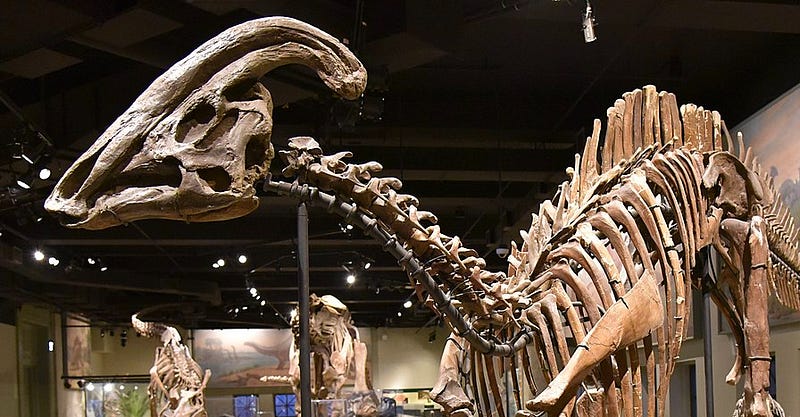
Scientists announced the discovery of an exquisitely preserved skull belonging to a rare species of the iconic tube-like crested Parasaurolophus. Three species of the famous North American duck-billed dinosaur are known: P. walkeri, P. tubicen, and P. cyrtocristatus.
Both P. walkeri from Alberta and P. tubicen from New Mexico had long, straight tubes, while P. cyrtocristatus, had a shorter, more curved crest than its relatives. The newly found skull belongs to the rarer cyrtocristatus species.
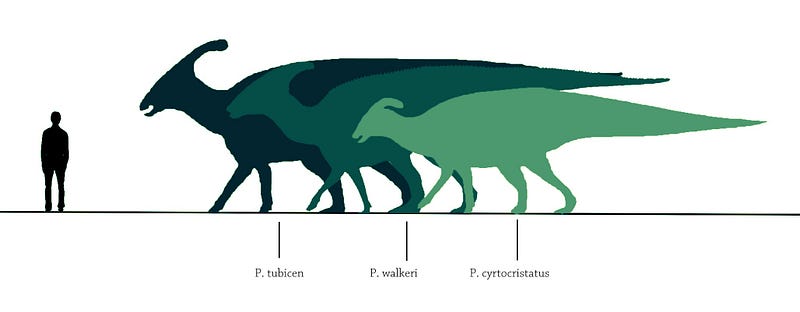
The analysis of additional features of the skull, together with information from other Parasaurolophus discoveries from southern Utah, suggests for the first time that P.tubicen and P. cyrtocristatus may be more closely related than they are to their northern cousin (P. walkeri).
In addition, and thanks to the skull’s exquisite preservation, paleontologists will have the opportunity to identify how such a bizarre structure grew on this dinosaur.
Paleontologists reconstruct dinosaur cloacal opening
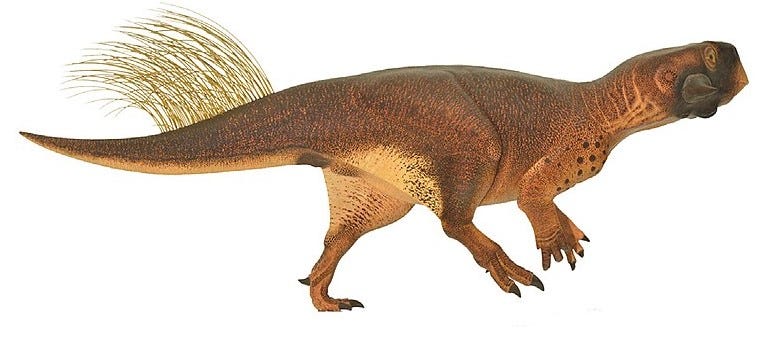
And, finally, paleontologists from the United Kingdom and the United States described for the first time the cloaca (the all-purpose opening used for defecation, urination, and breeding) of a non-avian dinosaur.
Scientists examined the cloacal opening of a wonderfully preserved Psittacosaurus specimen, a ceratopsian dinosaur that lived about 110 million years ago, and compared it to vents across modern land-dwelling vertebrate animals. The study found that while the cloaca of Psittacosaurus is unique in its appearance; it exhibits features reminiscent of living crocodilians.
For example, the cloaca’s outer margins are highly pigmented with melanin. This pigmentation provided the vent with a function in display and signaling, similar to living baboons and some breeding salamanders. The large, pigmented lobes on either side of the opening could have harbored musky scent glands, as seen in living crocodiles. Birds for their part occasionally exhibit visual signaling with the cloaca, and the study authors believe Psittacosaurus, as well as many other dinosaurs, could do the same.
This discovery opens up fascinating new behavioral implications for non-avian dinosaurs that were not previously appreciated.
Epilogue
To sum up, January was a remarkable month in the field of paleontology. Scientists learned more about the biology and behavior of a wide range of extinct animals and discovered exciting new species.
Hungry for more paleontology news? Review the latest discoveries from February here:
References
Dalman, Sebastian & Lucas, Spencer. (2021). New evidence for cannibalism in tyrannosaurid dinosaurs from the upper Cretaceous (Campanian/Maastrichtian) San Juan of New Mexico. Link:https://www.researchgate.net/publication/348002335_NEW_EVIDENCE_FOR_CANNIBALISM_IN_TYRANNOSAURID_DINOSAURS_FROM_THE_UPPER_CRETACEOUS_CAMPANIANMAASTRICHTIAN_SAN_JUAN_BASIN_OF_NEW_MEXICO
Gregory F. Funston, Mark J. Powers, S. Amber Whitebone, Stephen L. Brusatte, John B. Scannella, John R. Horner, and Philip J. Currie. Baby tyrannosaurid bones and teeth from the Late Cretaceous of western North America. Canadian Journal of Earth Sciences. 0(0): 1–22. https://doi.org/10.1139/cjes-2020-0169
Ashley R. Reynolds,Kevin L. Seymour,David C. Evans,(2021), Smilodon fatalis siblings reveal life history in a saber-toothed cat, Science, Link:https://www.cell.com/iscience/fulltext/S2589-0042(20)31113-5?_returnURL=https%3A%2F%2Flinkinghub.elsevier.com%2Fretrieve%2Fpii%2FS2589004220311135%3Fshowall%3Dtrue
Bill O’Driscoll, (Jan. 2021), Carnegie Museum researchers find 1st dinosaur atop nest with unhatched babies, TRIB Live, Link: https://triblive.com/local/carnegie-museums-researchers-announce-worlds-first-fossilized-dinosaur-babies/
Stockdale, M.T., Benton, M.J. Environmental drivers of body size evolution in crocodile-line archosaurs. Commun Biol 4, 38 (2021). https://doi.org/10.1038/s42003-020-01561-5
Alejandro Otero, José L. Carballido, Leonardo Salgado, José Ignacio Canudo, Alberto C. Garrido, Report of a giant titanosaur sauropod from the Upper Cretaceous of Neuquén Province, Argentina, Cretaceous Research, 2021, 104754, ISSN 0195–6671, https://doi.org/10.1016/j.cretres.2021.104754. (http://www.sciencedirect.com/science/article/pii/S019566712100001X)
Perri, A.R., Mitchell, K.J., Mouton, A. et al. Dire wolves were the last of an ancient New World canid lineage. Nature (2021). https://doi.org/10.1038/s41586-020-03082-x
Turner, Alan H.; Montanari, Shaena; Norell, Mark A. (2021). “A New Dromaeosaurid from the Late Cretaceous Khulsan Locality of Mongolia” (PDF). American Museum Novitates. 2020(3965): 1–48. doi:10.1206/3965.1. ISSN 0003–0082.
Nicholas R. Longrich, Nathalie Bardet, Anne S. Schulp, Nour-Eddine Jalil, Xenodens calminechari gen. et sp. nov., a bizarre mosasaurid (Mosasauridae, Squamata) with shark-like cutting teeth from the upper Maastrichtian of Morocco, North Africa,Cretaceous Research,2021,104764,ISSN 0195–6671, https://doi.org/10.1016/j.cretres.2021.104764. http://www.sciencedirect.com/science/article/pii/S0195667121000112)
Gates TA, Evans DC, Sertich JJW. 2021. Description and rediagnosis of the crested hadrosaurid (Ornithopoda) dinosaur Parasaurolophus cyrtocristatus on the basis of new cranial remains. PeerJ 9:e10669 https://doi.org/10.7717/peerj.10669
Jakob Vinther, Robert Nicholls, Diane A. Kelly, A cloacal opening in a non-avian dinosaur, Current Biology, 2021, ISSN 0960–9822, https://doi.org/10.1016/j.cub.2020.12.039 (http://www.sciencedirect.com/science/article/pii/S0960982220318911)


