
Top Species of Giant Crocodilians You’re Glad Are Extinct
Meet the most terrifying prehistoric relatives of the modern crocodile…
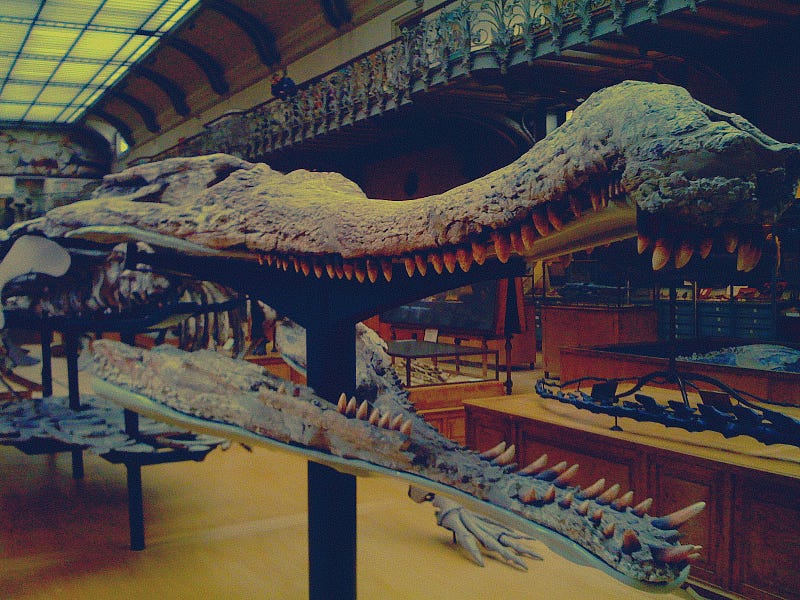
“It is the wisdom of the crocodiles, that shed tears when they would devour.” ~ Francis Bacon
Crocodiles and their relatives invoke some kind of primal fear in us. It’s no hard to explain why: the unexpressive stillness of their eyes, their menacing jaws, their different pace — all constitute an alien impression for a warm-blooded mammal. To be among these reptiles one is reminded of a different kind of world long vanished from the earth.
Indeed the ancestry of these mighty creatures dates back to the Late Triassic period, some 235 million years ago. During the course of this vast timescale, the crocodilian lineage witnessed the evolution of some truly giant predators, far larger and deadlier than any of their modern-day counterparts.
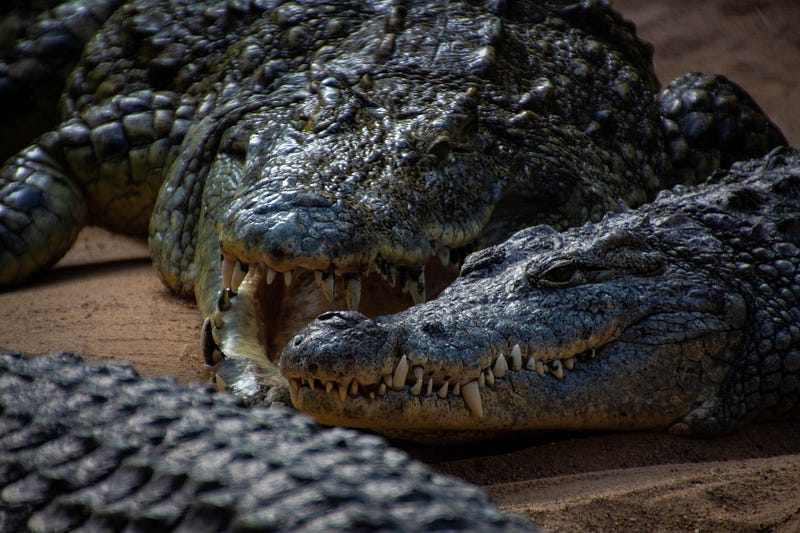
The most terrifying members of the crocodilian family tree are briefly introduced below. Thankfully all of them had long since gone extinct.
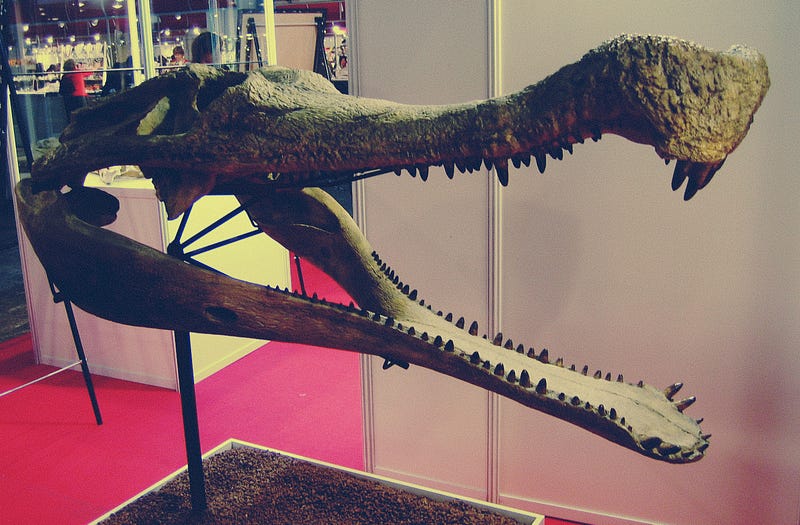
Sarcosuchus imperator
The oldest of these super-crocs is Sarcosuchus. Although its name translates to “flesh crocodile”, Sarcosuchus is commonly classified as a Pholidosaurid, a group of crocodile-like reptiles that are placed outside the clade of the extant forms.
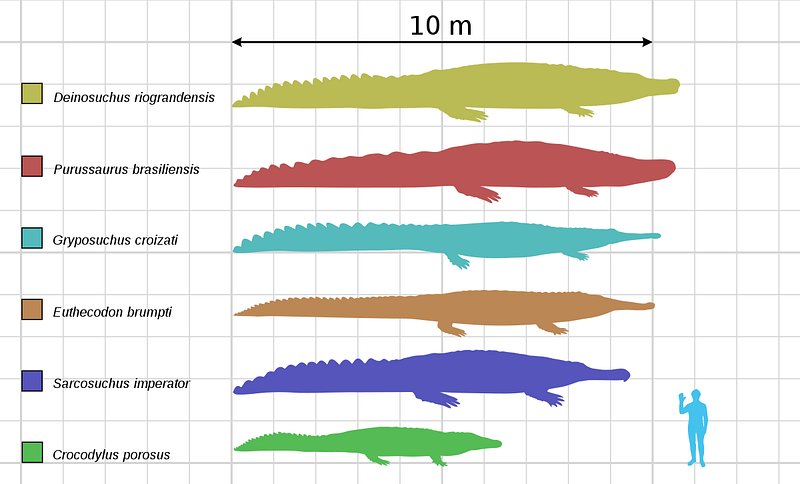
This giant reptile could grow up to 9.5 m (31 ft) in length and weigh up to 4.3 tons. It had a long snout comprising 75% of the length of its skull and a pair of telescoped eyes.
Sarcosuchus lived during the Early Cretaceous Period, between 133 and 112 million years ago in what is now Africa and South America. It thrived in the inland fluvial environment of these regions which at the time supported a humid tropical climate.
Sarcosuchus shared the waters with the holostean fish Lepidotus and the coelacanth Mawsonia. Being most probably a generalist predator, this enormous reptile could have also hunted down dinosaurs such as the ornithischian Lurdusaurus and Ouranosaurus, both of which exceeded 7m (23 ft) in length.
Deinosuchus rugosus
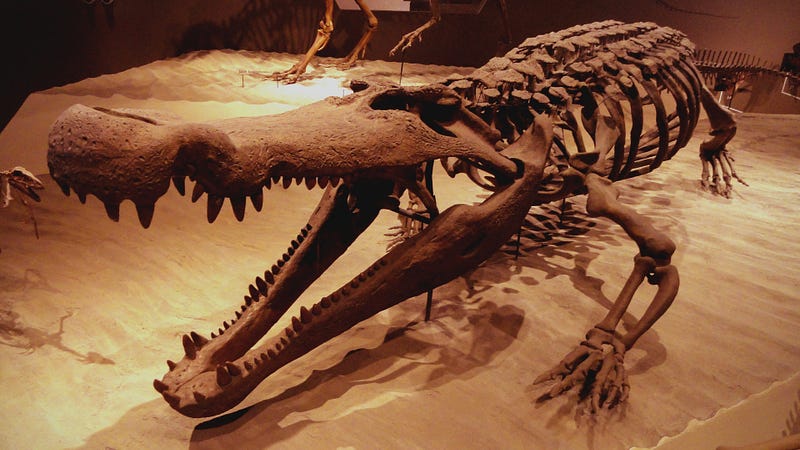
Being distantly related to the modern alligator, Deinosuchus terrorized the eastern and western coastal regions of North America between 82 and 73 million years ago.
As its name suggests, the “terrible crocodile” was indeed terrifying. Large individuals of this crocodilian could measure up to 10.6 meters (35 ft) in total length and perhaps weighed as much as 5 tons.
The overall appearance of Deinosuchus was fairly similar to its smaller relatives. Its back was covered with thick hemispherical osteoderms and its teeth were very thick and robust, appearing to have been adapted for crushing, rather than piercing.
It is generally thought that this predator would have employed hunting tactics similar to those of modern crocodilians, ambushing terrestrial prey at the water’s edge and then submerging them until they were drowned. A 2014 study even suggested that it would have been able to perform a “death roll”, like modern crocodiles.
Deinosuchus would have preyed upon sea turtles, fish, and other aquatic and terrestrial prey, including large dinosaurs.
Purussaurus brasiliensis
The apex predator of South America during the Miocene epoch was a genus of a giant caiman, named Purussaurus.
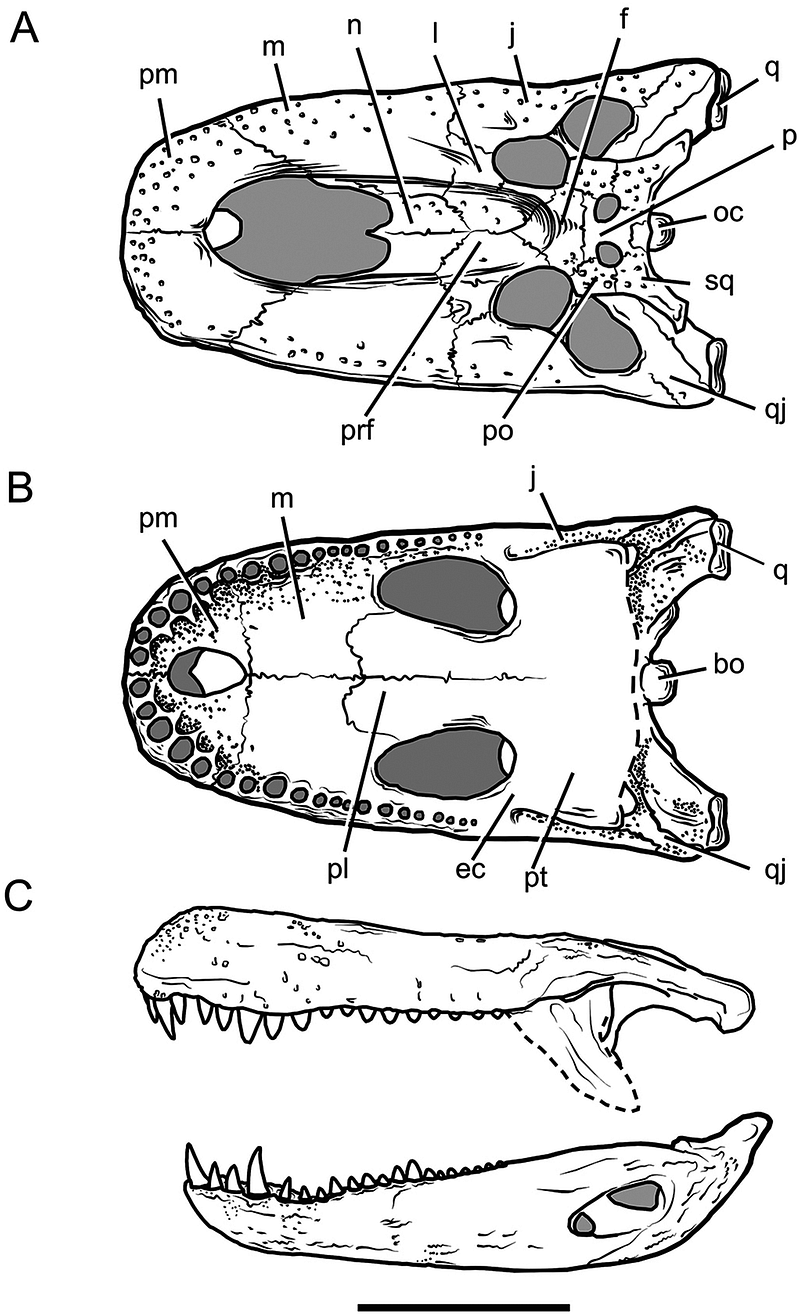
This enormous reptile lived between 20.4–5.3 million years ago and could have reached 10.9 meters (36 ft) in length and 5.6 tons in weight.
One study indicates that Purussaurus may have been heavier than either Sarcosuchus or Deinosuchus, as it had a much broader, shorter snout and this would require a thicker, stronger neck to support the larger head.
Its eyes, ears, and nostrils were at the very top of the head, suggesting that Purussaurus was an ambush predator like many modern caimans- perfectly adapted to thrive in the wetland systems of proto-Amazonia.
Purussaurus would have preyed upon sea turtles, birds, mammals (including sloths, bats, rodents, river dolphins) as well as other crocodilian species such as Charactosuchus, Gryposuchus, and Mourasuchus.
Notable Mentions
Below follows a brief mention of some equally large and specialized extinct crocodilians.
. Gryposuchus was a genus of gavialoid crocodilian found in Argentina, Colombia, Venezuela, Brazil, and the Peruvian Amazon. It grew to an estimated length of 10 meters (33 ft).
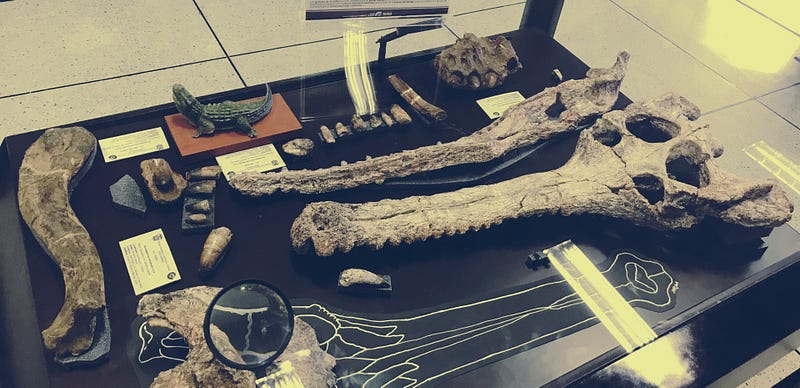
. Rhamphosuchus was a relative of the modern false gharial which lived during the Miocene in Pakistan and India. The animal may have been 8–11 m (26 to 36 ft) in length and had a narrow snout with multiple teeth for prey capture.
. At over 9 m (30 ft) long, Mourasuchus was a giant, aberrant caiman from the Miocene of South America, contemporary to Purussaurus. Its skull has been described as duck-like, being broad, flat, and very elongate. It presumably obtained its food by filter-feeding since its jaws were too gracile for the animal to have captured larger prey.
. Euthecodon was of long-snouted crocodylian common throughout much of Africa from the Early Miocene to the Early Pleistocene (23.03–0.781 million years ago). It is estimated to have been around 10 meters (33 ft) long.
Epilogue
Crocodiles, alligators, and caimans are members of an extremely successful group of reptiles whose ancestry dates back hundreds of millions of years. Their ability to hunt in both aquatic and terrestrial environments allowed them to flourish in almost every continent and to become a major threat for every animal that steps into their territory.
Their extinct relatives, larger and even more diverse, became a true menace in ecosystems dominated by giant dinosaurs and other mighty creatures. Thanks to their enormous size and powerful jaws these hyper-carnivores are great contenders for the title of the most ferocious cold-blooded reptiles that had ever existed.
Relevant Read
References
Adam P. Cossette; Christopher A. Brochu (2020). “A systematic review of the giant alligatoroid Deinosuchus from the Campanian of North America and its implications for the relationships at the root of Crocodylia”. Journal of Vertebrate Paleontology. Online edition: e1767638.
Brochu, Christopher A. (2003). “Review of King of the Crocodylians: The Paleobiology of Deinosuchus”. PALAIOS. 18 (1): 79–82. doi:10.1669/0883–1351(2003)018<0080:BR>2.0.CO;2
Connor, Steve (March 18, 1999). “Solved: Mystery of crocodile that feasted on dinosaurs”. The Independent. Independent News & Media.
Souza, Rafael G; Figueiredo, Rodrigo G; Azevedo, Sérgio A K; Riff, Douglas; Kellner, Alexander W A (2019–08–12). “Systematic revision of Sarcosuchus hartti (Crocodyliformes) from the Recôncavo Basin (Early Cretaceous) of Bahia, north-eastern Brazil”. Zoological Journal of the Linnean Society: zlz057. doi:10.1093/zoolinnean/zlz057. ISSN 0024–4082.
Haley D O’Brien, Leigha M Lynch; Kent A Vliet; John Brueggen; Gregory M Erickson; Paul M Gignac (2019). “Crocodylian Head Width Allometry and Phylogenetic Prediction of Body Size in Extinct Crocodyliforms”. Integrative Organismal Biology. 1 (1]). doi:10.1093/iob/obz006.
Jorge Moreno-Bernal (2007). “Size and Palaeoecology of Giant Miocene South American Crocodiles (Archosauria: Crocodylia)”. Journal of Vertebrate Paleontology. 27 (3 [suppl.]): A120. doi:10.1080/02724634.2007.10010458.
Aguilera, Orangel A.; Riff, Douglas; Bocquentin‐Villanueva, Jean (2006). “A new giant Purussaurus (Crocodyliformes, Alligatoridae) from the Upper Miocene Urumaco Formation, Venezuela”. Journal of Systematic Palaeontology. 4 (3): 221–232. doi:10.1017/S147720190600188X. ISSN 1477–2019


