
Caring Dinosaur Parent Gave Its Life While Nurturing Its Young
The animal died while protecting its egg-filled nest…
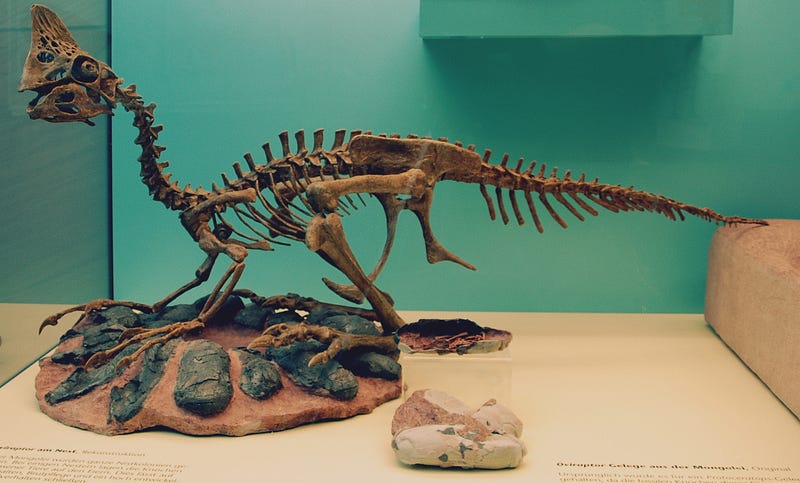
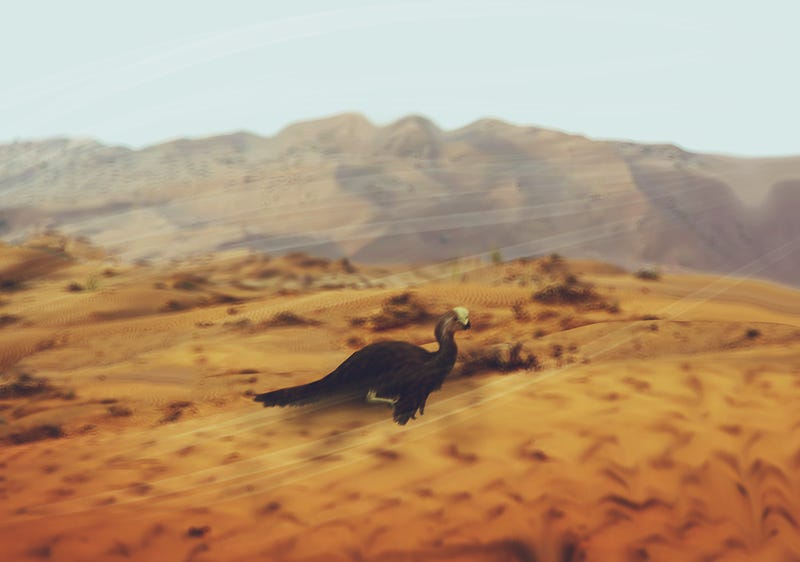
In the semiarid steppe landscape of Late Cretaceous China, a small, feathered dinosaur crouches over its nest. The nest contains over a dozen small, oval-shaped eggs, some of which are days before hatching. The parent gracefully positions itself atop the nest to keep them warm. Suddenly, a flash flood disrupts the tranquil scene, smothering everything in its path. The adult dinosaur hugs the nest with its arms, in a fruitless effort to protect its young…
Almost 70 million years later, a multinational team of scientists would examine the remains of the fossilized dinosaur and its nest, announcing an amazing discovery for the world of paleontology.
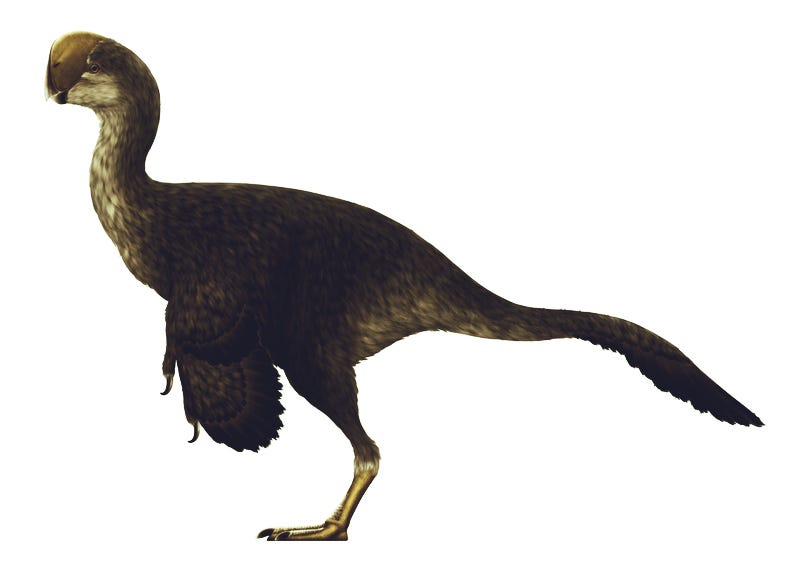
Scientists would not identify the exact genus of the dinosaur because the animal’s skull is missing. Yet they know it must have belonged to an oviraptorid, a group of bird-like feathered theropods with hollow bones, and three toes on each foot. These creatures had short skulls with toothless beaks and they thrived during the Late Cretaceous (84–66 million years ago) Period in China and Mongolia.
A caring parent
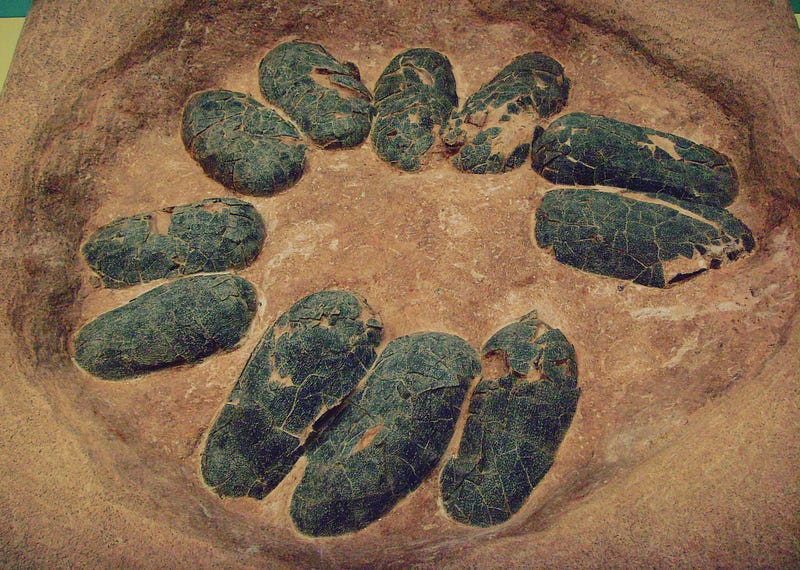
However remarkable, this is not the first discovery of an oviraptorid sitting atop its own nest. What sets this specimen apart from previous finds is that some eggs inside the nest contain fossilized embryos. At least seven of them preserve bones or partial skeletons of unhatched baby dinosaurs.
“This is the first time that combination has been found of an adult dinosaur sitting atop a nest of its eggs that are known to contain unhatched babies inside,” said Matt Lamanna, the curator of vertebrate paleontology at the Carnegie Museum of Natural History.
The fact that some embryos were close to hatching suggests that the parent incubated its nest for a prolonged period of time- in a fashion similar to modern birds, rather than simply guarding it like a crocodile.
“This kind of discovery — in essence, fossilized behavior — is the rarest of the rare in dinosaurs,” Lamanna said. “Though a few adult oviraptorids have been found on nests of their eggs before, no embryos have ever been found inside those eggs. In the new specimen, the babies were almost ready to hatch, which tells us beyond a doubt that this oviraptorid had tended its nest for quite a long time. This dinosaur was a caring parent that ultimately gave its life while nurturing its young.”
An undeserved reputation
In 1923, naturalist Roy Chapman Andrews unearthed the first remains of an oviraptorid dinosaur during his famous expedition in the reddish sandstones of the Djadokhta Formation of Mongolia.
Andrews found the skeleton of a small theropod lying over a nest of approximately 15 eggs. His initial thought was that the small dinosaur had broken into the nest of another species and attempted to feed on them. Based on this assumption, he named the new dinosaur Oviraptor, which translates to “egg thief”.
It would take many decades for scientists to conclude that the nest actually belonged to the animal itself. Rather than having the vicious egg-feeding habits Andrews imagined, these animals were in fact devoted parents that protected their young.
Epilogue
The latest discovery of the fossilized oviraptorid sitting above its soon-to-hatch babies proves that some dinosaurs were indeed affectionate parents willing to give their lives for their offspring. The particular specimen from China also provides a shred of compelling behavioral evidence coming from an extinct animal, which is a rare occurrence in paleontology.
*The paper was published in the journal Science Bulletin. The primary authors are Indiana University of Pennsylvania professor Shundong Bi and Xing Xu, a paleontologist at the Institute of Vertebrate Paleontology and Paleoanthropology in Beijing. The fossil discovered about a decade ago within metropolitan Ganzhou City in Jiangxi Province and, according to researchers, will stay in China.
Relevant Read:
References
Bill O’Driscoll, (Jan. 2021), Carnegie Museum researchers find 1st dinosaur atop nest with unhatched babies, TRIB Live, Link: https://triblive.com/local/carnegie-museums-researchers-announce-worlds-first-fossilized-dinosaur-babies/
Hayes John, (Jan. 2021), Unique dinosaur find researched by Carnegie Museum paleontologists, Pittsburg Post-Gazette, Link: https://www.post-gazette.com/news/science/2021/01/11/dinosaur-eggs-Carnegie-Museum-Natural-History-Pittsburgh-China/stories/202101110145
Panos Grigorakakis is a journalist, particularly interest in history, evolutionary biology, anthropology and…ocean liners! Connect with him on Linkedin or say hi on Twitter.


.jpg)
