
Mesozoic Quick Fact Series:
Horns, Beaks & Impressive Frills: The Mighty Ceratopsians
Introducing the remarkable Triceratops and its kin…
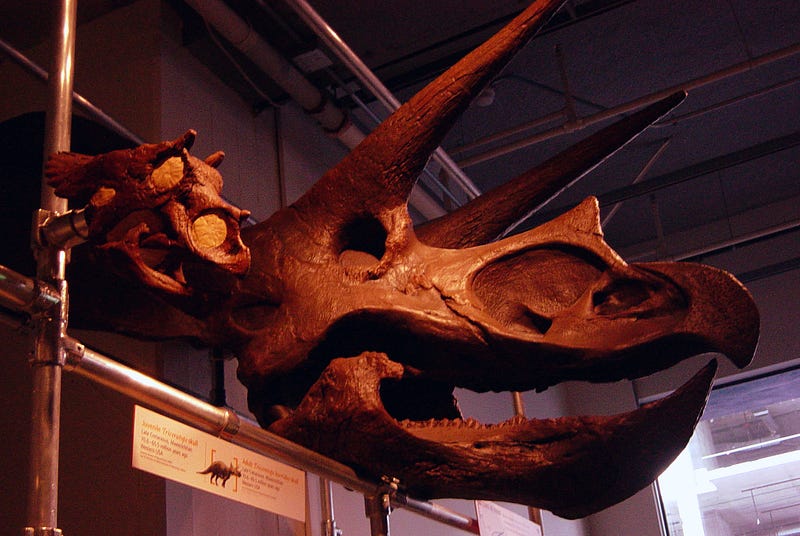
Mesozoic Quick Fact Series (MQFS) aims to provide interesting facts about various groups of extinct animals in a fun and readable way. We will focus on the highlights, so you don’t need to read extensive, time-consuming texts!
In this article, we will take a quick overview of Ceratopsia, a successful group of ornithischian dinosaurs that thrived in the Northern Hemisphere during the Late Cretaceous Period.
Let’s jump right through!
Starting with the basics…
The name Ceratopsia translates to ‘horned faces’. It is derived from the Greek kéras meaning ‘horn’ and ópsis meaning ‘appearance, view’ and by extension ‘face’. Although ‘-ceratops’ is the preferred suffix used in ceratopsian names, this is not always the case. Styracosaurus, Centrosaurus, Chasmosaurus, and Psittacosaurus are famous ceratopsians that don’t follow the aforementioned trend.
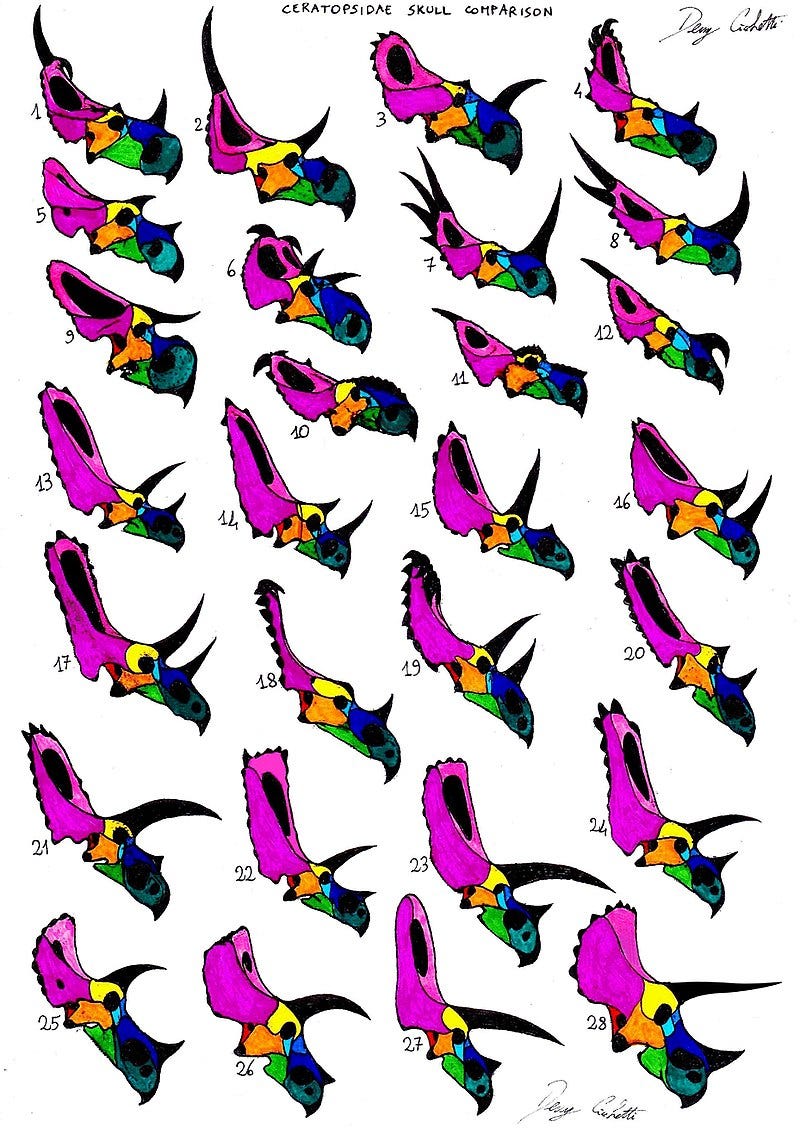
Early members of the group were small bipedal animals. Later forms, though, became very large quadrupeds and developed elaborate facial horns and frills extending over their neck.
When did they live?
Ceratopsians evolved roughly 160 million years ago, during the Late Jurassic Period. They disappeared from the face of the Earth during the Cretaceous-Paleogene mass extinction event, some 66 million years ago.
…and where?
So far, definite members of the group are only found in Asia, North America, and Europe. Possible ceratopsians from the Southern Hemisphere include the Serendipaceratops from Australia and Notoceratops from Argentina. Both of them, however, are only known from fragmentary remains, and most scientists consider them dubious.
How large were they?
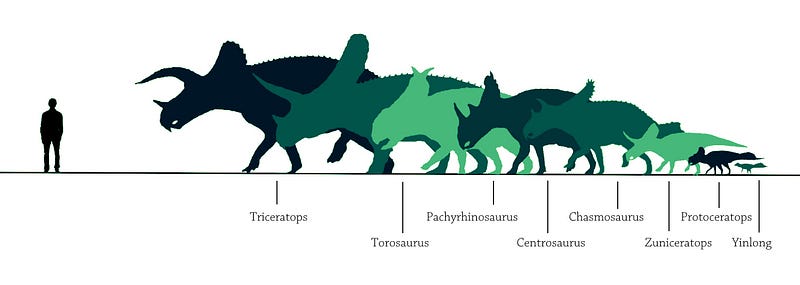
The smallest ceratopsians, like Yinlong, were only about 1.2 meters (3.9 ft) long and weighed roughly 15 kg (33 lb). In contrast, Triceratops and Torosaurus were true giants, growing up to 8–9 m (26–30) ft long and weighing anywhere between 6–12 tonnes!
Any cool names?
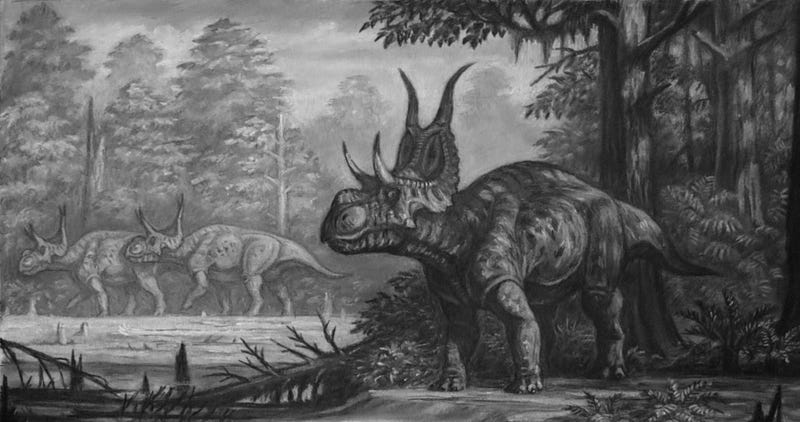
Most ceratopsian genera had really cool names, but let’s just now focus on two: Diabloceratops eatoni and Titanoceratops ouranos!
The 5.5 m (18.0 ft)-long centrosaurine Diabloceratops translates to “devil-horned face”. The name is a reference to the ceratopsian’s large pair of upward and sideways curving horns on the back of its frill.
The name of the large chasmosaurine Titanoceratops is inspired by the Titans of Greek mythology, the generation of gods preceding the Olympians. The species name ouranos refers to Uranus, the father of the Titan race.
In popular culture:
Triceratops is by far the most recognizable ceratopsian and one of the most famous dinosaurs in popular culture. From The Land Before Time (1988) to Jurassic Park (1993), this animal is portrayed prominently in countless films, documentaries, and books.
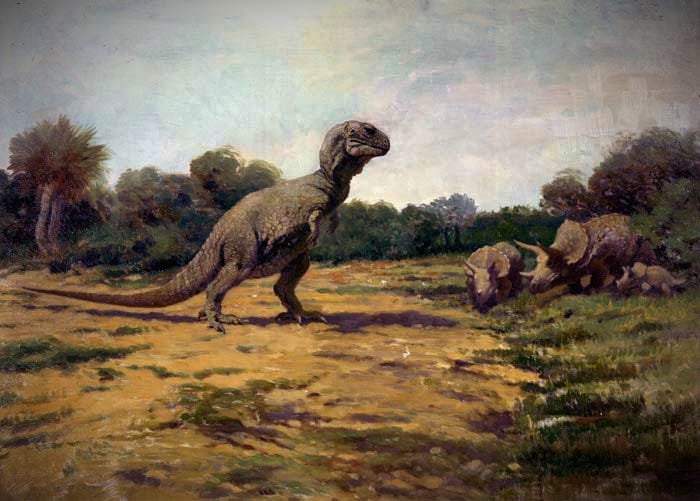
Thanks to Charles R. Knight’s famous painted mural (1942) in the Field Museum of Natural History, Triceratops established itself as the arch-rival of the mighty Tyrannosaurus rex. Since then, the two animals are depicted together in numerous museum displays and popular images.
This ceratopsian is also the official state dinosaur of Wyoming.
Did you know…?
. The reconstructed skulls of Titanoceratops and Torosaurus measure over 2.50 meters (8.7 ft) long, making them candidates for the longest skulls of any land animal.
. The primitive Psittacosaurus is notable for being the most species-rich dinosaur genus. Twelve species of this small ceratopsian have been named so far.
Relevant Reads:
References
Paul G.S.,(2010), Dinosaurs A Field Guide, A&C Black Publishers Ltd
Brusatte S., (2018), “The Rise and Fall of the Dinosaurs: A New History of a Lost World”, William Morrow
Holtz, Thomas R. Jr. (2011) Dinosaurs: The Most Complete, Up-to-Date Encyclopedia for Dinosaur Lovers of All Ages
Weishampel, David B.; Dodson, Peter; Osmólska, Halszka, eds. (2004). The Dinosauria (2nd ed.). Berkeley: University of California Press
Carpenter, K. (2006). “Bison” alticornis and O.C. Marsh’s early views on ceratopsians”. In Carpenter, K. (ed.). Horns and Beaks: Ceratopsian and Ornithopod Dinosaurs. Bloomington and Indianapolis: Indiana University Press
Marsh, O.C. (1889). “Notice of gigantic horned Dinosauria from the Cretaceous”. American Journal of Science
Dodson, P. (1996). The Horned Dinosaurs. Princeton, New Jersey: Princeton University Press
Hatcher, J. B.; Marsh, O. C.; Lull, R. S. (1907). The Ceratopsia. Washington, D.C.: Government Printing Office


