75-Million-Year-Old Dinosaur Suffered From Malignant Bone Cancer
The animal did not die because of the illness, though…
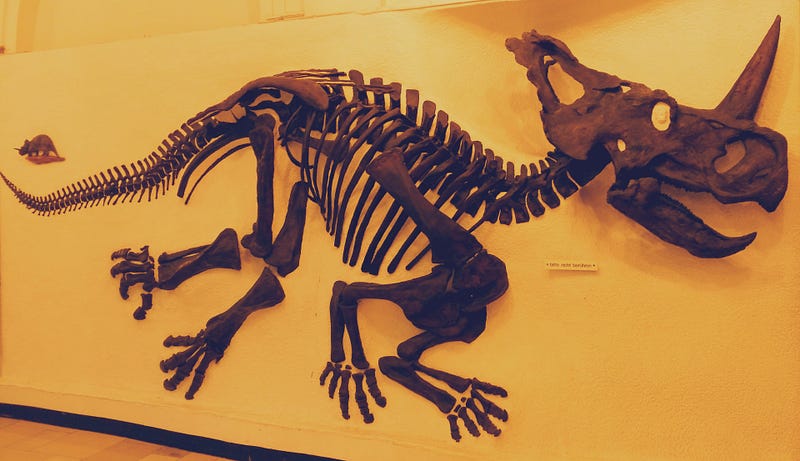
Despite their might and seemingly invincible nature, dinosaurs did occasionally fall victims to serious diseases and illnesses.
Scientists have previously discovered that duck-billed hadrosaurs suffered from arthritis, and benign tumors have been identified in their fossils as well as in some tyrannosaurid specimens. Paleontologists from Canada’s Royal Ontario Museum and McMaster University, however, are the first to confirm a dinosaur cancer diagnosis at the cellular level.
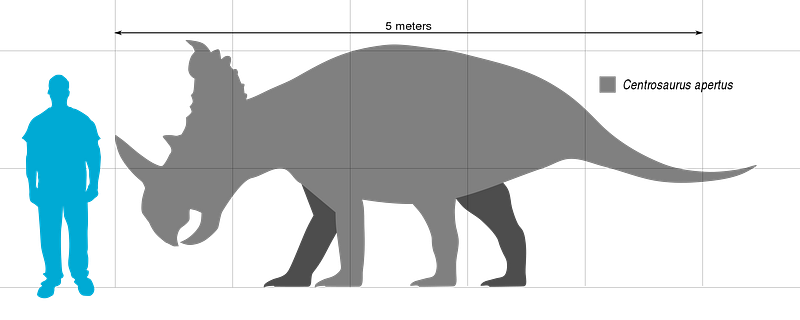
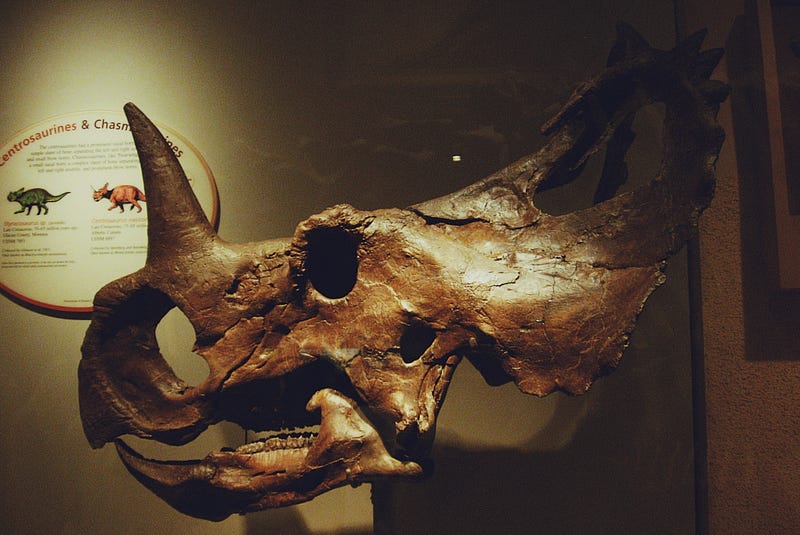
Scientists examined the lower leg bone (fibula) of a Centrosaurus apertus, a 5.5m (18.0 ft)-long plant-eater discovered in Alberta, and concluded that the 75-million-year-old dinosaur suffered from osteosarcoma — the same malignant bone cancer that afflicts about 3.4 out of every million people worldwide.
The study
For the purposes of the study, paleontologists assembled a team of multidisciplinary specialists and medical professionals from various fields including pathology, radiology, and orthopedic surgery.
Using high-resolution computerized tomography scans and examining thin sections under the microscope to evaluate the structure of the cells, scientists could confirm that their prehistoric patient suffered from osteosarcoma.
The team further affirmed its results by comparing the bone to the fibula of a healthy Centrosaurus and that of a human with osteosarcoma. They also found that the tumor was at an advanced stage, so it must have plagued the animal for quite some time.
“What this study shows, because we found bone cancer at quite an advanced stage, is that dinosaurs were not only afflicted by bone cancer but probably all sorts of other cancers that we see in vertebrates today,” says David Evans, a paleontologist at the Royal Ontario Museum and one of the study’s lead researchers.
Safety in numbers
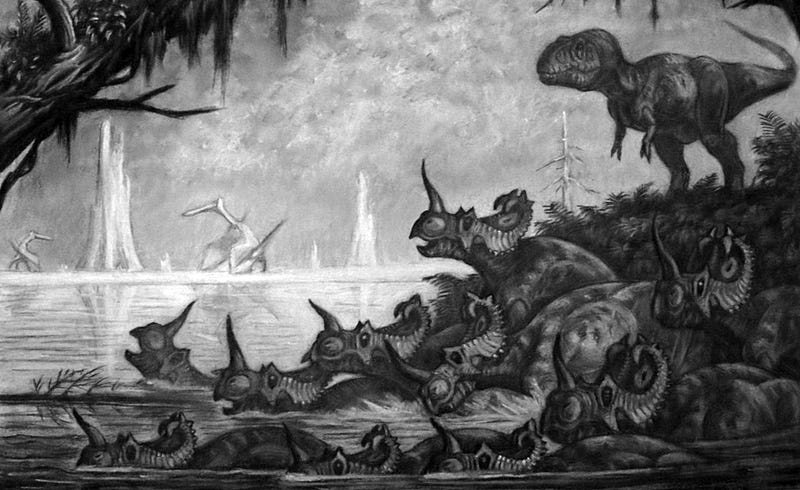
The pivotal bone did not belong to a solitary individual. The specimen was rather part of a large bone bed containing the remains of tens or perhaps hundreds of animals dying together at the same time. Scientists suggest that the herd was suddenly swept by a flash flood that ripped along an ancient coast.
The herd provided protection for the afflicted individual who would otherwise struggle to survive with cancer at such a progressive stage. Its declining health combined with a solitary lifestyle would have made it an easy target for Daspletosaurus or Gorgosaurus, the two large tyrannosaurids unearthed from the same rock formations.
“If you are a sick, horned dinosaur, being able to blend in with others of your kind will probably buy you some time versus being out solo,” says Andrew Farke of the Raymond M. Alf Museum of Paleontology.
“The cancer was able to progress to the stage that it did because of the safety in numbers of the herd that it lived in,” adds Evans.
Epilogue
The discovery of osteosarcoma in dinosaur bones provides valuable insights to scientists working in the fields of paleontology and paleopathology. According to David Evans, it also gives a fresh, more authentic look at the way we perceive dinosaurs.
“We often think of dinosaurs as sort of mythical, powerful creatures, and I think this discovery really underscores that they can be afflicted by diseases that we see around us today, even horrible fatal cancers,” Evans says. “I think in an odd way it brings them even more back to life.”
The study was published in The Lancet in August 2020.
Relevant Read:
References
Seper Ekhtiari, Kentaro Chiba, Snezana Popovic, Rhianne Crowther, Gregory Wohl, Andy Kin On Wong, Darren H Tanke, Danielle M Dufault, Olivia D Geen, Naveen Parasu, Mark A Crowther, David C Evans. First case of osteosarcoma in a dinosaur: a multimodal diagnosis. The Lancet Oncology, 2020; 21 (8): 1021 DOI: 10.1016/S1470–2045(20)30171–6
Black Riley, (2020), Dinosaurs Suffered From Cancer, Too, Smithsonian Magazine, Link: https://www.smithsonianmag.com/science-nature/dinosaurs-suffered-cancer-too-180975467/
Vogel Gretchen, (2020), Doctors diagnose advanced cancer — in a dinosaur, Science Mag, Link:https://www.sciencemag.org/news/2020/08/doctors-diagnose-advanced-cancer-dinosaur