avatarPanos Grigorakakis

Free AI web copilot to create summaries, insights and extended knowledge, download it at here

2389

Abstract

eum of Natural History, Chicago, Illinois / James St. John / <a href="https://commons.wikimedia.org/wiki/File:Tyrannosaurus_rex_theropod_dinosaur_(Hell_Creek_Formation,_Upper_Cretaceous;_near_Faith,_northwestern_South_Dakota,_USA)_3_(15340794381).jpg">Wikimedia Commons</a></figcaption></figure><h1 id="a52d">Confirming the Pattern</h1><p id="86ac">The latest finds are not surprising: scientists have reported similar discoveries in the past. In 2010, paleontologist Nickolas Longrich of Yale University documented four <a href="https://readmedium.com/t-rex-beyond-the-pop-culture-monster-f7fedc063e24"><b>Tyrannosaurus rex</b></a><b> </b>bones that bore divots and gouges. In 2015, a Tyrannosaurus limb bone found in Wyoming showed signs of injuries made by large, serrated teeth. These injuries could only have been made by another T.rex since the ‘tyrant lizard king’ was the only carnivore large enough and around at the time that could inflict such damage.</p><p id="ef6c">Were tyrannosaurs abnormal for having a taste for their own flesh and blood? Hans-Dieter Sues, curator of vertebrate paleontology at the National Museum of Natural History in Washington gives a negative answer:</p><blockquote id="7ab7"><p><i>“Meat-eaters of all kinds feed on dead animals, which, after all, are just meat lying around for the taking. Even pigs, which are omnivores, eat other dead pigs. There is nothing remarkable about this at all.”</i></p></blockquote><figure id="9d41"><img src="https://cdn-images-1.readmedium.com/v2/resize:fit:800/1*con7lDndlHaAtkeGEpKDvA.jpeg"><figcaption>Outdated display of a pair of Tyrannosaurus fighting over a carcass / William Diller Matthew /<a href="https://commons.wikimedia.org/wiki/File:Tyrannosaurus-group.jpg#filelinks"> Wikimedia Commons</a></figcaption></figure><h1 id="daf3">Epilogue</h1><p id="6696">However gruesome, cannibalism is a frequent practice employed by many contemporary predators, including crocodiles and komodo dragons. Evidence shows that tyrannosaurs were also opportunistic carnivores that did not pass a free meal, even if it came from a member of their own species. The brutal nature of these dinosaurs could explain their resilience and their successful rise at the top of the prehistoric food chain.</p><blockquote id="e787"><p>To get a more complete picture of the paleobiology of Tyrannosaurus, click the article below:</p></bl

Options

ockquote><div id="d459" class="link-block"> <a href="https://readmedium.com/t-rex-the-reign-of-the-king-20bd3cc1c1e0"> <div> <div> <h2>T.rex: The Reign of The King</h2> <div><h3>Exploring the origins and the paleobiology of the ‘tyrant lizard king’…</h3></div> <div><p>medium.com</p></div> </div> <div> <div style="background-image: url(https://miro.readmedium.com/v2/resize:fit:320/1*Ypxz43pmFi2_Rkpg-RvvRg.jpeg)"></div> </div> </div> </a> </div><h1 id="6ef2">Note</h1><p id="4156"><i>The term ‘tyrannosaurs’ in this story refers to the members of the Tyrannosauridae, which includes genera like Lythronax, Albertosaurus, Daspletosaurrus, and of course Tyrannosaurus itself.</i></p><h1 id="abd1">References</h1><p id="d1af"><i>Dalman, Sebastian & Lucas, Spencer. (2021). New evidence for cannibalism in tyrannosaurid dinosaurs from the upper Cretaceous (Campanian/Maastrichtian) San Juan of New Mexico. <b>Link:</b> <a href="https://www.researchgate.net/publication/348002335_NEW_EVIDENCE_FOR_CANNIBALISM_IN_TYRANNOSAURID_DINOSAURS_FROM_THE_UPPER_CRETACEOUS_CAMPANIANMAASTRICHTIAN_SAN_JUAN_BASIN_OF_NEW_MEXICO">https://www.researchgate.net/publication/348002335_NEW_EVIDENCE_FOR_CANNIBALISM_IN_TYRANNOSAURID_DINOSAURS_FROM_THE_UPPER_CRETACEOUS_CAMPANIANMAASTRICHTIAN_SAN_JUAN_BASIN_OF_NEW_MEXICO</a></i></p><p id="3d8e"><i>Black Riley, (2015), What Was on the T. Rex Menu? Sometimes Each Other, National Geographic, <b>Link:<a href="https://www.nationalgeographic.com/news/2015/10/151030-tyrannosaurus-rex-cannibal-menu-eat-science/"></a></b><a href="https://www.nationalgeographic.com/news/2015/10/151030-tyrannosaurus-rex-cannibal-menu-eat-science/">https://www.nationalgeographic.com/news/2015/10/151030-tyrannosaurus-rex-cannibal-menu-eat-science/</a></i></p><p id="08d4"><i>Handwerk Brian, (2010), T. Rex Was a Cannibal, Bone Gashes Suggest, National Geographic, <b>Link: <a href="https://www.nationalgeographic.com/news/2010/10/101015-t-rex-cannibals-paleontology-science/"></a></b><a href="https://www.nationalgeographic.com/news/2010/10/101015-t-rex-cannibals-paleontology-science/">https://www.nationalgeographic.com/news/2010/10/101015-t-rex-cannibals-paleontology-science/</a></i></p></article></body>

Tyrannosaurs Were Blood-Thirsty Cannibals After All

Recent finds from New Mexico confirm that tyrannosaurs engaged in cannibalistic behavior…
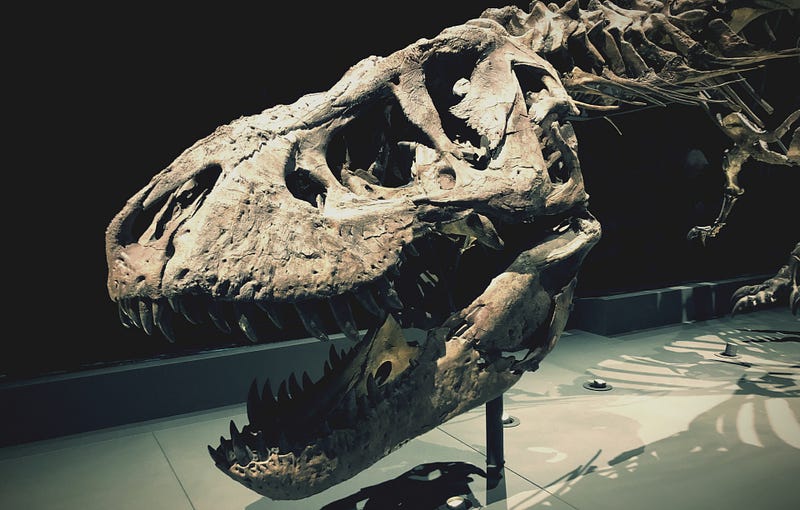
T.rex skeleton / Photo by Hay Kranen / Wikimedia Commons

Tyrannosaurs, the family of dinosaurs that includes the eponymous T.rex, were the apex predators of their ecosystems during the latest part of the Cretaceous Period (80–66 million years ago). Thanks to their powerful jaws and large teeth, these ferocious carnivores could prey upon any animal they wanted, including even members of their own species. That’s right: the terrifying tyrannosaurs may have also been cannibals.

Evidence from New Mexico

Recent evidence from the San Juan Basin in New Mexico confirms the idea that tyrannosaurs engaged in cannibalistic behavior from time to time.

Three newly found partial bones pertaining to adult, subadult, and juvenile tyrannosaurs preserve several bite marks and other feeding traces left by another tyrannosaur. The bones include an isolated anterior left dentary (bone of the lower jaw), a proximal caudal centrum (tail vertebrate), and an isolated right femur (thigh bone).

The bite marks in the dentary preserve signs of healing, meaning that the biting occurred when the animal was alive. In contrast, the other two bones (the caudal centrum and the right femur) lack the bone surface healing around the bite marks, indicating that the biting took place when the animal was already dead.

Even though the new finds were not attributed to a specific genus, they demonstrate that the tyrannosaurs of the San Juan Basin fed upon the remains of not only their most common prey (such as the horned ceratopsians, or the duckbilled hadrosaurs) but also their conspecifics (members of the same species).
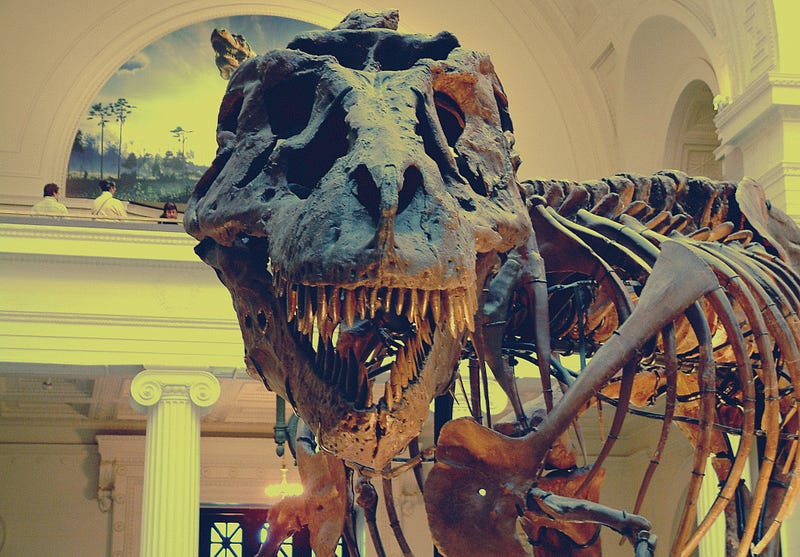
‘Sue’, the Tyrannosaurus at Field Museum of Natural History, Chicago, Illinois / James St. John / Wikimedia Commons

Confirming the Pattern

The latest finds are not surprising: scientists have reported similar discoveries in the past. In 2010, paleontologist Nickolas Longrich of Yale University documented four Tyrannosaurus rex bones that bore divots and gouges. In 2015, a Tyrannosaurus limb bone found in Wyoming showed signs of injuries made by large, serrated teeth. These injuries could only have been made by another T.rex since the ‘tyrant lizard king’ was the only carnivore large enough and around at the time that could inflict such damage.

Were tyrannosaurs abnormal for having a taste for their own flesh and blood? Hans-Dieter Sues, curator of vertebrate paleontology at the National Museum of Natural History in Washington gives a negative answer:

“Meat-eaters of all kinds feed on dead animals, which, after all, are just meat lying around for the taking. Even pigs, which are omnivores, eat other dead pigs. There is nothing remarkable about this at all.”
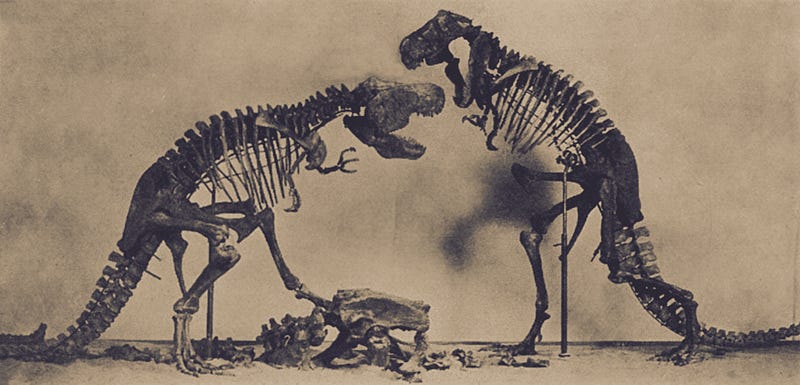
Outdated display of a pair of Tyrannosaurus fighting over a carcass / William Diller Matthew / Wikimedia Commons

Epilogue

However gruesome, cannibalism is a frequent practice employed by many contemporary predators, including crocodiles and komodo dragons. Evidence shows that tyrannosaurs were also opportunistic carnivores that did not pass a free meal, even if it came from a member of their own species. The brutal nature of these dinosaurs could explain their resilience and their successful rise at the top of the prehistoric food chain.

To get a more complete picture of the paleobiology of Tyrannosaurus, click the article below:

Note

The term ‘tyrannosaurs’ in this story refers to the members of the Tyrannosauridae, which includes genera like Lythronax, Albertosaurus, Daspletosaurrus, and of course Tyrannosaurus itself.

References

Dalman, Sebastian & Lucas, Spencer. (2021). New evidence for cannibalism in tyrannosaurid dinosaurs from the upper Cretaceous (Campanian/Maastrichtian) San Juan of New Mexico. Link: https://www.researchgate.net/publication/348002335_NEW_EVIDENCE_FOR_CANNIBALISM_IN_TYRANNOSAURID_DINOSAURS_FROM_THE_UPPER_CRETACEOUS_CAMPANIANMAASTRICHTIAN_SAN_JUAN_BASIN_OF_NEW_MEXICO

Black Riley, (2015), What Was on the T. Rex Menu? Sometimes Each Other, National Geographic, Link:https://www.nationalgeographic.com/news/2015/10/151030-tyrannosaurus-rex-cannibal-menu-eat-science/

Handwerk Brian, (2010), T. Rex Was a Cannibal, Bone Gashes Suggest, National Geographic, Link: https://www.nationalgeographic.com/news/2010/10/101015-t-rex-cannibals-paleontology-science/

Dinosaurs
Tyrannosaurus
Paleontology
Science
Cannibalism
Recommended from ReadMedium