
T.rex: The Reign of The King
Exploring the origins and the paleobiology of the ‘tyrant lizard king’…
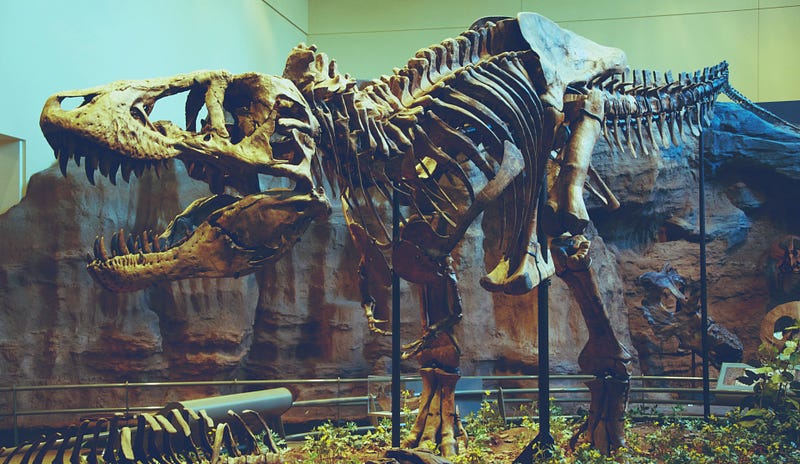
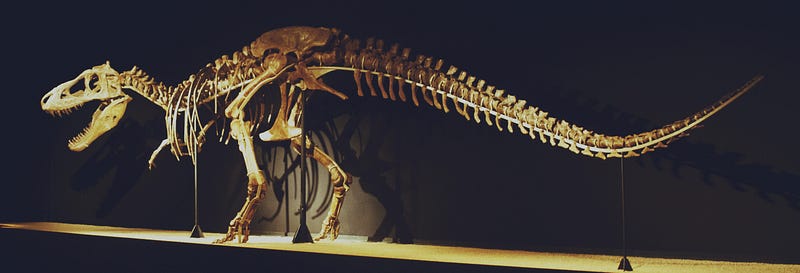
Ask anyone to name a dinosaur species and chances are they’ll think of T.rex. Since its official description in 1905, Tyrannosaurus captured the world’s imagination and quickly obtained fame unparalleled by any other prehistoric animal. Unfortunately, our perception of this remarkable creature is often significantly different from the actual predator that lived in western North America 66 million years ago.
To get a more accurate picture of the ‘tyrant lizard king’ we need to steer away from popular culture stereotypes and to focus instead on the available scientific data. Fortunately, T.rex is the most well-studied dinosaur in science, so there is a plethora of information about it.
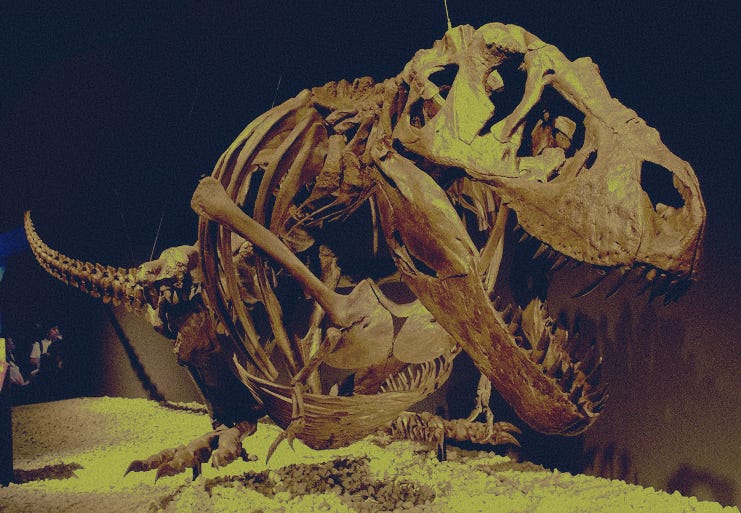
We broke our tribute to Tyrannosaurus into two parts in order to be more digestible:
. Part 1 focused on debunking common misconceptions about Tyrannosaurus and providing information regarding its general description.
You can find the first part below:
. Part 2 covers a few more aspects of T.rex’s paleobiology as well as its evolutionary history and its paleoenvironment.
(Beginning of Part 2)
Growth
Tyrannosaurs in general and T.rex, in particular, grew quite fast. Scientists noticed that the tyrannosaur growth curve was S-shaped, meaning that juvenile animals experienced tremendous growth spurts during adolescence.
It is estimated that juvenile tyrannosaurs remained under 1,800 kg (4,000 lb) until approximately 14 years of age. At about this time, their body size began to increase dramatically. During the rapid growth phase, a young T. rex would gain an average of 600 kg (1,300 lb) every year for the next four years. Between 18-20 years of age, the curve flattened again, indicating that the animal reached sexual maturity. The growth rate was dramatically reduced when animals reached adult size.
To learn more about the unique growth pattern of T.rex, read the article below:
Behavioral Traits
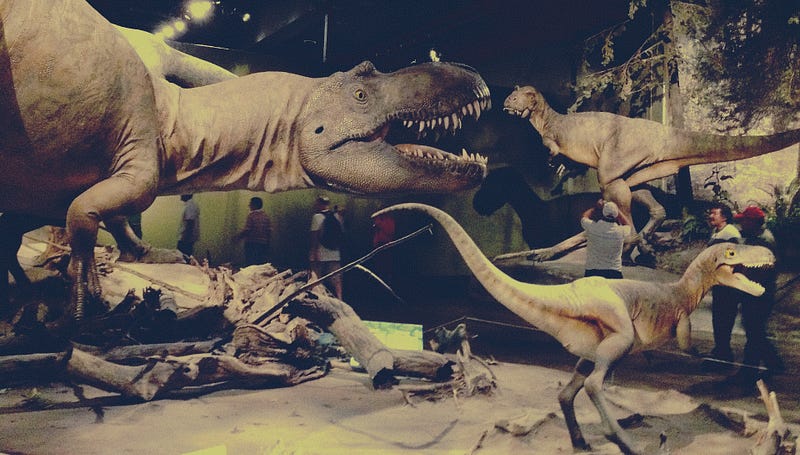
Even though Tyrannosaurus is often portrayed as a solitary individual, it may have been a social animal.
Fossils of over 26 individuals of the tyrannosaurid Albertosaurus were found together in Canada, suggesting that tyrannosaurs may have lived and hunted in deadly gangs. Specimens included both adult and juvenile animals at various stages of development. Similar discoveries come from Montana, where three skeletons of the tyrannosaurid Daspletosaurus were found together in the same bone bed. The bone bed included the remains of a large adult animal, a small juvenile, and another individual of intermediate size.
To some paleontologists, these kinds of discoveries prove that advanced tyrannosaurs (and thus maybe T.rex itself) were living in groups and formed deadly packs. Other scientists, however, remain skeptical. They suggest that the social interaction involved in these theropods would have more closely resembled the modern Komodo dragon, where non-cooperative individuals mob carcasses, frequently attacking and even cannibalizing each other in the process.
Origins, Evolution & Feathers
Tyrannosaurs first appeared during the Jurassic Period (200–145 million years ago) and remained small for most of their 100 million-year-long existence. Those small carnivores were agile, uncommon, and most importantly feathered.
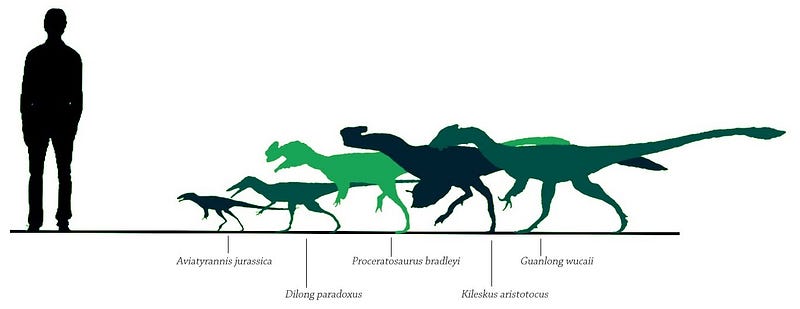
Considering its feathered origins, it was proposed that T.rex may have been fully feathered too. Hair of some kind may have been present, even though recent studies based on pieces of skin impressions suggested Tyrannosaurus had mostly scaly skin. Feathering, if any, would have been limited in the upper trunk or the postcranial area.
You may read more about tyrannosaurs below:
During the Cretaceous Period that followed, tyrannosaurs further radiated but remained under the shadows of other theropod groups such as the allosauroid carcharodontosaurs and the semi-aquatic spinosaurs. It was only after the decline of these giant predators that tyrannosaurs evolved larger size and became the dominant predators of the Northern Hemisphere.
To find out more about the terrifying allosaurs read the article below:
Roughly 10 million years before the appearance of T.rex, tyrannosaurids such as Albertosaurus, Gorgosaurus, and Daspletosaurus ruled the North American continent assuming the apex predator roles of their ecosystems.
Phylogenetic analysis showed that rather than being directly related to its North American cousins, Tyrannosaurus shared more similarities with Tarbosaurus and Zhuchengtyranus, two tyrannosaurids retrieved from Mongolia and China, respectively.
The ‘tyrant lizard king’ seems to have been an immigrant from Asia who out-competed its relatives in North America and became the only tyrannosaurid in the continent during the latest part of the Mesozoic Era. Having no remaining competitors, T.rex became quite widespread. Its territory ranged from Canada in the north to at least New Mexico in the south.
What’s On The Menu?
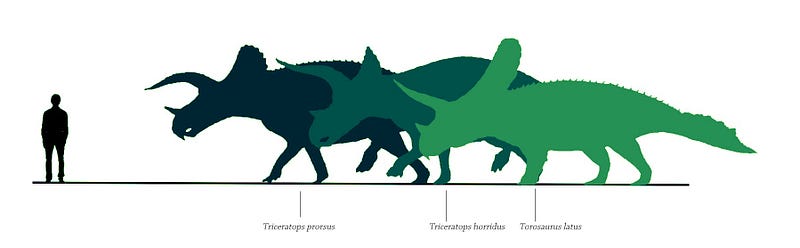
Late Cretaceous North America was a dangerous place to live, even for the largest carnivores and prey was difficult to catch. Big game predators like T.rex lived alongside ferocious herbivores such as the mighty Triceratops with its huge horns and the nearly identical ceratopsid Torosaurus.
Despite being a recurring theme across most dinosaur media, the iconic showdown between T.rex and Triceratops is only weakly backed up by scientific evidence. Or at least it was until recently.
A spectacular fossil containing a juvenile Tyrannosaurus and a full-grown Triceratops tangled together in possible epic combat could confirm that such violent interactions between these animals indeed took place 66 million years ago.
To learn more about the fascinating story of this unique fossil, click the article below:
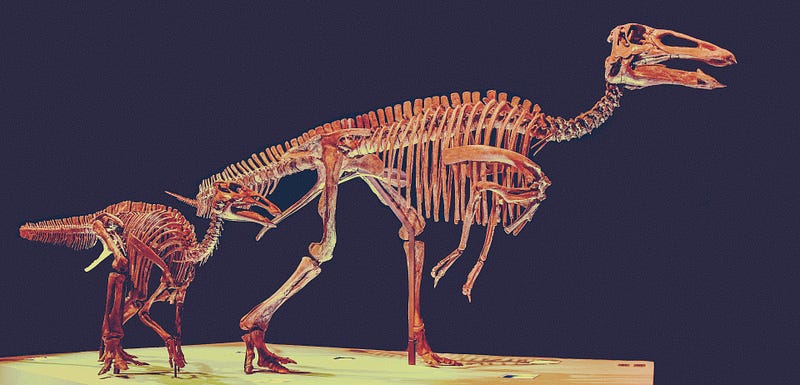
Late Cretaceous herbivore megafauna also included the armored Ankylosaurus (8m/26ft) and Denversaurus (6m/ 20ft) as well as the giant hadrosaurid (duck-billed dinosaur) Edmontosaurus (12–15m/ 40–49ft).
Covered in osteoderms, with bony half-rings covering its neck, and with a large club on the end of its tail, Ankylosaurus was well-defended against predators.
Lacking any obvious defensive features, Edmontosaurus was finding safety in numbers. It is suggested that groups of these animals could reach sizes of 10,000–25,000 individuals. A predator would have a much more hard task to attack a herd of so many large herbivores.
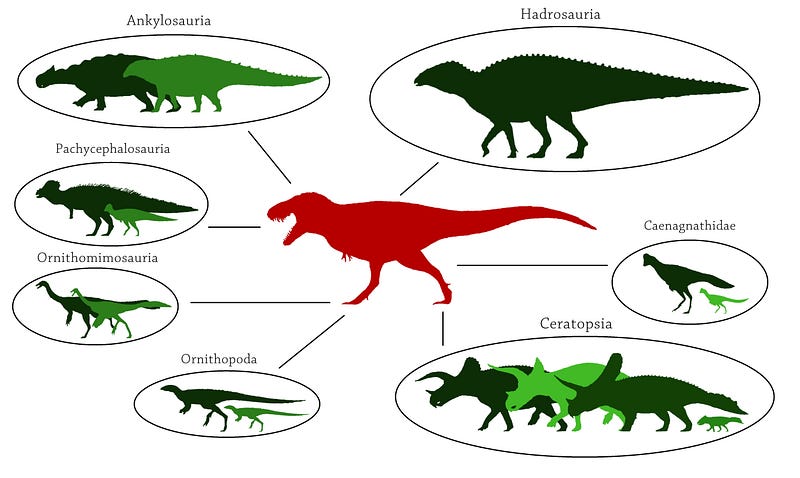
Smaller prey was also available as many groups of dinosaurs shared their environment with T.rex. Dome-headed pachycephalosaurs, fast-moving ornithomimosaurs, feathered caenagnathids, and small ornithopods were also part of the rich ecosystem during the Late Cretaceous Period of North America. Yet, each one posed a unique challenge to get, and tyrannosaurs should have implemented different hunting strategies if they were to make a kill.
When it didn’t hunt down other animals, T.rex could turn against members of its own species. Evidence suggests that tyrannosaurs, including T.rex, engaged in cannibalistic behavior from time to time. Researchers speculate Tyrannosaurus could attack a member of its own species either for territory dominance, food, or both.
To learn more about the available data supporting the idea of cannibalism in tyrannosaurs, read the article below:
Epilogue
Tyrannosaurus rex was a truly remarkable animal. It had lethal jaws, acute senses, a big brain, and possibly advanced social behavior skills. It was the last, biggest, and heaviest of its kind and among the largest carnivores to walk the earth. It was the apex predator of its ecosystem, a true king whose reign abruptly ended by the cataclysmic event that drove to extinction all non-avian dinosaurs 66 million years ago.
The skeleton of this ferocious animal is enough to inspire awe and wonder to museum visitors all over the world, but the bones alone are inadequate to picture the real portrait of this great predator when alive — a portrait so different from the one we are used to in popular culture.
References
Parrish J.M., Molnar R.E., Currie P.J., Koppelhus E.B.,(2013), Tyrannosaurid Paleobiology, Indiana University Press
Hone D.,(2016) The Tyrannosaur Chronicles, Bloomsbury Publishing Plc
Paul G.S.,(2010), Dinosaurs A Field Guide, A&C Black Publishers Ltd
Ligon S.,(2013), Unearthing a Pack of Albertosaurus, Link: https://www.ualberta.ca/science/dinosaurs/paleontology/the-people-of-paleo/philip-currie/profile-on-philip-currie
Loewen, Mark A; Irmis, Randall B; Sertich, Joseph J. W; Currie, Philip J; Sampson, Scott D (November 6, 2013). “Tyrant Dinosaur Evolution Tracks the Rise and Fall of Late Cretaceous Oceans”. PLOS ONE. 8 (11): e79420. Bibcode:2013PLoSO…879420L. doi:10.1371/journal.pone.0079420. PMC 3819173. PMID 24223179.


