
Closest T. Rex Relative May Have Been an Even Bigger Predator
Tyrannosaurus mcraeensis is a newly identified species of the eponymous T.rex.
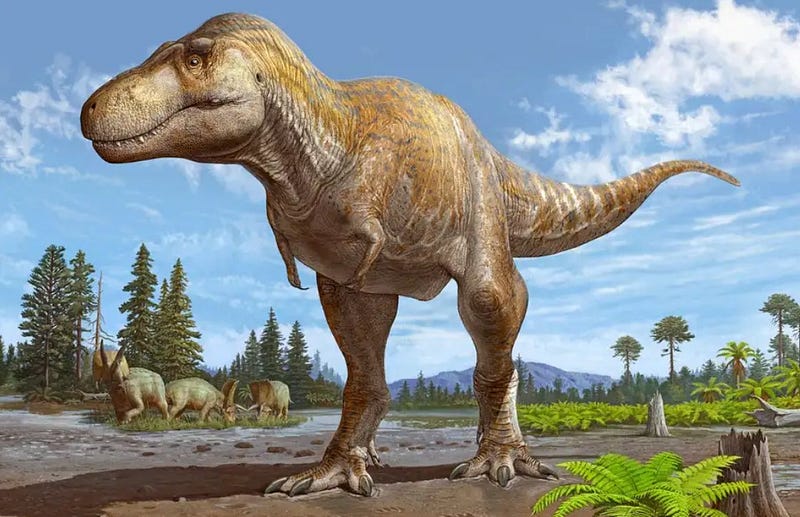
Tyrannosaurus mcraeensis is a newly identified species that ruled North America a few million years before the eponymous T.rex. According to a study published in the journal Scientific Reports, the new species is the closest known relative of the “tyrant lizard king” yet discovered.
And it may have grown even larger!
Spotting the Differences
The newfound species was identified from a partial fossilized skull that paleontologists unearthed back in 1983 while exploring the Hall Lake Formation in New Mexico. The skull was originally classified as belonging to a T. rex and has been displayed at the New Mexico Museum of Natural History and Science (NMMNHS) ever since.
But, Anthony Fiorillo at the NMMNHS and his colleagues re-examined the skull and noticed subtle yet suspicious anomalies in its shape. They propose that the specimen represents a distinct species, which they named Tyrannosaurus mcraeensis in reference to the McRae Group layers in which it was found.
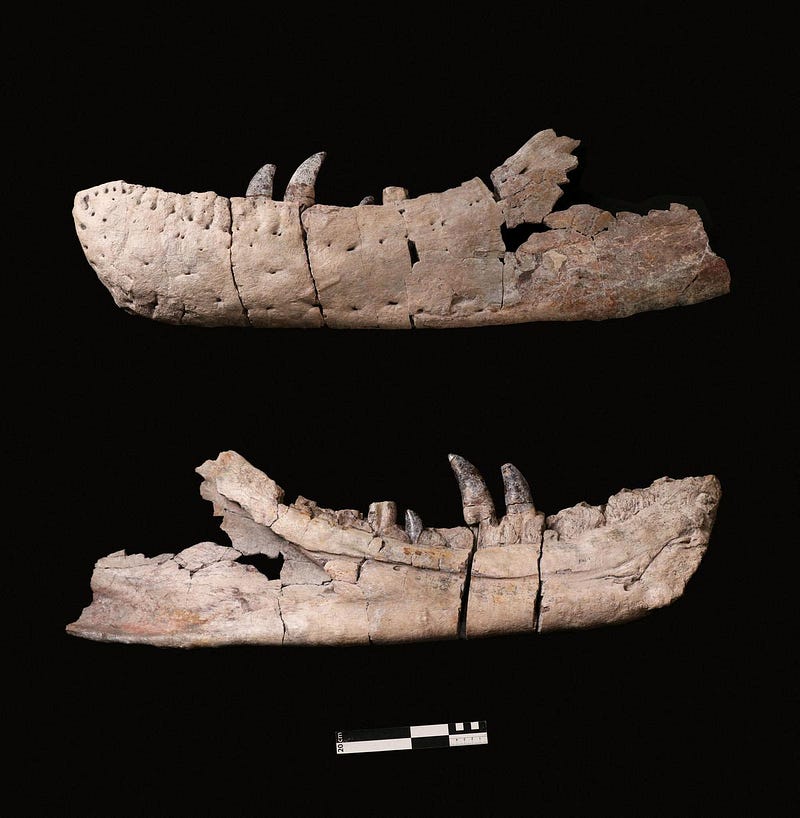
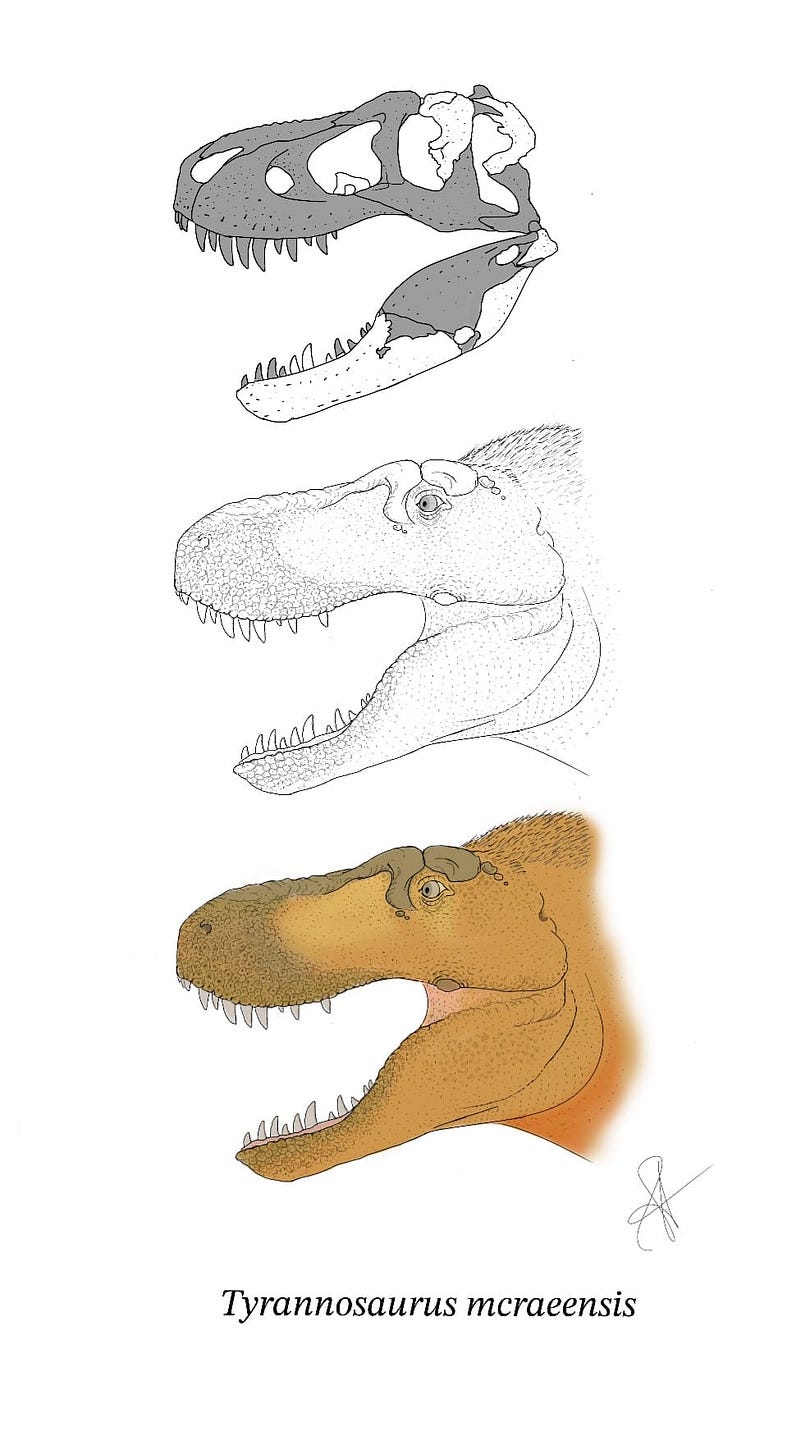
“The most striking difference is the shape of the lower jaw, which is more slender and curved [than T.rex],” study co-author Nick Longrich, a paleontologist at the University of Bath in the U.K., said. “It also lacks the prominent bosses or hornlets found over the top of the eyes in T. rex.”
T. mcraeensis also has fewer teeth than most other tyrannosaurs, which is one of the main reasons why the researchers believe it is T. rex’s closest relative — because T. rex also has fewer teeth, Longrich said.
Along with the above-mentioned morphological differences, the fossil comes from a much earlier age than the rest of the Tyrannosaurus rex specimens. The team revealed that the skull dates to between 73 million and 71 million years ago which makes T. mcraeensis between 3 million and 5 million years older than T. rex. This stark age difference was the main giveaway that they had discovered a new species.
Bigger than T.rex?
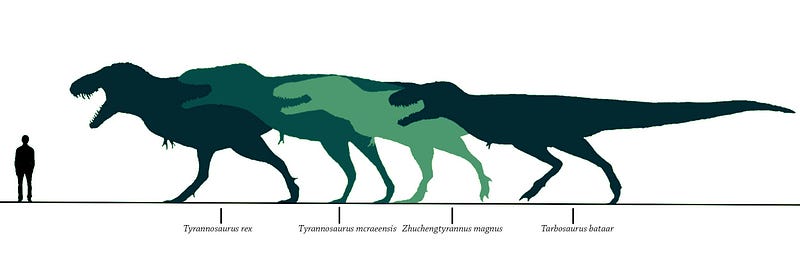
The size of the skull suggests this particular T. mcraeensis was around the same size as a typical adult T. rex, which grew to around 12 meters (39 feet) long. But other individuals of the same species may have been even larger.
“It’s not impossible” that T. mcraeensis could have been even larger than T. rex, Longrich said. “Since we only have one individual, it’s unlikely we’ve found the biggest individuals of the species.”
If T. mcraeensis and T.rex had existed at the same time, they would have “probably been pretty evenly matched” in a fight, he added.
Where Did T.rex Come From?
The discovery of T. mcraeensis provides new insights into the origins of the most famous predatory dinosaur.
Until now, the closest relatives of Tyrannosaurus rex were Tarbosaurus bataar and Zhuchengtyrannus magnus, a pair of Asian tyrannosaurs found in modern-day Mongolia and China respectively. Both species date back further than T. rex, which suggested its ancestors may have first emerged in Asia.
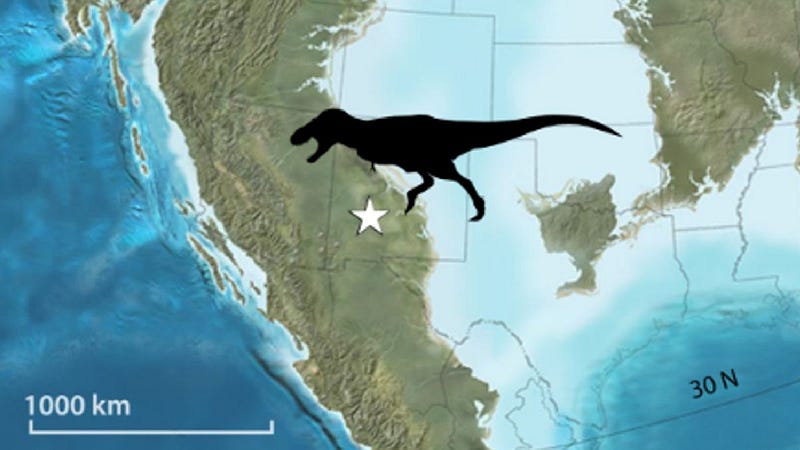
The new finding suggests that Laramidia (an ancient landmass that was made up of what is now the western coast of North America from Alaska down to Mexico) is a more likely origin of the T.rex lineage. This would imply that these predators later spread to Asia. As of now, however, no conclusive answer can be given on the subject.
Apex Predator
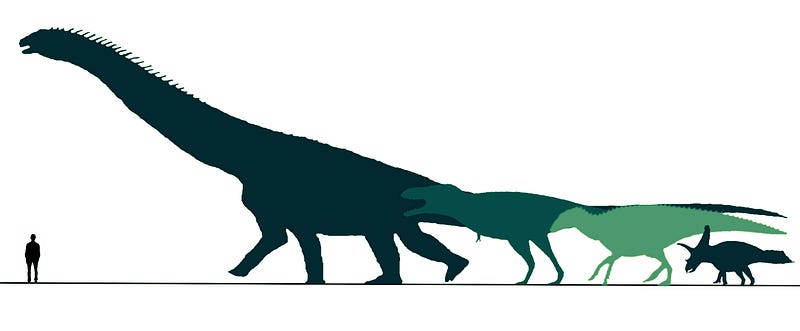
Tyrannosaurus mcraeensis was the apex predator of Laramidia during its age. The particular landmass was home to a wide variety of dinosaur species, including Sierraceratops turneri — a horned herbivore similar to Triceratops that was described in 2022. Duckbilled hadrosaurs and long-necked sauropods that could reach 30 meters (98 ft) in length are also found in the same rocks.
Fiorillo and his colleagues suggest the lineage leading to T. rex might have evolved their giant size to prey on these large herbivores and later spread northward. However, there is still uncertainty around this. Regardless of this assumption, the latest finding is further evidence that New Mexico is one of the best places in the world to search for new dinosaur species.
“Many new dinosaurs remain to be discovered in the state, both in the rocks and in museum drawers,” said study co-author Spencer Lucas, the curator of geology and paleontology at NMMNHS.
Epilogue
The discovery of Tyrannosaurus mcraeensis is truly remarkable.
The existence of such a large tyrannosaur several million years before T. rex hints that southwestern North America was an important center of dinosaur evolution and outlines a clearer picture of the last few million years of the Cretaceous Period.
Relevant Reads:
Source
Dalman, S.G., Loewen, M.A., Pyron, R.A. et al. A giant tyrannosaur from the Campanian–Maastrichtian of southern North America and the evolution of tyrannosaurid gigantism. Sci Rep 13, 22124 (2023). https://doi.org/10.1038/s41598-023-47011-0


