
60 days of Applied Machine Learning with Projects Series
Vertical series ( One post that will house all the projects as we build/implement them)
Welcome back peeps. Happy to share that we have just finished —
Finished Series —
60 Days of Data Science and Machine Learning with projects Series
We are now starting a new series — 30 days of Applied Machine Learning with Projects Series . This series would run in parallel with —
Ongoing Series —
What is Applied Machine Learning?
In simple terms, applied machine learning is all about applying machine learning and technique to a specific set of problems/business problems. i.e focus more on the techniques than the maths/statistics behind the techniques/methods.
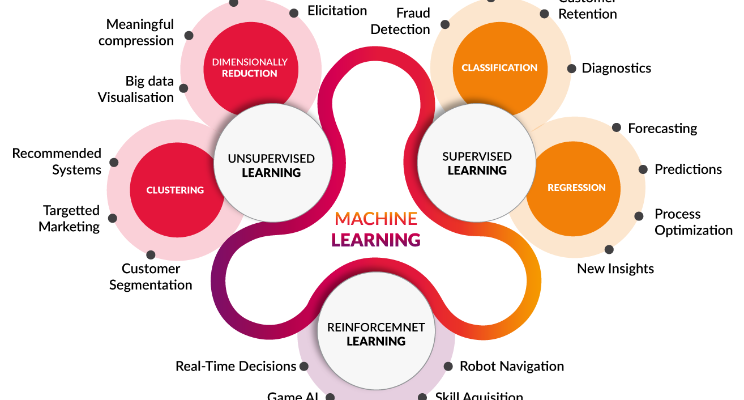
It can be easily understood as the a search problem for providing/mapping of inputs to the outputs given the available resources. It’s about building features that meet the analysis needs.
Industries where its used -
Retail
Healthcare
Finance
Entertainment
Education
Banking etc
As we move further in this series, we will explore the power of Applied Machine Learning.
Projects Videos —
All the projects, data structures, SQL, algorithms, system design, Data Science and ML , Data Analytics, Data Engineering, , Implemented Data Science and ML projects, Implemented Data Engineering Projects, Implemented Deep Learning Projects, Implemented Machine Learning Ops Projects, Implemented Time Series Analysis and Forecasting Projects, Implemented Applied Machine Learning Projects, Implemented Tensorflow and Keras Projects, Implemented PyTorch Projects, Implemented Scikit Learn Projects, Implemented Big Data Projects, Implemented Cloud Machine Learning Projects, Implemented Neural Networks Projects, Implemented OpenCV Projects,Complete ML Research Papers Summarized, Implemented Data Analytics projects, Implemented Data Visualization Projects, Implemented Data Mining Projects, Implemented Natural Leaning Processing Projects, MLOps and Deep Learning, Applied Machine Learning with Projects Series, PyTorch with Projects Series, Tensorflow and Keras with Projects Series, Scikit Learn Series with Projects, Time Series Analysis and Forecasting with Projects Series, ML System Design Case Studies Series videos will be published on our youtube channel ( just launched).
Subscribe today!
Goal
Note : Everyday new Applied Machine Learning topics and projects will be uploaded/posted here. This is a vertical post so check this post regularly for new topics/projects.
Let’s set a clear objective.
The goal is to develop an intuition and understand (in the depth) the practical side of Applied Machine Learning and build projects.
I have created a GitHub repo for this series where we will be maintaining our code.
Tools
We will be using Google Colabs and Jupyter Notebooks.
Prerequisite to this series
Complete 60 days of Data Science and Machine Learning before starting this series ( link below) —
Let’s talk about topics and projects we are going to cover in this series
We will be covering —
Introduction to Data Science
What is Data Science?
Tools, skills for Data Science
Common workflows
Bias in data science
Reproducibility, communication and collaboration
Complete Python
Data types, strings, operators
Chaining Comparison Operators with Logical Operators
Python Lists and Dictionaries, Sets, Tuples
Loops, Break and Continue Statements
Object-Oriented Programming — Class and attributes
Python strings in detail
Python F-String
Map, Classes, Functions and Arguments
First Class functions, Private Variables, Global and Non Local Variables, __import__ function
Magic Functions, Tuple Unpacking
Static Variables and Methods in Python
Lambda Functions, Magic methods
Inheritance and Polymorphism, Errors and Exception Handling
User-defined functions, Python garbage collection
Debugger in Python
Iterators, Generators, and Decorators
Memoization using Decorators
Ordered and Defaultdict, Coroutine
Regular expression, Magic methods, Closures
ChainMap
Python Itertools
Advanced python constructs
Comprehensions, Named Tuple, Type hinting in Python
How to write efficient Code in Python
Efficient Code and Optimization techniques for Python
Data Science Packages in Python
Pandas
Numpy
Advanced Pandas Techniques
Data Pre-processing
Handling missing values
Data Cleaning
Mean/mode/median Imputation
Hot Deck Imputation
Rescale Data
Binarize Data
Regression Imputation
Stochastic regression imputation
Feature Scaling
Data Augmentation
Read and Process Large Datasets
Data Profiling
Summary Functions
Indexing
Grouping
Linear Regression
Multi Linear Regression
Polynomial Regression
Regression
Support Vector Regression,
Decision Tree Regression
Random Forest Regression
Feature Engineering
GroupBy Features
Categorical and Numerical Features
Missing Value Analysis
Fill the missing Values
Unique Value Analysis
Univariate Analysis
Bivariate Analysis
Multivariate Analysis
Correlation Analysis
Spearman’s ρ
Pearson’s r
Kendall’s τ
Cramér’s V (φc)
Phik (φk)
Data Visualization
Data Visualization basics
Data Visualization Projects
Data Visualization using Plotly and Bokeh
Statistics
Random Variables
Statistical Inferences
Probability
Standard deviation and variance
Statistical Distributions
Hypothesis Testing
Normal distribution
t-distribution
Bernoulli distribution
confidence intervals
Data Collection and Data Cleaning
Data Collection
Data Cleaning
Data Manipulation
Join
Melt
Cut
Transform
Clean
Slicing
Reshaping
Filter
Group by
Pivot and Merge
Concatenate
MultiIndexing
Stacking
Hierarchical indexing
Aggregate
Summarize data
Linear Algebra for Machine Learning
Linear algebra concepts in Python
Matrix operations
Advanced linear algebra procedures
Supervised Learning
Regression
Supervised learning with probabilistic models
linear regression
Ordinary Least Squares
Linear Models
Linear and Quadratic Discriminant Analysis
Support Vector Machines
Stochastic Gradient Descent
Nearest Neighbors
Gaussian Processes
Cross decomposition
Naive Bayes
Decision Trees
Ensemble methods
Feature selection
Ridge Regression
Bias-variance tradeoff
Regression analysis
Bayesian Methods
Lagrange multipliers tool
sparse regression model
estimate covariants
Bayesian linear regression
Classification Algorithms
Classification using nearest neighbors
K-nearest neighbors
Bayes classifier
Supervised learning classification
perceptron algorithm
Logistic Regression
Kernel Methods
Gaussian Processes
kernel
kernelized perceptron
Support Vector Machines and Decision Trees
Hyperplanes with maximum margin method
SVM
decision tree-based classifiers
Grid search hyperparameters
Boosting and K-Means Clustering
Bagging and boosting techniques
Characteristics of K-means tools
Label encoder
Unsupervised Learning
Clustering Methods K-means,
soft K-means
Gaussian mixture model
Principal Component Analysis and Markov Models
PCA basics
Implement PCA
Implement Markov chains using quantecon
Hidden Markov Models and Kalman Filtering
Hidden Markov Model
Markov models
Gaussian models
Forward/backward algorithm
Modeling
Model Training and Evaluation
Model Baselines
Model Tuning and Optimization
Model Review and governance
Automated Model retraining
Model Deployment and monitoring
Model Inference and Serving
Model Resource Management Techniques
Model Analysis
High-Performance Modeling
Model selection and evaluation
Cross-validation
Hyper-parameters Tuning
Performance Metrics
Validation curves
Applied Machine Learning Projects (40)
Applied Machine Learning projects repo
That’s it for now. We will keep updating this post covering above topics.
Let me know if you have questions in the comment section below. Subscribe/ Follow, Like/Clap as it would encourage me to write more in my free time
Stay Tuned and Keep coding!!
Read More —
11 most important System Design Base Concepts
6. Networking, How Browsers work, Content Network Delivery ( CDN)
13. System Design Template — How to solve any System Design Question
System Design Case Studies — In Depth
Design Instagram
Design Netflix
Design Reddit
Design Amazon
Design Messenger App
Design Twitter
Design URL Shortener
Design Dropbox
Design Youtube
Design API Rate Limiter
Design Web Crawler
Design Amazon Prime Video
Design Facebook’s Newsfeed
Design Yelp
Design Uber
Design Tinder
Design Tiktok
Design Whatsapp
Most Popular System Design Questions
Mega Compilation : Solved System Design Case studies
Complete Data Structures and Algorithm Series
Some of the other best Series —
30 days of Data Structures and Algorithms and System Design Simplified
Data Science and Machine Learning Research ( papers) Simplified **
100 days : Your Data Science and Machine Learning Degree Series with projects
Complete Data Visualization and Pre-processing Series with projects
Exceptional Github Repos — Part 1
Exceptional Github Repos — Part 2
Tech Newsletter —
If you are interested, you can join my newsletter through which I send tech interview tips, techniques, patterns, hacks — Software Development, ML, Data Science, Startups and Technology projects to more than 30K readers. You can subscribe to Tech Brew :
For Python Projects —
For complete 60 days of Data Science and ML : Day 1 — Day 60 : Quick Recap of 60 days of Data Science and ML
Follow for more updates.
For other projects, tune to —
Build Machine Learning Pipelines( With Code)
Recurrent Neural Network with Keras
Clustering Geolocation Data in Python using DBSCAN and K-Means
Facial Expression Recognition using Keras
Hyperparameter Tuning with Keras Tuner
Custom Layers in Keras


