
EDUCATION
Why Retirement was Right for Me
When the minuses started outweighing everything else, it was time to go
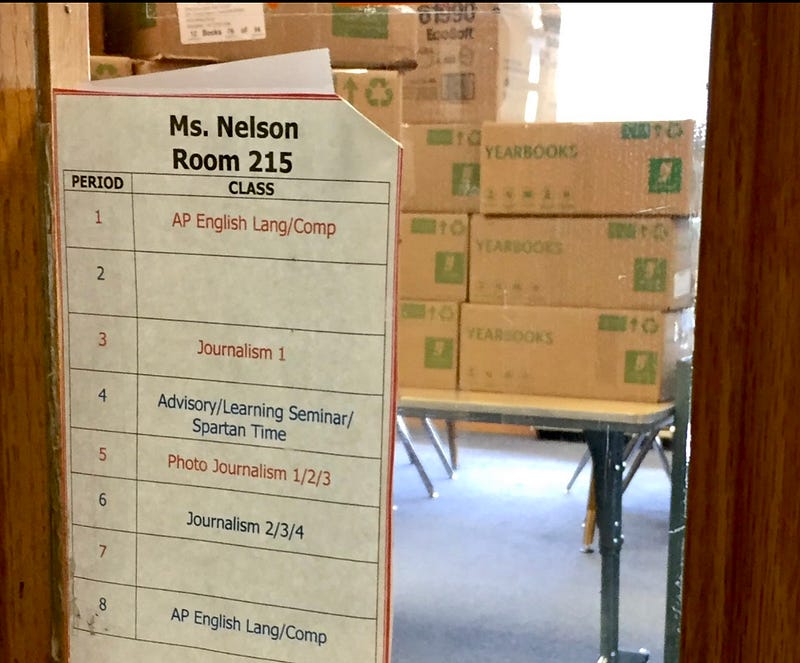
I retired from teaching five years ago this month. I packed up my things, went to a farewell luncheon in our school’s cafeteria, and said goodbye to a career that lasted 23 years and featured the comings and goings of an estimated 4,000 high school students in Room 215 — my high school home base.
I migrated to teaching from the ranks of D.C. politics and PR. I’d been influenced mightily by my own high school Journalism teacher, and jumped at the chance to change career paths half-way through my professional life. I never regretted the decision, and I’m a better person now because I made that leap.
I’ve tallied up the “pros” and the “cons” of my teaching career. Taking a look at the good, the bad and the ugly helps me make peace with my decision to leave it all behind.
The “Pros” of teaching in a public high school:
- The multiple occasions, over the years, when I was able to “bond” with my students — whether it was because of something they’d just learned, or something they were able to teach me, including the always-rewarding instances of the “light” going on. Not the nasty fluorescent tubes imbedded between false-ceiling panels, but the metaphorical illumination that accompanies the feeling of a student finally “getting” it.
- The freedom I had for many years, to develop both a Journalism and an Advanced Placement English curriculum on my own, with very little pushback from strict administration types. Yes, I worked with colleagues — both at my school and at others — to figure out what “worked.” And I’m darn proud of the results of my toil and trouble.
- The chance to get to know these kids for the people they were then and would certainly become later on. Anyone who tells you teens are “undisciplined” might be occasionally correct. But isn’t that the point of growing up?
- All of the times I let my students “take the wheel” in a classroom lesson or in the production of the school newspaper/yearbook and accelerate toward figuring something out at the finish line.
- The sweet, sweet sentiments expressed in actions as much as in words — including offers from parents. Help could happen at the drop of a hat, and often came in the form of tasty tidbits, large and small — when Mrs. P., for example, fried up magnificent and quite tasty samosas from her native India, or when Mrs. S. just knew my favorite snack was Hershey’s Kisses. These collaborations pushed me and my students to work harder sometimes, yes; but helped us kick back with a Kumbaya sesh or two, too.
- The parents who knew my efforts to educate their children were severely underfunded. They contributed gift cards to Staples, Office Depot, and in one case Better World Books — the last of which helped me purchase used class sets of The Great Gatsby, I Know Why the Caged Bird Sings and The Soloist on four different occasions.
- The parents who didn’t understand why I had to send “permission slips” home with their 16- and 17-year-olds, so they could read The Adventures of Huckleberry Finn, I Know Why the Caged Bird Sings, and In Cold Blood. I doubly appreciated the notes these folks sent back with the signed approvals — “I’ll bet Dr. D. (our district superintendent) would do a better job if he read this book”; or, my favorite, “Mr. W. (our principal) needs to sit in on your class this year, and you need to grade him harshly! If that bozo read what my son is reading in Room 215, he’d be a much more informed individual.”
- The parents who wrote me thank you notes for a job well-done. I often wrote them back, thanking them for the privilege of teaching their children. Oh, and remind me to drop a line to the other Mrs. Nelson in my district. I’m sure things are better for her now that I’m out of the picture.
The “Cons” of teaching in a public high school:
- The pay. Did you know that the average American teacher earns about $50,000 per year? That’s about $24.51 an hour, but teachers don’t usually get all their work done during a regular eight-hour day. They take their work home with them — especially the English teachers!
- The hours. School started at 7:20 a.m. For me, that meant getting up at 5 a.m., getting ready, and negotiating a sometimes stressful commute — 14 miles each way. And, because I didn’t just give my students standardized tests graded by computer (more on that later), I stayed up til all hours grading, grading, grading. A kid won’t learn much if you don’t return his paper promptly. So, estimate a 12-hour work day, minimum, for moi. No bueno.
- The administration. Have you heard of the Peter Principle? Employees in any organization rise to the level of their incompetence. Education is full of folks like that — specifically those in charge. During my time in the classroom, I witnessed a distinct pattern. Take, for example, the teacher who couldn’t, well, teach. She spent most of her time flirting with senior boys and gossiping with cheerleaders. Ten years later, she’s now an assistant principal. Or another idiot promoted way beyond his pay grade. As my hubby Moker would say, “He’s so worthless I wouldn’t cross the street to pee on him if he were on fire.” And don’t forget the principal we all called “Mickey Mouse.”
- Politicians, Part I. No Child Left Behind, conceived at the start of the millennium, involves judging teachers based on their students’ performance on standardized tests. Of course, these benchmarks are so ridiculous even the raccoon who tries to eat the plastic packing peanuts in my trash could pass ’em. The case could be made that the only thing these tests examine is the teacher’s ability to control her bladder.
- Politicians, Part II. A fair amount of politicos meddle in public education, but the be-all, end-all came this past November, when Virginians elected Glenn Youngkin as their governor. And he’s coming for our curriculum, kids! Let’s just say Youngkin wants parents and students to be “vigilant” in the classroom, and he’s set up a “tip line” to snitch on teachers.
- Politicians, Part III. Youngkin is also one of those idiots like Ted Cruz, whose kids go to private school. And the Youngkin progeny are taught the same kind of curriculum he now decries. If I hadn’t retired five years ago, this lunatic would have driven me right out the damn door. Speaking of doors…
- Politicians, Part IV. Cruz calls for “door safety,” not gun safety. He and others say a “good guy with a gun” is the solution to school shootings. And my favorite? Six states, including North Carolina — where I live now — are pushing to arm teachers. Yeah, excuse me, Mr. Bad Guy. Just wait a sec while I unlock my classroom cabinet, then unlock my gun safe, then find the ammunition that I’ve hidden, so no one gets hold of a loaded gun, then defend my classroom with my Glock, while at the same time trying to keep a classroom quiet and calm and hidden from your horrific intentions. No, I ain’t gonna wear a pistol on my hip, Hoss.
- Who’s in charge again? It often seemed the lunatics were running the asylum. One of my high school principals wanted to abolish grades. OK, then what do we do? Another wanted to cozy up to the press, letting them know of our school’s many successes, both on the gridiron and in the classroom. The purpose, of course, was to generate headlines, and in turn generate a fancy new job for said principal, who left our humble high school ranks to push pencils somewhere up the education food chain. My fave, though, was the man who thought he could lay a “behavior modification” trip on our school. I kid you not — he rewarded grown-ass kids with stickers and the like for “doing their part.”
- Looks a little moldy to me. Over the years, my colleagues and I suffered asbestos in classrooms and a recurring mold problem. Voters came to the rescue a few years ago, with an approximately $83 mil renovation for our sad sack school, which had originally opened in 1966. We basically received a whole new building. But, wait for it — black mold is still an egregious problem on campus. Teachers came back last August, and many were immediately relocated. You can’t teach in a classroom crawling with a dangerous respiratory contagion. And please don’t ask about the asbestos — rumor has it the school is going to dig around for more of the stuff soon.
- And if you don’t have anything better to do…Teachers will be asked to sub for an absent colleague; pull cafeteria duty; help the attendance police run down scofflaws; attend hours-long, mind-numbing meetings designed to teach you how to sharpen your whiteboard, laptop and PowerPoint skills (all basics that every teacher I know knows), and learn some pedagogical construct known as “Backward Design.” I attended multiple “all hands on deck” professional development sessions about this allegedly critical skill. The most I ever got out of them was the knowledge that I should figure out what I should teach before I teach.
There you have it, folks. Eight reasons to take up the noble calling of teaching; 10 reasons to stay the heck away. No wonder teachers are fleeing their classrooms in record numbers these days. Shocking statistics bear this out. Too bad they’re true.


