
Why I Moved Abroad…and Why I Moved Back
After living abroad in Paris for four years, I decided it was time to return to Los Angeles
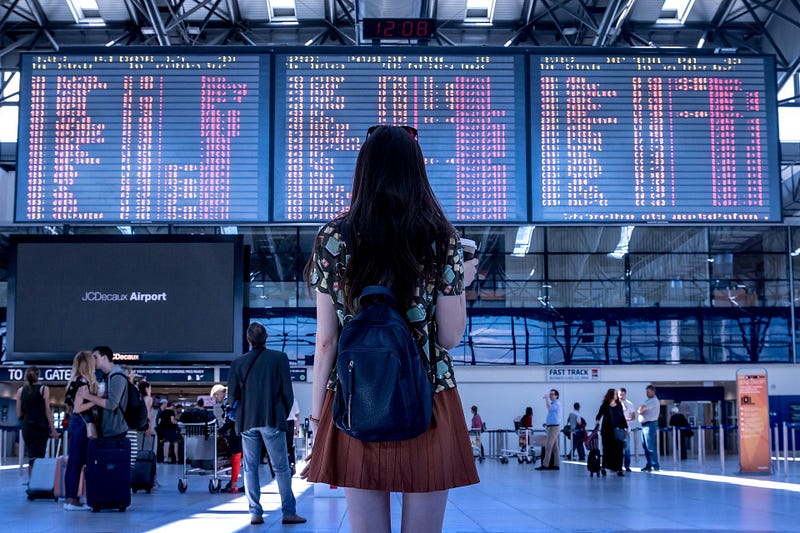
I lived abroad in Paris for almost four years. I arrived through a master’s degree program and transitioned to the French workforce, living the Parisian lifestyle for a few years before I decided to move back to the U.S. I found myself simultaneously near burnout and not adequately challenged in my corporate job when I decided to quit and trade my life of security for a more vagabond lifestyle as an expat. It wasn’t easy by any means. It was challenging, stimulating, exhilarating, and frustrating. I came out of the experience more confident in myself, more cultured, and more in touch with parts of myself that I had long neglected. I also finished the experience glad that I took the chance when I did, when I was still in my late twenties and did not have pets or a family to take with me.
The first big decision I made on this journey was to quit my stable job and trade it for a freer and uncertain future. The moment I quit my job was very nerve-wracking. When I handed in my resignation letter, I felt a strong compulsion to snatch the letter from my boss’s hands and call the whole thing off. But my hands remained in my lap and the moment passed. I stuck to my decision and pushed forward. I had so many doubts about my decision to quit and was worried about derailing my career trajectory. My fears turned out to be mostly unfounded. I found jobs in the same field abroad which furthered my work experience. My master’s degree broadened my educational background and opened doors that were previously closed to me. I was able to find another job in the U.S. immediately when I decided to return. The fact that I had lived and worked abroad made me a standout candidate!
My ticket to a visa to live and study in France was my French master’s degree program. I applied to an international program that was conducted in English at a French institution. My classmates came from twenty-eight countries around the world. After my four years in Paris, I know people from India, the Philippines, Algeria, Morocco, Cyprus, Lithuania, Poland, Germany, the UK, Spain, Hungary, Romania, Thailand, Chile, Vietnam, Ireland, Japan, Serbia, Australia, Turkey, Norway, and Argentina. My interactions with such an international community broadened my worldview. I saw America through the eyes of other world citizens. It made me realize how much the country I was born in is watched on the world stage. I saw how much soft power America wielded through the traditional sense and the export of its culture.
As I was feeling burnout from several years of working with little vacation, I saw living abroad as an opportunity to have much-needed downtime. I was struggling with the lack of adequate vacation days in my corporate job and timed my quit day so I had two months off before I started my master’s program. I also took several months off after my master’s program before I started working again. I needed time to just be. I had a lot on my mind regarding my relationships, self, and family. I needed time to sort that out within myself and I wasn’t finding it with my busy work schedule. These issues were distracting me at work. I took that as a sign that these were issues that needed my full attention. My time off allowed me to prioritize these problems and truly work them out.
I also realized that American life was moving too quickly for me. I was constantly inundated with news and status updates from friends. I was surrounded by a culture of keep up with the Joneses; everyone got a better job, bought a new car, a new house, got married, had kids, some broke engagements, or got divorced. I was living life in the fast lane in my twenties, impatient for everything to happen and to have all the answers immediately. I wasn’t as self-aware or present as I am now. I found when I turned off the notifications and stopped following the headlines, I could focus on myself. I read materials and did activities that helped me with the problems I was facing instead of following the latest trends. I reflected on the most important questions: am I fine with the direction my life is taking? If not, what do I want to change about it? How can I accomplish that?
“It is good to make a halfway place, a way station, a considered place in which to rest and mend after one escapes a famine. It is not too much to take one year, two years, to assess one’s wounds, seek guidance, apply the medicines, consider the future. A year or two is scant time…Whether the injury be to your art, lifestyles, thoughts, or ideas, and if you have knitted yourself up into a many-sleeved sweater, cut through the tangle now and get on with it. Beyond desire and wishing, beyond the carefully reasoned methods we love to talk and scheme over, there is a simple door waiting for us to walk through. On the other side are new feet. Go there. Crawl there if need be. Stop talking and obsessing. Just do it.” — Clarissa Pinkola Estés, Women Who Run with the Wolves
In Paris, the pace of life is slower. Establishments like stores, restaurants, banks, post offices, libraries, museums, and parks are open for shorter hours. They close early on Sundays or don’t open at all. The entire country of France is on vacation every year in August. People wait one week, three months, six months, or one year for administration. This is not ideal but considered typical. There is a lot more vacation offered at work and the attitude is that it should be taken. Bosses actively encourage it. The workaholic lifestyle is not strongly present. France has universal health care and generous social benefits. All of this enables a slower and less stressful way of living.
I found this environment conducive to the downtime I needed. I was able to take a giant pause in life to take care of myself mentally and emotionally. I spent a lot of time in therapy. I started writing and painting regularly. I took the most relaxing types of vacations in the most gorgeous villas and chateaus that I’ve ever seen. I visited thirteen countries in Europe and traveled to India for the first time. I tried out working for a cutting-edge tech startup and learned to write code for a year. I learned to speak French, a completely new language for me. I started a business with friends. I managed to check a lot of boxes. Four years later, I’m really glad I took the risk — the detour or unconventional path— to give myself the pause I needed and taste adventure in a foreign country.
Americans have the impression that the French are snobby people, but I discovered it was generally a misunderstanding. Americans don’t know how to speak French and the French are shy about their thick accents when speaking English. Thus, the typical sequence of events happens when Americans try to speak to the French in English and find themselves ignored because the French person is not prepared to speak in English. When I spoke in my limited French with French people, I found I had a good reception. People were generally helpful. I even experienced a couple of miracles when strangers in Paris returned my cell phone after I lost it. Another time, I narrowly missed my chance to jump on the metro after my friend. Instead of leaving, the train conductor re-opened the doors of the train to let me on. It was examples like this that showed me the kindness of French people.
I also appreciate the European lifestyle of allowing open bottles of alcohol in public. I always found it bizarre that Americans are not allowed to consume alcohol in public except in designated areas like beer gardens. I feel responsible enough to be able to enjoy my wine and beer outdoors without becoming intoxicated and causing a disturbance. The Parisian culture of relaxing on the docks of the Seine (quais de la Seine) with a bottle of wine and enjoying picnics in the local garden, park, or forest was one of the most memorable highlights for me. It was a marker of the slower pace of life, a sign of people relishing the time and surroundings.
I didn’t find the expat life completely rosy. One of the biggest challenges for me in the expat community is the constant churn of people who come and go from my life. Year after year, I made some great international friends through school, work, and other activities. Unfortunately, after I knew them for a year or two, many would move to their home country or elsewhere. My social life became a bit of a revolving door of friendships. I found it emotionally exhausting to put the energy into developing these connections, only to learn my friend would be moving somewhere far away and I wouldn’t be seeing them for a long time. I found I preferred living in the same place and maintaining lifelong friendships instead.
The other challenge is the language barrier and the lost in translation moments of different cultures. It took a while for me to become comfortable attempting French to strangers. My two years in France were difficult as my ears adjusted to hearing French. I resorted to a lot of miming and visual cues. Phone calls were the most difficult when visual cues were absent and I didn’t have a translator. I had some humorous misadventures as well. The first time I met a new person in France, I was not versed in the ritual of le bis and completely missed my cue while bidding this new friend farewell. I mostly stood there frozen. A kind fellow coached me on the ritual and I was successful the second time. This small act helped me along the way to feeling integrated into the City of Light.
The COVID-19 pandemic was a significant turning point for me. It was a difficult time as most people chose to lockdown and quarantine with their family for most of the year. Mine was more than 5,000 miles away. Still, I was one of the lucky ones. As a U.S. citizen and a visa holder in France, I was able to travel to the U.S. for Christmas 2020 and see my family. I was also able to legally re-enter France upon my return while all other Americans were banned. My trip home made me realize just how far away I was from my family and how many hours it would take to get to them if there was an emergency. I was quite sad to leave at the end of my trip. It made me wonder whether it was time for me to move closer to my family.
I also saw my parents were aging and my infant nieces and nephews were growing up. I had only met them in person once or twice. If I didn’t see them and call more often, they would not know who I was when they could start talking. I wanted to be more present for my family as they kept going forward in life. I felt like my family was sorely lacking in taking care of their mental health. They were in desperate need of good company and care. I thought I could provide some help there. I was pleasantly surprised to find that my relationship with my parents had improved significantly with the time spent apart and the inner work I had done the twelve months before. It seemed likely to me that a move back home would not be so bad. When I did decide to move back to the U.S., things fell into place fairly easily.
I see my move back to my country as a homecoming. It’s almost like stepping up to assume “adult life” for a second time. I was lucky enough to be able to step away for a bit to be a kid again before I decide to put roots down and take on big responsibilities like pets, marriage, kids, and taking care of elderly parents. Having been raised by overprotective parents, I think I had some reluctance to “grow up” because I didn’t have a chance to test things out for myself. Moving to a country where I didn’t know anyone certainly cured that. This time, I get to apply all I’ve learned from my time abroad into my daily life in the U.S. I am ready to live my life more calmly and wisely.
“The power of owning our story, even the difficult ones, is that we get to write the ending.” — Brené Brown