
Renegotiating Family Relationships
I am reintroducing myself to my family with the concept that I now have boundaries that must be respected
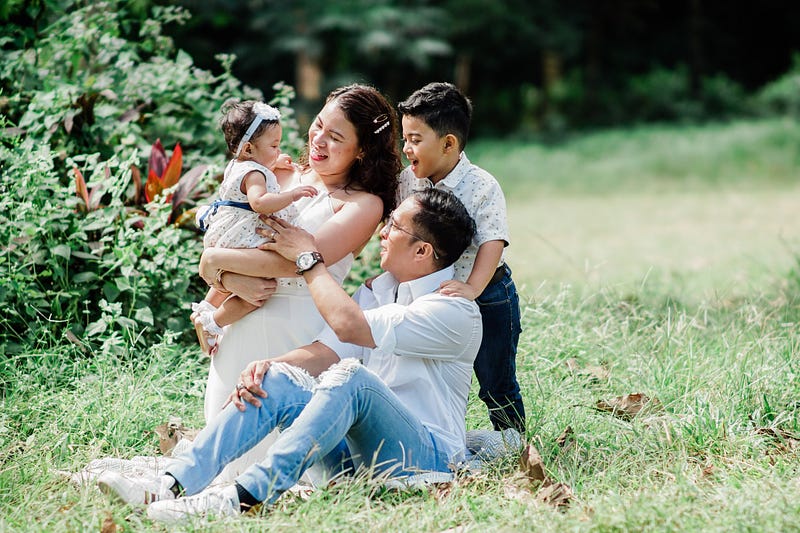
For the last ten years, I was living away from my family. I lived in a different state and even a different country! The further I got away from them, the more I was able to focus on developing myself outside of their influence. This includes several years of therapy focused on addressing the root causes of my anxiety. Now I have decided to move back close to my hometown. I am working on coexisting with them more harmoniously way than before. In addition, I am re-introducing the “new me” to them. I am renegotiating my role in my family, including how I expect to be treated and how much access my family has to me.
The biggest change from before is that I now operate with boundaries. According to Dr. John Townsend and Dr. Henry Cloud, “boundaries define what is me and what is not me. A boundary shows me where I end and someone else begins, leading me to a sense of ownership.” I have a sense of ownership over myself and my well-being. Thus, my biggest priority is to take care of myself, to ensure I am seen and heard, and that my needs are met. This means I spend my time, energy, and money where I want to and with the people I want to. I choose to focus on building the life I want for myself. This is true even if it goes against some of the values that I was raised with such as “respecting my elders.” If I have to choose between my wellbeing and respecting elders, I will always choose to take care of myself first.
How does this relate to reintroducing myself to my family? Unfortunately, taking care of myself and building the life I want often comes into conflict with what my family expects of me. They expect and demand that I spend more of my energy on them than I’d like. They expect and demand to see me more often and for longer than I have the time for, using tactics such as guilt trips and manipulation. Thus, I use boundaries to determine how much time and energy I need for myself and how much I am willing to share with them. I say “no” when I need to. I do not allow myself to be coerced into giving more time and energy than I am comfortable with. I take responsibility for issues that are mine and do not get involved in the rest. It has been uncomfortable to develop and maintain these new ways of operating with my family. However, it has been well worth it to be able to lead a life of love, freedom, and responsibility.
“Boundaries define what is me and what is not me. A boundary shows me where I end and someone else begins, leading me to a sense of ownership. Boundaries help us to define what is not on our property and what we are not responsible for. Boundaries help us to distinguish our property so we can take care of it. They help us to “guard our hearts with all diligence.” We need to keep things that will nurture us inside our fences and keep things that will harm us outside. In short, boundaries help us keep the good in and the bad out.” — Dr. John Townsend and Dr. Henry Cloud, Boundaries
With my mother, I set boundaries on her codependent behaviors, especially her tendency to rely on me to solve her problems. Since I was a child, I felt compelled to defend my mother against her in-laws when they bullied her. My mother didn’t know how to deal with marital problems and demanding in-laws, so she tried to use me as a shield and sounding board (i.e., therapist) to save her from these problems. I somehow developed the belief that it was my job to stand up for my mother and started thinking of my mother’s problems as mine. When I notice this is happening now, I step back and detach myself from the situation. I refrain from trying to help, I verbally excuse myself from the situation, or I limit contact with her for a few days until the problem blows over.
After much reflection, I can see that my mother is a sixty-year-old, married adult who is responsible for handling her problems with her in-laws. It is not my responsibility. I felt like I shed such a big emotional load when I realized these were not my problems and I have no need whatsoever to get involved in them. This was a big relief because dealing with my mother’s problems is emotionally draining. She gives off negative energy and anxiety, passing it to the family members around her until we all feel out of control. Emotionally distancing myself from her and refusing to get sucked into her emotional vortexes is the best way to protect myself.
Unfortunately, there are certain family members that I do not think it would be possible to set boundaries with. They would not respect the boundary and would get angry, belligerent, or try to guilt-trip me into complying with their will. They present such a threat to me that unexpected contact with them would be destabilizing and upsetting for me. In this case, I have decided the best option is to go “no contact” with them. I have blocked the phone numbers and social media accounts of several family members. This is not a decision I took lightly. It is sad and painful to have to do this, however, I feel more secure knowing these people cannot contact me as they wish. I refuse to be subjected to harmful behaviors that were present in old dynamics with them. I’ve decided that we should “love each other from afar.”
Several of my relatives fall into the “no contact” category. Although I have some positive memories with these people, I find the majority of their behavior towards me to be antagonistic and stressful. They tend to use me as an emotional punching bag to vent their frustrations. Out of the blue, I got long foul-mouthed Facebook rants from them. Other times they would make sarcastic, critical, and condescending jabs during conversations. They think with a competitive dog-eat-dog mentality and think they need me to lose in order for them to win. I have tried to set boundaries on this behavior and have been met with strong resistance. Often, they get defensive, refuse to accept responsibility for their behavior and actions, and have even verbally attacked me. This demonstrated to me that they have no intention of respecting the boundaries I set and led me to decide I would be better off without contact with them. The less they know about my life, the less access they have to me, and the more able I am to set boundaries.
I find it incredibly difficult, almost impossible, to set boundaries with my grandmother. My grandmother has too much control over the family. Multiple members of the family will stand up and defend her if I disobey her. I find that I am pressured by other family members into giving to my grandmother — my time, energy, and money — even when I do not want to and believe it is against my self-interest. Repeated instances of doing things against my interest at her hands were traumatic for me. It engendered a pattern of self-betrayal in my life as well as the trauma of not being seen or heard. I freeze and am not able to speak up for myself around her. I find that I am still triggered by the thought of having contact with her. As healthy boundaries do not seem to be possible, I should remain out of contact with her.
“Emotional distance is a temporary boundary to give your heart the space it needs to be safe. People who have been hurt in abusive relationships need to find a safe place to “thaw out” emotionally. You should not continue to set yourself up for hurt and disappointment. If you have been in an abusive relationship, you should wait until it is safe and until real patterns of change have been demonstrated before you go back. Many people are too quick to trust someone in the name of forgiveness and not make sure that the other is [repenting]. To continue to open yourself up emotionally to an abusive or addicted person without seeing true change is foolish. Forgive, but guard your heart until you see sustained change.” — Dr. John Townsend and Dr. Henry Cloud, Boundaries
My journey in re-introducing myself to my family with boundaries has not been easy. It is a slow process that has taken a lot of patience. It has taken a lot of communication and explaining how I prefer to be treated. I have had to repeat myself many times until my new values sank in for my family. I’ve also had to resort to temporarily blocking family members when they became too insistent or disrespectful. I have had to say “no” and deal with the discomfort of it when my family was not happy about my choices. I realize that my family is not familiar with the concept of boundaries and certainly isn’t used to seeing people enforce boundaries. It is up to me to show my family how I want to be treated with boundaries in place; to show them how to act so they can have access to me and my time. I have had to set an example for them.
It certainly feels like a balancing act as I juggle building the life I want and making time to develop healthy relationships with my family. While interacting with my family, I have had to consciously stop myself from falling into old patterns. It is very easy to do when the other party expects me to act in old ways. I do not want to repeat the traumas of the past. I take it one interaction at a time; choosing my actions and behaviors deliberately. I do not expect my parents to change. Instead, I try to meet them where they are, in a way that also works for me. I feel I am making progress; I feel that my needs are being considered when my family makes plans. This gives me hope that, with my close family at least, I’ll be able to live a full-fledged life while maintaining limited contact with them.